...

News

Can a 0.04% Daily Late-Payment Penalty Be Enforced in China?

Overview

A contractual late-payment penalty can become a significant issue in a commercial contract dispute, particularly when a client fails to pay for completed professional or consulting services.

In this China service contract case, a real estate consulting company completed the contracted consulting work, delivered the required report and fulfilled its contractual obligations. The client accepted the work but failed to pay the agreed service fee.

The contract contained a 0.04% daily late-payment penalty for overdue payment, together with provisions addressing litigation-related expenses. When the consulting company commenced proceedings, the defendant argued that the contractual penalty was excessive and should be reduced.

The court ultimately supported the contractual payment obligation and the agreed late-payment penalty, as well as the relevant recoverable litigation-related costs.

The case demonstrates an important practical issue in Chinese commercial litigation: a well-drafted payment and default clause can provide a strong basis for recovering both the underlying contractual debt and agreed remedies when the counterparty fails to perform.


Case Snapshot

ItemDetails
Case TypeCommercial Contract Dispute
JurisdictionMainland China
CourtPeople's Court in Guangdong
IndustryReal Estate Consulting
Contract TypeConsulting Services Agreement
Dispute ValueApproximately RMB 200,000
Main ClaimUnpaid consulting service fee
Additional ClaimsContractual late-payment penalty and recoverable litigation-related costs
Key Legal IssueWhether the agreed late-payment penalty could be enforced
Key StrategyContract enforcement and pre-judgment property preservation
AttorneyYu Yuting / Sun Jianhui
Law FirmNEO-ARK Law Firm

The Core Legal Issues

1. Can a consulting company recover unpaid service fees after completing the contracted work?

The first issue was whether the consulting company could establish a clear contractual right to payment.

The company had completed the agreed consulting work and delivered the required report. The client had accepted the work but did not make the agreed payment.

The legal analysis therefore focused on the contractual relationship and the sequence of performance:

contract → performance → delivery and acceptance → payment obligation → non-payment.

Establishing this contractual chain allowed the claim to be presented as a straightforward breach of contract and payment dispute, rather than a broader disagreement over the quality or scope of the consulting services.

2. Can a 0.04% daily late-payment penalty be enforced?

This was the central legal issue in the case.

The parties had expressly agreed that overdue payment would trigger a 0.04% daily late-payment penalty.

The defendant challenged the clause and argued that the penalty should be reduced.

The court ultimately supported the contractual penalty.

For businesses entering into commercial service agreements in China, this illustrates why payment and default provisions should be drafted with care. A late-payment clause can become an important recovery mechanism when the counterparty delays payment.

A well-drafted clause should clearly address:

  • the payment deadline;
  • the event triggering the penalty;
  • the calculation basis;
  • the applicable daily or periodic rate; and
  • the relationship between the penalty and other contractual remedies.

3. Can contractual litigation-cost provisions help recover legal expenses?

The contract also contained provisions concerning certain litigation-related expenses.

The consulting company therefore sought recovery of the relevant costs in addition to the outstanding service fee and late-payment penalty.

The court supported the applicable litigation-related claims.

This highlights a broader contract-drafting point: dispute-resolution provisions should be considered at the contract stage, not only after a dispute arises.

Where a contract clearly allocates certain costs and the relevant legal requirements are satisfied, those provisions may become part of the creditor's recovery strategy.


Legal Strategy

IssueLegal Approach
Unpaid consulting feeEstablish contractual performance, delivery and the client's payment obligation
Late-payment penaltyRely on the express contractual clause and establish the occurrence of payment default
Defendant's penalty-reduction argumentDefend the contractual arrangement based on the wording and circumstances of the agreement
Litigation-related expensesRely on the contractual allocation of recoverable costs
Enforcement riskConsider property preservation at the beginning of litigation
Recovery planningTreat preservation and enforcement as part of the litigation strategy rather than a separate post-judgment issue

The case was therefore handled as an enforcement-oriented commercial litigation matter, rather than merely as a claim for an unpaid invoice.


Why Property Preservation Was Important

Winning a commercial lawsuit does not necessarily guarantee successful recovery.

Where a debtor's assets may be transferred or become difficult to locate during litigation, a creditor may face additional enforcement risks even after obtaining a favorable judgment.

In this case, the consulting company applied for pre-judgment property preservation when commencing the proceedings.

The preservation measure helped secure assets relevant to the claim and strengthened the creditor's position for subsequent enforcement.

For companies pursuing commercial claims in China, property preservation can therefore be an important part of the overall litigation strategy, particularly where there are concerns about the counterparty's financial position or ability to satisfy a future judgment.


Outcome

The court confirmed the validity of the consulting agreement and found that the consulting company had fulfilled its contractual obligations while the client had failed to make the required payment.

The court supported:

  • recovery of the outstanding consulting service fee;
  • the agreed 0.04% daily late-payment penalty;
  • the applicable contractual litigation-related expenses; and
  • relevant court-approved preservation and litigation costs.

The defendant's request to reduce the contractual late-payment penalty was not accepted.

The property preservation measure also provided additional protection for the creditor's eventual recovery.

For confidentiality reasons, the specific amounts awarded by the court are not disclosed in this case study.


Why This Case Matters

This case demonstrates several recurring issues in Chinese commercial contract litigation.

Contract drafting matters

A clear payment clause and a clearly defined late-payment mechanism can significantly strengthen a creditor's position when a dispute arises.

Performance should be documented

For professional service providers, establishing that the contracted work was completed and delivered is often essential.

Contractual deliverables, acceptance records, invoices and relevant communications can collectively establish the payment obligation.

Contractual penalties should be assessed before litigation

A contractual penalty does not automatically guarantee recovery at the stated rate in every dispute.

Its wording, the circumstances of the breach and applicable Chinese legal rules all need to be considered.

In this case, however, the agreed 0.04% daily penalty was supported by the court.

Preservation can protect the value of a claim

A creditor may have a strong legal claim but still encounter enforcement difficulties if the debtor's assets cannot be located or have been transferred.

Early consideration of property preservation can therefore be an important component of commercial litigation planning.


Frequently Asked Questions

Can a Chinese court enforce a contractual late-payment penalty?

A contractual late-payment clause may be enforceable when properly agreed and applicable to the breach. However, the final recoverable amount depends on the wording of the contract, the circumstances of the dispute and applicable Chinese law.

In this case, the court supported the agreed 0.04% daily penalty.

Can a company recover unpaid consulting fees in China?

Yes. A consulting company may bring a contractual payment claim when it can establish the agreement, its contractual performance, the client's payment obligation and the client's failure to pay.

Can contractual litigation expenses be recovered in China?

Potentially. Recovery depends on the contract and applicable legal rules. Where the parties have agreed that certain litigation-related expenses may be recoverable, that provision can become an important part of the claim.

What is property preservation in Chinese litigation?

Property preservation is a court-ordered measure intended to prevent relevant assets from being transferred, concealed or otherwise made unavailable for enforcement while litigation is pending.

Should a creditor consider property preservation before judgment?

Where there is a meaningful enforcement risk, early preservation may be worth considering. The appropriate approach depends on the debtor's assets, the value of the claim and the circumstances of the dispute.


Key Takeaways

For companies seeking to recover unpaid contractual payments in China:

  1. Draft payment and late-payment provisions precisely.
  2. Maintain clear records showing contractual performance and acceptance.
  3. Review the enforceability of contractual penalty clauses before litigation.
  4. Address litigation-related expenses when drafting the contract.
  5. Assess property preservation at the beginning of a dispute where appropriate.
  6. Treat enforcement planning as part of the litigation strategy from the outset.

A commercial contract dispute is therefore not only about proving that money is owed. Effective recovery may also depend on contract drafting, proof of performance, protection of assets and enforcement planning.


About the Author

Yu Yuting
Partner | NEO-ARK Law Firm

Lawyer Yu focuses on foreign-related litigation, cross-border disputes, commercial matters, and legal services for overseas individuals and businesses in China.

Email: [email protected]

About NEO-ARK Law Firm

NEO-ARK Law Firm provides legal services in foreign-related litigation, commercial disputes, family law, and cross-border legal matters, assisting both international and domestic clients throughout China.

Recommend
Seven Neo-Ark Attorneys Appointed to the 11th-Term Work Committees of the Guangzhou Lawyers Association

Recently, the Guangzhou Lawyers Association (GLA) conducted the application and selection process for supplemental members of its 11th-Term Work Committees and certain Professional Committees.

Following the procedures of application, review, selection, and deliberation by the President’s Council and the Board of Directors, seven attorneys from Guangdong Neo-Ark Law Firm were selected as supplemental members of the 11th-Term Work Committees of the Guangzhou Lawyers Association.

Supplemental Members of the Work Committees

Foreign-related Affairs Work Committee

Yuting Yu (余宇婷)

Practice Areas: Foreign-related Disputes; Civil and Commercial Litigation; Criminal Defense; Corporate Legal Counsel

Practice Research and Training Work Committee

Jianhui Sun (孙建辉)

Practice Areas: Construction Engineering; Criminal Defense

Work Committee for Disciplinary Action against Member Violations

Chengwan Li (李成万)

Practice Areas: Legal Counsel; Banking and Finance; Labor and Social Security; Corporate and M&A Matters; Construction; Real Estate

Industry Dispute Resolution and Mediation Work Committee

Qing Yao (姚青)

Practice Areas: Civil and Commercial Litigation and Arbitration; Labor Disputes; Matrimonial and Family Law; Ongoing Corporate Legal Counsel

Finance and Asset Management Work Committee

Zi Cai (蔡梓)

Practice Areas: Tax Administrative Reconsideration and Administrative Litigation; Tax-related Criminal Defense; Ongoing Corporate Tax and Legal Counsel; Bankruptcy and Distressed Assets; Tax Audit Response

Culture, Sports and Member Welfare Work Committee

Xingming Yu (于兴铭)

Practice Areas: Civil and Commercial Disputes; Matrimonial and Family Disputes; Inheritance and Estate Disputes; Family Wealth Succession Planning; Corporate Legal Disputes; Corporate Legal Counsel; Housing Sale and Purchase Contract Disputes

Culture, Sports and Member Welfare Work Committee

Kaiyang Sun (孙楷洋)

Practice Areas: Corporate Legal Counsel Services; Construction; Labor Disputes; Matrimonial and Family Law; Civil and Commercial Dispute Resolution

The supplemental appointments further strengthen Neo-Ark Law Firm’s participation in the self-regulation and professional development of the legal profession, reflecting the firm’s commitment to industry affairs and the professional expertise of its attorneys.

About the Author

Yu Yuting
Partner | NEO-ARK Law Firm

Lawyer Yu focuses on foreign-related litigation, cross-border disputes, commercial matters, and legal services for overseas individuals and businesses in China.

Email: [email protected]

About NEO-ARK Law Firm

NEO-ARK Law Firm provides legal services in foreign-related litigation, commercial disputes, family law, and cross-border legal matters, assisting both international and domestic clients throughout China.

2026-08-24

Can a Company Recover Unpaid Consulting Fees and Contractual Penalties? A China Service Contract Dispute

Overview

An investment consulting company provided project positioning and consulting services for a resort development project under a written service agreement.

The consulting company completed and delivered the agreed final report, but the client failed to pay the contractual service fee despite repeated demands for payment.

The dispute raised several practical issues commonly encountered in commercial service contracts:

  • Whether the service provider had fully performed its contractual obligations;
  • Whether the agreed daily penalty for late payment was enforceable;
  • Whether contractual provisions requiring the losing party to bear legal and related costs could be enforced;
  • How a service provider can protect its ability to recover a judgment debt when the counterparty refuses to pay.

Representing the consulting company, Yu Yuting, Attorney at NEO-ARK Law Firm, pursued both the substantive claims and the necessary asset-preservation and enforcement measures.

The court ultimately ordered the resort investment company to pay the outstanding service fees, contractual penalties, legal fees and guarantee-related costs. After the judgment became effective, enforcement measures resulted in the defendant's bank funds being seized and transferred to the client.

Case Snapshot

ItemDetails
Practice AreaCommercial Litigation & Contract Disputes
Case TypeService Contract Dispute
JurisdictionGuangzhou, China
ClientInvestment Consulting Company
CounterpartyResort Investment Company
Core IssuesUnpaid Consulting Fees, Contractual Penalties, Legal Fees, Property Preservation and Enforcement
Dispute ValueApproximately RMB 300,000
CourtGuangzhou Haizhu District People's Court
Key OutcomeContract Fees, Contractual Penalties and Litigation-Related Costs Recovered
EnforcementBank Funds Seized and Directly Transferred
Lead LawyerYu Yuting / Sun Jianhui
Law FirmNEO-ARK Law Firm

Client's Situation

1. Consulting Services Were Completed but Payment Was Withheld

In December 2020, the parties entered into a Project Positioning Report Special Research and Consulting Services Agreement.

Under the agreement, the consulting company was engaged to provide positioning and consulting services for a resort project.

The agreed service fee was RMB 250,000.

The contract provided that payment would be made within 15 working days after the final report had been completed, delivered and accepted.

The consulting company completed the report and delivered it as agreed.

However, the resort investment company failed to make the contractual payment.


2. The Contract Contained a Late-Payment Penalty

The agreement provided for a contractual penalty of 0.04% per day for overdue payment.

It also contained a provision under which the losing party would bear litigation-related costs, including legal fees.

After repeated demands for payment produced no result, the consulting company commenced litigation before the Guangzhou Haizhu District People's Court.


Legal Strategy

Legal IssueStrategy
Contract performanceEstablish that the consulting company had completed and delivered the agreed services
Outstanding service feesEnforce the contractual payment obligation
Contractual penaltyDefend the agreed daily penalty rate against the defendant's request for reduction
Legal and related costsRely on the contractual cost-allocation provision
Asset preservationApply for preservation of the defendant's bank assets during litigation
Judgment enforcementPursue direct enforcement against the preserved funds after judgment

Property Preservation and Enforcement

1. Asset Preservation Was Initiated at the Litigation Stage

Because the defendant had failed to make payment despite repeated demands, the consulting company did not wait until the end of the litigation to consider enforcement risks.

A property preservation application was filed together with the lawsuit.

The court subsequently approved the preservation and froze approximately RMB 298,000 in the defendant's bank funds.

This measure helped prevent the relevant assets from becoming unavailable for enforcement.


2. Judgment Was Enforced Through the Preserved Funds

After the judgment became effective, the defendant still did not voluntarily comply.

The consulting company therefore applied for compulsory enforcement.

Because the relevant bank funds had already been preserved, the court was able to directly seize and transfer the preserved amount through the enforcement process.

After deduction of enforcement costs, approximately RMB 300,000 was ultimately returned to the client.

The case therefore achieved actual recovery rather than merely obtaining a paper judgment.


Why This Case Matters

For consulting companies and other service providers, obtaining a favourable judgment is only one part of commercial dispute resolution.

The more practical question is often:

Can the judgment actually be enforced and the money recovered?

This case demonstrates the value of combining contractual rights with procedural measures.

A well-drafted service contract can provide a basis for claiming:

  • Outstanding service fees;
  • Contractual late-payment penalties;
  • Legal fees where contractually recoverable;
  • Other agreed litigation-related costs.

At the same time, timely property preservation can materially improve the prospects of recovering the judgment debt when the counterparty refuses to pay voluntarily.

For companies providing consulting, investment advisory, project research or other professional services, the case highlights the importance of considering contract drafting, dispute resolution and enforcement strategy together.


Frequently Asked Questions

Can a consulting company recover unpaid fees if the client refuses to pay after receiving the final report?

Yes, where the service provider can establish that it performed the contractual obligations and the contractual payment conditions have been satisfied.

The specific payment terms, acceptance mechanism and evidence of performance are important.

Can a contractual late-payment penalty be enforced in China?

Potentially, yes.

The enforceability of a contractual penalty depends on the agreement, applicable law and circumstances of the dispute. A party seeking to reduce the agreed amount may need to establish the legal basis for adjustment.

Can legal fees be recovered in a commercial contract dispute?

They may be recoverable where the contract contains an appropriate provision and the relevant legal requirements are satisfied.

This case demonstrates the practical value of expressly addressing litigation-related costs when drafting commercial service agreements.

Why is property preservation important in a contract dispute?

A judgment does not necessarily result in voluntary payment.

Where there is a legitimate enforcement risk, timely preservation of the counterparty's assets can help ensure that assets remain available if compulsory enforcement becomes necessary.

What should service companies include in their contracts?

Service agreements should clearly address, among other matters:

  • Scope of services;
  • Delivery and acceptance procedures;
  • Payment deadlines;
  • Late-payment consequences;
  • Dispute resolution;
  • Allocation of legal and related costs;
  • Evidence and documentation of service completion.

Key Takeaways

  • A completed consulting service can support a claim for unpaid contractual fees.
  • Clearly drafted payment and late-payment provisions can strengthen a service provider's position.
  • Contractual provisions concerning legal and related costs may reduce the financial burden of litigation.
  • Asset preservation should be considered before a judgment where there is a meaningful enforcement risk.
  • Effective dispute resolution should focus not only on obtaining a judgment but also on actual recovery.

About the Author

Yu Yuting
Partner | NEO-ARK Law Firm

Lawyer Yu focuses on foreign-related litigation, cross-border disputes, commercial matters, and legal services for overseas individuals and businesses in China.

Email: [email protected]

About NEO-ARK Law Firm

NEO-ARK Law Firm provides legal services in foreign-related litigation, commercial disputes, family law, and cross-border legal matters, assisting both international and domestic clients throughout China.

2026-08-22

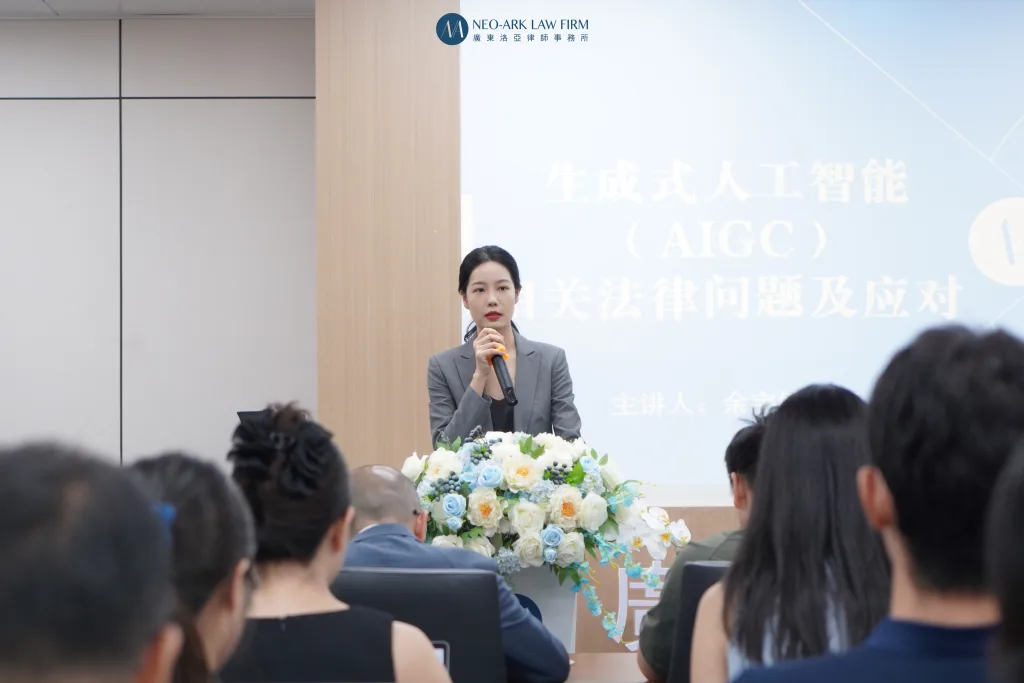
Navigating Generative AI: Attorney Yu Yuting Hosts Special Seminar on AIGC Legal Risks and Practical Strategies

On August 18, 2026, the Youth Working Committee of Guangdong Neo-Ark Law Firm hosted a specialized training seminar focused on the legal risks and compliance requirements of Generative Artificial Intelligence (AIGC). Hosted by Partner Chengwan Li, Vice Chair of the committee, the session featured a keynote analysis by Yuting Yu, Partner and Head of the International Legal Affairs Department at Neo-Ark.

The seminar systematically explored AI platform regulatory compliance, copyright ownership of AI-generated content, and emerging legal exposure across commercial applications like AI short dramas and AI-powered office workflows, grounding theoretical discussion in recent judicial precedents and domestic and international case law.

I. Core Legal Framework & Judicial Trends in AIGC

  • Dual-Track Analysis Model: The lecture structured AIGC legal practice along two primary axes: administrative regulations and judicial precedents. This approach mapped regulatory baselines alongside real-world court rulings to illustrate changing judicial attitudes toward AI innovation.
  • Platform Compliance & Data Governance: The session addressed core requirements for AI service providers, emphasizing algorithm safety, content filtering, data protection, and mandatory training data disclosure protocols required by current compliance frameworks.
  • Copyright Ownership & AI Output: The presentation examined judicial criteria for determining whether AI-generated works qualify for copyright protection, analyzing the degree of human creative input, prompt engineering standards, and original artistic contribution required to establish ownership.
  • High-Risk Application Scenarios: Practical risk analyses were provided for emerging commercial fields, including AI short dramas (AI短剧) and AI workflow tools, detailing key exposure areas such as personality rights infringement, commercial trade secret leaks, and copyright infringement in training datasets.

II. Expert Insights & Legal Professional Guidance

1. Applying Traditional Legal Principles to Emerging Tech

Attorney Yuting Yu emphasized that while AI technology introduces novel application scenarios, the underlying legal issues remain firmly grounded in established legal principles. The key challenge for practitioners lies in adapting core legal logic to rapid technological shifts.

2. Strategic Advice for Young Lawyers & Law Students

  • Maintain Sensitivity & Global Perspective: Young practitioners are encouraged to track technological developments, cultivate an international legal perspective, and actively connect AI compliance topics with their primary practice areas.
  • Avoid Over-Reliance on AI: For law students and emerging professionals, Yu highlighted the importance of leveraging AI tools productively while preserving independent analytical reasoning, encouraging researchers to challenge traditional frameworks and pursue innovative legal methodologies.

III. Commitment to Young Talent Development

Neo-Ark Law Firm’s Youth Working Committee remains dedicated to supporting the professional growth of emerging legal talent. By hosting targeted seminars on frontier legal issues, the committee continues to build an open, practical exchange platform that equips attorneys to navigate evolving regulatory landscapes effectively.

About the Author

Yu Yuting
Partner | NEO-ARK Law Firm

Lawyer Yu focuses on foreign-related litigation, cross-border disputes, commercial matters, and legal services for overseas individuals and businesses in China.

Email: [email protected]

About NEO-ARK Law Firm

NEO-ARK Law Firm provides legal services in foreign-related litigation, commercial disputes, family law, and cross-border legal matters, assisting both international and domestic clients throughout China.

2026-08-19

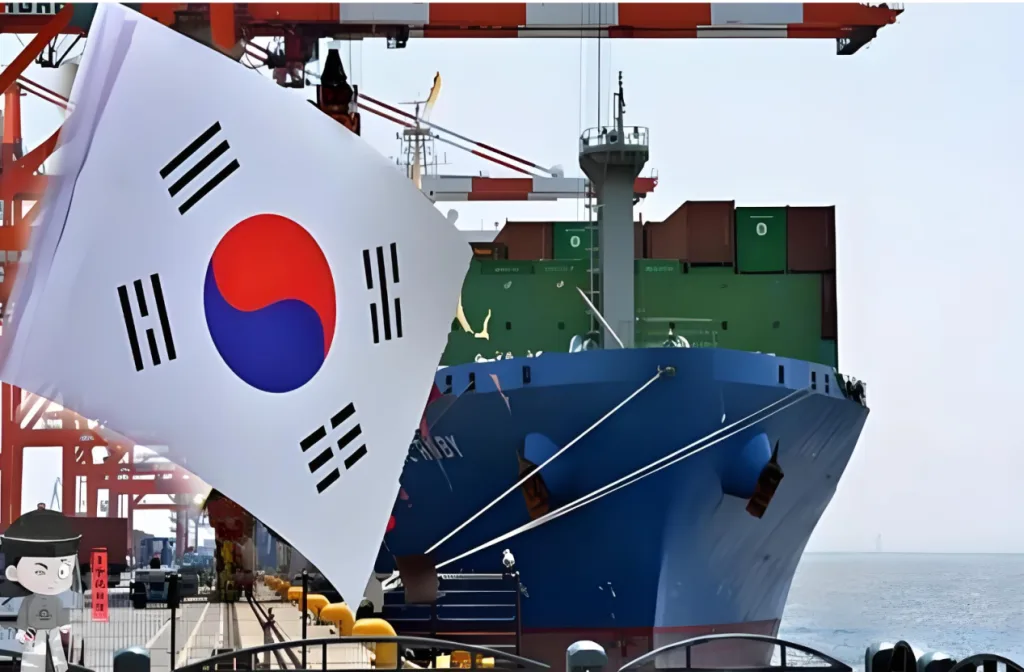
Legal Compliance Guide for Korean Businesses at the 140th Canton Fair 2026

In 2026, China–Korea economic and trade cooperation has deepened across the board. In January, South Korean President Lee Jae-myung made his first visit to China after taking office. The two sides signed 15 cooperation documents covering technological innovation, industrial collaboration, intellectual property, transportation and ecological environment, and food safety. More than 200 Korean entrepreneurs formed an economic delegation to accompany the visit. Negotiations on the second phase of the China–Korea Free Trade Agreement have accelerated. In April 2026, the two sides completed the 14th round of negotiations, with in-depth consultations on cross-border trade in services, investment, and financial services. Visa facilitation has been implemented, and there are currently more than 600 scheduled flights per week between the two countries. In the first quarter of 2026, total China–Korea merchandise trade reached RMB 701.69 billion, up 32% year on year.

(Source: Canton Fair official website)

The Canton Fair is the first window for Korean businesses to share in China’s dividends. In each of the past five sessions, about 8,000 Korean buyers attended. Leading companies such as Samsung Electronics and Lock&Lock have participated for more than 30 consecutive sessions. The 139th Canton Fair was successfully held from April 15 to May 5, with more than 32,000 exhibitors, including 279 leading procurement companies such as Samsung Electronics. The 140th Canton Fair (Autumn) will open on October 15, 2026. This is an unmissable opportunity for Korean businesses. This article examines the core legal compliance issues for Korean buyers and sellers in China trade.


I. Overview of China–Korea Trade

In 2025, bilateral imports and exports between China and Korea totaled RMB 2.37 trillion, up 1.7% year on year. China’s exports to Korea reached RMB 1.03 trillion, while imports from Korea reached RMB 1.34 trillion. Korea has been China’s second-largest trading partner for two consecutive years, accounting for 5.2% of China’s total foreign trade. In the first 11 months of 2025, China–Korea trade in electromechanical products reached RMB 1.43 trillion, up 5.9%, accounting for 67% of bilateral trade.

On the import side from Korea: electronic components grew by 9.9%, computer parts and accessories by 7.4%, and pharmaceutical materials and drugs by 8.9%. On the export side to Korea: electronic components grew by 10%, auto parts by 8.9%, the “new three” products (electric vehicles, lithium batteries, and photovoltaic products) by 12.4%, and medical instruments and equipment by 1.1%.

(Source: Sina Finance)


II. Key Legal Considerations for Contracting at the Canton Fair

Contracting at trade fairs moves quickly, but the faster the pace, the more important it is to hold the bottom line. The following four compliance actions must be implemented when signing contracts on site:

First, verify the counterparty’s signing qualifications. Request a copy of the business license and check whether the business scope includes trade or production. If necessary, entrust a professional institution to obtain a credit report.

Second, clarify payment terms, quality standards, and acceptance deadlines. Specify the payment method and deadline to avoid breach of contract caused by cross-border payment issues. Clearly cite specific national or industry standards, and agree on an acceptance period to avoid disputes caused by delays.

Third, pay attention to dispute resolution clauses. The contract should specify the applicable law and the dispute resolution method.

Fourth, make good use of on-site legal services. The Canton Fair has a “Legal Consultation” booth on site, where duty lawyers can provide immediate and effective legal advice. Companies may also engage their own legal team with cross-border service capabilities to provide contract review, business negotiation support, and other assistance.


III. Legal Compliance for Korean Exports to China: Semiconductors and Medical Aesthetic Devices

Korea’s exports to China are dominated by semiconductors, while medical aesthetic devices are a high-growth category. The following sections examine the core legal risks in these two industries.

(1) Semiconductors: Five Major Compliance Risks for Exports to China

Semiconductors are Korea’s largest export category. In the first four months of 2026, exports to China reached USD 32.3 billion, accounting for 29.3% of the industry’s total exports. Korean companies exporting to China must focus on the following compliance risks:

1. Origin determination. When exporting semiconductors to China, Korean companies should accurately determine the origin based on the specific product, processing techniques, and trade arrangements, and provide supporting documents such as certificates of origin, commercial invoices, purchase orders, and production and processing records. Incorrect declaration may lead to supplementary taxes, penalties, or cargo detention.

2. Equipment import licensing. Before importing semiconductor manufacturing equipment and components, companies should accurately determine the HS code based on the specific product model, technical parameters, and use, and verify whether it involves compulsory product certification, import licenses, dual-use item controls, inspection and quarantine, or other regulatory requirements. For products with unclear regulatory conditions, a professional compliance review should be completed before import.

3. New customs declaration rules. Since May 1, 2025, GACC Order No. 277 has been in effect, comprehensively revising the time limits and document requirements for import and export declaration. Many local customs authorities have implemented special inspections for semiconductor companies importing spare parts.

4. Rare earth export controls. In February 2025, China imposed export controls on key items such as tungsten, molybdenum, and indium. Exports with end uses involving chips at 14 nanometers and below require case-by-case approval, directly affecting Korean semiconductor companies’ access to raw materials.

5. Anti-dumping risk. China’s Ministry of Commerce has continued to impose anti-dumping duties on solar-grade polysilicon originating in Korea (initial rates of 2.4%–48.7% in 2014, adjusted to 4.4%–113.8% in 2017). The semiconductor sector may face similar risks in the future.

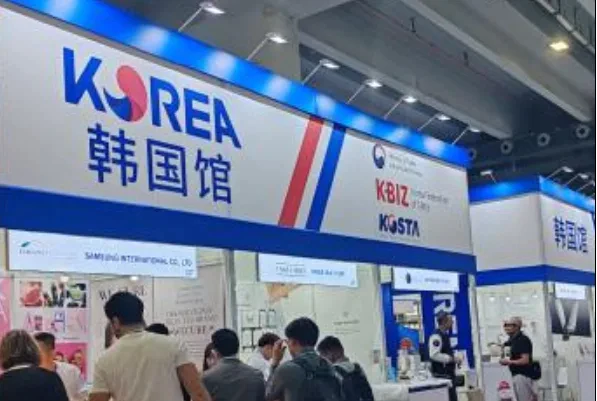
(Korea Pavilion at the Canton Fair – Source: Wuhan Institute of Design and Sciences)

(2) Medical Aesthetic Devices: Meeting China’s Compliance Threshold

Although medical aesthetic devices are smaller in export volume than semiconductors, Korea’s technical strength in the medical aesthetics industry has already penetrated Chinese consumer awareness through the consumer market. According to the 2025 Insight Report on China’s Medical Aesthetics Industry released by the China Association of Plastic and Aesthetic Surgeons, the proportion of Chinese people traveling abroad for medical aesthetics increased continuously from 2023 to 2025, with Korea remaining the top destination. In 2024, Korea received 261,000 Chinese medical aesthetics customers, up 132.4% year on year, and the number further climbed to about 620,000 in 2025.

End-consumer demand will inevitably flow upstream to device trade. For Korean medical aesthetic device companies hoping to enter the Chinese market, registration with the National Medical Products Administration (NMPA) is an unavoidable core threshold. Imported Class II and Class III devices must complete registration, appoint a domestic agent in China, and the agency agreement must be notarized in Korea and authenticated by the Chinese embassy or consulate in Korea, with joint liability clearly specified. Technical documents must include a China–Korea standards comparison table, and instructions and labels must be in Chinese and indicate the registration certificate number. Korean clinical trial data usually need to be supplemented with clinical evaluation data for the Chinese population, and the specific sample size requirements depend on the product risk level and review requirements. In 2025, skin-piercing devices and consumables such as skin booster injections were included in Class III medical device management, and the requirements have been fully implemented. Products without registration approval are prohibited from being marketed and sold. Customs conducts inspections of imported medical devices in accordance with the law, and non-compliant products are not permitted to be imported. In March of the same year, NMPA Announcement No. 30 allowed imported registration holders to use original application materials for domestic registration, providing Korean companies with a new path for localized production. Compliance speed determines market opportunity.


IV. Compliance Risks in Other Key Industries

1. Cosmetics: Since May 1, 2025, a full version of the safety assessment system has been fully implemented for cosmetic registration and filing, and companies may no longer use simplified reports. The requirements for raw material toxicological data are extremely high, and a domestic responsible person must be designated to complete filing or registration.

2. Electronic components: Pay attention to intellectual property compliance. Exported products must not infringe Chinese patent rights. Make good use of RCEP and China–Korea FTA rules of origin to choose the most favorable tariff preferences. Under the RCEP framework, 86% of products between the two sides enjoy zero tariffs.

3. Auto parts: Some accessories require compatibility certification. Since the China–Korea FTA entered into force in 2015, ten rounds of tariff reductions have been completed, with auto parts and chemical products benefiting significantly. Certificates of origin should be applied for early.


(Semiconductor-related products – Source: Canton Fair official website)

V. Practical Guide to Cross-Border Dispute Resolution between China and Korea

(1) Typical Cases and Lessons

Case 1 (Equity): A shareholder capital contribution dispute involving a Korean health industry group. The parties established a cross-border cross-shareholding structure combining “capital + technology.” Due to differences in corporate governance philosophy, they reached a deadlock and litigated against each other domestically and overseas for more than ten years, with total claims of several hundred million yuan. The case was ultimately retried and mediated by the Supreme People’s Court. Lesson: Cross-border equity structures must be designed carefully, and evidence preparation must be systematic.

Case 2 (Insurance claim): A fire insurance claim involving a Korean construction company in China. After the 2013 fire at SK Hynix’s Wuxi plant, Chinese insurance companies paid USD 860 million in compensation and sought recovery from the construction contractor. The Supreme Court of Korea ultimately ordered the contractor’s parent company to pay KRW 12.9 billion (approximately RMB 66.82 million) plus overdue interest to five Chinese insurance companies. Lesson: Companies operating in China must carry adequate insurance and clarify claim clauses.

Case 3 (Mediation): A cross-border joint venture dispute involving Korea’s ID Health Industry Group. In 2016, it established a joint venture with a Chinese company to develop the medical aesthetics market. Disputes arose due to differences in business philosophy. After ten years of litigation and arbitration involving RMB 310 million, the case was heard and mediated by the International Commercial Court of the Supreme People’s Court in 2025. Lesson: Litigation and mediation and other diversified resolution mechanisms can save time and cost.

(2) Choice of Dispute Resolution: Arbitration Is Recommended

Regarding cross-border recognition and enforcement, arbitration has clear advantages. Both China and Korea are contracting states to the 1958 New York Convention, and arbitral awards can be directly applied for recognition and enforcement in the other country, with simpler procedures and shorter timeframes. CIETAC awards have already been successfully recognized and enforced by the Busan District Court in Korea. China and Korea have not signed a dedicated bilateral treaty on the mutual recognition and enforcement of court judgments. In addition, in 2025, China Arbitration Week was held in Seoul for the first time, and CIETAC and the Korean Commercial Arbitration Board (KCAB) reached a cooperation consensus to promote the alignment of arbitration services between the two countries, further strengthening the convenience of the arbitration path.


Conclusion

The Canton Fair is a strategic window for Korean businesses to enter China. Underlying the opportunities, legal compliance is the credit foundation for long-term cooperation. We wish Korean businesses steady and sustained progress and shared success at the 140th Canton Fair.

About the Author

Yu Yuting
Partner | NEO-ARK Law Firm

Lawyer Yu focuses on foreign-related litigation, cross-border disputes, commercial matters, and legal services for overseas individuals and businesses in China.

Email: [email protected]

About NEO-ARK Law Firm

NEO-ARK Law Firm provides legal services in foreign-related litigation, commercial disputes, family law, and cross-border legal matters, assisting both international and domestic clients throughout China.

2026-08-17

Scroll to Top

+86 13503030053

BackToTop

Inquiry Inquiry Email Email Tel Tel

Request A Quote

×
Please enable JavaScript in your browser to complete this form.