...

News

When Offshore Trusts Fail: Key Principles for Effective Asset Protection in the Hui Ka Yan and Zhang Lan Cases

The first-instance criminal ruling against Evergrande Group and Hui Ka Yan resulted in global asset recovery actions targeting offshore trusts. Meanwhile, Singapore courts previously pierced Zhang Lan’s family trust, placing over $100 million directly within reach of creditor execution.

These high-profile cases highlight a critical question for high-net-worth individuals and corporate executives: Why do certain offshore trust structures successfully shield assets while others fail under judicial scrutiny? This legal analysis breaks down the background, judicial enforcement mechanisms, and underlying reasons for failure in both benchmark cases, establishing five core compliance principles for structuring secure offshore asset protection trusts.

(Image Source: People's Court Newspaper / Supreme People's Court Media)

I. The Hui Ka Yan Case: Why Offshore Structures Cannot Block Judicial Recovery

1. Case Background

On August 20, 2026, the Shenzhen Intermediate People's Court delivered its first-instance criminal judgment against Evergrande Group, Evergrande Real Estate, and Hui Ka Yan. Hui was sentenced to life imprisonment for multiple corporate crimes, stripped of political rights for life, and subjected to complete personal asset confiscation alongside mandatory recovery of illegal proceeds. Liquidators in Hong Kong synchronized global asset recovery efforts across multiple offshore jurisdictions.

(Image Source: Baidu Baike)

2. Judicial Enforcement Actions

  • Domestic Level: The Shenzhen Intermediate People's Court established the legal foundation for cross-border recovery by ordering the confiscation of Hui’s personal assets and the recovery of all illegal proceeds.
  • Offshore Level: Hong Kong liquidators initiated a three-step recovery strategy:
    1. Obtaining Worldwide Freezing Orders (WFOs) to restrict asset transfer and disposition.
    2. Procuring disclosure orders forcing full disclosure of global bank accounts, equity holdings, and real estate.
    3. Applying for receivership and asset liquidation across relevant offshore jurisdictions.

3. Core Reasons for Trust Failure

  • Illegitimate Asset Provenance: Trust structures alter ownership governance, not the underlying legal character of an asset. Assets derived from criminal conduct or illegal proceeds remain subject to statutory recovery regardless of how many offshore entities or jurisdiction layers envelope them.
  • Cross-Border Judicial Assistance: Criminal confiscation orders pair directly with offshore freezing and receivership mechanisms. Cross-border judicial assistance between mainland China, Hong Kong, and offshore jurisdictions enables courts to trace ultimate beneficial ownership and execute asset recovery.
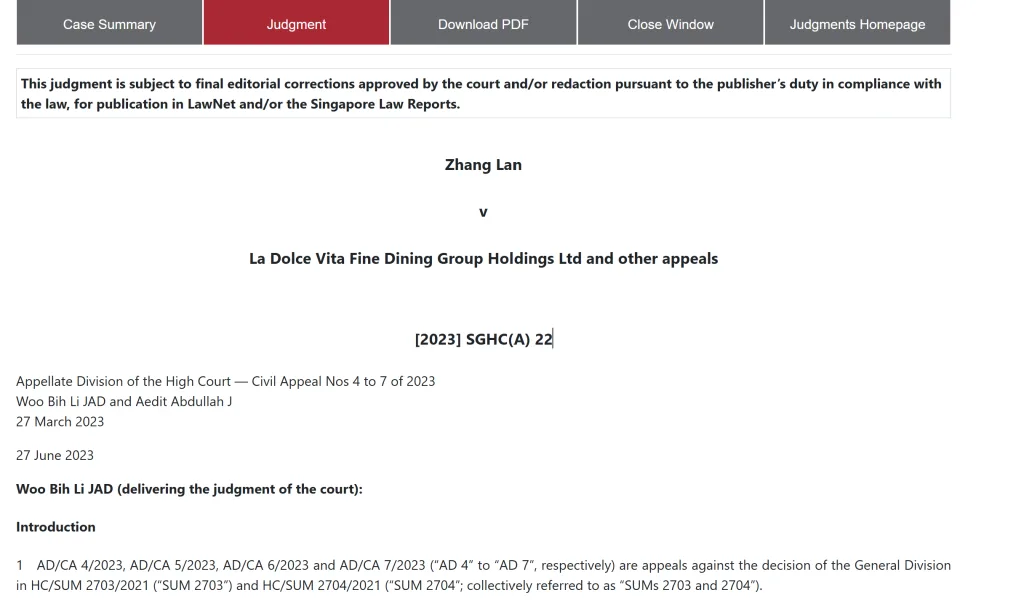
(Image Source: elitigation.sg)

II. The Zhang Lan Case: Failure Through Lack of Trust Independence

1. Case Background

Following equity transaction disputes involving South Beauty, Zhang Lan incurred substantial personal debt. Transaction proceeds totaling approximately $142 million flowed through Zhang Lan’s personal bank account in Hong Kong into SETL, a British Virgin Islands (BVI) company held within her family trust structure (Success Elegant Trust). Zhang argued these funds belonged to the trust and were immune from creditor enforcement.

2. Judicial Rulings & Enforcement

Creditors traced the fund flows and applied to the General Division of the High Court of Singapore for enforcement. In 2022, after examining transaction logs and operational realities, the Singapore High Court ruled that the account funds remained beneficially owned by Zhang Lan personally and appointed receivers over the accounts. The Singapore Court of Appeal affirmed the decision in 2023.

3. Core Reasons for Trust Failure

  • Failure of True Divestment: While funds transferred nominally from a personal account to a trust-owned BVI company, Zhang Lan retained direct operational authority over account disbursements.
  • Breach of Fiduciary Boundaries: A valid trust requires independent management by the trustee. Post-settlement interventions—such as issuing direct payment instructions for personal real estate acquisitions—served as evidence that Zhang Lan never surrendered beneficial control, rendering the structure an illusory trust.

III. Compliance Roadmap for Secure Offshore Trusts

Cayman Islands jurisdiction (由 AI 生成)

Cayman Islands jurisdiction.: Getty Images

  1. Ensure Legitimate Asset Origin: Trust asset protection applies strictly to legally acquired wealth. Comprehensive Know-Your-Transaction (KYT) and tax compliance audits must precede settlement. Assets subject to pending litigation, criminal exposure, or encumbrances must be excluded.
  2. Execute True Delivery & Control Transfer: Legal ownership, managerial control, and disposition rights must transfer fully to the licensed trustee. Settlors must maintain absolute separation between personal accounts and trust assets to avoid asset commingling.
  3. Define Settlor Powers Prudently: Settlors may retain limited rights (e.g., advisory investment roles, power to replace trustees, or appointing a protector). However, retaining unconditional revocation rights or direct operational control over trust capital invalidates the protective shield.
  4. Establish Structures Pre-Crisis: Trusts are prospective risk-management tools. The optimal setup window is during periods of financial solvency, stable business operations, and absent pending claims. Settlements executed during insolvency or active litigation face immediate voidance under fraudulent conveyance laws.
  5. Maintain Ongoing Operational Compliance: Courts evaluate trust operations across their full lifecycle. Trustees and trust protectors must retain complete records of trustee resolutions, investment decisions, and distribution logs while adapting to evolving global tax and anti-money laundering (AML) standards.

Conclusion

Offshore trust security relies not on secrecy tags or complex multi-tiered corporate layers, but on legitimate asset provenance, genuine control transfer, clear fiduciary boundaries, and compliant ongoing administration. Professional wealth structuring requires evaluating asset eligibility prior to entry, establishing precise legal boundaries during settlement, and ensuring the architecture operates strictly under trust principles throughout its lifecycle.

About the Author

Yu Yuting
Partner | NEO-ARK Law Firm

Lawyer Yu focuses on foreign-related litigation, cross-border disputes, commercial matters, and legal services for overseas individuals and businesses in China.

Email: [email protected]

About NEO-ARK Law Firm

NEO-ARK Law Firm provides legal services in foreign-related litigation, commercial disputes, family law, and cross-border legal matters, assisting both international and domestic clients throughout China.


Recommend
Can Using a Public Figure’s Photo Online Lead to a Portrait Rights Claim?

Overview

Using a person's photograph in corporate online content can create unexpected legal risks, particularly when the person is a public figure and the photograph was obtained from a publicly accessible source.

In this China portrait rights dispute, a company published an article through its corporate WeChat account that included photographs of a former public figure. The individual subsequently brought a lawsuit alleging infringement of portrait rights and sought monetary compensation, recovery of rights-protection expenses and a public apology.

The company disputed the alleged infringement. It argued that the article was a positive feature about the individual's career and achievements, the photographs had been obtained from publicly available online sources, and the publication did not distort, defame or otherwise misuse the individual's image. The company also challenged the extent of the claimed damages and the requested form of public apology.

Importantly, the case did not end with a court finding that the company had infringed the individual's portrait rights. Following the court's mediation, the parties reached a settlement that brought the dispute to a final conclusion without an infringement judgment.

The case illustrates an important risk-management issue for companies operating websites, WeChat accounts and other digital media: the fact that an image is publicly available online does not by itself eliminate portrait-rights risk, and the appropriate response to a claim may involve both substantive defenses and settlement strategy.


Case Snapshot

ItemDetails
Case TypeIntellectual Property / Portrait Rights Dispute
JurisdictionMainland China
CourtShanghai Putuo District People's Court
IndustryCommercial / Consumer Business
Dispute TypeAlleged unauthorized use of a person's photograph in corporate online content
Original Claim ValueApproximately RMB 160,000
Main ClaimsCompensation, reasonable rights-protection expenses and public apology
Key Legal IssueWhether the publication of publicly available photographs constituted an actionable portrait-rights infringement
Key StrategySubstantive defense + litigation risk control + judicial mediation
Final ResolutionSettlement through court mediation; no judicial finding of infringement
AttorneyYu Yuting / Sun Jianhui
Law FirmNEO-ARK Law Firm

The Core Legal Issues

1. Does using a publicly available photograph automatically constitute portrait-rights infringement?

The central issue was not simply whether the photograph had been used, but whether the circumstances of its use gave rise to legal liability.

The company argued that the photographs were obtained from publicly accessible online sources and were used in an article describing the individual's career and achievements.

The defense therefore distinguished between:

  • the existence of a photograph online;
  • the circumstances in which the photograph was obtained;
  • the purpose and context of publication;
  • whether the image was altered or presented in a derogatory manner; and
  • whether the publication created a commercial association or other legally significant use.

This distinction was important because online availability should not be treated as an automatic license to use a person's image for any purpose. At the same time, the legal assessment of an alleged portrait-rights infringement depends on the specific circumstances of the publication.

2. Does the use of a public figure's image receive greater tolerance?

The claimant was a public figure, which formed part of the company's defense.

The company argued that the article was a positive presentation of the individual's career and did not contain defamatory, degrading or misleading content.

The defense therefore focused on the context and nature of the publication, rather than relying solely on the claimant's public status.

This is an important distinction for businesses: being a public figure does not mean that a person's portrait can be freely used without legal consideration.

Instead, the purpose, presentation, context and potential commercial implications of the use should all be assessed.

3. How should a company respond when the claimant seeks both compensation and a public apology?

The claimant sought not only financial compensation and rights-protection expenses, but also a public apology in a widely circulated newspaper.

From the defendant's perspective, the potential risk therefore extended beyond financial liability.

A judgment requiring a public apology could potentially create additional reputational and commercial consequences for the company.

The defense accordingly challenged both the alleged infringement and the proportionality of the requested remedies.

This allowed the litigation strategy to focus not only on the amount of potential compensation, but also on preventing an unnecessarily broad form of public remedy.


Legal Strategy

IssueApproach
Alleged portrait-rights infringementChallenge whether the specific use of the photograph constituted actionable infringement
Source of photographsEstablish that the images had been obtained from publicly accessible online sources while avoiding reliance on this fact alone
Publication contextEmphasize the positive, non-derogatory nature of the article and the context in which the photographs were used
Commercial-use allegationChallenge the asserted connection between the publication and commercial exploitation of the claimant's portrait
DamagesChallenge the basis and reasonableness of the claimant's compensation demand
Public apologyChallenge the necessity and proportionality of the requested form of public remedy
Overall riskSeek a resolution that would avoid an adverse infringement judgment and minimize the company's financial and reputational exposure

The case therefore required more than a simple argument that the photographs were “found online.” The strategy addressed the legal nature of the use, publication context, alleged commercial purpose, requested remedies and overall litigation risk.


Settlement Strategy and Risk Control

An important feature of this case was that the objective was not merely to minimize the amount eventually paid.

The company also sought to avoid a formal judicial finding of infringement.

This distinction can be significant in intellectual property and personality-rights disputes.

A court judgment expressly finding infringement may create additional reputational consequences and may become relevant to future disputes or business communications.

Through active defense and court-led mediation, the parties ultimately reached a settlement.

The settlement:

  • resolved the dispute on a one-time basis;
  • did not contain a judicial finding that the company had infringed the claimant's portrait rights;
  • did not require the company to issue the originally requested public apology; and
  • brought the dispute to a final resolution.

For businesses, this demonstrates why settlement structure can be as important as settlement amount.


Outcome

The case was ultimately resolved through court mediation rather than an infringement judgment.

Under the settlement arrangement, the company made a one-time payment to resolve the financial aspects of the dispute, with the final amount being substantially lower than the claimant's original demand.

The company was not required to publish the requested public apology.

The mediation agreement also provided for a comprehensive resolution of the dispute, preventing the parties from continuing to pursue additional claims arising from the same matter.

For confidentiality reasons, the specific settlement amount and other detailed financial terms are not disclosed in this case study.


Why This Case Matters

Publicly available images still require legal review

Businesses should not assume that an image can be freely used simply because it can be found through a search engine or on a public website.

The source of an image, the identity of the person depicted, the purpose of publication and the context of use should all be considered before publication.

Portrait rights and copyright are different issues

A company may face more than one type of legal risk when publishing a photograph.

Copyright concerns may relate to the ownership or licensing of the photograph itself, while portrait-rights issues concern the rights and interests of the person depicted.

A compliance review should therefore consider both dimensions where appropriate.

Public figures are not automatically free to use

The fact that a person is well known does not eliminate portrait-rights considerations.

The purpose and manner of use remain important.

Settlement can protect against reputational consequences

In a personality-rights dispute, avoiding an adverse judicial finding may be commercially important.

A negotiated resolution can sometimes provide a more controlled outcome than allowing the dispute to proceed to a final judgment.

The form of relief matters

A claimant's requested compensation is only one aspect of the litigation risk.

Requests for public apologies, publications or other forms of corrective action may create additional business and reputational consequences.

Companies should therefore assess the full range of requested remedies, not just the monetary claim.


Frequently Asked Questions

Can a company use a public figure's photograph in a corporate WeChat article?

Not necessarily. The fact that an image is publicly accessible does not automatically mean that a company has unrestricted rights to use the person's portrait.

The purpose, context, manner and potential commercial implications of the use should be reviewed.

Does using a photograph from the internet eliminate portrait-rights liability?

No. An image being available online does not by itself establish that its use is legally permissible.

Businesses should separately consider the rights of the photographer or copyright owner and the portrait rights of the person depicted.

Are public figures treated differently in portrait-rights disputes?

A person's public status may be relevant to the legal assessment, but it does not mean that the person has no portrait rights.

The circumstances and purpose of the specific use remain important.

Can a company avoid a public apology through settlement?

Potentially. If the parties reach a settlement before judgment, the final resolution may differ significantly from the claimant's original requests.

In this case, the dispute was resolved through mediation without the company being required to issue the requested public apology.

Is mediation appropriate in an intellectual property or portrait-rights dispute?

It can be, particularly where the parties want to control financial exposure, reputational risk and the scope of any public-facing remedy.

The appropriate strategy depends on the facts and the client's commercial objectives.


Key Takeaways

For companies publishing photographs of individuals through websites, WeChat accounts, social media or other digital channels:

  1. Do not assume that publicly available photographs are automatically free to use.
  2. Assess portrait rights separately from copyright and image-licensing issues.
  3. Consider the purpose, context and manner of publication.
  4. For public figures, assess whether the use creates a commercial association or other legally significant implication.
  5. When facing a claim, challenge both liability and the scope of the remedies being requested.
  6. In appropriate cases, settlement can help control both financial and reputational risk.
  7. A settlement that avoids an infringement finding may be materially different from simply negotiating the amount of compensation.

This case demonstrates that effective litigation strategy in a portrait-rights dispute is not limited to defending the alleged infringement itself. Controlling the form of the final resolution can be equally important to the client's long-term commercial interests.


About the Author

Yu Yuting
Partner | NEO-ARK Law Firm

Lawyer Yu focuses on foreign-related litigation, cross-border disputes, commercial matters, and legal services for overseas individuals and businesses in China.

Email: [email protected]

About NEO-ARK Law Firm

NEO-ARK Law Firm provides legal services in foreign-related litigation, commercial disputes, family law, and cross-border legal matters, assisting both international and domestic clients throughout China.

2026-09-01

Can a 0.04% Daily Late-Payment Penalty Be Enforced in China?

Overview

A contractual late-payment penalty can become a significant issue in a commercial contract dispute, particularly when a client fails to pay for completed professional or consulting services.

In this China service contract case, a real estate consulting company completed the contracted consulting work, delivered the required report and fulfilled its contractual obligations. The client accepted the work but failed to pay the agreed service fee.

The contract contained a 0.04% daily late-payment penalty for overdue payment, together with provisions addressing litigation-related expenses. When the consulting company commenced proceedings, the defendant argued that the contractual penalty was excessive and should be reduced.

The court ultimately supported the contractual payment obligation and the agreed late-payment penalty, as well as the relevant recoverable litigation-related costs.

The case demonstrates an important practical issue in Chinese commercial litigation: a well-drafted payment and default clause can provide a strong basis for recovering both the underlying contractual debt and agreed remedies when the counterparty fails to perform.


Case Snapshot

ItemDetails
Case TypeCommercial Contract Dispute
JurisdictionMainland China
CourtPeople's Court in Guangdong
IndustryReal Estate Consulting
Contract TypeConsulting Services Agreement
Dispute ValueApproximately RMB 200,000
Main ClaimUnpaid consulting service fee
Additional ClaimsContractual late-payment penalty and recoverable litigation-related costs
Key Legal IssueWhether the agreed late-payment penalty could be enforced
Key StrategyContract enforcement and pre-judgment property preservation
AttorneyYu Yuting / Sun Jianhui
Law FirmNEO-ARK Law Firm

The Core Legal Issues

1. Can a consulting company recover unpaid service fees after completing the contracted work?

The first issue was whether the consulting company could establish a clear contractual right to payment.

The company had completed the agreed consulting work and delivered the required report. The client had accepted the work but did not make the agreed payment.

The legal analysis therefore focused on the contractual relationship and the sequence of performance:

contract → performance → delivery and acceptance → payment obligation → non-payment.

Establishing this contractual chain allowed the claim to be presented as a straightforward breach of contract and payment dispute, rather than a broader disagreement over the quality or scope of the consulting services.

2. Can a 0.04% daily late-payment penalty be enforced?

This was the central legal issue in the case.

The parties had expressly agreed that overdue payment would trigger a 0.04% daily late-payment penalty.

The defendant challenged the clause and argued that the penalty should be reduced.

The court ultimately supported the contractual penalty.

For businesses entering into commercial service agreements in China, this illustrates why payment and default provisions should be drafted with care. A late-payment clause can become an important recovery mechanism when the counterparty delays payment.

A well-drafted clause should clearly address:

  • the payment deadline;
  • the event triggering the penalty;
  • the calculation basis;
  • the applicable daily or periodic rate; and
  • the relationship between the penalty and other contractual remedies.

3. Can contractual litigation-cost provisions help recover legal expenses?

The contract also contained provisions concerning certain litigation-related expenses.

The consulting company therefore sought recovery of the relevant costs in addition to the outstanding service fee and late-payment penalty.

The court supported the applicable litigation-related claims.

This highlights a broader contract-drafting point: dispute-resolution provisions should be considered at the contract stage, not only after a dispute arises.

Where a contract clearly allocates certain costs and the relevant legal requirements are satisfied, those provisions may become part of the creditor's recovery strategy.


Legal Strategy

IssueLegal Approach
Unpaid consulting feeEstablish contractual performance, delivery and the client's payment obligation
Late-payment penaltyRely on the express contractual clause and establish the occurrence of payment default
Defendant's penalty-reduction argumentDefend the contractual arrangement based on the wording and circumstances of the agreement
Litigation-related expensesRely on the contractual allocation of recoverable costs
Enforcement riskConsider property preservation at the beginning of litigation
Recovery planningTreat preservation and enforcement as part of the litigation strategy rather than a separate post-judgment issue

The case was therefore handled as an enforcement-oriented commercial litigation matter, rather than merely as a claim for an unpaid invoice.


Why Property Preservation Was Important

Winning a commercial lawsuit does not necessarily guarantee successful recovery.

Where a debtor's assets may be transferred or become difficult to locate during litigation, a creditor may face additional enforcement risks even after obtaining a favorable judgment.

In this case, the consulting company applied for pre-judgment property preservation when commencing the proceedings.

The preservation measure helped secure assets relevant to the claim and strengthened the creditor's position for subsequent enforcement.

For companies pursuing commercial claims in China, property preservation can therefore be an important part of the overall litigation strategy, particularly where there are concerns about the counterparty's financial position or ability to satisfy a future judgment.


Outcome

The court confirmed the validity of the consulting agreement and found that the consulting company had fulfilled its contractual obligations while the client had failed to make the required payment.

The court supported:

  • recovery of the outstanding consulting service fee;
  • the agreed 0.04% daily late-payment penalty;
  • the applicable contractual litigation-related expenses; and
  • relevant court-approved preservation and litigation costs.

The defendant's request to reduce the contractual late-payment penalty was not accepted.

The property preservation measure also provided additional protection for the creditor's eventual recovery.

For confidentiality reasons, the specific amounts awarded by the court are not disclosed in this case study.


Why This Case Matters

This case demonstrates several recurring issues in Chinese commercial contract litigation.

Contract drafting matters

A clear payment clause and a clearly defined late-payment mechanism can significantly strengthen a creditor's position when a dispute arises.

Performance should be documented

For professional service providers, establishing that the contracted work was completed and delivered is often essential.

Contractual deliverables, acceptance records, invoices and relevant communications can collectively establish the payment obligation.

Contractual penalties should be assessed before litigation

A contractual penalty does not automatically guarantee recovery at the stated rate in every dispute.

Its wording, the circumstances of the breach and applicable Chinese legal rules all need to be considered.

In this case, however, the agreed 0.04% daily penalty was supported by the court.

Preservation can protect the value of a claim

A creditor may have a strong legal claim but still encounter enforcement difficulties if the debtor's assets cannot be located or have been transferred.

Early consideration of property preservation can therefore be an important component of commercial litigation planning.


Frequently Asked Questions

Can a Chinese court enforce a contractual late-payment penalty?

A contractual late-payment clause may be enforceable when properly agreed and applicable to the breach. However, the final recoverable amount depends on the wording of the contract, the circumstances of the dispute and applicable Chinese law.

In this case, the court supported the agreed 0.04% daily penalty.

Can a company recover unpaid consulting fees in China?

Yes. A consulting company may bring a contractual payment claim when it can establish the agreement, its contractual performance, the client's payment obligation and the client's failure to pay.

Can contractual litigation expenses be recovered in China?

Potentially. Recovery depends on the contract and applicable legal rules. Where the parties have agreed that certain litigation-related expenses may be recoverable, that provision can become an important part of the claim.

What is property preservation in Chinese litigation?

Property preservation is a court-ordered measure intended to prevent relevant assets from being transferred, concealed or otherwise made unavailable for enforcement while litigation is pending.

Should a creditor consider property preservation before judgment?

Where there is a meaningful enforcement risk, early preservation may be worth considering. The appropriate approach depends on the debtor's assets, the value of the claim and the circumstances of the dispute.


Key Takeaways

For companies seeking to recover unpaid contractual payments in China:

  1. Draft payment and late-payment provisions precisely.
  2. Maintain clear records showing contractual performance and acceptance.
  3. Review the enforceability of contractual penalty clauses before litigation.
  4. Address litigation-related expenses when drafting the contract.
  5. Assess property preservation at the beginning of a dispute where appropriate.
  6. Treat enforcement planning as part of the litigation strategy from the outset.

A commercial contract dispute is therefore not only about proving that money is owed. Effective recovery may also depend on contract drafting, proof of performance, protection of assets and enforcement planning.


About the Author

Yu Yuting
Partner | NEO-ARK Law Firm

Lawyer Yu focuses on foreign-related litigation, cross-border disputes, commercial matters, and legal services for overseas individuals and businesses in China.

Email: [email protected]

About NEO-ARK Law Firm

NEO-ARK Law Firm provides legal services in foreign-related litigation, commercial disputes, family law, and cross-border legal matters, assisting both international and domestic clients throughout China.

2026-08-28

Seven Neo-Ark Attorneys Appointed to the 11th-Term Work Committees of the Guangzhou Lawyers Association

Recently, the Guangzhou Lawyers Association (GLA) conducted the application and selection process for supplemental members of its 11th-Term Work Committees and certain Professional Committees.

Following the procedures of application, review, selection, and deliberation by the President’s Council and the Board of Directors, seven attorneys from Guangdong Neo-Ark Law Firm were selected as supplemental members of the 11th-Term Work Committees of the Guangzhou Lawyers Association.

Supplemental Members of the Work Committees

Foreign-related Affairs Work Committee

Yuting Yu (余宇婷)

Practice Areas: Foreign-related Disputes; Civil and Commercial Litigation; Criminal Defense; Corporate Legal Counsel

Practice Research and Training Work Committee

Jianhui Sun (孙建辉)

Practice Areas: Construction Engineering; Criminal Defense

Work Committee for Disciplinary Action against Member Violations

Chengwan Li (李成万)

Practice Areas: Legal Counsel; Banking and Finance; Labor and Social Security; Corporate and M&A Matters; Construction; Real Estate

Industry Dispute Resolution and Mediation Work Committee

Qing Yao (姚青)

Practice Areas: Civil and Commercial Litigation and Arbitration; Labor Disputes; Matrimonial and Family Law; Ongoing Corporate Legal Counsel

Finance and Asset Management Work Committee

Zi Cai (蔡梓)

Practice Areas: Tax Administrative Reconsideration and Administrative Litigation; Tax-related Criminal Defense; Ongoing Corporate Tax and Legal Counsel; Bankruptcy and Distressed Assets; Tax Audit Response

Culture, Sports and Member Welfare Work Committee

Xingming Yu (于兴铭)

Practice Areas: Civil and Commercial Disputes; Matrimonial and Family Disputes; Inheritance and Estate Disputes; Family Wealth Succession Planning; Corporate Legal Disputes; Corporate Legal Counsel; Housing Sale and Purchase Contract Disputes

Culture, Sports and Member Welfare Work Committee

Kaiyang Sun (孙楷洋)

Practice Areas: Corporate Legal Counsel Services; Construction; Labor Disputes; Matrimonial and Family Law; Civil and Commercial Dispute Resolution

The supplemental appointments further strengthen Neo-Ark Law Firm’s participation in the self-regulation and professional development of the legal profession, reflecting the firm’s commitment to industry affairs and the professional expertise of its attorneys.

About the Author

Yu Yuting
Partner | NEO-ARK Law Firm

Lawyer Yu focuses on foreign-related litigation, cross-border disputes, commercial matters, and legal services for overseas individuals and businesses in China.

Email: [email protected]

About NEO-ARK Law Firm

NEO-ARK Law Firm provides legal services in foreign-related litigation, commercial disputes, family law, and cross-border legal matters, assisting both international and domestic clients throughout China.

2026-08-24

Can a Company Recover Unpaid Consulting Fees and Contractual Penalties? A China Service Contract Dispute

Overview

An investment consulting company provided project positioning and consulting services for a resort development project under a written service agreement.

The consulting company completed and delivered the agreed final report, but the client failed to pay the contractual service fee despite repeated demands for payment.

The dispute raised several practical issues commonly encountered in commercial service contracts:

  • Whether the service provider had fully performed its contractual obligations;
  • Whether the agreed daily penalty for late payment was enforceable;
  • Whether contractual provisions requiring the losing party to bear legal and related costs could be enforced;
  • How a service provider can protect its ability to recover a judgment debt when the counterparty refuses to pay.

Representing the consulting company, Yu Yuting, Attorney at NEO-ARK Law Firm, pursued both the substantive claims and the necessary asset-preservation and enforcement measures.

The court ultimately ordered the resort investment company to pay the outstanding service fees, contractual penalties, legal fees and guarantee-related costs. After the judgment became effective, enforcement measures resulted in the defendant's bank funds being seized and transferred to the client.

Case Snapshot

ItemDetails
Practice AreaCommercial Litigation & Contract Disputes
Case TypeService Contract Dispute
JurisdictionGuangzhou, China
ClientInvestment Consulting Company
CounterpartyResort Investment Company
Core IssuesUnpaid Consulting Fees, Contractual Penalties, Legal Fees, Property Preservation and Enforcement
Dispute ValueApproximately RMB 300,000
CourtGuangzhou Haizhu District People's Court
Key OutcomeContract Fees, Contractual Penalties and Litigation-Related Costs Recovered
EnforcementBank Funds Seized and Directly Transferred
Lead LawyerYu Yuting / Sun Jianhui
Law FirmNEO-ARK Law Firm

Client's Situation

1. Consulting Services Were Completed but Payment Was Withheld

In December 2020, the parties entered into a Project Positioning Report Special Research and Consulting Services Agreement.

Under the agreement, the consulting company was engaged to provide positioning and consulting services for a resort project.

The agreed service fee was RMB 250,000.

The contract provided that payment would be made within 15 working days after the final report had been completed, delivered and accepted.

The consulting company completed the report and delivered it as agreed.

However, the resort investment company failed to make the contractual payment.


2. The Contract Contained a Late-Payment Penalty

The agreement provided for a contractual penalty of 0.04% per day for overdue payment.

It also contained a provision under which the losing party would bear litigation-related costs, including legal fees.

After repeated demands for payment produced no result, the consulting company commenced litigation before the Guangzhou Haizhu District People's Court.


Legal Strategy

Legal IssueStrategy
Contract performanceEstablish that the consulting company had completed and delivered the agreed services
Outstanding service feesEnforce the contractual payment obligation
Contractual penaltyDefend the agreed daily penalty rate against the defendant's request for reduction
Legal and related costsRely on the contractual cost-allocation provision
Asset preservationApply for preservation of the defendant's bank assets during litigation
Judgment enforcementPursue direct enforcement against the preserved funds after judgment

Property Preservation and Enforcement

1. Asset Preservation Was Initiated at the Litigation Stage

Because the defendant had failed to make payment despite repeated demands, the consulting company did not wait until the end of the litigation to consider enforcement risks.

A property preservation application was filed together with the lawsuit.

The court subsequently approved the preservation and froze approximately RMB 298,000 in the defendant's bank funds.

This measure helped prevent the relevant assets from becoming unavailable for enforcement.


2. Judgment Was Enforced Through the Preserved Funds

After the judgment became effective, the defendant still did not voluntarily comply.

The consulting company therefore applied for compulsory enforcement.

Because the relevant bank funds had already been preserved, the court was able to directly seize and transfer the preserved amount through the enforcement process.

After deduction of enforcement costs, approximately RMB 300,000 was ultimately returned to the client.

The case therefore achieved actual recovery rather than merely obtaining a paper judgment.


Why This Case Matters

For consulting companies and other service providers, obtaining a favourable judgment is only one part of commercial dispute resolution.

The more practical question is often:

Can the judgment actually be enforced and the money recovered?

This case demonstrates the value of combining contractual rights with procedural measures.

A well-drafted service contract can provide a basis for claiming:

  • Outstanding service fees;
  • Contractual late-payment penalties;
  • Legal fees where contractually recoverable;
  • Other agreed litigation-related costs.

At the same time, timely property preservation can materially improve the prospects of recovering the judgment debt when the counterparty refuses to pay voluntarily.

For companies providing consulting, investment advisory, project research or other professional services, the case highlights the importance of considering contract drafting, dispute resolution and enforcement strategy together.


Frequently Asked Questions

Can a consulting company recover unpaid fees if the client refuses to pay after receiving the final report?

Yes, where the service provider can establish that it performed the contractual obligations and the contractual payment conditions have been satisfied.

The specific payment terms, acceptance mechanism and evidence of performance are important.

Can a contractual late-payment penalty be enforced in China?

Potentially, yes.

The enforceability of a contractual penalty depends on the agreement, applicable law and circumstances of the dispute. A party seeking to reduce the agreed amount may need to establish the legal basis for adjustment.

Can legal fees be recovered in a commercial contract dispute?

They may be recoverable where the contract contains an appropriate provision and the relevant legal requirements are satisfied.

This case demonstrates the practical value of expressly addressing litigation-related costs when drafting commercial service agreements.

Why is property preservation important in a contract dispute?

A judgment does not necessarily result in voluntary payment.

Where there is a legitimate enforcement risk, timely preservation of the counterparty's assets can help ensure that assets remain available if compulsory enforcement becomes necessary.

What should service companies include in their contracts?

Service agreements should clearly address, among other matters:

  • Scope of services;
  • Delivery and acceptance procedures;
  • Payment deadlines;
  • Late-payment consequences;
  • Dispute resolution;
  • Allocation of legal and related costs;
  • Evidence and documentation of service completion.

Key Takeaways

  • A completed consulting service can support a claim for unpaid contractual fees.
  • Clearly drafted payment and late-payment provisions can strengthen a service provider's position.
  • Contractual provisions concerning legal and related costs may reduce the financial burden of litigation.
  • Asset preservation should be considered before a judgment where there is a meaningful enforcement risk.
  • Effective dispute resolution should focus not only on obtaining a judgment but also on actual recovery.

About the Author

Yu Yuting
Partner | NEO-ARK Law Firm

Lawyer Yu focuses on foreign-related litigation, cross-border disputes, commercial matters, and legal services for overseas individuals and businesses in China.

Email: [email protected]

About NEO-ARK Law Firm

NEO-ARK Law Firm provides legal services in foreign-related litigation, commercial disputes, family law, and cross-border legal matters, assisting both international and domestic clients throughout China.

2026-08-22

Scroll to Top

+86 13503030053

BackToTop

Inquiry Inquiry Email Email Tel Tel

Request A Quote

×
Please enable JavaScript in your browser to complete this form.