Neoark Lawyers Partner Yu Yuting Provides Cross-Border Legal Advisory Services at the 140th Canton Fair
On-Site Legal Advisory Services
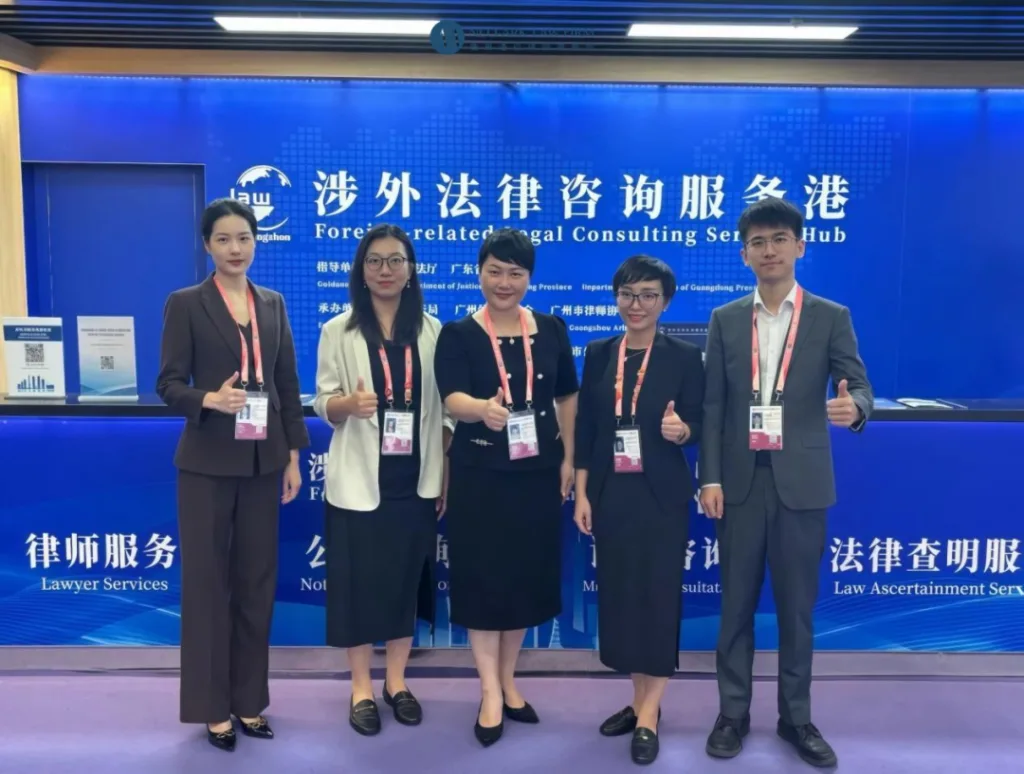
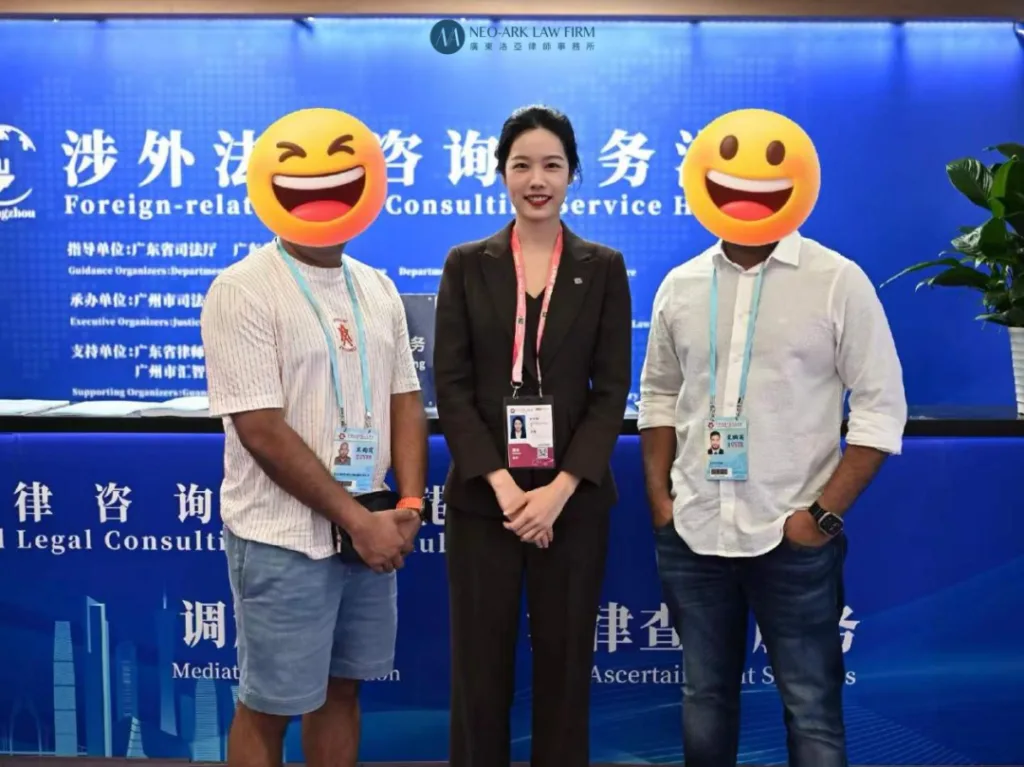
The 140th China Import and Export Fair (Canton Fair) opened grandly, gathering global merchants in Pazhou, Guangzhou. On October 19, Yu Yuting, Partner and Head of the International Legal Department at Neoark Lawyers, was selected by the Guangzhou Lawyers Association to serve at the Canton Fair Foreign-Related Legal Advisory Service Station, providing cross-border legal assistance to overseas buyers and exhibitors to support high-level international business engagement.
During the service period, Attorney Yu Yuting and her team consulted with international merchants from Australia, Singapore, Thailand, Malaysia, Vietnam, the Philippines, Qatar, Cameroon, Ghana, Kyrgyzstan, India, and other countries. They addressed practical legal inquiries and provided formal guidance on international trade dispute resolution, foreign-invested company formation in China, ongoing legal retained counsel services, intellectual property infringement, mediation, notarization, and commercial arbitration.
Phase 1 of this Canton Fair focused on "Advanced Manufacturing," featuring electrical and machinery products, home appliances, new energy vehicles, industrial automation, and service robotics. In addition to providing fixed-station consultations, Attorney Yu Yuting visited the Intelligent Robotics Zone and the General Machinery and Vehicle Exhibition Areas to communicate directly with exhibitors, identify specific business needs, and deliver tailored legal support.
Service Recognition and Upcoming Schedule
This on-site deployment reflects the industry recognition of Attorney Yu Yuting’s cross-border legal practice and highlights Neoark Lawyers’ ongoing dedication to foreign-related legal practice. It also serves as a practical demonstration of the Guangzhou Lawyers Association's initiative to promote international legal standards.
During Phase 3 of the Canton Fair (Theme: "A Better Life," featuring consumer goods), Attorney Yu Yuting will continue her service on-site at the Foreign-Related Legal Advisory Station. Exhibitors and buyers in need of legal counsel are welcome to visit:
November 2: Area D, Booth 20-4
November 3: Area B, Booth 10.1
Frequently Asked Questions
Q: What legal services do Neoark Lawyers offer at the Canton Fair?A: Neoark Lawyers provides cross-border legal assistance on international trade disputes, IP protection, foreign-invested enterprise setup in China, contract drafting, and commercial dispute resolution.
About the Author
Yu Yuting Partner | NEO-ARK Law Firm
LawyerYu focuses on foreign-related litigation, cross-border disputes, commercial matters, and legal services for overseas individuals and businesses in China.
NEO-ARK Law Firm provides legal services in foreign-related litigation, commercial disputes, family law, and cross-border legal matters, assisting both international and domestic clients throughout China.
Academic Disputes and Defamation Claims in China: A Reputation Rights Appeal
Overview
Disputes involving historical research, family heritage, and public criticism can become particularly sensitive when published statements circulate within a close-knit community or reach audiences overseas. In such cases, the central legal question is not necessarily whether a researcher's conclusions are correct, but whether the statements made about that researcher cross the line into unlawful harm to personal reputation.
NEO-ARK Law Firm represented an appellant in a reputation rights dispute before an appellate court in mainland China. The client, a Hong Kong permanent resident and a community leader with several public and honorary positions, had spent years researching the historical origins and relationships of two family lineages. After publishing a historical study intended for academic discussion, the client became the subject of critical articles in a community publication.
The articles allegedly went beyond academic disagreement and included personal attacks and statements that damaged the client's reputation. The publication was distributed not only locally but also to community associations and family groups in multiple overseas locations.
The first-instance court found that the publication had infringed the client's reputation rights but awarded only part of the compensation sought. Both parties appealed. On appeal, the court upheld the finding of infringement and increased the compensation for the client's losses.
The case illustrates how courts may distinguish legitimate debate over historical research from public statements that unlawfully damage an individual's social reputation.
Case Snapshot
Item
Details
Case Type
Reputation Rights Infringement
Jurisdiction
Mainland China
Appellate Representation
Representing the individual appellant
Attorney
Yu Yuting
Law Firm
NEO-ARK Law Firm
Central Issue
Whether published criticism of historical research crossed the line into reputational infringement
First-Instance Outcome
The court found infringement and awarded partial compensation
Appellate Outcome
The finding of infringement was upheld, and the compensation award was increased
The Legal Issues
1. Does Disagreement With Historical Research Justify Public Personal Attacks?
Historical and genealogical research may involve disputed sources, interpretations, oral histories, and competing accounts. Different researchers or community members may reasonably disagree about the conclusions drawn from such material.
However, disagreement with a person's research does not automatically justify making damaging statements about that person. A court assessing a reputation rights claim must examine the content and context of the published statements, rather than treating the underlying academic disagreement as the sole issue.
In this case, the opposing party relied on historical materials, witness statements, and correspondence from community organizations to argue that the statements in its publication were not fabricated. The appeal therefore required careful attention to the distinction between presenting a historical viewpoint and making public assertions that could damage an individual's reputation.
2. Did the Published Statements Harm the Client's Social Reputation?
The client argued that the publication had made personal attacks and disparaged the client's research in a manner that adversely affected how others viewed the client. Its circulation among local and overseas community groups increased the potential reputational consequences.
The legal analysis needed to focus on the actual language used, the factual basis for the statements, the context in which they appeared, and whether they were capable of lowering the client's social evaluation.
The fact that a publication concerns a historical or academic controversy does not, by itself, resolve whether its statements are lawful. Equally, criticism that is strongly worded or unwelcome does not automatically amount to infringement. The assessment depends on the specific content and circumstances.
3. How Should the Court Assess the Loss Caused by Reputational Harm?
Reputation disputes may involve more than direct financial loss. Public allegations can affect an individual's standing within professional, social, or community networks, particularly where the statements are distributed to a wide audience.
In this case, the appeal addressed not only whether infringement had occurred, but also whether the compensation awarded at first instance adequately reflected the losses claimed by the client. The appellant supplemented the case with material relating to actual losses and the alleged impact on the client's social reputation.
The appellate court ultimately maintained the finding of infringement and increased the compensation award.
Legal Strategy
Issue
Appellate Approach
Legal Significance
Academic disagreement versus personal defamation
Emphasized that the correctness of the underlying research was not the sole question for deciding the reputation claim
Helped focus the dispute on the legality of the published statements
Language and factual context
Directed attention to the wording of the publication, its factual basis, and the context in which the statements were made
Supported a more targeted assessment of whether the statements harmed reputation
Impact on social reputation
Presented additional material concerning the consequences of the publication and the client's claimed losses
Addressed the adequacy of compensation
Cross-border circulation
Explained the distribution of the publication to community groups in multiple overseas locations
Highlighted the broader context and potential reach of the alleged reputational harm
Court's Decision and Outcome
At first instance, the court found that the publication had infringed the client's reputation rights and awarded compensation, but did not grant the full relief sought.
Both parties appealed. The client sought an increase in compensation, while the opposing party challenged the infringement finding and requested dismissal of the claims.
On appeal, the court upheld the finding that the publication had infringed the client's reputation rights and increased the compensation awarded for the client's losses. The appellate result therefore preserved the liability determination while revising the compensation outcome in the client's favor.
The judgment was subsequently shared by the client with relevant community associations overseas as part of the client's effort to clarify the dispute and address the reputational consequences.
The case should not be understood as a judicial determination that the client's historical research was correct in every respect. Its significance lies in the court's treatment of the published statements and the legal consequences of the reputational harm established in the proceedings.
Practical Lessons for Reputation Rights Disputes in China
Academic Criticism and Defamation Are Not the Same
Researchers and community organizations may express disagreement with historical interpretations or challenge the reliability of research materials. The legal question is whether the particular statements, viewed in context, cross the boundary into unlawful reputational harm.
The Exact Wording of a Publication Matters
A reputation claim should address what was actually published, whether the statements were presented as fact or opinion, their factual foundation, and the circumstances in which readers would understand them. General assertions that a publication was unfair may be less persuasive than a focused analysis of the disputed language and its effects.
Distribution Can Matter to the Assessment of Harm
Where a publication reaches professional, social, or overseas community networks, its circulation may be relevant to understanding the context and consequences of the alleged infringement. The legal significance of that distribution depends on the evidence and the applicable law.
Compensation Requires a Separate Assessment
Establishing infringement and determining the appropriate remedy are related but distinct questions. Parties seeking increased compensation should substantiate the losses and reputational consequences they rely upon, rather than assuming that a finding of infringement automatically entitles them to the full amount claimed.
Frequently Asked Questions
Can criticism of historical or genealogical research amount to defamation in China?
It can, depending on the content and context of the statements. Disagreement with research findings is not automatically unlawful, but public statements that unlawfully damage a person's reputation may give rise to civil liability. The outcome depends on the particular facts and applicable law.
Does a reputation rights claim require proof of direct financial loss?
Not necessarily. Reputational harm and financial loss are not identical. The available remedies and the evidence needed to support compensation depend on the nature of the claim, the circumstances of the infringement, and the applicable legal rules.
Can a community publication be held liable for damaging statements?
Potentially, yes. The legal assessment may consider the statements' wording, factual basis, context, and impact. The fact that a publication is issued by a community or cultural organization does not, by itself, determine whether the statements are lawful.
What if a publication is distributed to overseas community associations?
The wider distribution may be relevant to the context and potential consequences of the statements. However, overseas circulation does not automatically establish liability or determine the governing law. The court must assess the facts and the legal issues properly before it.
Conclusion
This appellate case demonstrates the importance of separating disputes over academic or historical conclusions from disputes over personal reputation. A party's ability to criticize research does not eliminate the need to consider whether specific public statements are supported by their factual context and whether they unlawfully harm another person's reputation.
For individuals facing damaging publications, a focused legal analysis of the statements, their context, their circulation, and the evidence of resulting harm can be central to pursuing an effective reputation rights claim in mainland China.
About the Author
Yu Yuting Partner | NEO-ARK Law Firm
LawyerYu focuses on foreign-related litigation, cross-border disputes, commercial matters, and legal services for overseas individuals and businesses in China.
NEO-ARK Law Firm provides legal services in foreign-related litigation, commercial disputes, family law, and cross-border legal matters, assisting both international and domestic clients throughout China.
2026-10-16
Legal Guide for the 140th Canton Fair | Legal Services and Dispute Resolution
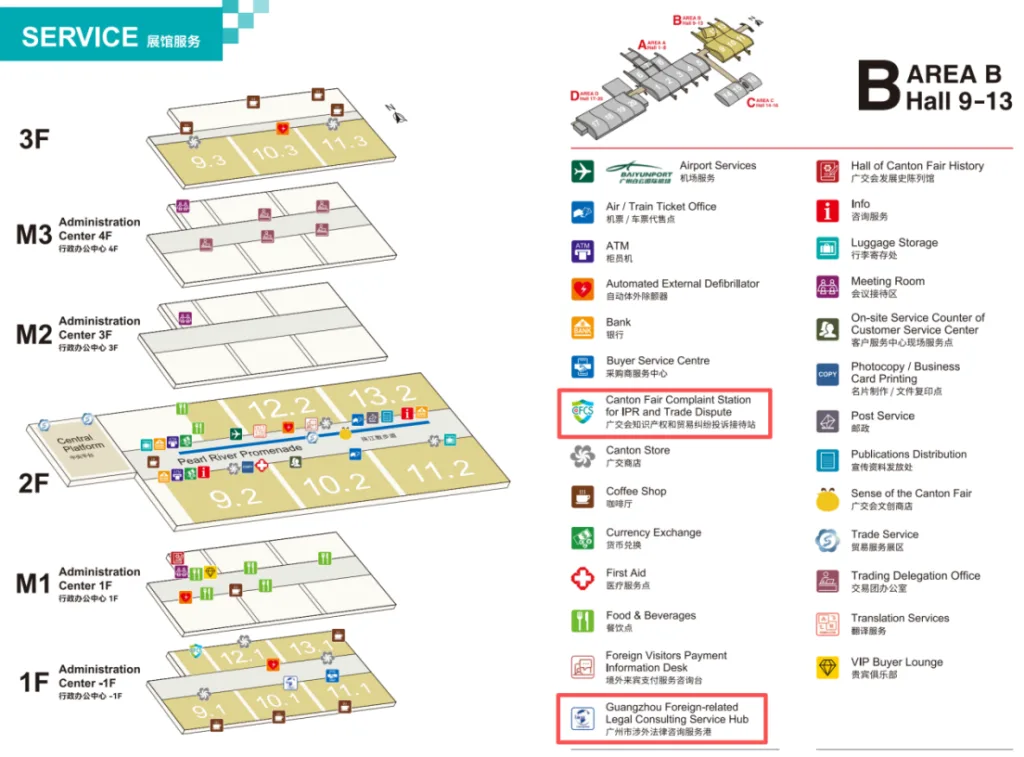
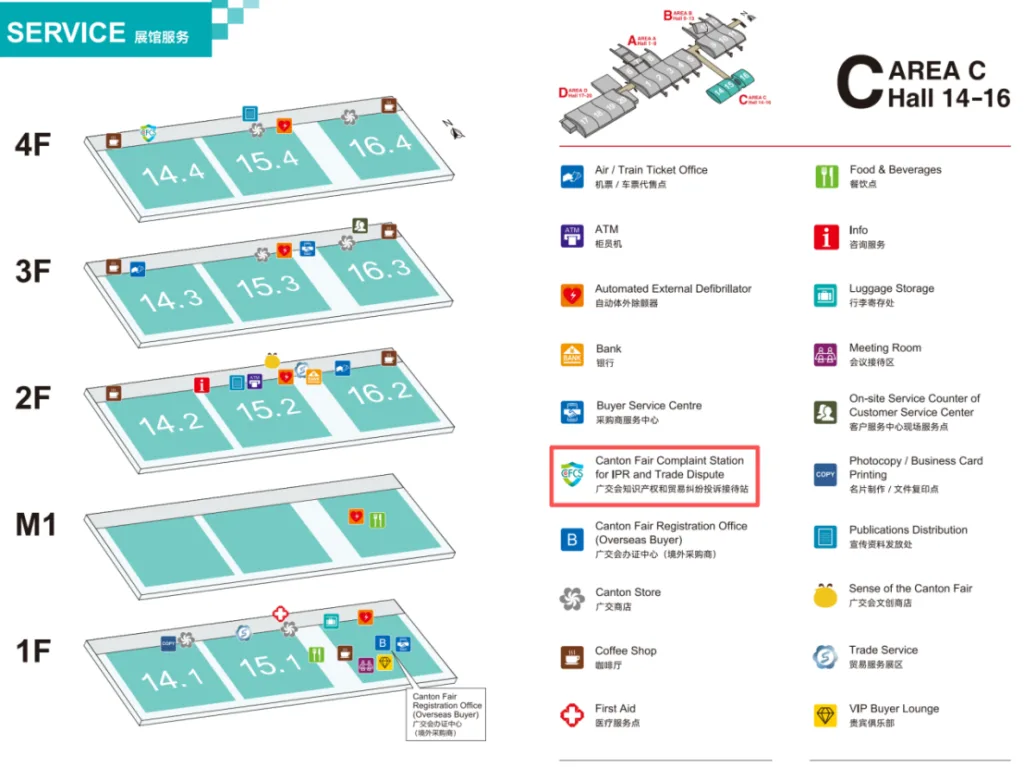
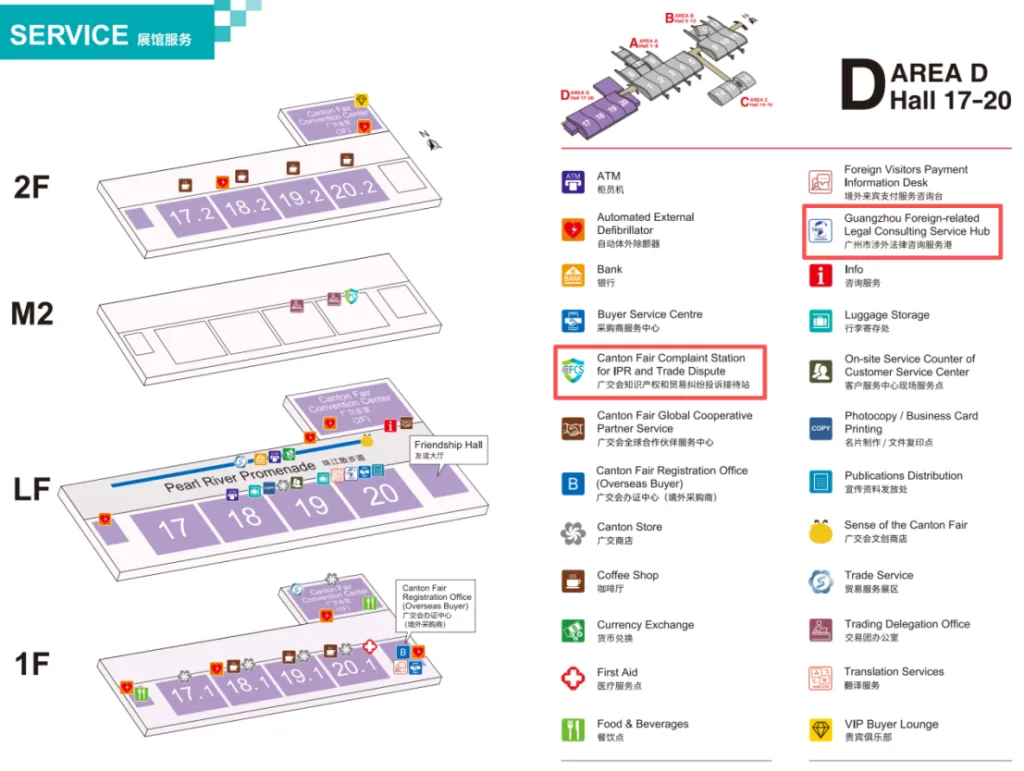
The 140th China Import and Export Fair (Canton Fair) takes place in Guangzhou from October 15 to November 4, 2026. Bringing together thousands of international buyers and domestic exhibitors, the fair serves as a vital global trade platform.
To help participants navigate legal issues and resolve commercial conflicts efficiently, this guide outlines on-site legal service stations, offline dispute resolution channels, online complaint mechanisms, and the duty schedule for Attorney Yuting Yu (Partner & Head of International Legal Affairs at Neo-Ark Law Firm), who will serve at the Guangzhou Foreign-Related Legal Advisory Service Port.
I. Three On-Site Legal Service Channels
Service Station
Core Service Scope
Recommended Scenarios
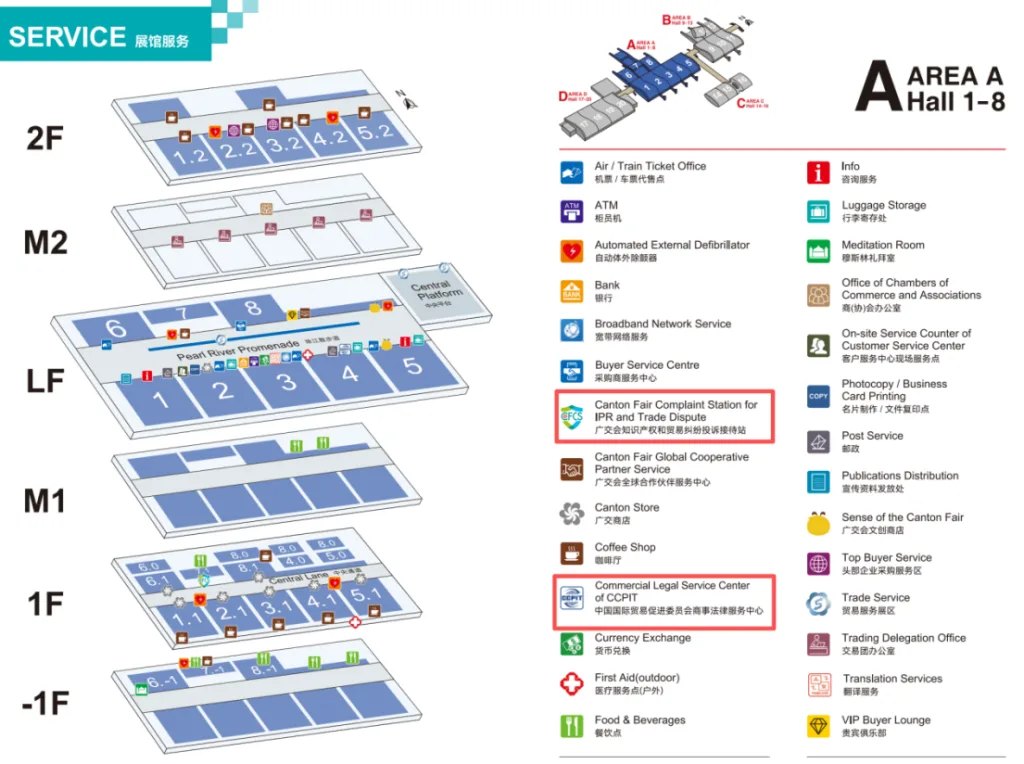
IP & Trade Dispute Complaint Station (知识产权和贸易纠纷投诉接待站)
Processes compliant intellectual property (IP) and trade dispute complaints under official Canton Fair guidelines.
On-site IP infringement allegations or trade contract disputes within Canton Fair jurisdiction.
CCPIT Commercial Legal Service Center (中国贸促会商事法律服务中心)
Enterprises seeking guidance on international trade laws, cross-border contracts, and commercial risk.
Guangzhou Foreign-Related Legal Service Port (广州市涉外法律咨询服务港)
Connects exhibitors with cross-border legal consulting, attorney services, arbitration, notarization, mediation, and foreign law ascertainment.
Overseas buyers and domestic suppliers requiring advice on governing laws, cross-border dispute resolution, or legal representation.
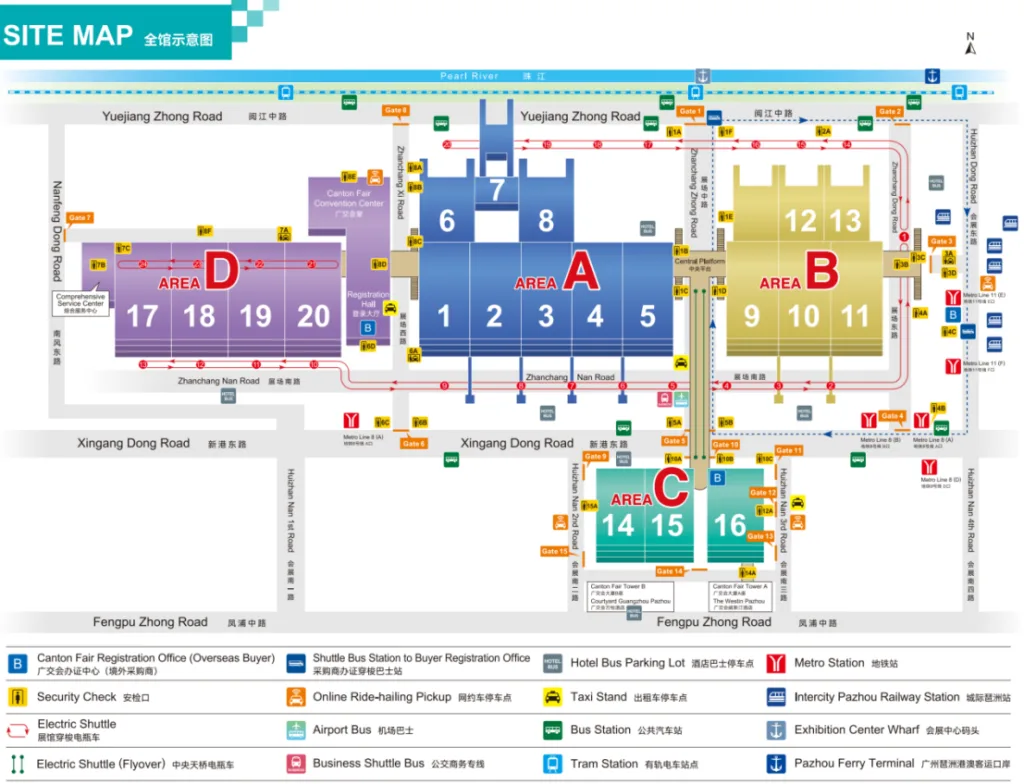
Zone Service Rules: IP and Trade Dispute Complaint Stations are stationed across Complex Areas A, B, C, and D. While Areas A and B accept both IP and trade dispute complaints, Areas C and D handle IP complaints exclusively. Trade dispute complaints occurring in Areas C or D must be submitted at the Area A or B complaint desks.
Recommended Desks:Complex Areas C & D (or Areas A & B) Complaint Reception Stations.
Action Steps: Prepare proof of IP ownership (trademark/patent certificates), evidence of alleged infringement, and booth/exhibitor identification before submitting a formal complaint.
2. Trade Disputes & Contract Breach
Recommended Desks:Complex Areas A & B Complaint Reception Stations; or the CCPIT Commercial Legal Service Center (Area A).
Action Steps: Gather signed contracts, Purchase Orders (PO), Proforma Invoices (PI), remittance receipts, delivery records, and communication logs to confirm eligibility under Canton Fair rules.
3. Cross-Border Contracts & Complex Legal Matters
Recommended Desks:Complex Areas B & D, Guangzhou Foreign-Related Legal Advisory Service Port.
Action Steps: Consult on-site attorneys regarding governing law clauses, arbitration clauses, cross-border asset preservation, and international litigation frameworks.
III. Online Dispute Resolution Pathways
For online and hybrid exhibitors, the official Canton Fair portal maintains a continuous online complaint system:
Online IP Complaints: Submit digital evidence and ownership certificates through the official Canton Fair website portal.
Trade Dispute Inquiries: Contact the official Canton Fair legal customer service hotlines:
Domestic Hotline:4000-888-999
International Hotline:+86 (20) 28-888-999
IV. On-Site Duty Schedule of Attorney Yuting Yu
Attorney Yuting Yu (Partner and Head of International Legal Affairs at Neo-Ark Law Firm) will be on duty at the Guangzhou Foreign-Related Legal Advisory Service Port on the following dates to deliver direct legal counseling for exhibitors and buyers:
[On-Site Duty Schedule: Attorney Yuting Yu]
 ├── October 19, 2026 | Area B, Booth 10.1
 ├── November 2, 2026 | Area D, Booth 20-4
 └── November 3, 2026 | Area B, Booth 10.1
October 19, 2026 (Phase 1): Complex Area B, Booth 10.1
November 2, 2026 (Phase 3): Complex Area D, Booth 20-4
November 3, 2026 (Phase 3): Complex Area B, Booth 10.1
About the Author
Yu Yuting Partner | NEO-ARK Law Firm
LawyerYu focuses on foreign-related litigation, cross-border disputes, commercial matters, and legal services for overseas individuals and businesses in China.
NEO-ARK Law Firm provides legal services in foreign-related litigation, commercial disputes, family law, and cross-border legal matters, assisting both international and domestic clients throughout China.
2026-10-14
Foreign Employee Without a Work Permit: Contract Validity in China
Overview
Employing foreign nationals in China can raise complex legal questions when work authorization requirements have not been satisfied. A dispute may involve not only the validity of the employment contract, but also claims for unpaid wages, overtime, annual leave compensation and compensation for termination.
In this case, a US national of Chinese descent joined a company in China as a research analyst under a three-year contract. Her responsibilities included managing financial regulatory research projects across the Asia-Pacific region, from research design and questionnaire development to data analysis and report preparation.
After the company terminated the contractual relationship, the individual brought proceedings before the Guangzhou Haizhu District People’s Court, claiming unpaid wages, overtime payments, compensation for unused annual leave, reimbursement of expenses and economic compensation for allegedly unlawful termination.
Representing the company, the defense argued that the individual had not obtained the required foreign employment permit and that the contract should therefore not be treated as a valid employment contract under the regulations applicable to the case.
The court accepted the defense on key issues. It dismissed the claims for economic compensation arising from unlawful termination and compensation for unused annual leave, while ordering the company to pay overtime-related service fees.
The case illustrates why employers should assess work authorization, contractual status and the legal basis of each claimed payment separately when responding to disputes involving foreign personnel.
1. Can a contract with a foreign employee be treated as invalid if the required work permit was not obtained?
Foreign nationals working in mainland China may be subject to specific employment authorization requirements. Whether a contractual relationship is legally recognized as an employment relationship can depend on the applicable rules, the worker’s status, the work authorization arrangements and the circumstances of the engagement.
In this case, the company argued that the claimant had not obtained the required foreign employment permit. Relying on the regulations applicable to the dispute, the defense challenged the validity of the employment contract.
The court accepted the defense on the key claims concerning termination compensation and unused annual leave.
The case demonstrates the importance of examining the legal requirements applicable at the time of employment rather than assuming that a signed contract alone resolves questions of legal status.
Important qualification: The outcome of this historical case should not be treated as a universal rule that every contract involving a foreign national without a work permit is invalid. The applicable legal framework, subsequent regulatory developments and the individual’s circumstances must be considered in each case.
2. Does an invalid employment contract automatically eliminate every payment obligation?
No. The legal consequences of an invalid contract must be distinguished from the question of whether payment remains due for work already performed or services provided.
In this dispute, the court did not accept every part of the employer’s defense. Although it dismissed the claims for economic compensation arising from unlawful termination and unused annual leave compensation, it ordered the company to pay overtime-related service fees.
This distinction is important for employers. Even where a contract’s legal status is disputed, the parties’ actual performance and the legal basis for compensation may still require separate examination.
An employer should therefore avoid assuming that an invalid contract automatically extinguishes all payment obligations.
3. Can a foreign worker claim economic compensation for allegedly unlawful termination?
The availability of economic compensation depends on the legal relationship recognized by the court and the rules applicable to the dispute.
Here, the claimant sought economic compensation on the basis that the company had unlawfully terminated the employment relationship. The court accepted the defense that the contractual relationship should not be treated as a valid employment contract under the applicable rules and dismissed the corresponding compensation claim.
The result turned on the legal framework applied to this particular case. It should not be read as a general exemption from termination-related obligations whenever a foreign worker’s authorization is questioned.
For employers, the key step is to identify the legal basis of the claim and determine whether the relevant statutory protections apply to the relationship in question.
4. Can overtime-related payments still be awarded when the contract is found invalid?
A finding that an employment contract is invalid does not necessarily settle whether a person should receive payment for additional work performed.
In this case, the court ordered the company to pay overtime-related service fees even though it rejected the claimant’s requests for termination compensation and unused annual leave compensation.
The decision underscores the need to analyze each payment claim independently. The legal basis for overtime-related remuneration may differ from the basis for statutory economic compensation or annual leave entitlements.
Employers should maintain reliable records of working hours, assigned duties, payment arrangements and actual services performed. These records can help clarify both the nature of the relationship and the appropriate treatment of each claim.
Legal Strategy and Case Outcome
Issue
Defense Position and Court Outcome
Contractual status
The company challenged the validity of the employment contract based on the absence of the required foreign employment permit under the rules applicable to the case.
Economic compensation for termination
The court dismissed the claimant’s request.
Compensation for unused annual leave
The court dismissed the claimant’s request.
Overtime-related payments
The court ordered the company to pay overtime-related service fees.
Overall result
The employer successfully defended key claims, but retained a payment obligation for overtime-related services.
The outcome was therefore a partial success for the employer rather than a complete dismissal of all claims.
The case shows why a defense should address the legal status of the contract and each category of claimed compensation separately. A successful challenge to one category of claim does not necessarily defeat all other monetary claims.
Practical Lessons for Employers Hiring Foreign Nationals in China
Verify work authorization before employment begins. Employers should confirm the applicable work authorization and residence requirements for each foreign national before the person starts work. The precise requirements depend on the person’s status and the governing rules.
Do not rely on contract wording alone. A contract’s title or the parties’ chosen terminology may not conclusively determine the legal nature of the relationship. The actual duties, working arrangements, payment structure and applicable legal requirements may all be relevant.
Separate employment-status issues from payment claims. Even where the validity of a contract is disputed, compensation for work actually performed may require independent assessment. Employers should review wages, overtime, expenses and other claimed amounts on their own legal and factual basis.
Keep clear working-time and payment records. Records of schedules, assigned duties, overtime, leave and payments can help an employer assess the merits of a claim and explain the basis for any amount owed.
Review the law applicable to the relevant period. Foreign employment rules can change. An assessment of an older dispute should distinguish the rules applicable when the work was performed from the regulations currently in force.
Frequently Asked Questions
Can a foreign national work in China without a work permit?
Foreign nationals generally need to satisfy the applicable authorization requirements before undertaking employment in mainland China, subject to relevant exemptions and special arrangements. Employers should verify the requirements that apply to the individual’s status and proposed work.
Does the absence of a work permit automatically invalidate an employment contract in China?
The answer depends on the applicable legal framework, the circumstances of the engagement and any relevant regulatory developments. This case applied the rules relevant to the dispute before the court; it should not be treated as a universal rule for every foreign worker.
If a contract is invalid, must the employer still pay for work performed?
Potentially, yes. Contract invalidity does not automatically resolve every payment issue. The court may need to consider the services performed, the payments due and the legal basis for each claim.
Can an employer defeat an annual leave compensation claim by challenging the employment relationship?
The outcome depends on the legal status of the relationship and the rules applicable to the claim. Employers should assess the legal basis of the annual leave claim rather than assume that a dispute over work authorization necessarily resolves every entitlement.
What should employers do when a foreign employee brings multiple payment claims?
Employers should review each claim separately, including wages, overtime, annual leave, expenses and termination-related compensation. Work authorization documents, contracts, communications, attendance records and payment records may all be relevant to the analysis.
Conclusion
This case demonstrates that disputes involving foreign personnel can turn on the interaction between work authorization, contractual validity and the legal basis of individual payment claims. The employer successfully defended the claims for termination compensation and unused annual leave compensation, but the court still awarded overtime-related service fees.
For employers operating in mainland China, early verification of work authorization, accurate employment records and a claim-by-claim legal assessment can help reduce compliance risks and support a more effective response to disputes.
About the Author
Yu Yuting Partner | NEO-ARK Law Firm
LawyerYu focuses on foreign-related litigation, cross-border disputes, commercial matters, and legal services for overseas individuals and businesses in China.
NEO-ARK Law Firm provides legal services in foreign-related litigation, commercial disputes, family law, and cross-border legal matters, assisting both international and domestic clients throughout China.
2026-10-13
New Regulations for Hong Kong and Macao Lawyers Practicing in the Greater Bay Area: Where to Practice, Permitted Scope, and Partnership Eligibility
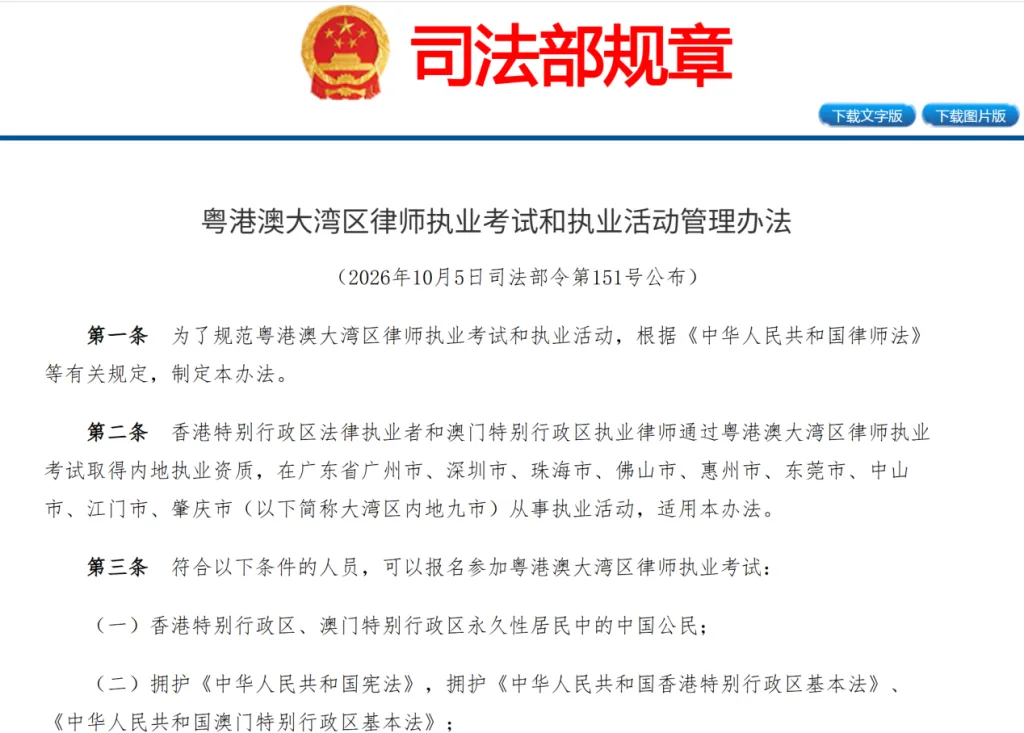
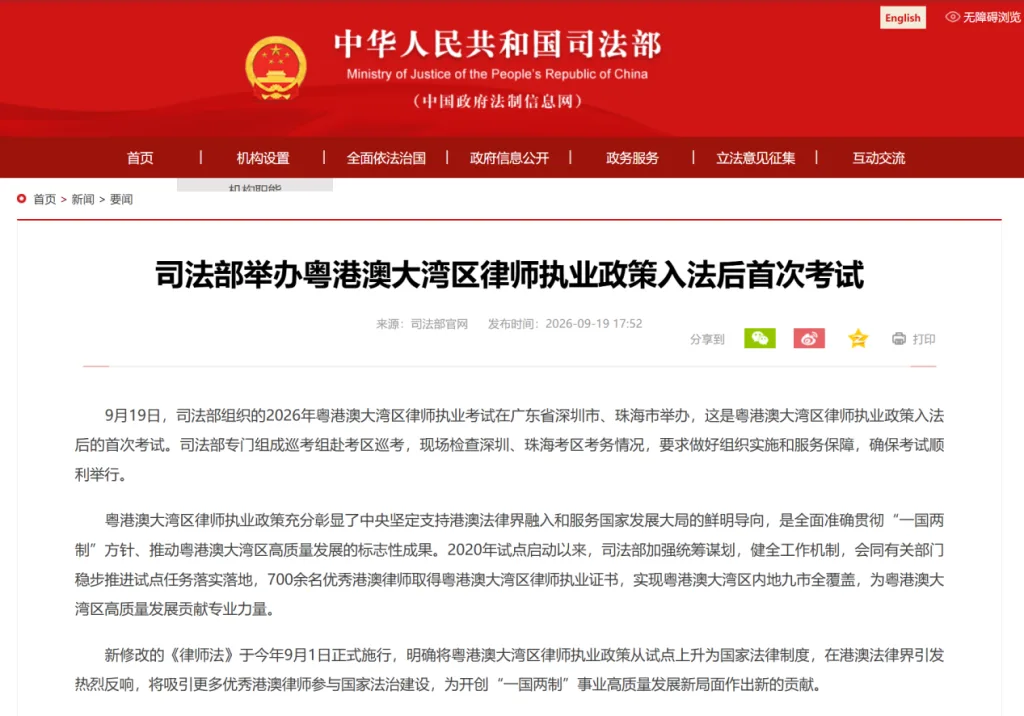
On October 5, 2026, the Ministry of Justice of the People's Republic of China promulgated Order No. 151, issuing the updated Measures for the Administration of the Examination and Practice Activities of Greater Bay Area Lawyers (粤港澳大湾区律师执业考试和执业活动管理办法), effective immediately. Comprising 12 comprehensive articles, the new regulations standardize qualifications, practice scopes, institutional affiliations, and partnership rights for legal practitioners from Hong Kong and Macao operating in the Greater Bay Area (GBA).
Legal practitioners from Hong Kong and Macao who pass the GBA Legal Qualification Examination and obtain mainland practice certificates are authorized to handle designated civil and commercial legal matters—encompassing both litigation and non-litigation services—across nine mainland GBA cities. Within this defined scope, GBA lawyers enjoy equal rights and bear equal obligations as mainland Chinese attorneys. As of September 2026, over 700 Hong Kong and Macao lawyers have successfully obtained GBA practice certificates.
I. Core Policy Highlights & Regulatory Framework
1. Institutionalization of the Examination
Examination Frequency: The GBA Legal Qualification Examination is officially established on a biennial schedule (held every two years).
Examination Locations: The primary examination center is located in Shenzhen, with an additional test center in Zhuhai depending on the volume of Macao-based applicants.
2. Eligibility Criteria for Applicants
Applicants must fulfill the following statutory requirements:
Citizenship & Status: Chinese citizens who are permanent residents of the Hong Kong Special Administrative Region (HKSAR) or Macao Special Administrative Region (MSAR).
Constitutional Compliance: Express support for the Constitution of the People's Republic of China and the Basic Laws of Hong Kong and Macao.
Practice Experience: A minimum of 3 cumulative years of legal practice experience. Hong Kong solicitors and barristers must not be subject to temporary qualification suspension; Macao practicing lawyers must not be under preventive suspension measures.
Language & Professional Ethics: High standard of professional ethics; demonstrated capability to draft legal documents in written Chinese and conduct professional activities in Mandarin (Putonghua).
Mandatory Training: Following examination passage, candidates must complete centralized training and pass the evaluation administered by the Guangdong Lawyers Association prior to applying for a practice certificate.
3. Permitted Practice Scope & Jurisdictional Connections
GBA lawyers are authorized to handle civil and commercial legal matters across nine mainland GBA cities (Guangzhou, Shenzhen, Zhuhai, Foshan, Huizhou, Dongguan, Zhongshan, Jiangmen, and Zhaoqing).
Permitted Employing Entities: GBA lawyers may be employed by mainland Chinese law firms located in the nine cities or by joint-venture law firms (港澳与内地合伙联营律所) established between Hong Kong/Macao and mainland firms.
Prohibited Employment: GBA lawyers cannot be employed by mainland representative offices of foreign law firms or mainland representative offices of Hong Kong/Macao law firms.
Partnership Rights: GBA lawyers are explicitly permitted to become partners in mainland law firms based within the nine GBA cities.
II. Industry Impact & Compliance Considerations
1. Strategic Advantages for Cross-Border Enterprises
The updated framework enables multi-jurisdictional enterprises to receive integrated, cross-border legal services under a unified mainland law firm structure. By bridging common law (Hong Kong), civil law (Macao), and mainland socialist legal frameworks, GBA lawyers streamline communication, optimize cross-border corporate transactions, and enhance efficiency in international commercial arbitration.
2. Institutional Operational Adjustments for Mainland Law Firms
While incorporating Hong Kong and Macao legal talent strengthens mainland firms in cross-border M&A, cross-border insolvency, and international arbitration, it necessitates internal compliance upgrades:
Cross-Jurisdictional Conflict Audits: Establishing robust conflict-of-interest screening across mainland and offshore client rosters.
Data & Document Governance: Aligning cross-border client confidentiality, document retention, and fee-sharing protocols with mainland regulatory standards.
Client Due Diligence (KYC): Implementing unified Anti-Money Laundering (AML) and client identity verification workflows across cross-border engagements.
Conclusion
Ministry of Justice Order No. 151 marks a significant milestone in the institutional integration of legal services across the Guangdong-Hong Kong-Macao Greater Bay Area. By clarifying practice boundaries and opening law firm partnership pathways, the new rules provide a transparent legal environment for cross-border investments, international trade, and commercial dispute resolution.
About the Author
Yu Yuting Partner | NEO-ARK Law Firm
LawyerYu focuses on foreign-related litigation, cross-border disputes, commercial matters, and legal services for overseas individuals and businesses in China.
NEO-ARK Law Firm provides legal services in foreign-related litigation, commercial disputes, family law, and cross-border legal matters, assisting both international and domestic clients throughout China.
 Skip to content