...

News

Can Norwegian Police Records Support a Defamation Claim in China? A Cross-Border Reputation Rights Dispute

Overview

False allegations circulated through overseas Chinese community networks can cause serious reputational harm, particularly when they concern alleged misconduct and are shared with a person's professional, social, and business contacts.

NEO-ARK Law Firm represented an individual claimant in a reputation rights infringement dispute involving statements circulated through multiple WeChat groups. The dispute had an international dimension: the original allegation had been investigated by Norwegian police, who subsequently discontinued the case due to insufficient evidence. Despite that outcome, the allegation was later repeated and amplified in Chinese-language community groups.

The claimant alleged that two individuals had disseminated false statements accusing the claimant of sexual misconduct involving a minor, accompanied by insulting language. The statements were circulated across several large WeChat groups, including overseas Chinese community and hometown association networks, and were also communicated to the claimant's personal and professional contacts.

The claimant maintained that the publications damaged their social standing, affected community positions and cultural exchange activities, and caused significant personal distress.

The legal representation focused on establishing the lack of evidentiary support for the underlying allegation, documenting the subsequent dissemination of the statements, and demonstrating the resulting reputational impact. The case illustrates important considerations when pursuing a reputation rights claim in China involving overseas events and foreign investigative documents.

Case Snapshot

ItemDetails
Case TypeReputation Rights Infringement
Legal ProceedingsCivil litigation in mainland China
International ElementNorwegian police investigation and overseas Chinese community networks
ClientIndividual claimant
Opposing PartiesTwo individual defendants
AttorneyYu Yuting
Law FirmNEO-ARK Law Firm
Key Legal IssuesCross-border evidence, online dissemination, reputational harm, and civil liability
Representation FocusEstablishing the factual context, documenting dissemination, and substantiating reputational losses

Key Legal Issues

1. Can a Foreign Police Document Be Used in a Chinese Reputation Rights Lawsuit?

A central issue was the evidentiary significance of a document issued by Norwegian police confirming that their investigation had been discontinued due to insufficient evidence.

The document was important because it addressed the factual background of the allegation that later became the subject of widespread online statements.

However, a decision to discontinue a criminal investigation because of insufficient evidence should not automatically be treated as a judicial finding that an allegation was false. Nor does it, by itself, establish that subsequent statements constitute a civil reputation rights infringement.

The legal assessment must distinguish between the outcome of the foreign investigation and the separate questions before the Chinese civil court: what was actually published, whether the statements had a sufficient factual basis, and whether the conduct unlawfully harmed the claimant's reputation.

In this case, the Norwegian police document formed a central part of the evidentiary presentation. The representation also addressed the cross-border evidentiary requirements involved in submitting foreign-issued materials in mainland Chinese proceedings.

2. Can Reposting Allegedly False Statements in WeChat Groups Create Civil Liability?

The alleged statements were not confined to a private conversation. According to the claimant's account, one defendant circulated the allegations and insulting descriptions in multiple WeChat groups, while the other defendant subsequently forwarded the statements to a wider network of overseas Chinese community organizations and personal contacts.

The representation focused on documenting the content, timing, scope, and dissemination of the relevant messages through screenshots and screen recordings.

This distinction matters because the legal assessment of online reputational harm may depend not only on the words used, but also on the manner and reach of publication.

A person who forwards or republishes another person's statements may also face legal scrutiny. Whether that conduct constitutes infringement depends on the specific content, circumstances, knowledge, and applicable legal requirements.

3. How Can Reputational Harm Be Demonstrated in Overseas Chinese Communities?

The claimant held several social and cultural positions connected with China-Norway exchanges and overseas Chinese community activities. The claimant alleged that the publications affected these relationships, including the loss of a community position and the postponement of cultural exchange projects.

The representation therefore addressed the consequences of the alleged infringement beyond the online messages themselves.

Relevant materials included documents relating to the claimant's social positions, records concerning changes in community membership or status, and information about the impact on cultural exchange activities.

These materials were intended to help the court assess the actual context and consequences of the alleged reputational harm, rather than relying solely on the claimant's subjective account.

Legal Strategy

Legal IssueRepresentation ApproachPurpose
Foreign investigative recordsPresented the Norwegian police discontinuance document and addressed its use as foreign-issued evidenceEstablished the background and evidentiary context of the original allegation
Online publicationOrganized WeChat screenshots and screen recordings showing the statements and their disseminationDocumented the alleged publication and forwarding conduct
Motive and circumstancesSubmitted relevant organizational materials concerning the parties' background and the alleged personal conflictProvided context for assessing the circumstances of publication
Reputational consequencesPresented appointment records, community-related documents, and materials concerning affected activitiesSubstantiated the alleged impact on the claimant's social standing
Litigation costsAdvanced the claim for reasonable legal expensesSought recovery of costs associated with protecting the claimant's rights

Why This Case Matters

Foreign Investigative Documents Require Careful Legal Treatment

A police document issued overseas may be relevant to proceedings in China, but its evidentiary meaning must be accurately described. A discontinued investigation is not necessarily equivalent to an acquittal or a finding that the original allegation was fabricated.

Careful presentation helps prevent the foreign document from being overstated and allows the court to assess its significance alongside the other evidence.

Online Dissemination Should Be Documented, Not Merely Described

In online defamation disputes, it is important to preserve the original messages and establish how they were circulated. Screenshots and screen recordings can help document publication, while contextual materials may help explain the audience reached and the consequences alleged.

Reputational Harm May Extend Beyond the Internet

Statements circulated in community networks can affect an individual's social positions, professional relationships, and participation in cultural or business activities. Evidence of those consequences can be relevant when a claimant seeks appropriate civil remedies.

Cross-Border Disputes Require Coordination Between Different Evidentiary Systems

When relevant events occur overseas but civil proceedings take place in China, counsel may need to consider the origin, form, authenticity, translation, and admissibility of foreign-issued documents. The applicable requirements should be checked according to the type of document and the procedural rules governing the specific case.

Frequently Asked Questions

Can someone sue for defamation in China over statements originally made about an event in Norway?

Potentially, yes. The existence of an overseas event does not automatically prevent a person from pursuing a civil reputation rights claim in China. However, jurisdiction, applicable law, the location and effects of the alleged infringement, and the available evidence must be assessed in the particular case.

Does a Norwegian police decision to discontinue an investigation prove that an allegation was false?

Not automatically. Discontinuance due to insufficient evidence means that the investigation was not continued on the available evidentiary basis. It should not be described as a criminal court finding that the allegation was false. The document may nevertheless be relevant evidence in a separate civil dispute, subject to the court's assessment.

Can forwarding a message in a WeChat group amount to reputation rights infringement?

It may, depending on the content, circumstances, factual basis, and manner of dissemination. Republishing statements is not automatically lawful merely because the person forwarding them was not the original author.

What evidence may be relevant to a WeChat defamation claim?

Potentially relevant materials include original chat records, screenshots, screen recordings, information identifying the groups and recipients, records of subsequent forwarding, and documents showing the alleged consequences of the statements. The authenticity, integrity, relevance, and admissibility of each item should be considered.

Can a claimant seek compensation for reputational harm and legal expenses?

A claimant may seek appropriate civil remedies, potentially including cessation of infringement, an apology, and compensation where the legal requirements are met. Whether particular losses or legal expenses can be recovered depends on the applicable law and the evidence submitted.

Conclusion

This cross-border reputation rights dispute highlights the importance of carefully connecting foreign investigative records, online publication evidence, and proof of reputational consequences.

For individuals facing damaging allegations circulated through overseas Chinese community networks, an effective legal response may require more than demonstrating that a foreign investigation was discontinued. It requires a structured assessment of the statements themselves, their factual basis, the parties' dissemination conduct, and the harm alleged.

NEO-ARK Law Firm's representation in this matter illustrates an evidence-focused approach to reputation rights litigation involving overseas events and cross-border materials in mainland China.

About the Author

Yu Yuting
Partner | NEO-ARK Law Firm

Lawyer Yu focuses on foreign-related litigation, cross-border disputes, commercial matters, and legal services for overseas individuals and businesses in China.

Email: [email protected]

About NEO-ARK Law Firm

NEO-ARK Law Firm provides legal services in foreign-related litigation, commercial disputes, family law, and cross-border legal matters, assisting both international and domestic clients throughout China.


Recommend
Canton Fair Legal Insights: How Foreign Investors Can Set Up a Company in China and Manage Compliance Risks

During the 140th Canton Fair, yu yuting—Partner, Head of the International Legal Affairs Department at Neo-Ark Law Firm, and duty lawyer at the Guangzhou Foreign-Related Legal Services Port—received numerous inquiries from international buyers regarding foreign direct investment (FDI), company establishment, tax optimization, and intellectual property compliance.

To support international entrepreneurs and corporate investors planning China entry, this Q&A guide synthesizes key registration procedures, entity selection frameworks, regional tax incentives, and legal risk mitigation strategies under current Chinese corporate and foreign investment laws.

I. Corporate Entity Selection: Five Common Investment Structures

Foreign investors establishing a legal presence in China should select an entity form aligned with their commercial goals, capital allocation, and operational scope:

Foreign Investment Entity TypePrimary Commercial Use CasesOperational Scope & Features
Wholly Foreign-Owned Enterprise (WFOE)
(外商独资企业)
E-commerce independent platforms, foreign tech subsidiaries, manufacturing plants.100% foreign-owned limited liability company; full commercial, trading, and operational authority.
Sino-Foreign Joint Venture (JV)
(中外合资经营企业)
Auto parts manufacturing, medical equipment diagnostic centers, restricted tech sectors.Equity or cooperative partnership between foreign and domestic Chinese entities; shared capital and technology.
Foreign-Invested Partnership (FIP)
(外商投资合伙企业)
Cross-border venture capital funds, USD private equity funds, professional consultancies.Flexible capital contributions, flow-through tax structures, and customized partner governance.
Branch Office of a Foreign Company
(外国公司分支机构)
Foreign bank branches, international inspection and certification conglomerates.Direct extension of the parent company; non-independent legal personality with parent assuming liabilities.
Representative Office (RO)
(外国企业常驻代表机构)
Market research, liaison offices, product promotion for foreign brands.Non-profit generating entity; restricted strictly to market research, quality control, and liaison activities.

II. Key Registration Procedures and Operational Compliance Requirements

Establishing a compliant corporate entity in China requires navigating several administrative, tax, and banking steps:

1. Corporate Registration & Business License Application

Submit notarized investor qualification documents, Articles of Association, legal representative appointment resolutions, Ultimate Beneficial Owner (UBO) disclosures, and a verified commercial property lease contract to the State Administration for Market Regulation (SAMR).

2. Capital and Operating Bank Accounts

Open an RMB Basic Deposit Account for daily domestic operations alongside a Foreign Exchange Capital Account under State Administration of Foreign Exchange (SAFE) guidelines for equity infusions and cross-border remittances.

3. Foreign Investment Information Reporting

Complete mandatory online reporting through the National Enterprise Credit Information Publicity System and commercial regulation portals.

4. Customs Registration for Import/Export Entities

Enterprises engaged in physical goods trading must obtain Customs Declaration Registration as a Consignor/Consignee of Imported and Exported Goods alongside specialized import/export administrative permits.

5. Tax Registration and Regional Incentives

Complete tax setup, tax type determinations, invoice (Fapiaos) issuance permissions, and establish compliant statutory accounting ledgers.

Regional Tax Highlight (Guangzhou Nansha): Qualified foreign-invested enterprises in encouraged industries within the starting area of Nansha, Guangzhou enjoy a reduced 15% Enterprise Income Tax (CIT) rate (compared to the standard 25% statutory rate). Qualified overseas high-end talent may also access individual income tax subsidies, subject to maintaining substance-based operational requirements (real personnel, real assets, and actual commercial operations).

6. Foreign Staff Work Permits & Visas

Expatriate personnel working within the Chinese entity must secure formal Foreigner's Work Permits (Class A/B) and residence permits prior to commencing employment.

7. Retention of Chinese Legal Counsel

Engage domestic legal counsel to draft Articles of Association, structure equity ownership, formulate labor compliance systems, review cross-border contracts, and build IP defensive barriers.

III. Six Critical Legal Risk Areas and Compliance Strategies

1. Negative List & Market Access Audits

  • Risk: Investing in restricted or prohibited market sectors, or engaging sanctioned counterparties.
  • Compliance Strategy: Screen business scopes against the Special Administrative Measures (Negative List) for Foreign Investment Access. Sectors like news media are strictly prohibited, while telecommunications and aviation carry foreign equity caps. Perform background checks against global credit blacklists and immigration restriction databases.

2. Address Compliance and Operational Anomaly Listings

  • Risk: Using fictitious addresses or failing to update corporate registry entries upon relocating triggers an official "Operational Anomaly" (经营异常) listing.
  • Compliance Strategy: Maintain a physical, verifiable commercial lease with actual operations on-site. Operational anomalies cause bank account freezes, tax holdbacks, and work visa rejections.

3. Subscribed Capital Contribution Timelines

  • Risk: Civil liability and shareholder default claims resulting from unfulfilled capital contributions.
  • Compliance Strategy: Under Article 47 of the amended Company Law of the People's Republic of China, shareholders of limited liability companies must pay their subscribed capital contributions in full within five years of establishment. Structure realistic capital timelines during incorporation.

4. Real Trade Backgrounds & Anti-Money Laundering (AML)

  • Risk: Account freezing, tax audits, or criminal investigation triggered by non-compliant fund routing.
  • Compliance Strategy: Ensure every transaction is backed by genuine trade background documentation, matching invoices, and complete shipping records. Strictly avoid third-party pool accounts or fictitious invoicing (虚开增值税发票).

5. Labor Law & Employment Compliance

  • Risk: Wrongful termination claims, unpaid mandatory social benefits, or illegal employment of foreign nationals.
  • Compliance Strategy: Chinese labor laws enforce strict statutory protections. Employers must contribute to social insurance and housing provident funds. Illegal employment of foreign nationals lacking valid work permits leads to severe administrative fines and corporate credit debits.

6. Intellectual Property: "Register First, Use Later"

  • Risk: Bad-faith trademark squatting (恶意抢注) or patent infringement claims by local competitors.
  • Compliance Strategy: China strictly operates on a "First-to-File" system for trademarks and patents. Foreign brands should secure domestic registrations prior to market entry or trade show displays.

PCT & Priority Rights Advantage: International applicants from Patent Cooperation Treaty (PCT) or Paris Convention member states can leverage priority right windows (12 months for patents, 6 months for trademarks) to lock in original foreign filing dates in China. Preserve evidence of prior rights immediately upon detecting infringement.

Conclusion

Establishing a successful foreign-invested enterprise in China requires matching commercial objectives with appropriate corporate structures, securing statutory registrations, and maintaining active legal and tax compliance. Seeking professional guidance from experienced cross-border legal counsel ensures seamless entry and operational stability in the Chinese market.

About the Author

Yu Yuting
Partner | NEO-ARK Law Firm

Lawyer Yu focuses on foreign-related litigation, cross-border disputes, commercial matters, and legal services for overseas individuals and businesses in China.

Email: [email protected]

About NEO-ARK Law Firm

NEO-ARK Law Firm provides legal services in foreign-related litigation, commercial disputes, family law, and cross-border legal matters, assisting both international and domestic clients throughout China.

2026-10-30

Tea Culture & Legal Elegance: Guangdong Neo-Ark Law Firm Hosts Traditional Tea Culture & Etiquette Workshop

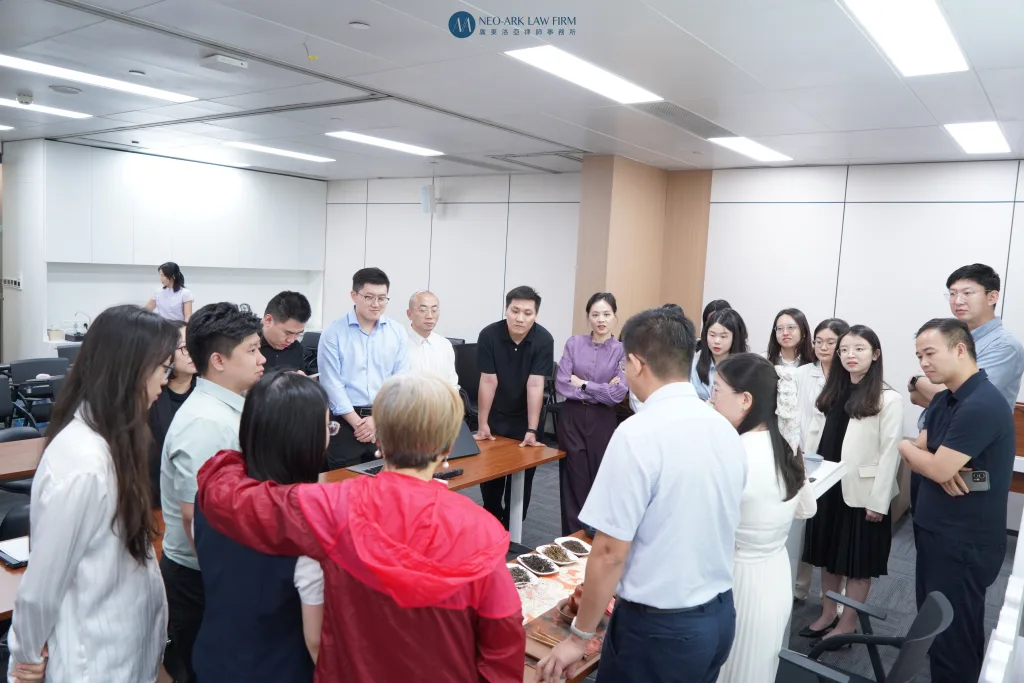
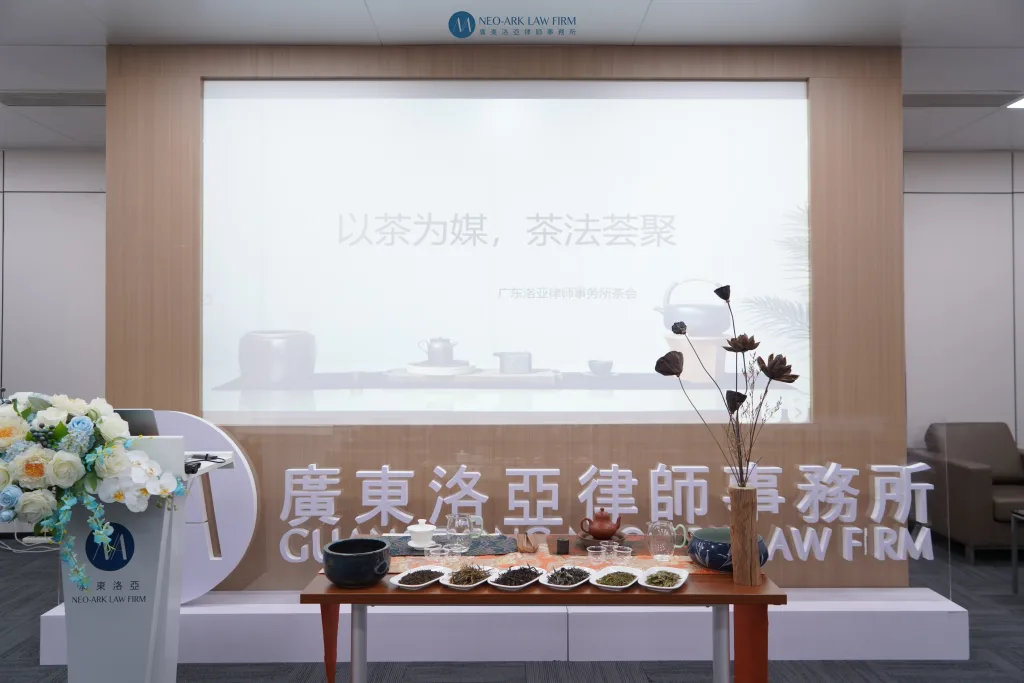
On the afternoon of October 23, 2026, Guangdong Neo-Ark Law Firm hosted a traditional tea appreciation and professional etiquette workshop entitled "Tea Culture & Legal Elegance" (“茶香法韵,雅集洛亚”).

Organized to support work-life balance and refine professional etiquette for practicing attorneys, the salon featured guest speakers Shaoguo Chen, founder of Guangdong Penglaixuan Trade Development Co., Ltd. and advocate for Mengxiyun tea culture, alongside certified tea master Xiaojuan Xu. Hosted by Attorney Tao Zou, the event brought together partners, associates, and administrative staff for an afternoon of traditional tea education, etiquette training, and sensory tasting.

I. The Art & Science of Tea Classification

During the keynote sharing, Mr. Shaoguo Chen introduced the foundational classification of Chinese tea based on processing and fermentation levels across six major tea categories:

  • The Six Major Categories: Green, White, Yellow, Oolong (Cyan), Red (Black), and Dark (Fermented) teas.
  • Tea History & Market Realities: Chen provided historical background on famous teas, noting that commercial "Dahongpao" on today's market is derived from propagated cultivars rather than the original six mother trees on Wuyi Mountain, which are strictly protected state treasures with harvesting prohibited.
  • Business Etiquette & Social Protocols: The lecture addressed practical tea etiquette in corporate and legal networking settings, helping attorneys handle business tea service with confidence and cultural understanding.

II. Master Class: The Ten Steps of Tea Service & Guest Etiquette

Tea Master Xiaojuan Xu led a practical demonstration focusing on the Ten Steps of Tea Preparation (行茶十式) and client hospitality rules:

III. Interactive Blind Tasting & Firm Culture

Following the instructional session, attorneys engaged in a multi-sensory tasting exercise covering six representative teas: Tieguanyin Oolong, Dianhong Black Tea, Silver Needle White Tea, Wuyi Rougui Rock Tea, Duck Shit Aroma Oolong, and Ripe Pu'er Dark Tea.

Attorneys analyzed leaf shape, aroma, and liquor color using traditional sensory evaluation techniques. The highlight of the workshop featured a blind tasting competition, where attorneys Kaiyang Sun and Shuying Lv successfully identified all six tea samples by aroma and taste profile.

By pairing professional etiquette with team bonding, Guangdong Neo-Ark Law Firm continues to enrich its workplace culture, cultivating well-rounded legal professionals and strengthening team cohesion.

About the Author

Yu Yuting
Partner | NEO-ARK Law Firm

Lawyer Yu focuses on foreign-related litigation, cross-border disputes, commercial matters, and legal services for overseas individuals and businesses in China.

Email: [email protected]

About NEO-ARK Law Firm

NEO-ARK Law Firm provides legal services in foreign-related litigation, commercial disputes, family law, and cross-border legal matters, assisting both international and domestic clients throughout China.
2026-10-26

Multiple Neoark Lawyers Selected into the Guangdong Lawyers Association Emerging Foreign-Related Legal Talent Pool

Achievement Announcement

On October 22, 2026, the Guangdong Lawyers Association officially announced the 7th batch of the Guangdong Foreign-Related Law Firm Directory and Foreign-Related Legal Talent Pool. Four young lawyers from Neoark Lawyers—Li Yubo, Yu Yuting, Liu Xinyi, and Tang Jingying—were successfully selected into the Guangdong Lawyers Association Emerging Foreign-Related Legal Talent Pool based on their practical legal expertise and cross-border service capabilities.

About the Talent Pool

The Guangdong Lawyers Association Emerging Foreign-Related Legal Talent Pool serves as a core talent reserve platform for cross-border legal services in Guangdong Province. It focuses on identifying and cultivating high-caliber young legal professionals with international perspectives, mastery of foreign-related legal practice, and alignment with cross-border business demands. The selection of four Neoark lawyers marks another significant milestone in the firm’s development in foreign-related legal practice.

Neoark Lawyers continues to focus on international legal practice, building a dedicated team of lawyers with overseas educational backgrounds, fluency in international business rules, and foreign language proficiency. Covering practice areas such as cross-border investment, international trade, dispute resolution, and intellectual property, the firm delivers multi-tiered cross-border legal solutions to help clients navigate complex international regulatory risks.

Profiles of the Selected Lawyers

1. Li Yubo
  • Practice Areas: Criminal-Civil Intersecting Litigation, Civil & Commercial Litigation, Matrimonial & Wealth Succession, Intellectual Property, Corporate Counsel, Complex Dispute Resolution.
  • Key Appointments: Member of the Criminal-Civil Committee of Guangdong Lawyers Association; Director of the Hong Kong, Macao & Taiwan Law Research Association of Guangdong Law Society; External Supervisor at Guangdong University of Foreign Studies Law School; Arbitrator at Zhanjiang International Arbitration Court and Yulin Arbitration Commission.
  • Biography: With over 20 years of legal experience across foreign trade commissions, state-owned enterprises, and multinational corporations, Attorney Li Yubo has handled high-profile patent infringement cases, trademark disputes, major criminal defense matters, and government land expropriation legal projects.

2. Yu Yuting
  • Practice Areas: Civil & Commercial Litigation, Criminal Defense, Corporate Legal Counsel, Foreign-Related Disputes.
  • Key Appointments: Director of Digital Law Research Association and Family Law Research Association of Guangdong Law Society; Officer of Foreign-Related Legal Services Branch of Guangzhou Lawyers Association; Legal Counsel to Guangzhou Association of Enterprises with Foreign Investment.
  • Biography: Prior to practicing law, Attorney Yu Yuting served in the legal department of a public security organ. She has provided specialized legal services to state-owned entities such as CCCC Group and CCEC5, as well as ongoing counsel for multinational and domestic corporations. Fluent in English, she handles bilingual contract drafting and international commercial litigation and arbitration.

3. Liu Xinyi
  • Practice Areas: Talent & Artist Representation, Civil & Commercial Dispute Resolution, Intellectual Property, Corporate Governance.
  • Key Appointments: Member of Trade Secrets & Privacy Protection Committee of Guangzhou Lawyers Association; Member of Neoark Family Law Research Center.
  • Biography: Holding an LL.B. from East China University of Political Science and Law with 6+ years of practice experience, Attorney Liu Xinyi has handled over 100 litigation and non-litigation IP enforcement matters. She specializes in corporate brand protection, MCN entertainment contracts, live-streaming industry compliance, and corporate governance.

4. Tang Jingying
  • Practice Areas: Internet-Related Dispute Resolution, Contract Disputes, Labor Disputes, Family Law, Corporate Compliance, Criminal Defense.
  • Key Appointments: Director of "San Nong" Legal Research Association; Director of Family Law Research Association of Guangdong Law Society; Senior Corporate Compliance Officer.
  • Biography: Attorney Tang Jingying holds a Master of Laws (LL.M.) in Civil and Commercial Law from Guangdong University of Foreign Studies. One of her representative contract dispute cases was selected among the "Top 50 Annual Cases" by the People's Court Press under the Supreme People's Court. She also developed award-winning legal compliance products for MCN agencies.

Future Outlook

Neoark Lawyers will use this recognition to further enhance its foreign-related legal talent development, strengthen cross-border service capabilities, and support high-quality foreign-related legal developments in Guangdong Province.

About the Author

Yu Yuting
Partner | NEO-ARK Law Firm

Lawyer Yu focuses on foreign-related litigation, cross-border disputes, commercial matters, and legal services for overseas individuals and businesses in China.

Email: [email protected]

About NEO-ARK Law Firm

NEO-ARK Law Firm provides legal services in foreign-related litigation, commercial disputes, family law, and cross-border legal matters, assisting both international and domestic clients throughout China.
2026-10-23

Neoark Lawyers Partner Yu Yuting Provides Cross-Border Legal Advisory Services at the 140th Canton Fair

On-Site Legal Advisory Services

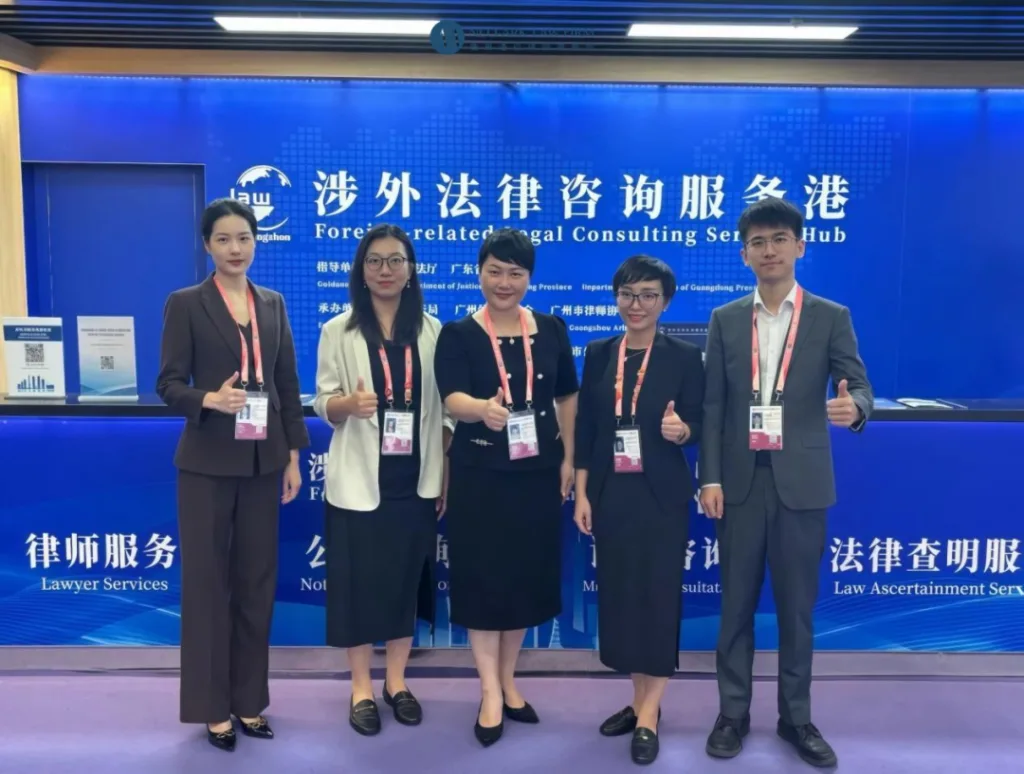
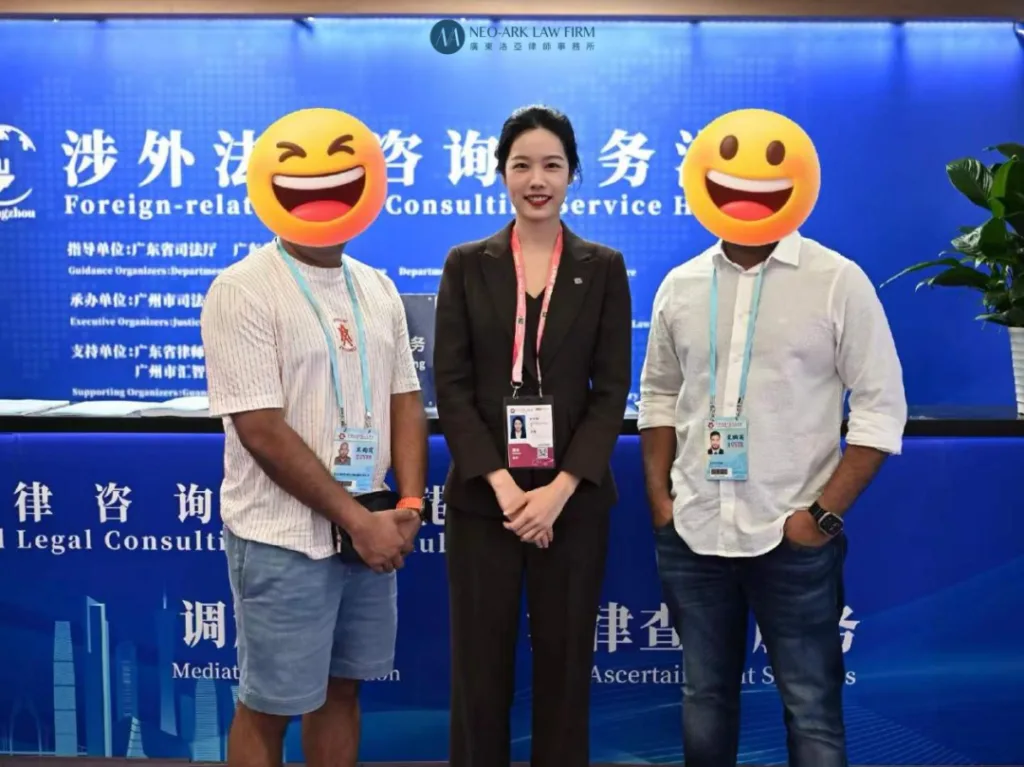
The 140th China Import and Export Fair (Canton Fair) opened grandly, gathering global merchants in Pazhou, Guangzhou. On October 19, Yu Yuting, Partner and Head of the International Legal Department at Neoark Lawyers, was selected by the Guangzhou Lawyers Association to serve at the Canton Fair Foreign-Related Legal Advisory Service Station, providing cross-border legal assistance to overseas buyers and exhibitors to support high-level international business engagement.

During the service period, Attorney Yu Yuting and her team consulted with international merchants from Australia, Singapore, Thailand, Malaysia, Vietnam, the Philippines, Qatar, Cameroon, Ghana, Kyrgyzstan, India, and other countries. They addressed practical legal inquiries and provided formal guidance on international trade dispute resolution, foreign-invested company formation in China, ongoing legal retained counsel services, intellectual property infringement, mediation, notarization, and commercial arbitration.

Phase 1 of this Canton Fair focused on "Advanced Manufacturing," featuring electrical and machinery products, home appliances, new energy vehicles, industrial automation, and service robotics. In addition to providing fixed-station consultations, Attorney Yu Yuting visited the Intelligent Robotics Zone and the General Machinery and Vehicle Exhibition Areas to communicate directly with exhibitors, identify specific business needs, and deliver tailored legal support.

Service Recognition and Upcoming Schedule

This on-site deployment reflects the industry recognition of Attorney Yu Yuting’s cross-border legal practice and highlights Neoark Lawyers’ ongoing dedication to foreign-related legal practice. It also serves as a practical demonstration of the Guangzhou Lawyers Association's initiative to promote international legal standards.

During Phase 3 of the Canton Fair (Theme: "A Better Life," featuring consumer goods), Attorney Yu Yuting will continue her service on-site at the Foreign-Related Legal Advisory Station. Exhibitors and buyers in need of legal counsel are welcome to visit:

  • November 2: Area D, Booth 20-4
  • November 3: Area B, Booth 10.1

Frequently Asked Questions

  • Q: What legal services do Neoark Lawyers offer at the Canton Fair?A: Neoark Lawyers provides cross-border legal assistance on international trade disputes, IP protection, foreign-invested enterprise setup in China, contract drafting, and commercial dispute resolution.

About the Author

Yu Yuting
Partner | NEO-ARK Law Firm

Lawyer Yu focuses on foreign-related litigation, cross-border disputes, commercial matters, and legal services for overseas individuals and businesses in China.

Email: [email protected]

About NEO-ARK Law Firm

NEO-ARK Law Firm provides legal services in foreign-related litigation, commercial disputes, family law, and cross-border legal matters, assisting both international and domestic clients throughout China.

2026-10-20

Scroll to Top

+86 13503030053

BackToTop

Inquiry Inquiry Email Email Tel Tel

Request A Quote

×
Please enable JavaScript in your browser to complete this form.