Skip to content
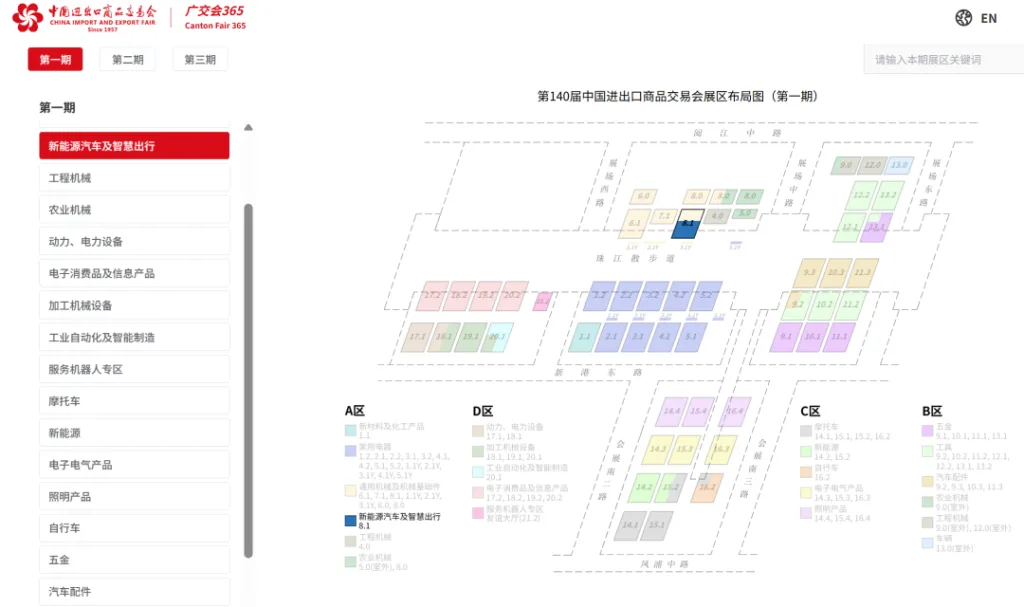
The 140th China Import and Export Fair (Canton Fair) takes place in Guangzhou from October 15 to November 4, 2026, marking the event's 70th anniversary. Phase 1 (October 15–19) focuses on "Advanced Manufacturing," spotlighting New Energy Vehicles (NEVs), smart mobility, and automotive components. Following bilateral talks between President Xi Jinping and President Vladimir Putin in Beijing in May 2026, Sino-Russian economic cooperation continues to deepen, positioning Chinese automakers and auto parts suppliers as key contributors to the Russian market.

(Image Source: Sputnik Russian News Agency)
However, long-chain cross-border automotive transactions carry notable legal and operational exposure: complex market access procedures, evolving recycling fees, export control regulations for dual-use components, and fluctuating currency clearing channels. This guide outlines the key legal considerations, risk mitigation strategies, and judicial precedents for enterprises exporting vehicles and auto parts to Russia.
I. Complete Vehicle Imports: Total Landed Cost Calculation and EAC Compliance
1. Total Landed Cost Modeling
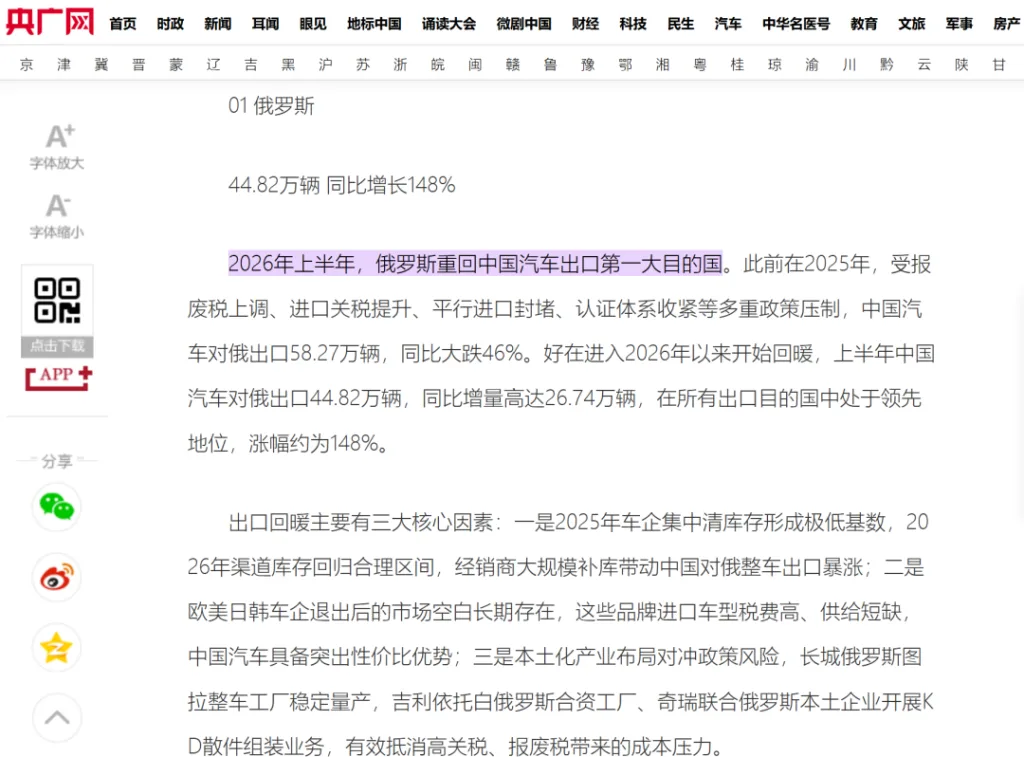
A vehicle's actual import cost in Russia extends well beyond its Factory Gate or FOB purchase price. Exporters and importers must model total landed costs using the following formula:
(Image Source: CNR.cn)
- New Energy Vehicles (NEVs): Electric drive system specifications, battery capacity, engine displacement equivalent, and exact model classifications must be verified against current Russian tax schedules.
- Key Risks: Vague contract terms regarding tax liability, unexpected increases in the Russian scrap tax during transit delays, and discrepancies between physical vehicle specifications (power output, displacement, age) and customs declarations.
- Legal Recommendations:
- Clearly allocate all tax, duty, and fee liabilities between buyer and seller in the sales contract.
- Stipulate precise technical parameters (displacement, horsepower, manufacturing year, import purpose) and assign strict liability for variances.
- Insert a Regulatory Change Clause specifying relief mechanisms, fee adjustments, or termination rights if sudden policy shifts impact performance.
2. EAC Certification and Technical Compliance
(Image Source: Official Canton Fair Website)
Russia, as a member of the Eurasian Economic Union (EAEU), requires imported vehicles and components to comply with TR CU 018/2011 (Technical Regulation on the Safety of Wheeled Vehicles).
- Certification Rules: EAC certificates must be issued by accredited Russian certification bodies (accreditation codes typically starting with
RA.RU), tested in accredited laboratories within Russia, and marked with the EAC logo on the product body. - Penalties: Utilizing fraudulent or borrowed certificates can result in fines of 100%–300% of the cargo value, mandatory goods re-export, and a 3-year blacklist from Russian customs registry systems.
- Legal Recommendations:
- Verify certificate numbers and accredited agency credentials via the official Russian Federal Accreditation Service (RusAccreditation) system prior to signing contracts.
- For pre-owned and parallel-import vehicles, ensure correct issuance of the Electronic Vehicle Passport (e-PAS/e-PTS) and valid scrap tax payment receipts.
- Maintain complete bilingual (Chinese/Russian) technical dossiers, factory certificates, and test reports.
II. Auto Parts Exports: Potential Application of Dual-Use Item Controls
(Image Source: kad.arbitr.ru)
Automotive parts encompass diverse technical classifications. Under the Export Control Law of the People's Republic of China and the updated Dual-Use Items Export Control List, specific automotive components may fall under export restrictions:
- High-Risk Controlled Items:
- High-precision inertial navigation systems, gyroscopes, and accelerometers.
- Specialized automotive-grade semiconductor chips, millimeter-wave radars, and LiDAR units.
- High-strength carbon fiber composite materials and special alloy structures.
- Off-road vehicle chassis and specialized drivetrain components adaptable for dual military-civilian purposes.
- Compliance Actions:
- Screen product HS codes and technical parameters against the updated Dual-Use Items Export Control List prior to export booking.
- Conduct comprehensive Know Your Customer (KYC) and end-user screenings to verify the Russian importer’s identity and end-use application (e.g., commercial aftermarket repair vs. industrial manufacturing) to prevent unauthorized transshipment.
III. Settlement and Foreign Exchange: RMB/RUB Mainstream and Digital Currency Frameworks
While Chinese Yuan (RMB) and Russian Ruble (RUB) serve as the primary clearing currencies for Sino-Russian trade, the implementation of new digital finance regulations requires updated risk controls.
1. Currency Settlement Practices
Under Article 317 of the Civil Code of the Russian Federation, commercial contracts may denominate obligation values in foreign currency or accounting units while settling in Rubles calculated at the Central Bank of the Russian Federation (CBR) exchange rate on the payment date.
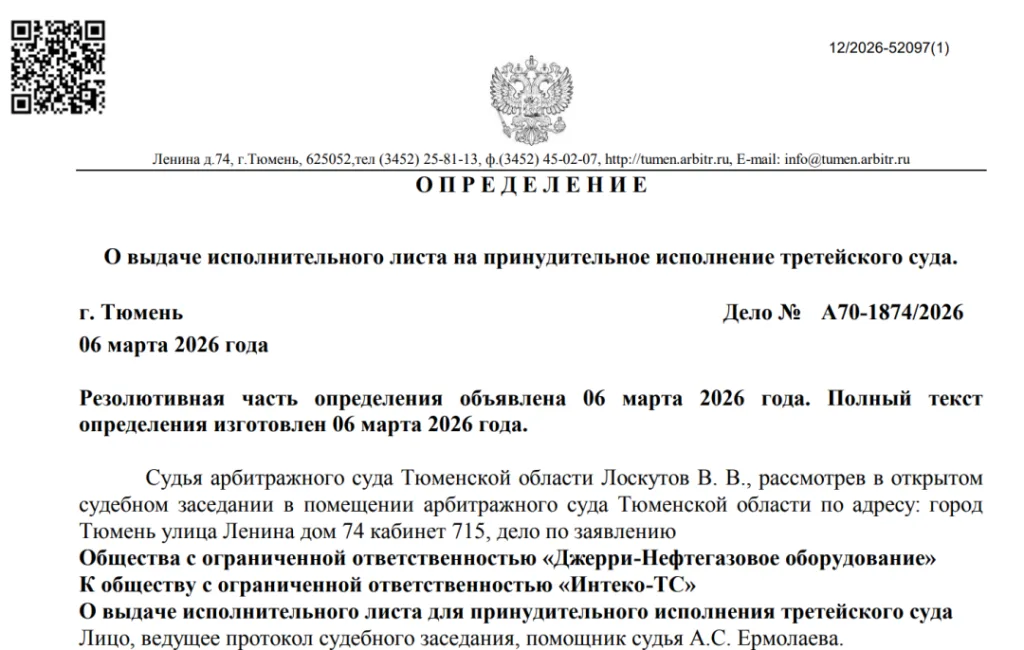
- Judicial Precedent (RMB Denomination): In a cross-border supply dispute adjudicated by the Tyumen Region Arbitration Court, Jereh Oil & Gas Equipment Co., Ltd. (Russian subsidiary of China's Jereh Group) successfully enforced a contract denominated in RMB against Inteko TS LLC. The court granted full monetary recovery, issuing an enforcement order for RMB-denominated principal and penalties converted to RUB at the CBR exchange rate.
2. Digital Assets Regulatory Threshold
Under Russia's experimental legal framework for digital currency and digital rights in foreign trade (effective September 1, 2024), trade contracts may utilize permitted digital financial assets (DFAs) for international clearing. However, transactions reaching or exceeding 10 million RUB (or equivalent) are subject to mandatory financial monitoring by Rosfinmonitoring.
- Compliance Actions:
- Prioritize commercial bank channels for direct RMB/RUB cross-border clearing. Explicitly define payment paths, delivery milestones, and exchange rate risk-sharing mechanisms in the contract.
- If using third-party payment arrangements, execute binding tripartite agreements linking payment obligations to specific contract numbers.
- When evaluating digital currency/DFA clearing options, perform structured legal reviews regarding custody, exchange mechanics, and regulatory compliance.
IV. Russian Import Customs Clearance and Logistics: Channel Comparison
| Transport Channel | Primary Ports & Corridors | Suitable Freight Type | Operational Advantages & Disadvantages |
| Rail Transport | Manzhouli, Suifenhe, Erenhot | Complete Vehicles (Car Carriers/Auto-racks), Auto Parts (Containers) | Pros: High capacity, stable scheduling. Cons: Border bottleneck congestion during peak seasons; buffer time required. |
| Road Transport | Heihe, Tongjiang, Dongning | Complete Vehicles (Commercial Transporters), Urgent Parts | Pros: Fastest transit time, high door-to-door flexibility. Cons: Higher unit cost; vulnerable to severe winter weather delays. |
| Maritime Shipping | Vladivostok, St. Petersburg, Novorossiysk | Bulk Vehicles (Ro-Ro Vessels), Heavy Auto Components | Pros: Ideal for large-volume shipments; lowest cost per ton. Cons: Subject to Russian port throughput capacity and port congestion delays. |
| China-Europe Railway Express | Transit via Kazakhstan / Mongolia to Moscow | High-Value Parts & Specialized Modules | Pros: Balanced transit speed, end-to-end tracking visibility. Cons: Requires strict transit documentation consistency across multiple customs jurisdictions. |
V. Typical Case Studies and Judicial Precedents
(Image Source: Official Canton Fair Website)
Case 1: Enforcement of CIETAC Arbitral Awards in Russian Courts
- Fact Pattern: China’s Zoomlion heavy industry group initiated CIETAC arbitration against Russian buyer ARM-AUTO over unpaid machinery equipment sales. CIETAC awarded damages to Zoomlion, but the buyer refused voluntary compliance. Zoomlion sought enforcement before Russian courts. Lower courts initially refused enforcement, alleging procedural flaw in arbitration notice delivery.
- Russian Supreme Court Ruling: The Supreme Court of the Russian Federation reversed the lower rulings and enforced the CIETAC award. The Court held that the arbitral institution validly served notices to the contractually designated address. The buyer bore sole legal responsibility for failing to notify the tribunal or seller of an address change.
- Takeaway: Arbitration clauses must specify exact corporate registration details, physical notification addresses, email contacts, and mandatory formal notice protocols for address updates.
Case 2: Contractual Inspection Windows and Quality Defect Claims
- Fact Pattern (Case No. А40-117228/2021): A buyer sought a 495 million RUB refund, claiming delivered military medical shelters failed Ministry of Defense technical standards.
- Moscow Court Ruling: Although the contract provided a 6-month quality objection window, the buyer failed to issue a formal written notice of defect within the statutory timeframe and failed to prove fundamental breach. The court rejected the refund counterclaim, granting only partial liquidated damages for minor delays.
- Takeaway: Contracts should explicitly define:
- Inspection timelines for quantity, surface appearance, and packaging.
- Written notification deadlines for hidden defects.
- Formal notification protocols and accredited testing organizations.
- Legal waiver consequences if the buyer fails to object within the stipulated timeframe.
Case 3: International Rail Freight Damage Claims Under SMGS
- Fact Pattern (Case No. А40-296498/2023): Cargo transported from Penza-4 station (Russia) to Kazakhstan suffered freeze damage and transit delays. The recipient generated a formal Commercial Incident Report (Коммерческий акт) immediately upon arrival, documenting exact package damage and temperature impacts.
- Moscow Arbitral Court Ruling: The court applied the Agreement on International Goods Transport by Rail (SMGS) rules on carrier liability, ordering Russian Railways to pay approximately 3.6 million RUB in cargo damages.
- Takeaway: For exports utilizing rail logistics, parties must preserve the SMGS consignment note, official seals, arrival inspection logs, and station-issued Commercial Incident Reports. Immediate on-site evidence preservation is mandatory to sustain damage recovery claims.
VI. Canton Fair On-Site Compliance Checklist
[Exhibitor Checklist]
 ├── 1. Access & Certification: Valid EAC TR CU 018/2011 certificate status verified.
 ├── 2. Trade Compliance: HS code screened against China's Dual-Use Export Control List.
 ├── 3. Contractual Structure: RMB/RUB currency clearing paths & CBR exchange mechanics set.
 ├── 4. Quality Protocols: Dual-tier inspection windows (surface vs. hidden defects) drafted.
 └── 5. Dispute Resolution: Specific CIETAC/arbitration service address clauses inserted.
- Access Documentation: Ensure all displayed vehicle models and components hold valid EAC registration dossiers or clear certification pathways.
- Export Control Screening: Verify product technical specifications against Chinese dual-use control thresholds before agreeing to foreign delivery schedules.
- Contract Drafts: Include explicit clauses allocating scrap tax obligations, regulatory change risk, RMB clearing parameters, and strict dispute service protocols.
Conclusion
Sino-Russian automotive trade presents expanding commercial opportunities during Phase 1 of the 140th Canton Fair. To maximize commercial gains while safeguarding transaction value, automotive exporters and importers should complete comprehensive legal reviews covering product certification, total landed cost structures, export control compliance, RMB clearing mechanisms, and enforceable dispute resolution clauses.
About the Author

Yu Yuting
Partner | NEO-ARK Law Firm
Lawyer Yu focuses on foreign-related litigation, cross-border disputes, commercial matters, and legal services for overseas individuals and businesses in China.
Email: [email protected]
About NEO-ARK Law Firm
NEO-ARK Law Firm provides legal services in foreign-related litigation, commercial disputes, family law, and cross-border legal matters, assisting both international and domestic clients throughout China.