Our Role: Defense Counsel for Downstream Entities (Company B and Company C)
The Outcome: The court segregated liability between the primary manufacturing source and downstream participants, capping the joint liabilities of Company B and Company C at strictly limited fractions of the total claim.
Case Background & Context
The Plaintiff, a brand owner holding multiple registered trademarks, trade dress rights, and trade name protections, initiated a comprehensive lawsuit against multiple defendants, including Company A, Company B, and Company C. The claim alleged trademark infringement and unfair competition involving products that allegedly used confusingly similar marks, imitated packaging design, and copied promotional narratives. Given the alleged scale of the infringement, the Plaintiff sought a substantial total compensation package exceeding 10 million RMB.
Our firm was retained to represent Company B and Company C, both operating as downstream business entities within the commercial supply chain. The defense strategy centered on establishing a legitimate supply chain source, validating trademark sub-authorization, and proving that these clients had fully satisfied their statutory duty of reasonable care as downstream operators.
Faced with an aggressive multi-defendant lawsuit, our IP litigation team focused on partitioning liability to insulate the downstream clients from the substantial liabilities directed at the primary manufacturer:
Advocating for Judicial Segregation of Liability: We successfully presented arguments distinguishing the legal responsibilities of source manufacturers from those of downstream participants. We established that even if a statutory legitimate source defense is not fully sustained, downstream operators should not automatically bear full joint liability for the entire scope of a manufacturer's large-scale production.
Contextualizing Fault and Operational Scale: Our team introduced detailed evidence regarding the modest operational realities, localized commercial scale, and limited degree of fault of our clients. This effectively guided the court to evaluate the downstream entities independently from the willful intent and manufacturing volume of the primary infringers.
Securing Proportional Accountability: By focusing on the equitable distribution of liability, we countered the Plaintiff's efforts to enforce undifferentiated joint and several liability, anchoring our clients' exposure strictly to their specific degree of commercial involvement.
The Judgment & Commercial Impact
The People's Court affirmed the core principles of our defense regarding liability segregation. While evaluating the significant liability attributed to the principal manufacturing source, the court strictly limited our clients' financial exposure:
Company B’s Liability Capped: Restricted strictly to a nominal and limited portion of the total judgment.
Company C’s Liability Capped: Restricted strictly to a minimal and limited portion of the total judgment.
Why Clients TrustNeo-Ark Law Firm: This case exemplifies a crucial judicial trend in Chinese intellectual property enforcement: targeting the source of infringement while strictly segregating downstream commercial liability. It provides a valuable precedent for downstream entities facing high-value litigation, demonstrating how a targeted defense strategy can successfully isolate a company’s operational assets and limit financial exposure in complex, multi-party disputes.
Recovering Repeated Private Loans in China: Renewals and Capitalised Interest
Overview
Repeated private loans can create complex repayment disputes, particularly when advances are made over several years and the parties use different payment methods. The accounting may become even more complicated when previously accrued interest is incorporated into a later loan balance.
In this case, a borrower who was a Hong Kong resident obtained funds from the lender through multiple transactions over an extended period. The advances included bank transfers, WeChat transfers and amounts recorded as interest converted into principal. Written loan acknowledgements were issued, with an agreed annual interest rate of 6%.
Despite making partial interest payments, the borrower did not repay the principal. The lender repeatedly requested repayment by telephone and WeChat, while the borrower acknowledged the borrowing but continued to delay payment.
The dispute highlights important considerations in recovering repeated private loans in mainland China, including how to establish the outstanding debt, distinguish new advances from capitalised interest, and assess repayment obligations where no fixed repayment date has been agreed.
Case Snapshot
Item
Details
Dispute Type
Private Loan / Debt Recovery
Legal Jurisdiction
Mainland China
Borrower
Hong Kong resident
Loan Period
Approximately September 2018 to May 2024
Number of Loan Transactions
Eight
Approximate Loan Balance Claimed
RMB 790,000
Agreed Interest Rate
6% per annum
Approximate Dispute Value
RMB 859,000
Attorney
Yu Yuting
Law Firm
NEO-ARK Law Firm
Key Legal Issues
1. How should repeated loans over several years be established?
When funds are advanced through multiple transactions, the lender must establish the individual advances and explain how they relate to the total amount claimed.
Written loan acknowledgements can help identify the parties' lending arrangements. Bank transfer records and WeChat payment records may corroborate the actual movement of funds. Where the claimed balance includes amounts carried forward from earlier transactions, the underlying records should also explain how those amounts were calculated.
In this case, the lending history involved eight transactions over several years. The supporting materials included written loan acknowledgements, bank and WeChat transfer records, and communications in which the borrower acknowledged the debt.
2. Can previously accrued interest be converted into principal?
A loan balance may include amounts arising from previously accrued interest, but the legal treatment of those amounts requires careful examination.
Under the rules governing private lending in mainland China, parties cannot avoid the applicable interest-rate limits simply by describing unpaid interest as new principal. Where previously accrued interest is incorporated into a later loan balance, the court may examine the underlying transactions, the parties' agreement and the applicable legal ceiling.
The calculation must therefore distinguish between:
Principal actually advanced to the borrower;
Interest accrued under the earlier loan arrangements;
Interest payments already made; and
Any amount carried forward or incorporated into a subsequent loan acknowledgement.
The fact that an amount appears in a later loan acknowledgement does not, by itself, establish that the entire amount is recoverable as principal.
3. Can a lender demand repayment when no repayment date was agreed?
Under Article 675 of the Civil Code of the People's Republic of China, where the parties have not agreed on a repayment period, or the period cannot be determined, the borrower may repay the loan at any time, while the lender may demand repayment after allowing a reasonable period.
Accordingly, the absence of a fixed maturity date does not prevent a lender from making a repayment demand.
In this case, the lender made repeated repayment requests by telephone and WeChat. The borrower acknowledged the borrowing but did not repay the principal.
4. How should the agreed interest rate be assessed?
The parties recorded an annual interest rate of 6%. Whether and to what extent interest is recoverable must be assessed under the rules applicable to the relevant loan transactions.
Because the lending relationship extended from 2018 to 2024, the applicable rules and judicial interpretations should be considered in light of the dates and circumstances of each transaction. The interest calculation should also account for payments already made and any amounts carried forward into later loan records.
Legal and Evidentiary Considerations
Issue
Relevant Material
Legal Significance
Multiple loan transactions
Eight written loan acknowledgements
Helps establish the sequence and terms of the lending arrangements
Actual fund transfers
Bank and WeChat transfer records
Corroborates the movement of funds
Interest carried forward
Loan records and transaction calculations
Helps determine whether amounts recorded as principal include previously accrued interest
Partial interest payments
Payment records
Relevant to calculating the outstanding balance
Borrower's acknowledgement
WeChat and telephone communications
May corroborate the existence of the debt
Repayment demands
Communications requesting repayment
Helps establish that the lender demanded repayment despite the absence of a fixed repayment date
Practical Lessons for Repeated Private Loan Disputes
Maintain a transaction-by-transaction loan record
Where lending takes place over several years, a consolidated balance alone may not be sufficient. Each advance, payment and adjustment should be traceable to its underlying transaction.
Separate new advances from capitalised interest
A lender should maintain a clear calculation showing which amounts represent new funds actually advanced and which represent interest carried forward from earlier arrangements. This distinction can be important when a court assesses the recoverable principal and interest.
Preserve digital payment and communication records
WeChat transfers and messages may form an important part of the evidence in a private lending dispute. Relevant records should be preserved in a form that allows the transaction details, parties and context to be verified.
Make and document repayment demands
Where no repayment date has been agreed, a lender should make a clear demand for repayment and allow a reasonable period for compliance. Keeping records of these communications can help establish the course of dealings between the parties.
Frequently Asked Questions
Can multiple private loans be combined into one debt claim in China?
A lender may claim the outstanding balance arising from multiple loan transactions. However, the lender should be able to explain each transaction and provide records supporting the total amount claimed.
Can unpaid interest be added to the principal of a later loan?
It may be possible in certain circumstances, but the treatment is subject to the applicable rules governing private lending and interest-rate limits. Re-labelling unpaid interest as principal does not automatically make it recoverable.
Are WeChat transfers valid evidence in a private loan dispute?
WeChat transfer records may help establish that funds were transferred. Their evidential significance depends on whether they can be linked to the parties, the loan arrangements and the surrounding communications.
Can a lender demand repayment if the loan has no fixed repayment date?
Yes. Under Article 675 of the Civil Code, where no repayment period has been agreed or can be determined, the lender may demand repayment after allowing the borrower a reasonable period.
Conclusion
Recovering repeated private loans requires a clear account of the entire lending history. Where transactions span several years and include bank transfers, WeChat payments and interest carried forward into later loan records, the lender must be able to explain how the claimed balance was formed.
This case illustrates the importance of maintaining written loan acknowledgements, preserving digital payment records and distinguishing actual advances from previously accrued interest. It also highlights that a lender may demand repayment even where the parties have not agreed on a fixed repayment date.
The recoverability of the claimed principal and interest ultimately depends on the underlying transactions, the applicable legal rules and the court's assessment of the evidence.
About the Author
Yu Yuting Partner | NEO-ARK Law Firm
LawyerYu focuses on foreign-related litigation, cross-border disputes, commercial matters, and legal services for overseas individuals and businesses in China.
NEO-ARK Law Firm provides legal services in foreign-related litigation, commercial disputes, family law, and cross-border legal matters, assisting both international and domestic clients throughout China.
2026-11-13
140th Canton Fair Legal Insights | Three Core Compliance Challenges for Foreign Direct Investment in China
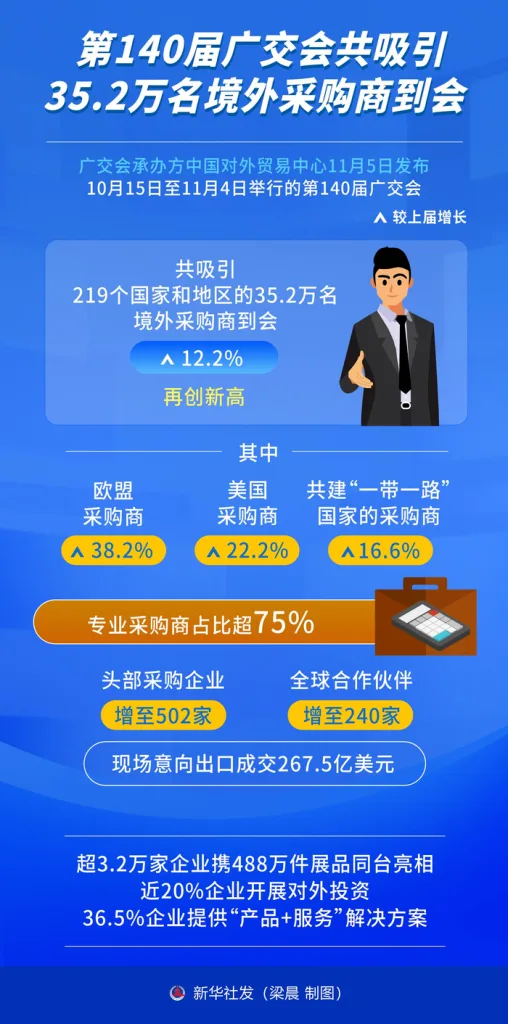
On November 4, 2026, the 140th China Import and Export Fair (Canton Fair) concluded in Guangzhou. Spanning 1.55 million square meters, the landmark 70th-anniversary session welcomed a record-breaking 352,000 overseas buyers from 219 countries and regions, marking a 12.2% increase over the previous session.
Throughout her duty rotation at the Guangzhou Foreign-Related Legal Services Port, Yu Yuting—Partner and Head of the International Legal Affairs Department at Guangdong Neo-Ark Law Firm—advised numerous international executives regarding market entry. A prominent trend emerged from these consultations: overseas enterprises are increasingly shifting from traditional trade sourcing to direct "Investment in China" (在华投资). To support smooth operational execution, this briefing outlines three core legal compliance priorities for foreign enterprises establishing a commercial footprint in China.
(Image Source: Official Canton Fair Website)
I. Distribution Channel Compliance & Brand Protection
For foreign brands that have established domestic trading subsidiaries and plan to expand their retail or wholesale networks across China, structuring compliant distribution and brand licensing agreements is critical during early market entry.
Defining Cargo Title & Risk Transfer: Clearly establish the exact point at which ownership and risk transfer across transaction stages. Contracts must distinguish between outright distribution (经销), agency sales (代销), and consignment (寄售), tailored to the specific commercial workflow rather than relying on generic templates.
Intellectual Property Boundaries: Set explicit clauses governing trademark usage scope, patent licensing permissions, and technical confidentiality obligations to prevent unauthorized sub-licensing or IP dilution.
Antitrust-Compliant Pricing Controls: Structure pricing policies strictly within China’s Anti-Monopoly Law framework. Clearly define Recommended Retail Prices (RRP) and compliance mechanisms while avoiding unlawful Resale Price Maintenance (RPM).
Cross-Regional Sales (Channel Conflict) Restrictions: Define clear territorial boundaries, cross-regional sales (窜货) criteria, and corresponding breach remedies or termination rights to safeguard regional market stability.
(Image Source: CCTV-13)
II. Capital Settlement & Foreign Exchange Compliance
Corporate bank account setup and cross-border fund flows frequently trigger regulatory bottlenecks for newly established foreign-invested enterprises (FIEs). Misconceptions regarding account categories and State Administration of Foreign Exchange (SAFE) rules often lead to compliance holds.
[Cross-Border Fund Flow Compliance Architecture]
 ├── Account Segregation ───> Strict separation of corporate vs. personal accounts
 ├── Pre-Opening Readiness ─> Full KYC dossier (investor credentials, filings, legal rep ID)
 └── FX & BOP Reporting ────> Authentic trade/investment background + mandatory SAFE declarations
Strict Segregation of Corporate & Personal Accounts: Maintain absolute separation between corporate bank accounts and personal accounts. All commercial revenue and operational settlements must be routed through corporate accounts; utilizing personal accounts to collect or disburse company funds is strictly prohibited.
Pre-Opening KYC & Documentation Readiness: Prepare complete corporate registration proofs, foreign investment filing receipts, Articles of Association, and legal representative identification documents in advance to satisfy strict bank anti-money laundering (AML) and due diligence reviews.
Foreign Exchange & Balance of Payments Compliance: Ensure that capital injections, dividend repatriations, and current account settlements correspond to authentic underlying transactions. Complete mandatory Balance of Payments (BOP) statistical declarations on time to avoid account freezes or regulatory penalties.
(Image Source: Xinhua News Agency)
III. Manufacturing Partnerships & Entity Establishment Risk Controls
As foreign investors deepen their commitment in China, demand for localized manufacturing partnerships and physical entity incorporation—particularly in electronics manufacturing and hardware processing—has grown substantially. Risk management in this phase depends on proactive legal structuring prior to execution:
Compliance Layer
Core Legal Requirements & Risk Mitigation Actions
Entity Establishment
Screen business scopes against the Special Administrative Measures (Negative List) for Foreign Investment Access; confirm approval workflows and plan registered capital timelines (noting the 5-year full payment rule under China's Company Law). (See our previous guide on setting up a company in China for detailed entity comparisons.)
Partner Due Diligence
Prior to signing Original Equipment Manufacturer (OEM) or Original Design Manufacturer (ODM) contracts, conduct comprehensive due diligence on domestic factories to verify production capacity, regulatory licenses, and clean IP standing.
Contractual Safeguards
Incorporate binding clauses governing product quality standards, delivery schedules, tooling ownership, background/foreground IP attribution, and liquidated damages directly into manufacturing agreements.
Conclusion
The rise of "Investment in China" as a central theme at the 140th Canton Fair underscores sustained global confidence in China's industrial supply chains and business environment, signaling a strategic shift from exploratory trade to long-term operational commitment. Foreign enterprises planning localized expansion should engage experienced cross-border legal counsel early to structure compliant distribution networks, banking frameworks, and manufacturing contracts.
About the Author
Yu Yuting Partner | NEO-ARK Law Firm
LawyerYu focuses on foreign-related litigation, cross-border disputes, commercial matters, and legal services for overseas individuals and businesses in China.
NEO-ARK Law Firm provides legal services in foreign-related litigation, commercial disputes, family law, and cross-border legal matters, assisting both international and domestic clients throughout China.
2026-11-12
Recovering an Unpaid Private Loan in China: Evidence and Repayment Rights
Overview
A private loan dispute can become difficult when a borrower receives money in several instalments, makes partial interest payments, but fails to repay the principal. The situation may be further complicated when the parties never agreed on a fixed repayment date.
In this case, the borrower, a Hong Kong resident, obtained several loans from the lender over a period of approximately two years. The transactions involved both bank transfers and cash payments, and the borrower issued written acknowledgements of the debts. Although the borrower made partial interest payments and later acknowledged the borrowing during communications with the lender, the principal remained unpaid.
The dispute illustrates several important issues in private lending claims in mainland China: how to establish the existence and amount of a loan, how to address cash advances, and how a lender may demand repayment when no repayment date has been agreed.
Case Snapshot
Item
Details
Dispute Type
Private Loan / Debt Recovery
Legal Jurisdiction
Mainland China
Borrower
Hong Kong resident
Loan Period
Approximately April 2018 to May 2020
Number of Advances
Five
Approximate Principal
RMB 590,000
Agreed Interest Rate
6% per annum
Approximate Dispute Value
RMB 730,000
Attorney
Yu Yuting
Law Firm
NEO-ARK Law Firm
Key Legal Issues
1. How can a lender prove loans made through both bank transfers and cash payments?
A private lending claim requires the lender to establish that the funds were actually advanced and that the parties intended to create a lending relationship.
Bank transfer records can help establish the movement of funds. For cash advances, written acknowledgements, receipts, communications between the parties and other corroborating materials may be particularly important.
In this case, the lender relied on written loan acknowledgements for the advances, together with bank transfer records and communications in which the borrower acknowledged the borrowing. Considered together, these materials provided a basis for demonstrating the lending relationship and the outstanding debt.
2. Can a lender demand repayment if no repayment date was agreed?
Under Article 675 of the Civil Code of the People's Republic of China, where a loan repayment period has not been agreed or cannot be determined, the borrower may repay the loan at any time, while the lender may demand repayment after giving the borrower a reasonable period to do so.
Accordingly, the absence of a fixed repayment date does not mean that the borrower can indefinitely postpone repayment. A lender may request repayment and allow a reasonable period for the borrower to comply.
Here, the parties had not specified a repayment deadline. The lender therefore relied on repeated repayment demands made by telephone and through messaging communications.
3. Is an agreed annual interest rate of 6% enforceable?
The enforceability of private loan interest depends on the applicable legal rules and the relevant contract date. Chinese judicial rules on private lending have changed over time, including the introduction of an interest-rate ceiling linked to the one-year Loan Prime Rate (LPR).
The agreed annual rate in this case was 6%. Its enforceability should be assessed under the rules applicable to the relevant loan agreements and advances. The fact that the borrower made partial interest payments may also be relevant to understanding the parties' performance of the agreements, but does not by itself establish the final amount recoverable.
Legal and Evidentiary Considerations
Issue
Relevant Material
Legal Significance
Existence of the loans
Written loan acknowledgements
Supports the existence and terms of the lending relationship
Delivery of funds
Bank transfer records and cash-payment documentation
Helps establish that the loan advances were actually made
Borrower's acknowledgement
Telephone and messaging communications
May corroborate the borrowing and the outstanding obligation
Repayment demands
Communications requesting repayment
Helps demonstrate that the lender sought repayment despite the absence of a fixed maturity date
Interest agreement
Written loan terms
Provides a basis for assessing the agreed interest, subject to applicable legal limits
Practical Lessons for Private Loan Recovery in China
Keep a clear record of every advance
Where a loan is advanced in several instalments, each transaction should be documented. The records should identify the amount, date, recipient and purpose of the payment. Cash advances should be supported by signed acknowledgements or other reliable documentation.
Preserve communications acknowledging the debt
Messages in which a borrower confirms the loan, discusses repayment or requests additional time may help corroborate the written loan documents and payment records. Such communications should be preserved in their original form where possible.
Make a clear repayment demand
If the parties did not agree on a repayment date, the lender should make a clear repayment request and allow a reasonable period for compliance. Keeping a record of the demand can help establish the history of the dispute.
Assess interest separately from principal
The principal advanced, interest already paid and any remaining interest claim should be calculated separately. The applicable interest rules must be assessed with reference to the dates and terms of the relevant loan transactions.
Frequently Asked Questions
Can a lender sue for repayment if the loan agreement has no maturity date?
Yes. Under Article 675 of the Civil Code, where no repayment period has been agreed or can be determined, the lender may demand repayment after allowing the borrower a reasonable period to repay.
Are bank transfers enough to prove a private loan?
Not necessarily. A bank transfer can demonstrate that money moved between accounts, but the legal nature of the transfer may still need to be established. Loan acknowledgements, communications and other supporting materials can help show that the payment was a loan rather than a gift or another type of transaction.
Can cash loans be recovered through litigation in China?
A cash loan may be recoverable if the lender can establish that the money was actually delivered and that the parties intended it to be a loan. Written acknowledgements and corroborating records can be important.
Does a borrower's acknowledgement of the debt help a recovery claim?
It can. A clear acknowledgement may corroborate the loan documents and payment records. Its significance will depend on the wording, authenticity and surrounding circumstances.
Conclusion
Recovering a private loan in mainland China requires more than showing that money changed hands. The lender must establish the lending relationship, demonstrate that the funds were advanced and provide a reliable account of the outstanding principal and interest.
This case illustrates the value of maintaining written loan acknowledgements, payment records and communications confirming the debt. It also demonstrates that the absence of a fixed repayment date does not necessarily prevent a lender from demanding repayment under Chinese law.
The final outcome of any claim will depend on the evidence, the applicable legal rules and the court's assessment of the particular transactions.
About the Author
Yu Yuting Partner | NEO-ARK Law Firm
LawyerYu focuses on foreign-related litigation, cross-border disputes, commercial matters, and legal services for overseas individuals and businesses in China.
NEO-ARK Law Firm provides legal services in foreign-related litigation, commercial disputes, family law, and cross-border legal matters, assisting both international and domestic clients throughout China.
2026-11-10
Industry Recognition | Guangdong Neo-Ark Law Firm Shortlisted for the 2026 ALB China Regional Law Awards in Real Estate & Construction
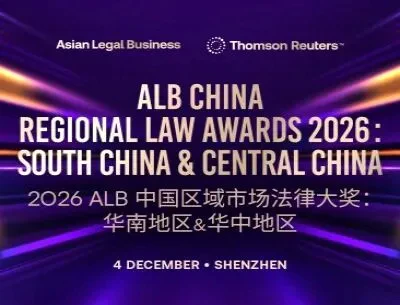
On November 3, 2026, Asian Legal Business (ALB)—a leading legal publication owned by Thomson Reuters—officially announced the finalists for the 2026 ALB China Regional Law Awards: South China & Central China. Recognized for its deep industry expertise and track record in real estate and infrastructure matters, Guangdong Neo-Ark Law Firm has been shortlisted for Real Estate & Construction Law Firm of the Year: South China & Central China – Local.
I. Significance of the ALB Regional Law Awards
Published by Thomson Reuters, Asian Legal Business (ALB) is one of the most authoritative legal media platforms in the Asia-Pacific region. Its annual regional law awards evaluate firms across deal complexity, market innovation, client feedback, and sustained practice growth.
This nomination marks another milestone in Neo-Ark's consistent recognition by ALB:
[Neo-Ark Law Firm ALB Recognition Track Record]
 ├── 2021: Shortlisted — Rising Law Firm of the Year
 ├── 2023: Shortlisted — Real Estate & Construction Law Firm of the Year
 ├── 2024: Shortlisted — Real Estate & Construction Law Firm of the Year
 └── 2026: Shortlisted — Real Estate & Construction Law Firm of the Year (South & Central China - Local)
II. Core Strengths in Real Estate & Infrastructure Law
Being shortlisted for the third time in the Real Estate & Construction category reflects sustained market trust in Neo-Ark's specialized legal capabilities:
Full-Lifecycle Project Advisory: Delivering integrated legal support across land acquisition, project financing, EPC contracting, engineering bidding compliance, and commercial real estate operations.
Complex Construction Dispute Resolution: Representing developers, state-owned construction conglomerates, and infrastructure investors in high-stakes engineering cost audits, construction delay claims, and cross-border infrastructure arbitration.
Institutional Backing: Supported by the firm's dedicated Construction & Infrastructure Investment Law Research Center and its newly upgraded Special General Partnership governance structure with RMB 10 million in paid-in capital.
III. Commitment to Service Excellence
This recognition underscores the industry's validation of Neo-Ark Law Firm's professional rigor, service quality, and client reputation. Looking ahead, Guangdong Neo-Ark Law Firm will continue refining its specialized practice teams and delivering pragmatic, high-caliber legal solutions for real estate, construction, and infrastructure enterprises across the Greater Bay Area and beyond.
About the Author
Yu Yuting Partner | NEO-ARK Law Firm
LawyerYu focuses on foreign-related litigation, cross-border disputes, commercial matters, and legal services for overseas individuals and businesses in China.
NEO-ARK Law Firm provides legal services in foreign-related litigation, commercial disputes, family law, and cross-border legal matters, assisting both international and domestic clients throughout China.
 Skip to content