Skip to content
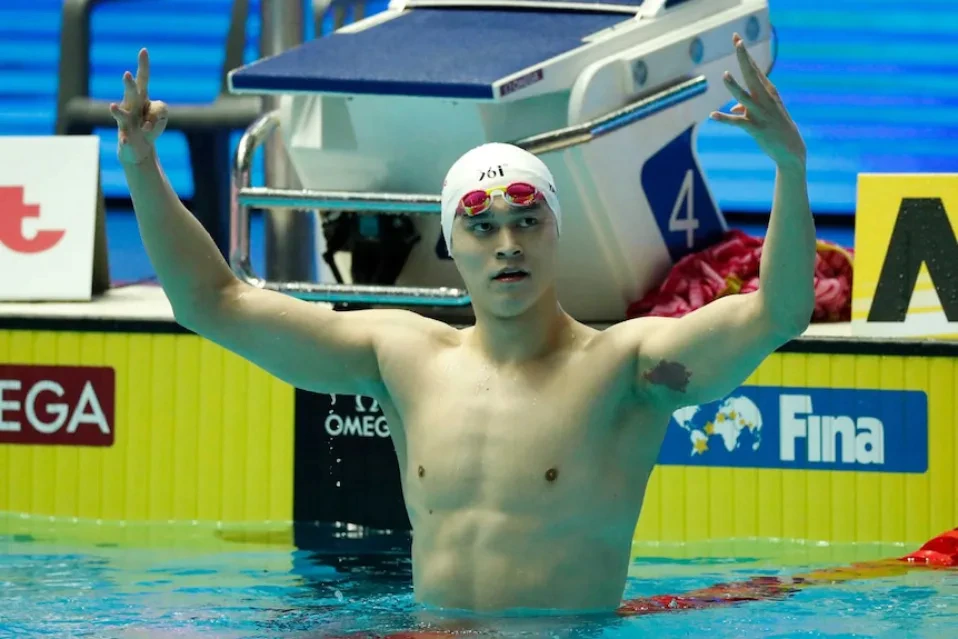
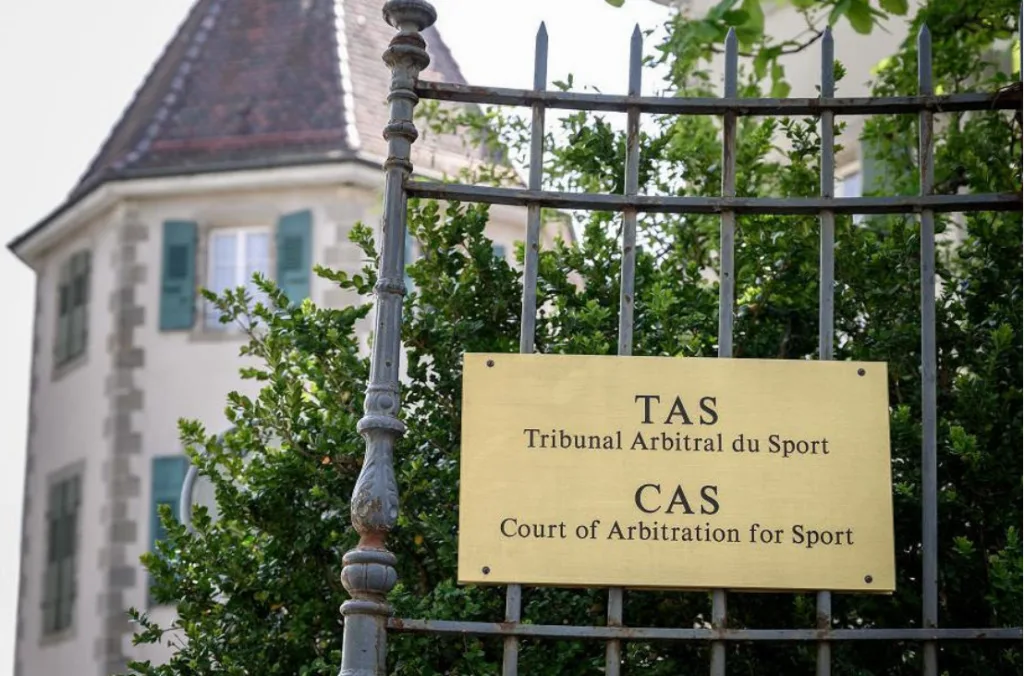
In September 2018, three International Doping Tests & Management (IDTM) officials conducted an out-of-competition anti-doping test on elite swimmer Sun Yang. Due to Sun’s team questioning the testers’ professional qualifications, refusing to cooperate, and ultimately destroying sample containers, the case went to the Court of Arbitration for Sport (CAS) for a high-profile retrial. This resulted in a final four-year and three-month suspension for the athlete.
Setting aside public sentiment and media rhetoric, the core professional questions remain: Could Sun Yang’s legal team have executed a superior defense strategy? Could "defects in testing qualifications" serve as a valid absolute defense under international sports law? This article evaluates these issues through the lens of CAS adjudicative logic, the World Anti-Doping Code (WADC), and the International Standard for Testing and Investigations (ISTI), offering critical compliance guidance for athletes moving forward.
(Source:ABC News)
I. Core CAS Logic: Sporting Autonomy and Procedural Precedence
CAS arbitration operates strictly under the principle of sporting autonomy, with the WADC and the ISTI serving as its primary constitutional frameworks. Established CAS jurisprudence dictates that an athlete's objections to testing protocols must be funneled exclusively through compliant, pre-defined legal channels:
- Conditional acceptance of the test.
- Formal contemporaneous written objections on the doping control form.
- Retrospective post-test administrative and legal appeals.
Unless the testing authority is conclusively proven to have committed fundamental, malicious procedural fraud, athletes are strictly barred from executing unilateral, self-help confrontational actions—such as destroying biological samples or physically obstructing collection officers—on the mere suspicion of procedural flaws.
Sun Yang’s legal team anchored their defense on the argument that the blood collection nurse was practicing cross-provincially in violation of Chinese domestic administrative laws. However, the CAS Retrial Panel explicitly applied ISTI Article 5.3.3 and Annex H, which stipulate only that blood sampling officers must hold a valid, internationally recognized qualification and a formal written authorization from the testing agency (IDTM).
The tribunal ruled that territorial practice restrictions under China’s Nurses Regulations represent domestic administrative norms and do not invalidate compliance metrics established under international sports law. This highlights a foundational reality in international sports dispute resolution: domestic statutes cannot override international anti-doping treaty frameworks.
(Source:CCTV NEWS)
II. The Qualification Defense: A Lack of Evidentiary Support
The strategy to treat the nurse's cross-provincial practice as an absolute defense failed primarily due to an insufficient evidentiary foundation before the tribunal. While Sun’s team reported the nurse to local Chinese health authorities, those regulatory bodies never issued an official, binding administrative decision confirming a statutory violation. In international arbitration, if a party invokes a violation of domestic law but cannot produce a final, binding determination from the competent state authority proving that breach, the arbitral tribunal will routinely dismiss the argument. Consequently, this core defense lacked legal traction from the outset.
Furthermore, the CAS Retrial Panel re-verified that the ISTI enforces no specialized medical or professional qualification metrics on a "Chaperone" (or Urinalysis Witness). The international standard requires only that the chaperone be an adult, of the same gender as the athlete, and completely free from identifiable conflicts of interest. Because Sun's defense could not demonstrate actual malice, hostility, or a structural conflict of interest on the part of the chaperone, the witness's primary employment background had no bearing on the validity of the doping control session.

(Source:LawInSport)
III. The Fatal Mistake: Escalating Procedural Objections into Substantive Violations
The catastrophic failure of Sun Yang's defense strategy lay in escalating a legitimate procedural objection into a clear substantive violation of international rules. This breakdown manifested across three distinct operational errors:
- Blurs in Legal Boundaries: The defense confused the right to dispute a process with the right to physically terminate it. Legitimate disputes require on-site evidence preservation and formal notation on the DCO's forms, not the destruction of biological samples or security standoffs.
- Absence of Specialized Sports Law Protocols: The operational directive issued by the athlete's support staff to "withhold the samples" was an intuitive reaction rooted in domestic administrative enforcement logic, completely ignoring the strict liability rules of international sports arbitration.
- Emotional Countermeasures Over Strategic Litigation: By converting procedural frustration into physical non-cooperation, the team forfeited their status as compliant actors, completely shifting the burden of proof against them.

(Source:inewsweek.cn)
IV. Replay of the Better Path: The Optimal Legal Framework
Had the athlete's support team been trained in international anti-doping compliance, they would have executed the following sequence to preserve the athlete's career while fully contesting the test's validity:
1. Conditional Acceptance Strategy
The athlete should have declared on-site: "I formally object to the authorization and specific credentials of this testing team. However, to maintain full compliance and protect sample integrity, I will submit to the collection under protest, provided all samples are sealed, co-signed, and photographed by both parties for the record." This approach aligns with the WADA Guidelines and completely insulates an athlete from triggering a refusal charge.
2. Rigorous Evidence Preservation
The support team should have systematically photographed the DCO’s IDTM authorization letter, the nurse’s practice certificate, and the chaperone’s identification, while recording a clear audio log asking the officers to verify their individual project-specific authorizations.
3. Post-Test Administrative Appeal
Within one hour of the session, the team should have contacted the national anti-doping agency and specialized external counsel to file a formal, written jurisdictional objection with IDTM and the international federation (FINA) within 24 hours. So long as the physical samples remain intact, even if the tribunal later rules the testing session valid, the athlete faces no threat of a violation under WADC Article 2.3 (Evading/Refusing Sample Collection) or WADC Article 2.5 (Tampering with Doping Control).
4. The Critical Prohibition
Under no circumstances should a support team open a sealed sample bottle, smash a biological transport container, or seize documentation from a DCO. The moment physical destruction occurs, Articles 2.3 and 2.5 are automatically triggered, both carrying a mandatory baseline sanction of a 4-year suspension for first-time infractions.

(Source:caixin)
V. Key Takeaways from the Reduced Sanction on Retrial
The reduction of Sun Yang's ban from eight years down to four years and three months during the 2021 retrial stemmed entirely from a reassessment of the athlete's intent. The Retrial Panel concluded that the destruction of the collection containers was not part of a premeditated, long-term strategy to evade drug testing or mask a prohibited substance. Instead, it was an immediate reaction sparked by panic and poor advice from his inner circle regarding the testers' credentials.
While this mitigated the "intent" element of the infraction—thereby avoiding the max penalty—the panel firmly reiterated that an athlete's mistaken belief does not excuse the physical destruction of a sample. The baseline four-year penalty was maintained because the act of destroying the container independently satisfied the statutory definition of tampering. This underscores the absolute rule of anti-doping litigation: protect the sample first, litigate the process second.
This case exposes a systemic vulnerability in the operational readiness of elite sports teams. The support staff (including team doctors and managers) relied on localized instincts regarding "unauthorized enforcement" to issue a directive that directly violated global sports regulations. Elite athlete delegations cannot manage anti-doping interventions based on general common sense; they must undergo mandatory, simulated compliance drills to handle these highly technical procedures.

(Source:WADA)
VI. Compliance Guidance and Conclusion
The precedent set by this case provides three non-negotiable compliance rules for international sports organizations and athletes:
- The Absolute Structural Boundary: Biological samples must never be compromised or withheld under any circumstances. Physical integrity of the sample is the red line of sports law.
- Procedural Recourse Execution: Every procedural anomaly must be detailed in writing on the official DCO forms at the time of the test, creating an unassailable contemporaneous paper trail for subsequent litigation.
- Institutional Legal Integration: National sports associations must embed specialized international sports lawyers directly into their traveling delegations, replacing standard administrative staff with compliance experts trained in WADA regulations.

(Source:WADA)
It is well-recognized within international law that the composition of CAS panels and the interpretive control over WADA statutes can present structural hurdles for non-Western athletes—particularly regarding the strict thresholds required to prove mitigating factors like "psychological panic."
Yet, even within an unforgiving regulatory environment, the legal failures executed by Sun Yang's team were entirely preventable. Acknowledging structural biases in global institutions does not absolve a defense team from executing flawed strategies.
Ultimately, rule consciousness in international sports is about navigating procedural justice, not pursuing immediate substantive alignment. Even if an athlete believes a specific test is fundamentally unfair or improperly authorized, they must first comply and subsequently appeal. The institutional limitations of CAS cannot obscure the basic legal missteps made on the night of the test. Respecting the process and following designated legal pathways is the only way to safeguard an elite career from catastrophic, unforced regulatory errors.
Disclaimer & Copyright: This article is co-authored by Mandy Wu and Yu Yuting. The insights shared are for general compliance trends only and do not constitute formal legal advice.As a specialized cross-border legal institution, Neo-Ark Law Firm provides comprehensive global compliance and rights-protection support for expanding enterprises. For more international legal updates, please visit the Neo-Ark Law Firm Official Websites (https://www.neoarklawyers.com/news).