Skip to content
During the knockout stage of the 2026 FIFA World Cup, a historic disciplinary decision triggered intense debate across global sports law and regulatory compliance circles. On July 1, 2026, during the Round of 32 match between the United States and Poland, American star forward Folarin Balogun received a direct red card for a serious stamping foul.
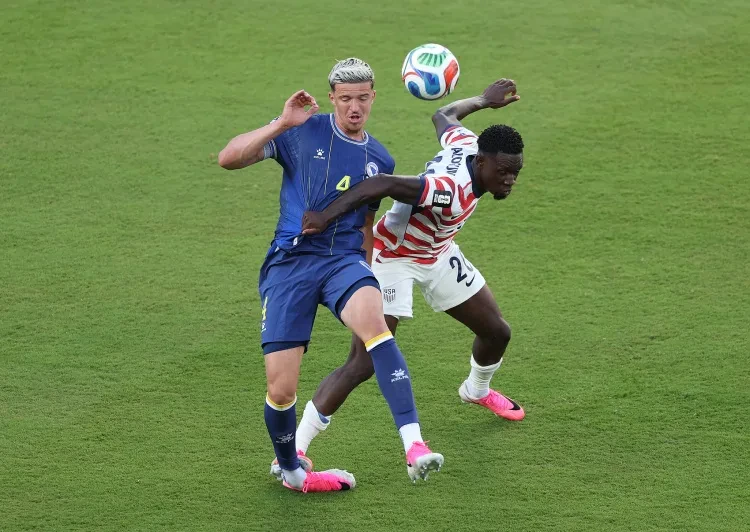
(US player Folarin Balogun receiving a direct red card following a referee review during the World Cup Round of 32 match on July 1. Source: Agence France-Presse)
Under Article 10.5 of the Regulations for the FIFA World Cup 2026, a direct red card entails an automatic match suspension for the team's subsequent fixture (the Round of 16 match against Belgium).
However, on July 5, 2026, the FIFA Disciplinary Committee announced a unprecedented verdict: imposing a one-match suspension but suspending its execution under a one-year probation period. This ruling allowed Balogun to take the pitch against Belgium, sparking accusations of host-nation bias and procedural overreach.
This article dissects the statutory logic, procedural mechanics, and international dispute resolution principles underlying FIFA's controversial exercise of administrative discretion.
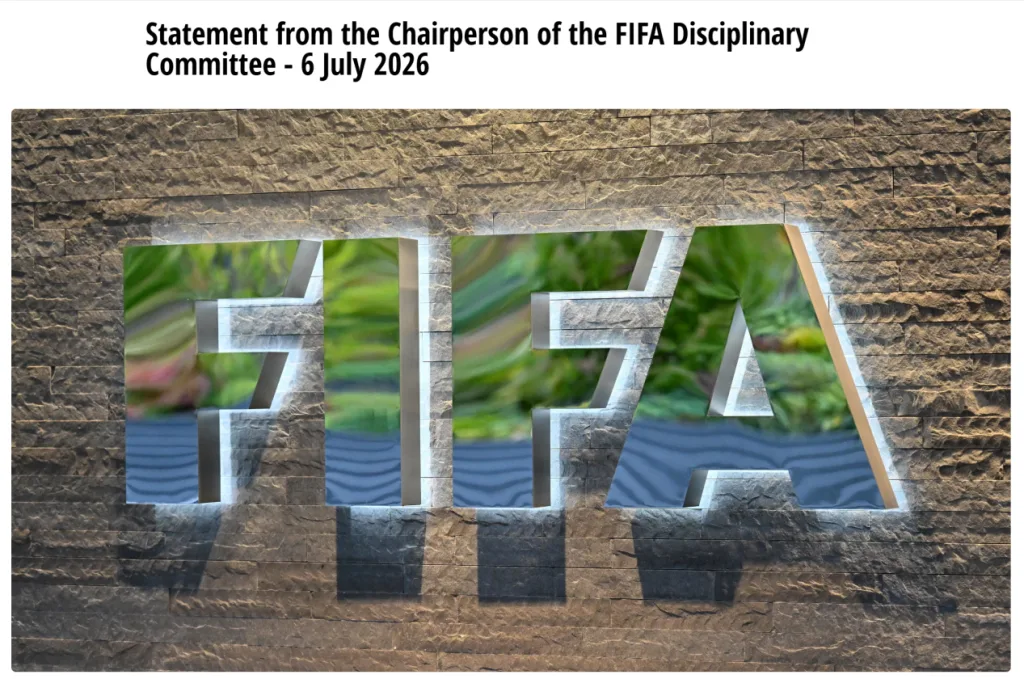
(Official press release published by the Chairman of the FIFA Disciplinary Committee addressing the legal basis of the decision on July 6. Source: FIFA)
I. The Two-Step Statutory Logic of FIFA's Disciplinary Framework
The FIFA Disciplinary Committee navigated a precise two-step legal methodology to uphold judicial authority while granting procedural relief:
Step 1: Statutory Affirmation ──> Affirm red card validity (Art. 66.4) + Impose $40,000 fine (Art. 14 & 66)
                                   ↓
Step 2: Execution Discretion   ──> Activate probation power (Art. 27) + Institute 1-year probationary period
1. Step 1: Fact-Finding and Authority Preservation
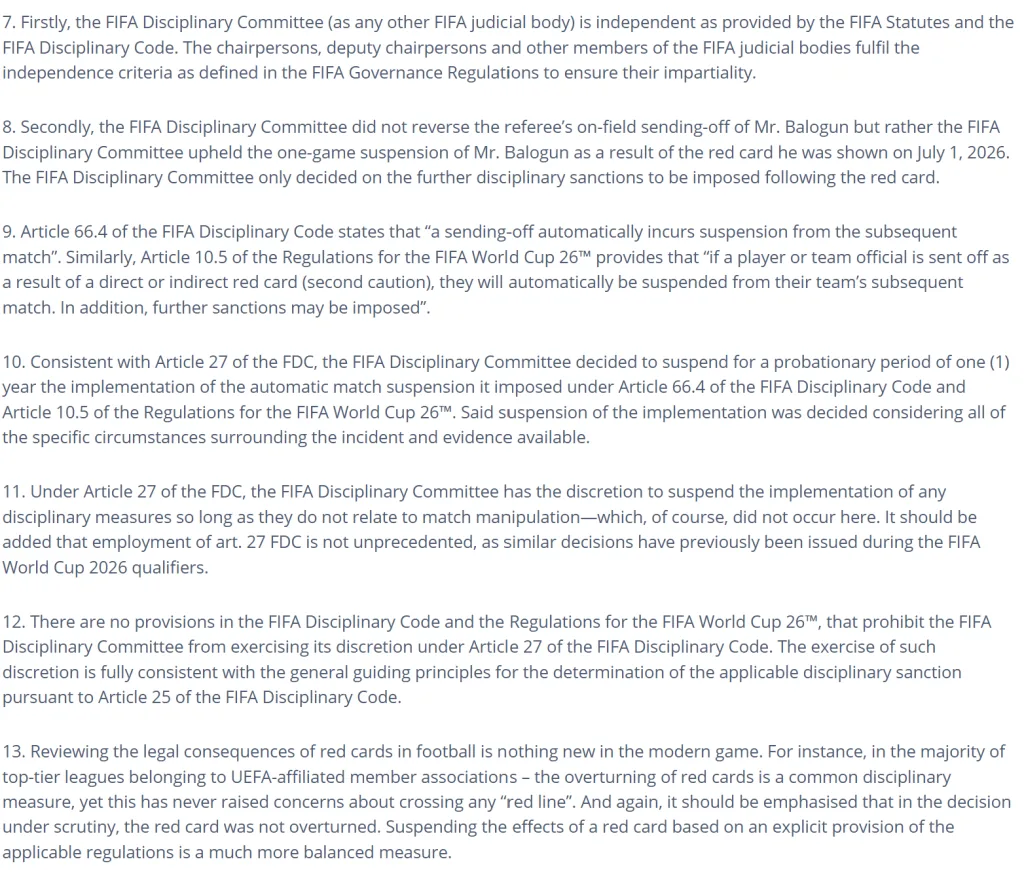
The Disciplinary Committee did not overturn the referee's pitch decision. Pursuant to Article 66.4 of the FIFA Disciplinary Code (FDC) and Article 10.5 of the World Cup Regulations, the automatic one-match suspension was officially confirmed. Additionally, a $40,000 fine was levied against the player and the US Soccer Federation under joint liability principles (Articles 14 and 66) for post-match pitch infractions, preserving referee authority.
2. Step 2: Activating Administrative Discretion Under Article 27
Under Article 27 of the FDC, the Disciplinary Committee possesses statutory authority to grant a suspension of implementation (probation) for disciplinary sanctions, except in cases involving match manipulation. FIFA did not "annul" the red card; rather, it converted the immediate suspension into a 1-year conditional probation. A repeat infraction within twelve months automatically triggers cumulative enforcement of both penalties.
                      ┌── Article 25 (FDC): Determination of Sanctions ──> Defines WHAT penalty is imposed.
Discretionary Matrix ─┤
                      └── Article 27 (FDC): Probation Mechanism       ──> Defines HOW penalty is executed.
This statutory interaction aligns with FIFA judicial precedent, as suspended bans and red-card probation mechanisms have been applied within UEFA domestic leagues and 2026 World Cup qualifying rounds.
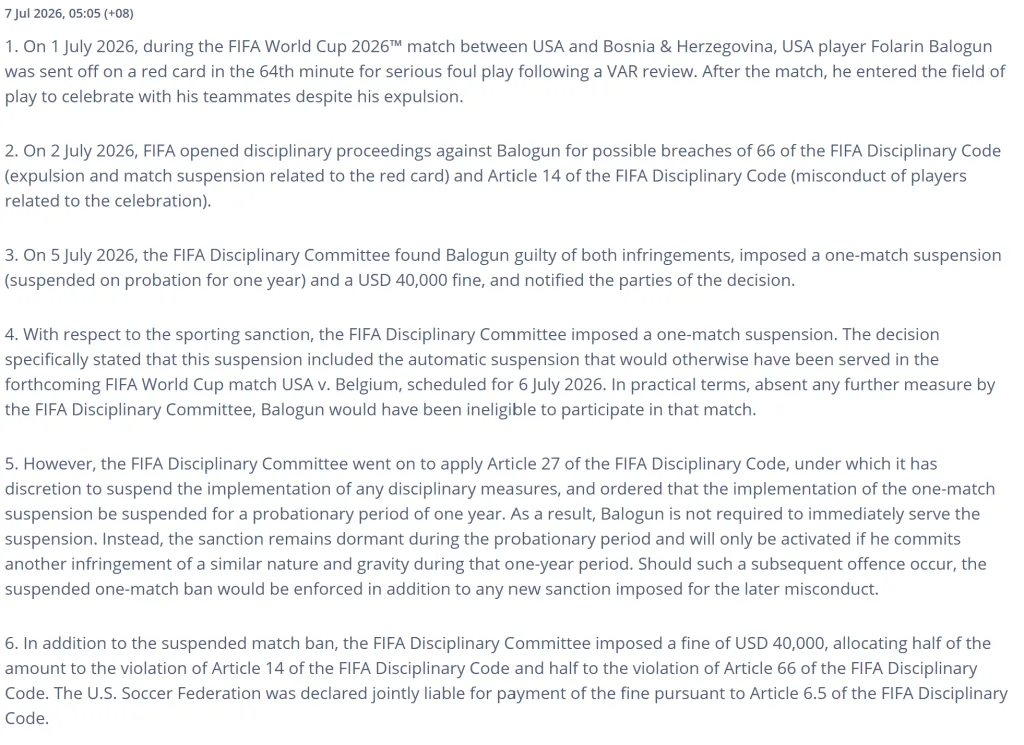
(Full text of the official compliance statement issued by the Chairman of the FIFA Disciplinary Committee regarding Article 27 application. Source: FIFA)
II. Harmonizing Mandatory Suspensions with Discretionary Powers
A central legal question emerged: Does applying Article 27 probation to a World Cup match violate the legal canon lex specialis derogat legi generali (special law overrides general law), given that World Cup Regulation Article 10.5 mandates "automatic" suspensions?
FIFA’s official statement clarified that the two provisions operate in complementary legal dimensions rather than in conflict:
- Substantive Sanction vs. Procedural Execution: Article 10.5 of the World Cup Regulations establishes the substantive rule (confirming that a red card results in a one-match ban). Article 27 of the FDC governs the procedural execution (determining whether the ban must be served immediately or conditionally deferred).
- Absence of Exclusionary Language: No statutory provision within the World Cup Regulations explicitly waives or excludes the application of FDC Article 27 probation mechanisms during final tournament phases.
III. Procedural Standing Barriers: The Dismissal of Belgium's Appeal
Following the ruling, the Royal Belgian Football Association lodged an immediate appeal. The FIFA Appeal Committee dismissed the challenge on procedural grounds, ruling that Belgium lacked procedural standing (locus standi) as a non-party to the underlying disciplinary proceeding.
| Party | Procedural Status | Statutory Rights Under FIFA Code |
| US Soccer Federation & Player | Direct Parties to Proceeding | Full right to be heard, receive formal notice, and submit defense. |
| Belgian Football Association | Subsequent Opponent / Affected Third Party | Classified as Non-Direct Party; denied formal standing to appeal internal administrative discretion. |
This ruling highlights a fundamental tension in international sports arbitration: balancing strict procedural boundaries (limiting standing to direct sanction targets) against the rights of third parties whose competitive interests are directly impacted by administrative rulings.
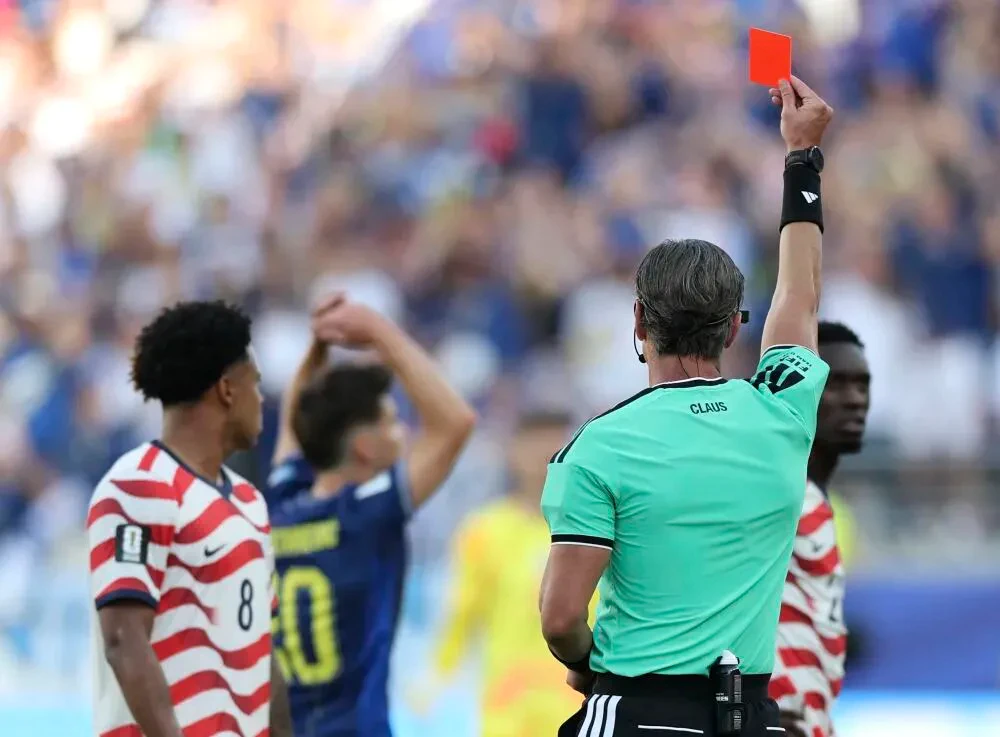
(Match referee issuing a direct red card to US forward Folarin Balogun during the Round of 32 fixture. Source: Xinhua News )
IV. Judicial Independence in Multi-Stakeholder Governance
To counter allegations of geopolitical or commercial bias favoring the host nation, FIFA anchored its defense on the structural independence of its judicial bodies.
Under the FIFA Statutes and FIFA Governance Regulations, members of the Disciplinary Committee are subject to strict neutrality standards, operating independently of the FIFA Council and commercial partners. In transnational compliance and international arbitration, structural judicial independence serves as the primary safeguard for institutional legitimacy when handling high-stakes corporate or geopolitical disputes.
Conclusion & Cross-Border Legal Insights
On July 6, Belgium defeated the United States 4–1 in the Round of 16, ending the host nation's tournament run. However, the legal precedents established by this decision extend far beyond the pitch.
For cross-border corporate governance and regulatory compliance, the Balogun precedent offers valuable strategic lessons:
Sports Litigation Parallel ──> Uncovering procedural discretion to secure probation for a key athlete.
                                         ↓
Cross-Border Compliance   ──> Utilizing precise statutory interpretations, jurisdictional defenses, and procedural
                              remedies to insulate commercial assets during extraterritorial regulatory enforcement.
Whether defending against administrative sanctions, trade restrictions, or long-arm enforcement, mastery of procedural rules and statutory discretion remains the cornerstone of effective international risk management.
(Official FIFA statement confirming the procedural dismissal of the appeal submitted by the Royal Belgian Football Association. Source: FIFA)
About the Author

Yu Yuting
Partner | NEO-ARK Law Firm
Lawyer Yu focuses on foreign-related litigation, cross-border disputes, commercial matters, and legal services for overseas individuals and businesses in China.
Email: [email protected]
About NEO-ARK Law Firm
NEO-ARK Law Firm provides legal services in foreign-related litigation, commercial disputes, family law, and cross-border legal matters, assisting both international and domestic clients throughout China.