Skip to content

Executive Summary
On October 30, 2026, Binance—the world’s largest cryptocurrency exchange—confirmed that hackers breached its hot wallets, stealing approximately $6.3 billion in digital tokens and marking the largest theft in cryptocurrency history. The breach triggered significant market volatility, briefly driving Bitcoin down to roughly $76,000, while Binance suspended withdrawals, froze approximately $3 billion on-chain, and pledged to cover all user losses using its SAFU fund and corporate reserves.
This historic security breach raises three fundamental legal questions under Chinese criminal law:
- Are virtual currencies such as Bitcoin and Tether (USDT) recognized as legally protected "property"?
- Does stealing cryptocurrency constitute Theft (盗窃罪) or a Computer Data Crime (非法获取计算机信息系统数据罪)?
- How do Chinese courts calculate the monetary valuation of stolen digital assets when domestic trading lacks legal recognition?
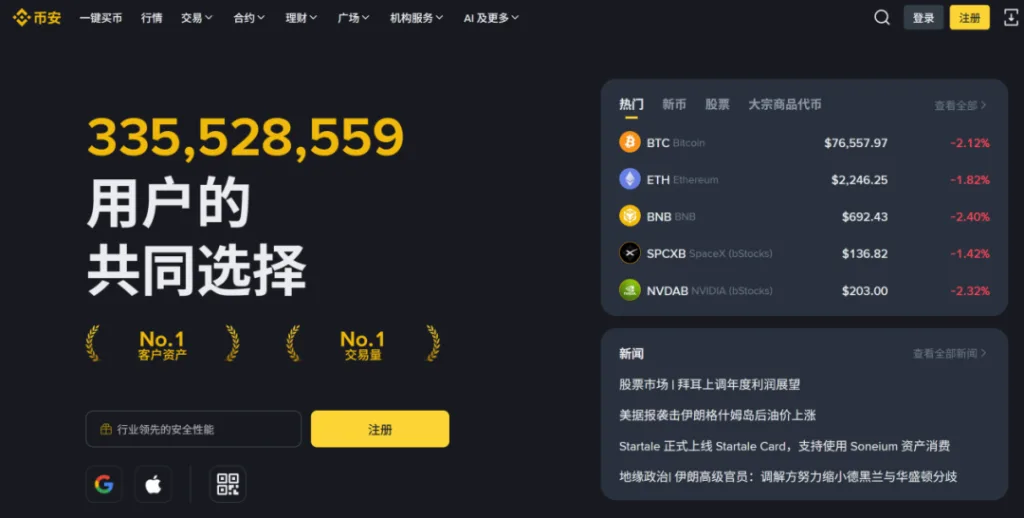
(Source: Binance Website)
I. The Legal Nature of Virtual Currency: Not Fiat Money, Yet Protected Property
Understanding criminal liability requires separating administrative financial regulations from criminal property protections:
- Not Legal Tender: Under the 2013 Notice on Preventing Bitcoin Risks (Yinfa [2013] No. 289) issued by the People's Bank of China (PBOC) and five ministries, Bitcoin is defined as a "specific virtual commodity" lacking legal status equivalent to fiat currency. The 2021 Notice on Further Preventing and Disposing of Speculation Risks in Virtual Currency Trading reaffirmed that cryptocurrencies lack legal tender status, cannot circulate as currency, and that related commercial trading constitutes illegal financial activity.
- Dual Attributes (Data + Property): Technically, a digital token is an encrypted entry on a distributed ledger controlled via private keys—giving it a data attribute. Economically, acquiring cryptocurrency requires measurable consideration (mining electricity, computing power, or fiat purchase capital), and unlawful deprivation inflicts direct financial loss on the holder—establishing a property attribute. Consequently, while Chinese regulatory authorities prohibit cryptocurrency trading, criminal courts consistently recognize virtual currencies as property protected against unlawful appropriation.
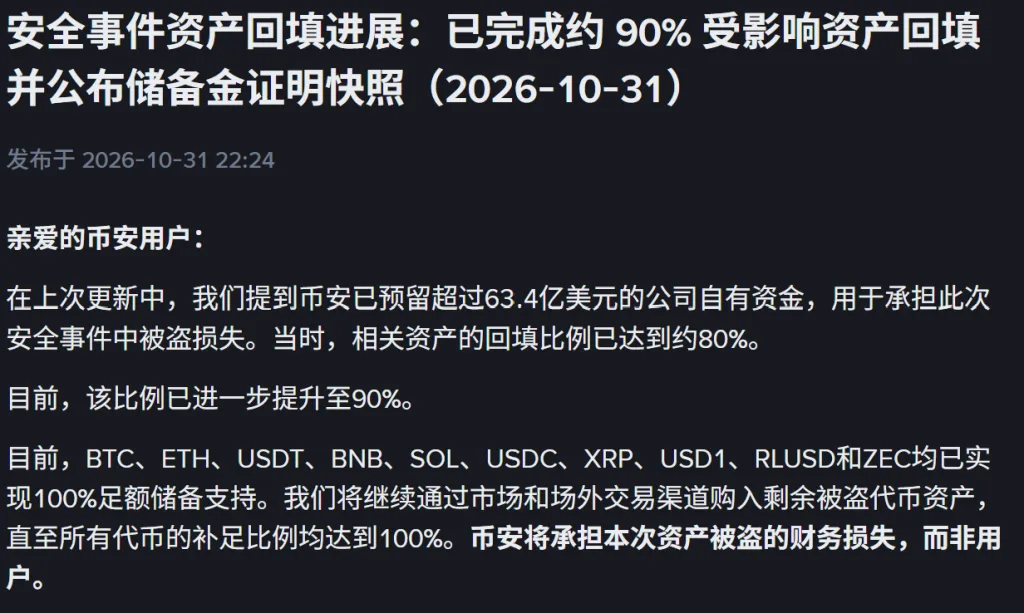
(Source: Binance Website)
II. Crime Classification: Property Theft vs. Computer Data Crime
In Chinese judicial practice, prosecuting cryptocurrency theft involves evaluating two competing criminal provisions:
| Legal Classification Pathway | Statutory Basis | Core Judicial Rationale |
| Crime of Theft (盗窃罪) | Article 264, Criminal Law of the PRC | Virtual currency possesses manageability, transferability, and economic value; covertly appropriating tokens constitutes property theft. |
| Illegal Acquisition of Computer Information System Data (非法获取计算机信息系统数据罪) | Article 285(2), Criminal Law of the PRC | Virtual currency is fundamentally electronic data; unauthorized system intrusion and extraction constitute a data offense. |
Current judicial trends recognize both attributes, classifying offenses based on the underlying criminal conduct and applying the heavier penalty when offenses overlap (择一重处). Guidance from the Supreme People's Procuratorate emphasizes evaluating intrusions across the physical, logical, and content layers of computer systems.
Landmark Judicial Precedents
- Memorizing Mnemonic Phrases Classified as Theft (Qingdao, 2025):Defendant Zhang exploited his role assisting with digital wallet transactions to memorize a victim's seed phrase, transferring 107 Bitcoins and liquidating them for over RMB 660,000. In April 2025, the Licang District People's Court of Qingdao convicted Zhang of Theft, sentencing him to 10 years and 9 months in prison plus a RMB 100,000 fine (affirmed on appeal by the Qingdao Intermediate People's Court in November 2025).
- Malicious Wallet Software Charged Under Both Offenses (Wenzhou, 2025):Defendant Liu promoted a fraudulent digital wallet application offering above-market gift card redemptions, utilizing backend servers to siphon user tokens and harvest hundreds of wallet addresses, seed phrases, and balance records. In May 2025, the Wenzhou Intermediate People's Court upheld convictions for both Theft and Illegal Acquisition of Computer Information System Data, imposing a combined sentence of 11 years and 6 months alongside the recovery of over 8,700 tokens.

(Source: Lianhe Zaobao)
III. The Valuation Challenge: Three Judicial Rules for Calculating Stolen Crypto
Because virtual currencies are not legal tender in China, there are no official exchange rates or state-authorized price appraisal agencies. Combined with 24/7 global trading and sharp price volatility, courts rely on three complementary valuation standards:
[Judicial Valuation Hierarchy for Virtual Currency]
 ├── Rule 1: Liquidated Assets ──────> Actual proceeds realized from illegal sale (销赃所得)
 ├── Rule 2: Unliquidated Assets ────> Lowest trading price on major international exchanges on the offense date
 └── Rule 3: Verifiable Cost Basis ──> Actual fiat purchase price / acquisition cost paid by victim or offender
- Rule 1 — Actual Liquidation Proceeds: Where offenders convert stolen tokens into fiat currency, courts adopt the actual realized proceeds as the crime amount. In the 107-Bitcoin case in Qingdao, prosecutors fixed the theft valuation at the RMB 660,000 realized by the defendant.
- Rule 2 — Lowest International Exchange Price on Offense Date: Where tokens remain unliquidated, judicial practice (as highlighted in a May 2025 Supreme People's Procuratorate publication by the Xuanwu District Procuratorate of Nanjing) calculates value using the lowest daily trading price on major international exchanges on the date of the offense. This satisfies evidentiary certainty and aligns with the criminal law principle of in dubio pro reo (resolving doubts in favor of the defendant).
- Rule 3 — Actual Acquisition Cost: Where clear purchase records exist—such as cases documented by the Zhongzhan District Procuratorate of Jiaozuo involving USDT settlements—courts may determine value based on the verifiable fiat purchase cost.

(Binance Co-CEO He Wei Zheng, Source: Lianhe Zaobao)
IV. Practical Risk Takeaways for Token Holders & Industry Practitioners
- Regulatory Bans Do Not Strip Criminal Protection: Prohibitions on domestic cryptocurrency trading do not immunize hackers or thieves. Holders whose digital assets are stolen retain the right to report the offense and seek criminal asset recovery.
- Blockchain Transparency Enables Tracing: Using cryptocurrencies to settle illicit transactions does not guarantee anonymity. Immutable on-chain ledger records allow law enforcement to trace fund flows and establish criminal liability.
- Private Keys and Seed Phrases Establish Legal Control: In legal practice, control over private keys or mnemonic phrases serves as primary evidence of possession. Any compromise results in immediate loss of control with high cross-border recovery hurdles.
- Immediate On-Chain Evidence Preservation: As demonstrated by the $3 billion frozen on-chain in the Binance incident, rapid cross-border coordination is essential. Market participants should preserve complete deposit/withdrawal records, transaction hashes (TxIDs), wallet addresses, and fiat bank statements to support immediate asset freezing and valuation verification.
Conclusion
Under Chinese criminal law, virtual currency is not fiat money, yet it constitutes legally protected property; while technically electronic data, it embodies concrete economic interests that criminal courts actively shield against unlawful infringement.
About the Author

Yu Yuting
Partner | NEO-ARK Law Firm
Lawyer Yu focuses on foreign-related litigation, cross-border disputes, commercial matters, and legal services for overseas individuals and businesses in China.
Email: [email protected]
About NEO-ARK Law Firm
NEO-ARK Law Firm provides legal services in foreign-related litigation, commercial disputes, family law, and cross-border legal matters, assisting both international and domestic clients throughout China.