Can a South Korean Semiconductor Company Restore Lost Tax Incentives in China? A Cross-Border Tax Strategy Case
Overview
A South Korean company established a wholly owned subsidiary in Xi'an, China, to operate in the semiconductor industry.
Although the subsidiary appeared to satisfy the substantive requirements for China's preferential tax policies applicable to qualifying semiconductor enterprises, it failed to complete the required annual filing procedures and was not included on the official list of eligible enterprises for the following tax year.
The company engaged Yu Yuting, Attorney at NEO-ARK Law Firm, to assess the legal consequences of the missed filing, evaluate possible remedial measures under Chinese law, and develop a cross-border tax strategy designed to minimise the group's overall global tax burden.
Case Snapshot
Item
Details
Practice Area
Cross-Border Tax Advisory
Case Type
Tax Incentive Compliance
Cross-Border Element
South Korea – China
Client
South Korean Company
Industry
Semiconductor (Integrated Circuit)
Core Legal Issue
Loss of Tax Incentives Due to Missed Compliance Filing
Lead Lawyer
Yu Yuting / Li Chengwan
Law Firm
NEO-ARK Law Firm
Client's Situation
The matter developed through the following stages.
1. Investment in China
The client established a wholly owned subsidiary in Xi'an, China, to conduct business in the semiconductor industry.
2. Qualification for Preferential Tax Policies
Based on the applicable national policies, the subsidiary appeared to meet the substantive requirements for preferential tax treatment available to qualifying enterprises.
3. Missed Annual Compliance Filing
The company did not complete the required annual filing procedures or apply for inclusion on the official list of eligible enterprises within the prescribed deadline.
4. Loss of Preferential Tax Treatment
As a result, the subsidiary was unable to enjoy the relevant tax incentives for the following tax year.
5. Cross-Border Tax Advisory
The client sought legal advice on available administrative options in China and on cross-border tax planning aimed at reducing its worldwide tax exposure.
Legal Strategy
Strategy
Purpose
Review China's tax incentive policies
Assess whether the company met the substantive eligibility requirements
Analyse compliance obligations
Identify the legal impact of the missed filing
Review applicable international tax treaties
Evaluate available cross-border tax planning opportunities
Coordinate with overseas tax advisers
Develop an integrated global tax strategy
Assess available administrative remedies
Determine practical options under Chinese law
Outcome
Following the legal review, the client obtained a comprehensive assessment of its legal position and the available options under Chinese law.
The advisory work provided practical guidance on potential administrative remedies, cross-border tax treaty considerations, and coordinated international tax planning, enabling the client to evaluate the most commercially appropriate strategy for reducing its overall global tax burden.
Why This Case Matters
Many foreign-invested enterprises assume that qualifying for China's tax incentives is sufficient to secure preferential tax treatment.
In practice, continued eligibility often depends on ongoing compliance with administrative filing requirements and government procedures.
This case demonstrates that tax compliance involves more than meeting the substantive legal criteria. For multinational businesses operating in China, timely legal review and coordinated international tax planning can play an important role in preserving tax benefits and managing global tax exposure.
Frequently Asked Questions
Can South Korean companies qualify for China's tax incentives?
Yes.
Foreign-invested enterprises, including South Korean companies, may qualify for various preferential tax policies in China if they satisfy the relevant legal and regulatory requirements.
What happens if a company misses a required tax incentive filing?
The consequences depend on the applicable regulations and administrative practice. In some situations, supplementary procedures or other remedial measures may be available, but prompt legal and tax advice is essential.
Why should multinational companies consider international tax treaties?
Cross-border tax treaties and foreign tax credit mechanisms may affect the group's overall tax position. Coordinating Chinese tax compliance with international tax planning can help reduce worldwide tax exposure.
Key Takeaways
Tax incentives require both substantive eligibility and procedural compliance.
Missing an administrative filing deadline may affect access to preferential tax treatment.
Cross-border tax planning should combine Chinese law with international tax considerations.
Early legal advice may help identify available options and reduce global tax risk.
About the Author
Yu Yuting Partner | NEO-ARK Law Firm
LawyerYu focuses on foreign-related litigation, cross-border disputes, commercial matters, and legal services for overseas individuals and businesses in China.
NEO-ARK Law Firm provides legal services in foreign-related litigation, commercial disputes, family law, and cross-border legal matters, assisting both international and domestic clients throughout China.
Multiple Neoark Lawyers Selected into the Guangdong Lawyers Association Emerging Foreign-Related Legal Talent Pool
Achievement Announcement
On October 22, 2026, the Guangdong Lawyers Association officially announced the 7th batch of the Guangdong Foreign-Related Law Firm Directory and Foreign-Related Legal Talent Pool. Four young lawyers from Neoark Lawyers—Li Yubo, Yu Yuting, Liu Xinyi, and Tang Jingying—were successfully selected into the Guangdong Lawyers Association Emerging Foreign-Related Legal Talent Pool based on their practical legal expertise and cross-border service capabilities.
About the Talent Pool
The Guangdong Lawyers Association Emerging Foreign-Related Legal Talent Pool serves as a core talent reserve platform for cross-border legal services in Guangdong Province. It focuses on identifying and cultivating high-caliber young legal professionals with international perspectives, mastery of foreign-related legal practice, and alignment with cross-border business demands. The selection of four Neoark lawyers marks another significant milestone in the firm’s development in foreign-related legal practice.
Neoark Lawyers continues to focus on international legal practice, building a dedicated team of lawyers with overseas educational backgrounds, fluency in international business rules, and foreign language proficiency. Covering practice areas such as cross-border investment, international trade, dispute resolution, and intellectual property, the firm delivers multi-tiered cross-border legal solutions to help clients navigate complex international regulatory risks.
Key Appointments: Member of the Criminal-Civil Committee of Guangdong Lawyers Association; Director of the Hong Kong, Macao & Taiwan Law Research Association of Guangdong Law Society; External Supervisor at Guangdong University of Foreign Studies Law School; Arbitrator at Zhanjiang International Arbitration Court and Yulin Arbitration Commission.
Biography: With over 20 years of legal experience across foreign trade commissions, state-owned enterprises, and multinational corporations, Attorney Li Yubo has handled high-profile patent infringement cases, trademark disputes, major criminal defense matters, and government land expropriation legal projects.
Key Appointments: Director of Digital Law Research Association and Family Law Research Association of Guangdong Law Society; Officer of Foreign-Related Legal Services Branch of Guangzhou Lawyers Association; Legal Counsel to Guangzhou Association of Enterprises with Foreign Investment.
Biography: Prior to practicing law, Attorney Yu Yuting served in the legal department of a public security organ. She has provided specialized legal services to state-owned entities such as CCCC Group and CCEC5, as well as ongoing counsel for multinational and domestic corporations. Fluent in English, she handles bilingual contract drafting and international commercial litigation and arbitration.
3. Liu Xinyi
Practice Areas: Talent & Artist Representation, Civil & Commercial Dispute Resolution, Intellectual Property, Corporate Governance.
Key Appointments: Member of Trade Secrets & Privacy Protection Committee of Guangzhou Lawyers Association; Member of Neoark Family Law Research Center.
Biography: Holding an LL.B. from East China University of Political Science and Law with 6+ years of practice experience, Attorney Liu Xinyi has handled over 100 litigation and non-litigation IP enforcement matters. She specializes in corporate brand protection, MCN entertainment contracts, live-streaming industry compliance, and corporate governance.
4. Tang Jingying
Practice Areas: Internet-Related Dispute Resolution, Contract Disputes, Labor Disputes, Family Law, Corporate Compliance, Criminal Defense.
Key Appointments: Director of "San Nong" Legal Research Association; Director of Family Law Research Association of Guangdong Law Society; Senior Corporate Compliance Officer.
Biography: Attorney Tang Jingying holds a Master of Laws (LL.M.) in Civil and Commercial Law from Guangdong University of Foreign Studies. One of her representative contract dispute cases was selected among the "Top 50 Annual Cases" by the People's Court Press under the Supreme People's Court. She also developed award-winning legal compliance products for MCN agencies.
Future Outlook
Neoark Lawyers will use this recognition to further enhance its foreign-related legal talent development, strengthen cross-border service capabilities, and support high-quality foreign-related legal developments in Guangdong Province.
About the Author
Yu Yuting Partner | NEO-ARK Law Firm
LawyerYu focuses on foreign-related litigation, cross-border disputes, commercial matters, and legal services for overseas individuals and businesses in China.
NEO-ARK Law Firm provides legal services in foreign-related litigation, commercial disputes, family law, and cross-border legal matters, assisting both international and domestic clients throughout China.
2026-10-23
Neoark Lawyers Partner Yu Yuting Provides Cross-Border Legal Advisory Services at the 140th Canton Fair
On-Site Legal Advisory Services
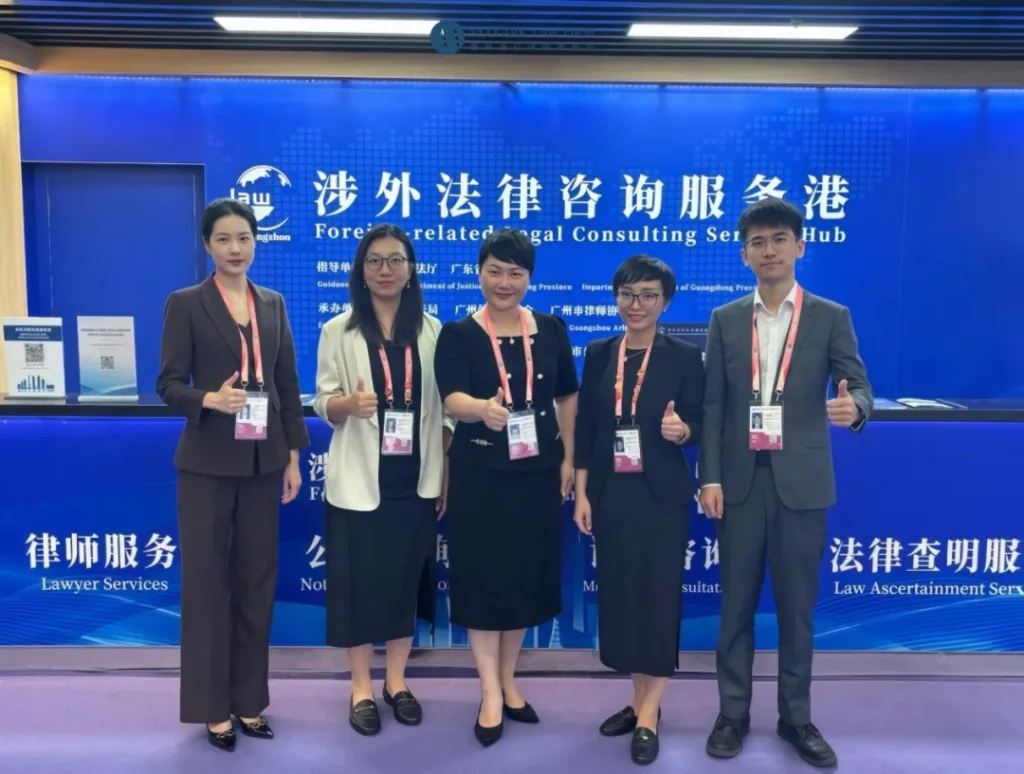
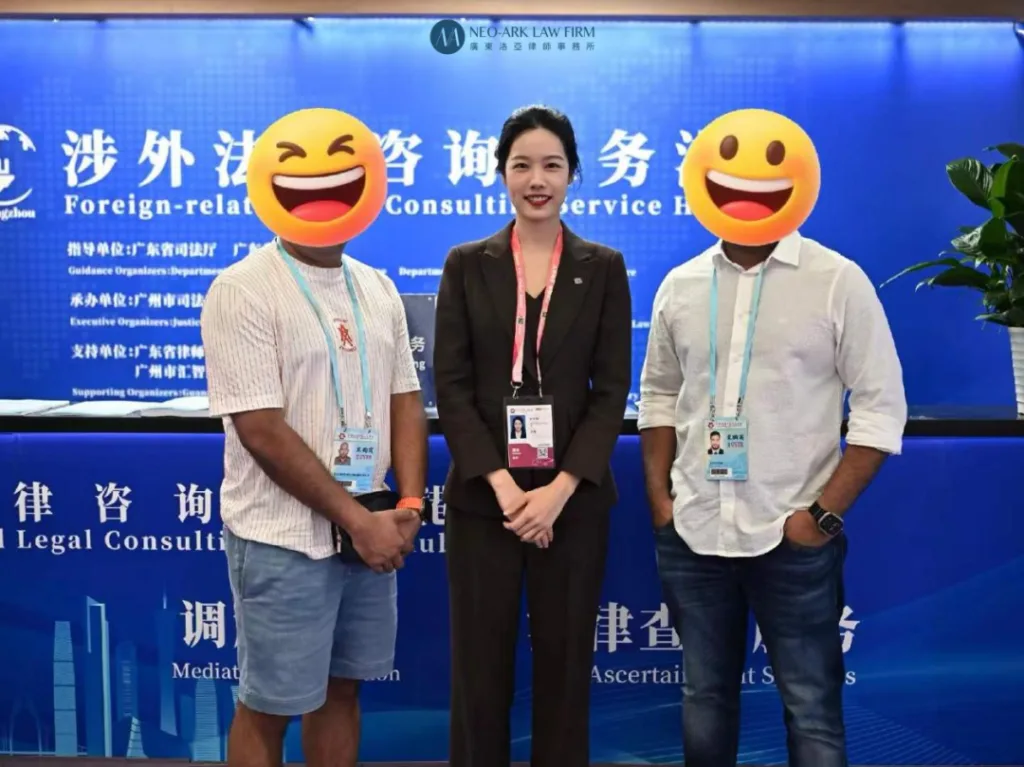
The 140th China Import and Export Fair (Canton Fair) opened grandly, gathering global merchants in Pazhou, Guangzhou. On October 19, Yu Yuting, Partner and Head of the International Legal Department at Neoark Lawyers, was selected by the Guangzhou Lawyers Association to serve at the Canton Fair Foreign-Related Legal Advisory Service Station, providing cross-border legal assistance to overseas buyers and exhibitors to support high-level international business engagement.
During the service period, Attorney Yu Yuting and her team consulted with international merchants from Australia, Singapore, Thailand, Malaysia, Vietnam, the Philippines, Qatar, Cameroon, Ghana, Kyrgyzstan, India, and other countries. They addressed practical legal inquiries and provided formal guidance on international trade dispute resolution, foreign-invested company formation in China, ongoing legal retained counsel services, intellectual property infringement, mediation, notarization, and commercial arbitration.
Phase 1 of this Canton Fair focused on "Advanced Manufacturing," featuring electrical and machinery products, home appliances, new energy vehicles, industrial automation, and service robotics. In addition to providing fixed-station consultations, Attorney Yu Yuting visited the Intelligent Robotics Zone and the General Machinery and Vehicle Exhibition Areas to communicate directly with exhibitors, identify specific business needs, and deliver tailored legal support.
Service Recognition and Upcoming Schedule
This on-site deployment reflects the industry recognition of Attorney Yu Yuting’s cross-border legal practice and highlights Neoark Lawyers’ ongoing dedication to foreign-related legal practice. It also serves as a practical demonstration of the Guangzhou Lawyers Association's initiative to promote international legal standards.
During Phase 3 of the Canton Fair (Theme: "A Better Life," featuring consumer goods), Attorney Yu Yuting will continue her service on-site at the Foreign-Related Legal Advisory Station. Exhibitors and buyers in need of legal counsel are welcome to visit:
November 2: Area D, Booth 20-4
November 3: Area B, Booth 10.1
Frequently Asked Questions
Q: What legal services do Neoark Lawyers offer at the Canton Fair?A: Neoark Lawyers provides cross-border legal assistance on international trade disputes, IP protection, foreign-invested enterprise setup in China, contract drafting, and commercial dispute resolution.
About the Author
Yu Yuting Partner | NEO-ARK Law Firm
LawyerYu focuses on foreign-related litigation, cross-border disputes, commercial matters, and legal services for overseas individuals and businesses in China.
NEO-ARK Law Firm provides legal services in foreign-related litigation, commercial disputes, family law, and cross-border legal matters, assisting both international and domestic clients throughout China.
2026-10-20
Academic Disputes and Defamation Claims in China: A Reputation Rights Appeal
Overview
Disputes involving historical research, family heritage, and public criticism can become particularly sensitive when published statements circulate within a close-knit community or reach audiences overseas. In such cases, the central legal question is not necessarily whether a researcher's conclusions are correct, but whether the statements made about that researcher cross the line into unlawful harm to personal reputation.
NEO-ARK Law Firm represented an appellant in a reputation rights dispute before an appellate court in mainland China. The client, a Hong Kong permanent resident and a community leader with several public and honorary positions, had spent years researching the historical origins and relationships of two family lineages. After publishing a historical study intended for academic discussion, the client became the subject of critical articles in a community publication.
The articles allegedly went beyond academic disagreement and included personal attacks and statements that damaged the client's reputation. The publication was distributed not only locally but also to community associations and family groups in multiple overseas locations.
The first-instance court found that the publication had infringed the client's reputation rights but awarded only part of the compensation sought. Both parties appealed. On appeal, the court upheld the finding of infringement and increased the compensation for the client's losses.
The case illustrates how courts may distinguish legitimate debate over historical research from public statements that unlawfully damage an individual's social reputation.
Case Snapshot
Item
Details
Case Type
Reputation Rights Infringement
Jurisdiction
Mainland China
Appellate Representation
Representing the individual appellant
Attorney
Yu Yuting
Law Firm
NEO-ARK Law Firm
Central Issue
Whether published criticism of historical research crossed the line into reputational infringement
First-Instance Outcome
The court found infringement and awarded partial compensation
Appellate Outcome
The finding of infringement was upheld, and the compensation award was increased
The Legal Issues
1. Does Disagreement With Historical Research Justify Public Personal Attacks?
Historical and genealogical research may involve disputed sources, interpretations, oral histories, and competing accounts. Different researchers or community members may reasonably disagree about the conclusions drawn from such material.
However, disagreement with a person's research does not automatically justify making damaging statements about that person. A court assessing a reputation rights claim must examine the content and context of the published statements, rather than treating the underlying academic disagreement as the sole issue.
In this case, the opposing party relied on historical materials, witness statements, and correspondence from community organizations to argue that the statements in its publication were not fabricated. The appeal therefore required careful attention to the distinction between presenting a historical viewpoint and making public assertions that could damage an individual's reputation.
2. Did the Published Statements Harm the Client's Social Reputation?
The client argued that the publication had made personal attacks and disparaged the client's research in a manner that adversely affected how others viewed the client. Its circulation among local and overseas community groups increased the potential reputational consequences.
The legal analysis needed to focus on the actual language used, the factual basis for the statements, the context in which they appeared, and whether they were capable of lowering the client's social evaluation.
The fact that a publication concerns a historical or academic controversy does not, by itself, resolve whether its statements are lawful. Equally, criticism that is strongly worded or unwelcome does not automatically amount to infringement. The assessment depends on the specific content and circumstances.
3. How Should the Court Assess the Loss Caused by Reputational Harm?
Reputation disputes may involve more than direct financial loss. Public allegations can affect an individual's standing within professional, social, or community networks, particularly where the statements are distributed to a wide audience.
In this case, the appeal addressed not only whether infringement had occurred, but also whether the compensation awarded at first instance adequately reflected the losses claimed by the client. The appellant supplemented the case with material relating to actual losses and the alleged impact on the client's social reputation.
The appellate court ultimately maintained the finding of infringement and increased the compensation award.
Legal Strategy
Issue
Appellate Approach
Legal Significance
Academic disagreement versus personal defamation
Emphasized that the correctness of the underlying research was not the sole question for deciding the reputation claim
Helped focus the dispute on the legality of the published statements
Language and factual context
Directed attention to the wording of the publication, its factual basis, and the context in which the statements were made
Supported a more targeted assessment of whether the statements harmed reputation
Impact on social reputation
Presented additional material concerning the consequences of the publication and the client's claimed losses
Addressed the adequacy of compensation
Cross-border circulation
Explained the distribution of the publication to community groups in multiple overseas locations
Highlighted the broader context and potential reach of the alleged reputational harm
Court's Decision and Outcome
At first instance, the court found that the publication had infringed the client's reputation rights and awarded compensation, but did not grant the full relief sought.
Both parties appealed. The client sought an increase in compensation, while the opposing party challenged the infringement finding and requested dismissal of the claims.
On appeal, the court upheld the finding that the publication had infringed the client's reputation rights and increased the compensation awarded for the client's losses. The appellate result therefore preserved the liability determination while revising the compensation outcome in the client's favor.
The judgment was subsequently shared by the client with relevant community associations overseas as part of the client's effort to clarify the dispute and address the reputational consequences.
The case should not be understood as a judicial determination that the client's historical research was correct in every respect. Its significance lies in the court's treatment of the published statements and the legal consequences of the reputational harm established in the proceedings.
Practical Lessons for Reputation Rights Disputes in China
Academic Criticism and Defamation Are Not the Same
Researchers and community organizations may express disagreement with historical interpretations or challenge the reliability of research materials. The legal question is whether the particular statements, viewed in context, cross the boundary into unlawful reputational harm.
The Exact Wording of a Publication Matters
A reputation claim should address what was actually published, whether the statements were presented as fact or opinion, their factual foundation, and the circumstances in which readers would understand them. General assertions that a publication was unfair may be less persuasive than a focused analysis of the disputed language and its effects.
Distribution Can Matter to the Assessment of Harm
Where a publication reaches professional, social, or overseas community networks, its circulation may be relevant to understanding the context and consequences of the alleged infringement. The legal significance of that distribution depends on the evidence and the applicable law.
Compensation Requires a Separate Assessment
Establishing infringement and determining the appropriate remedy are related but distinct questions. Parties seeking increased compensation should substantiate the losses and reputational consequences they rely upon, rather than assuming that a finding of infringement automatically entitles them to the full amount claimed.
Frequently Asked Questions
Can criticism of historical or genealogical research amount to defamation in China?
It can, depending on the content and context of the statements. Disagreement with research findings is not automatically unlawful, but public statements that unlawfully damage a person's reputation may give rise to civil liability. The outcome depends on the particular facts and applicable law.
Does a reputation rights claim require proof of direct financial loss?
Not necessarily. Reputational harm and financial loss are not identical. The available remedies and the evidence needed to support compensation depend on the nature of the claim, the circumstances of the infringement, and the applicable legal rules.
Can a community publication be held liable for damaging statements?
Potentially, yes. The legal assessment may consider the statements' wording, factual basis, context, and impact. The fact that a publication is issued by a community or cultural organization does not, by itself, determine whether the statements are lawful.
What if a publication is distributed to overseas community associations?
The wider distribution may be relevant to the context and potential consequences of the statements. However, overseas circulation does not automatically establish liability or determine the governing law. The court must assess the facts and the legal issues properly before it.
Conclusion
This appellate case demonstrates the importance of separating disputes over academic or historical conclusions from disputes over personal reputation. A party's ability to criticize research does not eliminate the need to consider whether specific public statements are supported by their factual context and whether they unlawfully harm another person's reputation.
For individuals facing damaging publications, a focused legal analysis of the statements, their context, their circulation, and the evidence of resulting harm can be central to pursuing an effective reputation rights claim in mainland China.
About the Author
Yu Yuting Partner | NEO-ARK Law Firm
LawyerYu focuses on foreign-related litigation, cross-border disputes, commercial matters, and legal services for overseas individuals and businesses in China.
NEO-ARK Law Firm provides legal services in foreign-related litigation, commercial disputes, family law, and cross-border legal matters, assisting both international and domestic clients throughout China.
2026-10-16
Legal Guide for the 140th Canton Fair | Legal Services and Dispute Resolution
The 140th China Import and Export Fair (Canton Fair) takes place in Guangzhou from October 15 to November 4, 2026. Bringing together thousands of international buyers and domestic exhibitors, the fair serves as a vital global trade platform.
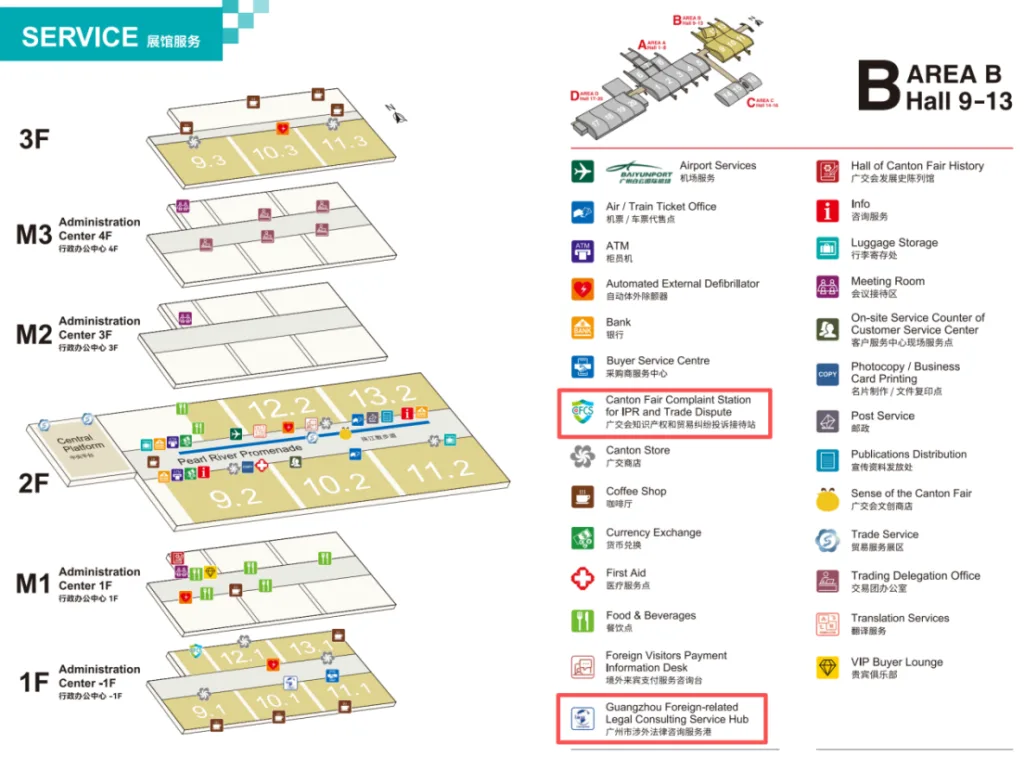
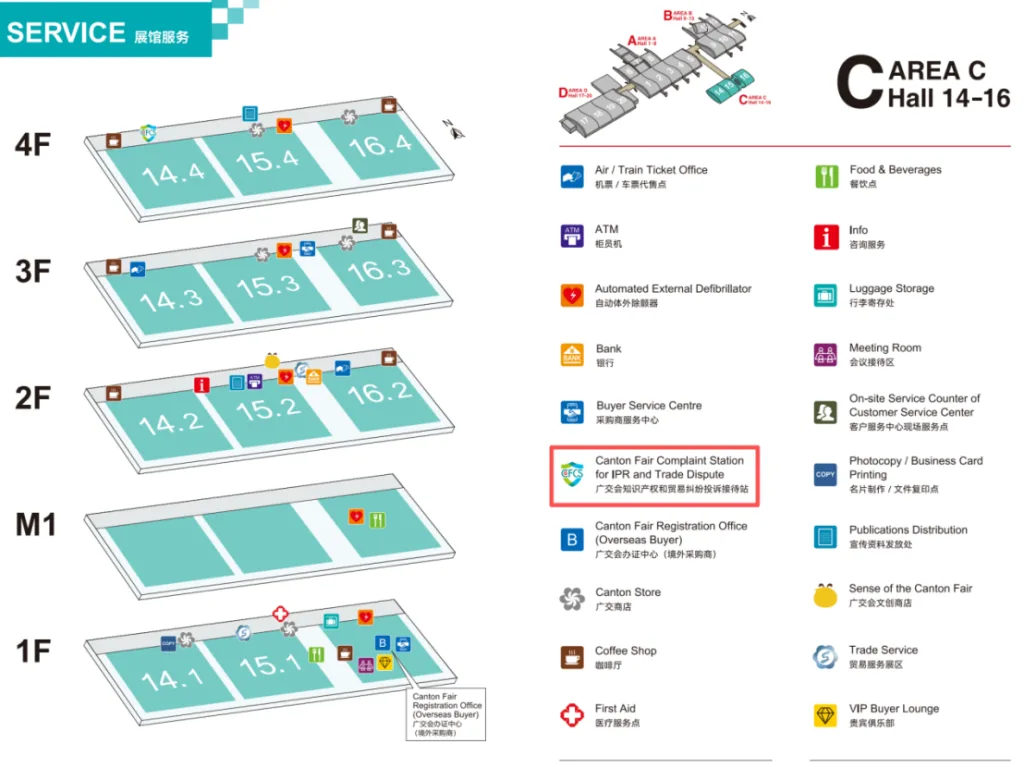
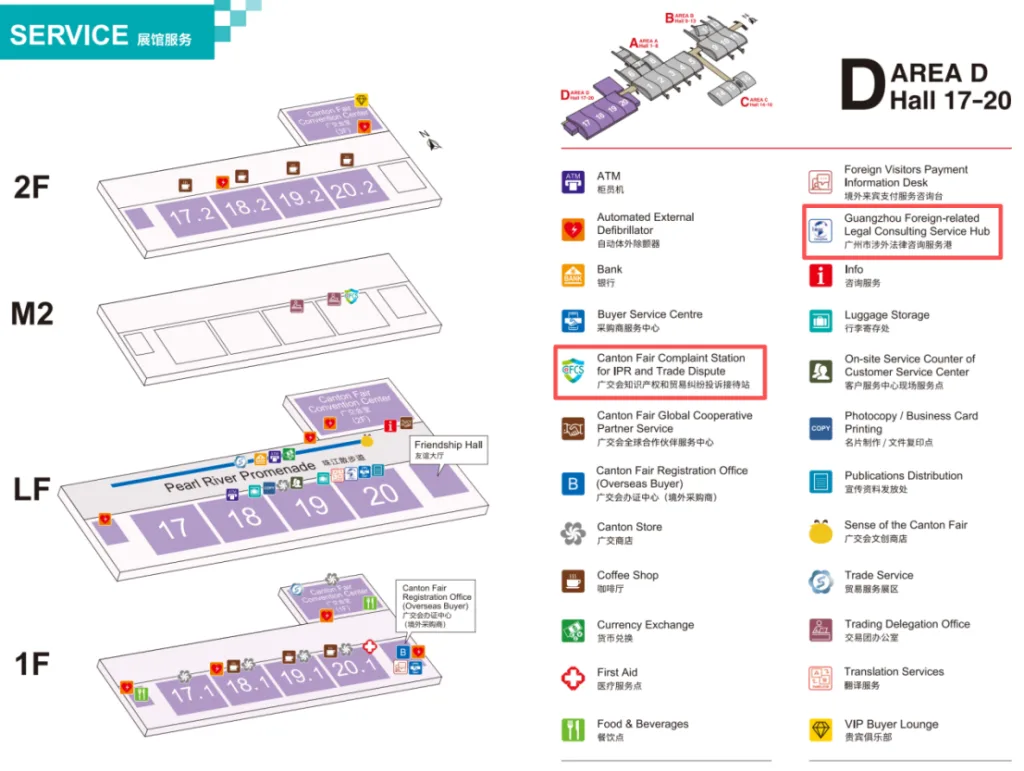
To help participants navigate legal issues and resolve commercial conflicts efficiently, this guide outlines on-site legal service stations, offline dispute resolution channels, online complaint mechanisms, and the duty schedule for Attorney Yuting Yu (Partner & Head of International Legal Affairs at Neo-Ark Law Firm), who will serve at the Guangzhou Foreign-Related Legal Advisory Service Port.
I. Three On-Site Legal Service Channels
Service Station
Core Service Scope
Recommended Scenarios
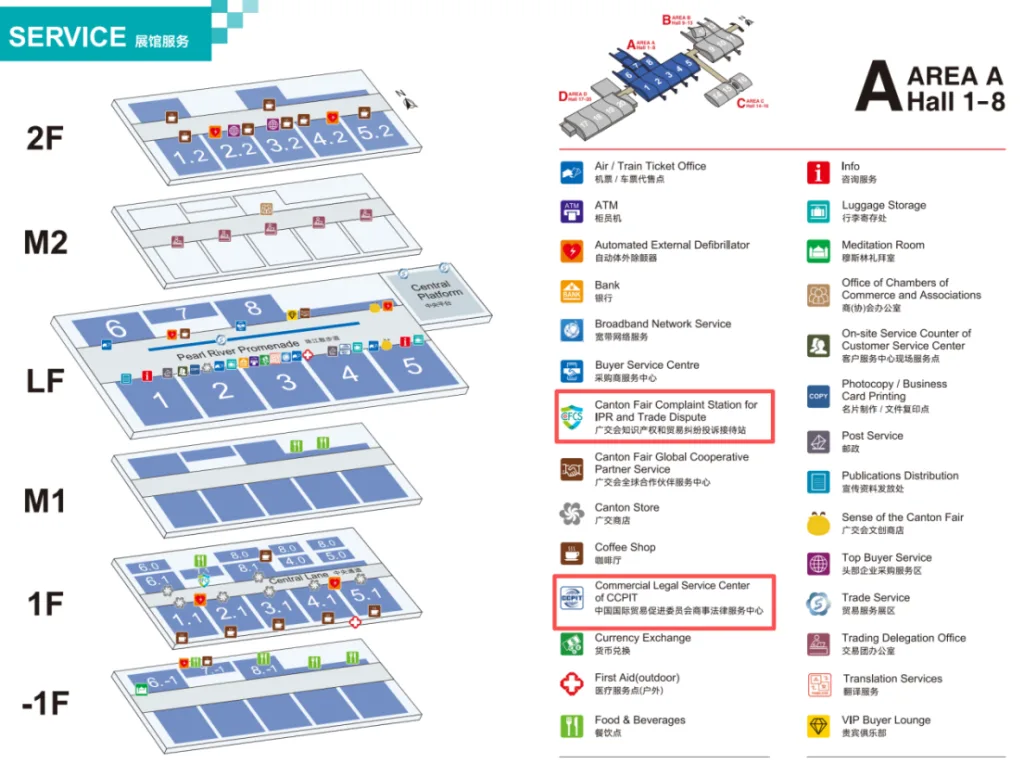
IP & Trade Dispute Complaint Station (知识产权和贸易纠纷投诉接待站)
Processes compliant intellectual property (IP) and trade dispute complaints under official Canton Fair guidelines.
On-site IP infringement allegations or trade contract disputes within Canton Fair jurisdiction.
CCPIT Commercial Legal Service Center (中国贸促会商事法律服务中心)
Enterprises seeking guidance on international trade laws, cross-border contracts, and commercial risk.
Guangzhou Foreign-Related Legal Service Port (广州市涉外法律咨询服务港)
Connects exhibitors with cross-border legal consulting, attorney services, arbitration, notarization, mediation, and foreign law ascertainment.
Overseas buyers and domestic suppliers requiring advice on governing laws, cross-border dispute resolution, or legal representation.
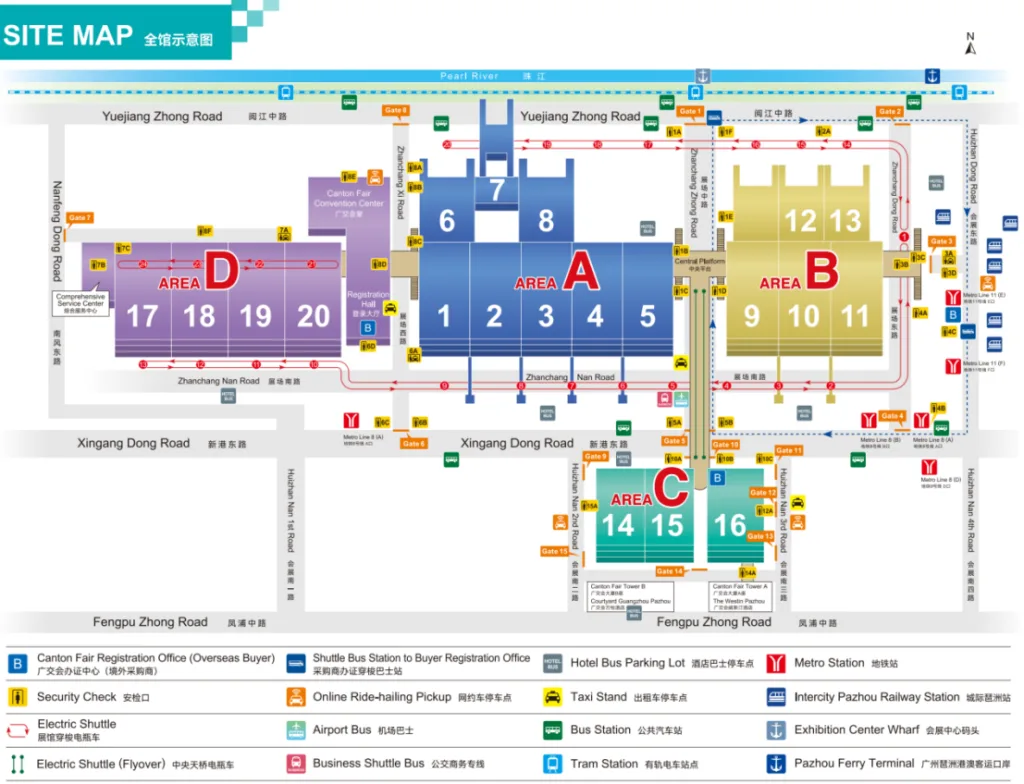
Zone Service Rules: IP and Trade Dispute Complaint Stations are stationed across Complex Areas A, B, C, and D. While Areas A and B accept both IP and trade dispute complaints, Areas C and D handle IP complaints exclusively. Trade dispute complaints occurring in Areas C or D must be submitted at the Area A or B complaint desks.
Recommended Desks:Complex Areas C & D (or Areas A & B) Complaint Reception Stations.
Action Steps: Prepare proof of IP ownership (trademark/patent certificates), evidence of alleged infringement, and booth/exhibitor identification before submitting a formal complaint.
2. Trade Disputes & Contract Breach
Recommended Desks:Complex Areas A & B Complaint Reception Stations; or the CCPIT Commercial Legal Service Center (Area A).
Action Steps: Gather signed contracts, Purchase Orders (PO), Proforma Invoices (PI), remittance receipts, delivery records, and communication logs to confirm eligibility under Canton Fair rules.
3. Cross-Border Contracts & Complex Legal Matters
Recommended Desks:Complex Areas B & D, Guangzhou Foreign-Related Legal Advisory Service Port.
Action Steps: Consult on-site attorneys regarding governing law clauses, arbitration clauses, cross-border asset preservation, and international litigation frameworks.
III. Online Dispute Resolution Pathways
For online and hybrid exhibitors, the official Canton Fair portal maintains a continuous online complaint system:
Online IP Complaints: Submit digital evidence and ownership certificates through the official Canton Fair website portal.
Trade Dispute Inquiries: Contact the official Canton Fair legal customer service hotlines:
Domestic Hotline:4000-888-999
International Hotline:+86 (20) 28-888-999
IV. On-Site Duty Schedule of Attorney Yuting Yu
Attorney Yuting Yu (Partner and Head of International Legal Affairs at Neo-Ark Law Firm) will be on duty at the Guangzhou Foreign-Related Legal Advisory Service Port on the following dates to deliver direct legal counseling for exhibitors and buyers:
[On-Site Duty Schedule: Attorney Yuting Yu]
 ├── October 19, 2026 | Area B, Booth 10.1
 ├── November 2, 2026 | Area D, Booth 20-4
 └── November 3, 2026 | Area B, Booth 10.1
October 19, 2026 (Phase 1): Complex Area B, Booth 10.1
November 2, 2026 (Phase 3): Complex Area D, Booth 20-4
November 3, 2026 (Phase 3): Complex Area B, Booth 10.1
About the Author
Yu Yuting Partner | NEO-ARK Law Firm
LawyerYu focuses on foreign-related litigation, cross-border disputes, commercial matters, and legal services for overseas individuals and businesses in China.
NEO-ARK Law Firm provides legal services in foreign-related litigation, commercial disputes, family law, and cross-border legal matters, assisting both international and domestic clients throughout China.
 Skip to content