Public Service & Social Responsibility | Three Neo-Ark Partners Appointed to the Tianhe District Public Legal Education Lecture Team
Executive Summary
The Tianhe District Bureau of Justice in Guangzhou recently completed its latest selection process for the Tianhe District Public Interest Lawyer Legal Education Lecture Team (天河区公益律师普法宣讲团). Following comprehensive vetting, three partners from Guangdong Neo-Ark Law Firm—Senior Partner & Executive Director Minghong Liu, Partner Wanjun Li, and Partner & Head of the International Legal Affairs Department yu yuting—were officially appointed and awarded letters of appointment for a three-year term.
Led by the Tianhe District Bureau of Justice, the lecture team brings together seasoned legal practitioners with strong ethical standing and dedication to public service. Over their three-year tenure, the appointed partners will deliver targeted, on-demand legal education across government agencies, local communities, schools, and corporate enterprises—conducting legal lectures, offering pro bono consultations, interpreting landmark cases, producing educational media, and participating in rule-of-law forums.
I. Profiles of the Appointed Neo-Ark Partners
1. Liu Minghong (刘明鸿) — Senior Partner & Executive Director
Core Practice Areas: Complex civil and commercial dispute resolution, government affairs and administrative litigation, corporate and government legal counsel, and criminal defense.
Key Institutional & Academic Roles:
Council Member, Constitutional Law, Administrative Law, and Marriage & Family Law Research Associations of the Guangdong Law Society.
Council Member, Rural Law Research Association of the Guangzhou Law Society.
External Master's Supervisor, Guangdong University of Technology; Visiting Professor, Law School of Dali University.
Committee Member, 11th Term Tianhe District Lawyers Work Committee and Administrative Reconsideration & Litigation Committee of the Guangzhou Lawyers Association (GLA).
Executive Director, Neo-Ark Youth Working Committee; Deputy Secretary-General, Neo-Ark Construction & Infrastructure Investment Law Research Center.
Core Practice Areas: Matrimonial and family law, cross-border family disputes, divorce asset division, child custody and visitation rights, hidden asset investigations, estate inheritance, spousal debt defense, personal safety protection orders, and high-net-worth family wealth planning.
Key Institutional & Public Service Roles:
Council Member, Marriage & Family Law Research Association and Standing Council Member, Food & Drug Law Research Association of the Guangdong Law Society.
Member, Foreign-Related New Talent Pool of the Guangdong Lawyers Association.
Committee Member, Marriage & Family Law Committee and Foreign Affairs Work Committee of the Guangzhou Lawyers Association (GLA).
Expert Volunteer Attorney, Guangdong Women's Rights Protection and Information Service Station; Volunteer Attorney, Yangcheng Legal Ladies Team.
Mediator, Guangzhou International Commercial Mediation Center; Roster Legal Aid Attorney, Yuexiu District Legal Aid Office.
Contributing Columnist ("Legal Perspectives on Family Matters"), Family (《家庭》) Magazine; Senior Lecturer, Guangdong Jiangnan Technical College.
3. Yu Yuting (余宇婷) — Partner & Head of International Legal Affairs Department
Core Practice Areas: Cross-border dispute resolution, civil and commercial litigation, criminal defense, and corporate legal counsel.
Key Institutional & Cross-Border Roles:
Council Member, Digital Law and Marriage & Family Law Research Associations of the Guangdong Law Society; Council Member, Rural Law Research Association of the Guangzhou Law Society.
Member, Foreign-Related New Talent Pool of the Guangdong Lawyers Association.
Officer, Foreign-Related Legal Services Subcommittee and Committee Member, Foreign Affairs Work Committee of the Guangzhou Lawyers Association (GLA); Member, GLA International Commercial Arbitration Training Group and Guangzhou International Commercial Legal Services Center.
Legal Counsel, Guangzhou Association of Enterprises with Foreign Investment; Committee Member, Legal Committee of the Huaxia Returned Overseas Students Association.
Duty Lawyer, Filing Division of the Guangzhou Intermediate People's Court and the Guangzhou Labor and Personnel Dispute Arbitration Institute.
Visiting Lecturer, Law School of Dali University; Specially Appointed Instructor, Law School of Guangdong Sci-Tech Trade Professional College.
Council Member, The Chinese University of Hong Kong (CUHK) Guangzhou Alumni Association and Shenzhen University Law School Alumni Association.
Deputy Secretary-General, Neo-Ark Criminal Law Research Center and Youth Working Committee.
About the Author
Yu Yuting Partner | NEO-ARK Law Firm
LawyerYu focuses on foreign-related litigation, cross-border disputes, commercial matters, and legal services for overseas individuals and businesses in China.
NEO-ARK Law Firm provides legal services in foreign-related litigation, commercial disputes, family law, and cross-border legal matters, assisting both international and domestic clients throughout China.
Recovering an Unpaid Private Loan in China: Evidence and Repayment Rights
Overview
A private loan dispute can become difficult when a borrower receives money in several instalments, makes partial interest payments, but fails to repay the principal. The situation may be further complicated when the parties never agreed on a fixed repayment date.
In this case, the borrower, a Hong Kong resident, obtained several loans from the lender over a period of approximately two years. The transactions involved both bank transfers and cash payments, and the borrower issued written acknowledgements of the debts. Although the borrower made partial interest payments and later acknowledged the borrowing during communications with the lender, the principal remained unpaid.
The dispute illustrates several important issues in private lending claims in mainland China: how to establish the existence and amount of a loan, how to address cash advances, and how a lender may demand repayment when no repayment date has been agreed.
Case Snapshot
Item
Details
Dispute Type
Private Loan / Debt Recovery
Legal Jurisdiction
Mainland China
Borrower
Hong Kong resident
Loan Period
Approximately April 2018 to May 2020
Number of Advances
Five
Approximate Principal
RMB 590,000
Agreed Interest Rate
6% per annum
Approximate Dispute Value
RMB 730,000
Attorney
Yu Yuting
Law Firm
NEO-ARK Law Firm
Key Legal Issues
1. How can a lender prove loans made through both bank transfers and cash payments?
A private lending claim requires the lender to establish that the funds were actually advanced and that the parties intended to create a lending relationship.
Bank transfer records can help establish the movement of funds. For cash advances, written acknowledgements, receipts, communications between the parties and other corroborating materials may be particularly important.
In this case, the lender relied on written loan acknowledgements for the advances, together with bank transfer records and communications in which the borrower acknowledged the borrowing. Considered together, these materials provided a basis for demonstrating the lending relationship and the outstanding debt.
2. Can a lender demand repayment if no repayment date was agreed?
Under Article 675 of the Civil Code of the People's Republic of China, where a loan repayment period has not been agreed or cannot be determined, the borrower may repay the loan at any time, while the lender may demand repayment after giving the borrower a reasonable period to do so.
Accordingly, the absence of a fixed repayment date does not mean that the borrower can indefinitely postpone repayment. A lender may request repayment and allow a reasonable period for the borrower to comply.
Here, the parties had not specified a repayment deadline. The lender therefore relied on repeated repayment demands made by telephone and through messaging communications.
3. Is an agreed annual interest rate of 6% enforceable?
The enforceability of private loan interest depends on the applicable legal rules and the relevant contract date. Chinese judicial rules on private lending have changed over time, including the introduction of an interest-rate ceiling linked to the one-year Loan Prime Rate (LPR).
The agreed annual rate in this case was 6%. Its enforceability should be assessed under the rules applicable to the relevant loan agreements and advances. The fact that the borrower made partial interest payments may also be relevant to understanding the parties' performance of the agreements, but does not by itself establish the final amount recoverable.
Legal and Evidentiary Considerations
Issue
Relevant Material
Legal Significance
Existence of the loans
Written loan acknowledgements
Supports the existence and terms of the lending relationship
Delivery of funds
Bank transfer records and cash-payment documentation
Helps establish that the loan advances were actually made
Borrower's acknowledgement
Telephone and messaging communications
May corroborate the borrowing and the outstanding obligation
Repayment demands
Communications requesting repayment
Helps demonstrate that the lender sought repayment despite the absence of a fixed maturity date
Interest agreement
Written loan terms
Provides a basis for assessing the agreed interest, subject to applicable legal limits
Practical Lessons for Private Loan Recovery in China
Keep a clear record of every advance
Where a loan is advanced in several instalments, each transaction should be documented. The records should identify the amount, date, recipient and purpose of the payment. Cash advances should be supported by signed acknowledgements or other reliable documentation.
Preserve communications acknowledging the debt
Messages in which a borrower confirms the loan, discusses repayment or requests additional time may help corroborate the written loan documents and payment records. Such communications should be preserved in their original form where possible.
Make a clear repayment demand
If the parties did not agree on a repayment date, the lender should make a clear repayment request and allow a reasonable period for compliance. Keeping a record of the demand can help establish the history of the dispute.
Assess interest separately from principal
The principal advanced, interest already paid and any remaining interest claim should be calculated separately. The applicable interest rules must be assessed with reference to the dates and terms of the relevant loan transactions.
Frequently Asked Questions
Can a lender sue for repayment if the loan agreement has no maturity date?
Yes. Under Article 675 of the Civil Code, where no repayment period has been agreed or can be determined, the lender may demand repayment after allowing the borrower a reasonable period to repay.
Are bank transfers enough to prove a private loan?
Not necessarily. A bank transfer can demonstrate that money moved between accounts, but the legal nature of the transfer may still need to be established. Loan acknowledgements, communications and other supporting materials can help show that the payment was a loan rather than a gift or another type of transaction.
Can cash loans be recovered through litigation in China?
A cash loan may be recoverable if the lender can establish that the money was actually delivered and that the parties intended it to be a loan. Written acknowledgements and corroborating records can be important.
Does a borrower's acknowledgement of the debt help a recovery claim?
It can. A clear acknowledgement may corroborate the loan documents and payment records. Its significance will depend on the wording, authenticity and surrounding circumstances.
Conclusion
Recovering a private loan in mainland China requires more than showing that money changed hands. The lender must establish the lending relationship, demonstrate that the funds were advanced and provide a reliable account of the outstanding principal and interest.
This case illustrates the value of maintaining written loan acknowledgements, payment records and communications confirming the debt. It also demonstrates that the absence of a fixed repayment date does not necessarily prevent a lender from demanding repayment under Chinese law.
The final outcome of any claim will depend on the evidence, the applicable legal rules and the court's assessment of the particular transactions.
About the Author
Yu Yuting Partner | NEO-ARK Law Firm
LawyerYu focuses on foreign-related litigation, cross-border disputes, commercial matters, and legal services for overseas individuals and businesses in China.
NEO-ARK Law Firm provides legal services in foreign-related litigation, commercial disputes, family law, and cross-border legal matters, assisting both international and domestic clients throughout China.
2026-11-10
Inheriting Property Under a Notarized Will in China: Resolving a Family Inheritance Dispute
Overview
Inheritance disputes involving jointly owned property can become complicated when a deceased person's will allocates only their share of the property and other family members disagree over ownership registration and transfer.
NEO-ARK Law Firm represented two beneficiaries in an inheritance dispute before the Liwan District People's Court in Guangzhou, China. The dispute concerned a residential property jointly owned by a married couple and a notarized will executed by the deceased husband.
During his lifetime, the deceased had made a notarized will specifying that his 50% ownership interest in the jointly owned property would pass to two of his daughters in equal shares. Each daughter was designated to inherit a 25% interest in the entire property, with the inherited interest to remain her personal property.
After the father's death, disagreements arose among the family members regarding inheritance rights and the registration of the property ownership. The two beneficiaries therefore initiated legal proceedings, seeking judicial confirmation of their respective ownership interests and an order requiring their mother to cooperate with the property transfer.
The court upheld the inheritance arrangement under the notarized will, confirmed the ownership shares of the family members, and ordered the surviving spouse to assist with the property transfer within a specified period.
The case demonstrates the importance of clearly identifying the deceased's ownership interest, establishing the validity and contents of a will, and obtaining an enforceable judgment when family members cannot complete an inheritance-related property transfer by agreement.
Case Snapshot
Item
Details
Case Type
Inheritance and Property Ownership Dispute
Practice Area
Family and Inheritance Law
Court
Liwan District People's Court, Guangzhou
Client
Two beneficiaries under a notarized will
Property
Residential property in Guangzhou, China
Inheritance Instrument
Notarized Will
International Element
Family members included Australian citizens and a Hong Kong SAR resident
Attorney
Yu Yuting
Law Firm
NEO-ARK Law Firm
First-Instance Outcome
Ownership shares confirmed and property transfer assistance ordered
Key Legal Issues
1. Can a Notarized Will Determine the Inheritance of Jointly Owned Property?
When a property is jointly owned by spouses, a deceased spouse generally cannot dispose of the surviving spouse's ownership interest through a will. The inheritance arrangement must first distinguish the deceased's own share from the property belonging to the surviving spouse.
In this case, the residential property was jointly owned by the husband and wife, each holding a 50% interest.
The husband executed a notarized will specifying that his 50% share would be inherited by two daughters in equal portions. Each daughter was therefore entitled to a 25% interest in the entire property under the will, while the surviving spouse retained her own 50% ownership interest.
This distinction was central to the dispute. The inheritance claim did not seek to transfer the entire property to the beneficiaries; it sought recognition of the ownership interests allocated under the deceased's will.
2. How Can Beneficiaries Obtain Property Ownership Registration After Inheritance?
A will may establish the intended distribution of an estate, but disputes can arise when the surviving co-owner or other family members do not cooperate with the procedures required to register the inherited property interests.
In this case, the beneficiaries sought judicial confirmation of their respective shares and an order requiring the surviving spouse to assist with the property transfer.
The court confirmed the ownership interests and ordered the surviving spouse to cooperate with the relevant transfer procedures within the period specified in the judgment.
This illustrates how civil litigation may provide a route to resolve an inheritance-related registration dispute when voluntary cooperation cannot be achieved.
3. What Happens When Family Members Do Not Attend the Hearing?
Several family members were joined as third parties in the proceedings. Some defendants and third parties did not appear despite being legally summoned.
The court proceeded with the case in their absence in accordance with the applicable procedural rules.
A judgment entered in a party's absence does not automatically mean that every allegation made by the other party is accepted. The court must still assess the evidence and determine the legal issues before it.
In this case, the court made its first-instance decision based on the evidence and applicable law, notwithstanding the absence of certain parties.
4. How Should an Inheritance Dispute Be Handled When Family Members Have Different Nationalities or Residency Statuses?
The family members involved included Australian citizens and a Hong Kong SAR resident. This added a cross-border dimension to the family dispute.
However, the property was located in Guangzhou, and the proceedings were brought before a mainland Chinese court.
For inheritance disputes involving property in mainland China, it is important to identify the location and nature of the property, the relevant parties, the applicable law, and any procedural requirements arising from overseas identities or documents.
The presence of foreign nationals or Hong Kong residents does not automatically turn a mainland property dispute into a foreign court proceeding. The relevant jurisdictional and choice-of-law rules must be assessed according to the specific facts.
Legal Strategy
Issue
Legal Approach
Purpose
Ownership before inheritance
Identified the deceased's 50% interest in the jointly owned property
Established the portion of the property available for inheritance
Validity and contents of the will
Relied on the notarized will and its clear allocation of the deceased's ownership interest
Established the beneficiaries' inheritance basis
Ownership allocation
Sought judicial confirmation of each beneficiary's 25% interest and the surviving spouse's 50% interest
Resolved uncertainty over the property's ownership structure
Property transfer
Requested an order requiring the surviving spouse to cooperate with registration procedures
Provided a judicial basis for completing the transfer
Family members' absence
Proceeded with the case under the applicable rules after certain parties failed to appear despite lawful summons
Enabled the court to adjudicate the dispute on the evidence available
Court's Decision and Outcome
On 15 December 2025, the Liwan District People's Court issued its first-instance judgment.
The court:
Confirmed that the two beneficiary daughters each held a 25% ownership interest in the residential property;
Confirmed that the surviving spouse retained a 50% ownership interest; and
Ordered the surviving spouse to assist with the property transfer within 30 days.
The judgment also allocated the court acceptance fee among the parties.
Certain defendants and third parties did not appear after being legally summoned, and the court proceeded with the hearing and issued its judgment in their absence.
The first-instance decision provided a clear judicial determination of the ownership shares under the notarized will and a specific obligation to cooperate with the property transfer.
Practical Lessons for Inheritance and Property Disputes in China
Identify the Deceased's Actual Ownership Interest
A will can only dispose of the property or ownership interest legally attributable to the testator. Where a property is jointly owned by spouses, the surviving spouse's share should be distinguished from the deceased's estate before inheritance distribution is determined.
Prepare a Clear and Legally Effective Will
A properly prepared will can reduce uncertainty over the intended distribution of an estate. Where real estate is involved, the will should clearly identify the relevant property interest and the intended beneficiaries.
Seek Judicial Confirmation When Family Members Refuse to Cooperate
Where beneficiaries cannot complete the property transfer through agreement, they may need to seek judicial confirmation of their inheritance rights and an order requiring the relevant parties to cooperate.
Consider Cross-Border Family Circumstances
Inheritance disputes may involve family members living in different jurisdictions or holding different nationalities and residency statuses. Relevant identity documents, authorization documents, and overseas materials may need to satisfy applicable procedural requirements.
Distinguish a First-Instance Judgment From a Final Decision
A first-instance judgment may be subject to appeal within the statutory period. Parties should confirm whether an appeal has been filed and whether the judgment has become legally effective before treating the ownership determination as final.
Frequently Asked Questions
Can a surviving spouse inherit the deceased spouse's share of a jointly owned property if there is a will?
The distribution depends on the contents and validity of the will and the applicable inheritance rules. A surviving spouse's existing ownership interest must first be distinguished from the deceased spouse's estate. The deceased's will generally cannot dispose of the surviving spouse's own share.
Can two children inherit a parent's share of a property under a notarized will in China?
Yes, subject to the validity of the will and the applicable legal requirements. A testator may designate beneficiaries to inherit the testator's own property or ownership interest. The precise shares should be determined according to the will and the relevant law.
Can a court order a family member to cooperate with an inherited property transfer?
A court may order a party to assist with property transfer procedures where the claimant establishes the relevant inheritance rights and the legal basis for the requested relief. The judgment should clearly identify the ownership interests and the required cooperation.
Does the presence of Australian citizens or Hong Kong residents make a property inheritance dispute a foreign court case?
Not automatically. The location of the property, the parties' circumstances, and the applicable jurisdictional and choice-of-law rules must be considered. A dispute involving real estate in mainland China may be heard by a mainland Chinese court even when some family members reside overseas or hold foreign nationality.
What if a defendant does not attend an inheritance hearing in China?
If a party has been legally summoned but fails to appear without a valid reason, the court may proceed in that party's absence in accordance with procedural law. The court must still assess the evidence and legal issues before issuing its decision.
Conclusion
This inheritance dispute demonstrates the importance of separating a deceased person's ownership interest from the surviving spouse's existing share when distributing jointly owned property.
By relying on a notarized will and seeking judicial confirmation of the beneficiaries' respective interests, the claimants obtained a first-instance judgment confirming the ownership allocation and requiring cooperation with the property transfer.
For families dealing with inheritance and real estate disputes in mainland China, clear testamentary arrangements and properly structured legal proceedings can help resolve ownership uncertainty, particularly where family members are unable or unwilling to cooperate.
About the Author
Yu Yuting Partner | NEO-ARK Law Firm
LawyerYu focuses on foreign-related litigation, cross-border disputes, commercial matters, and legal services for overseas individuals and businesses in China.
NEO-ARK Law Firm provides legal services in foreign-related litigation, commercial disputes, family law, and cross-border legal matters, assisting both international and domestic clients throughout China.
2026-11-04
Binance's $6.3 Billion Crypto Theft: How Does Chinese Criminal Law Classify and Value Virtual Currency?
Executive Summary
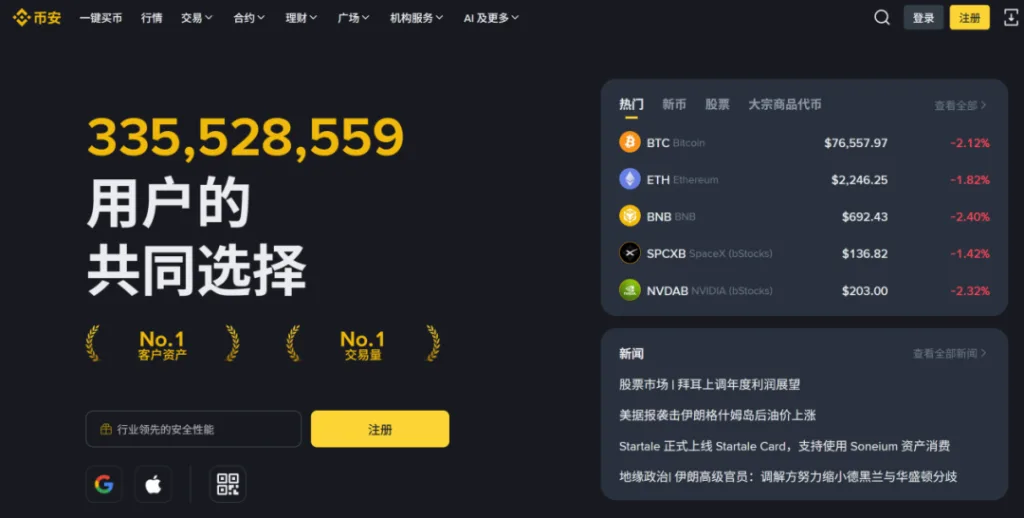
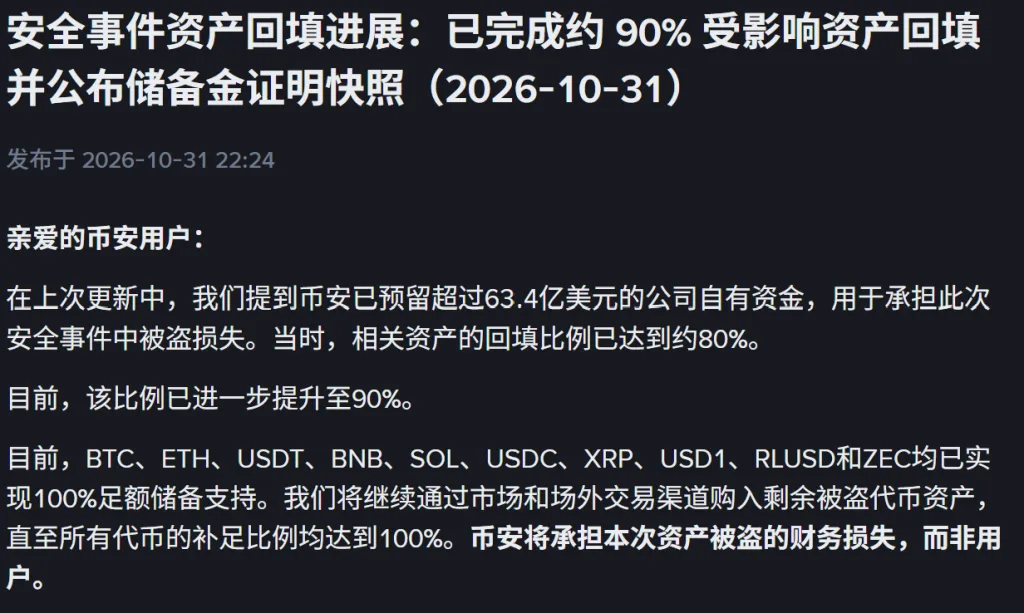
On October 30, 2026, Binance—the world’s largest cryptocurrency exchange—confirmed that hackers breached its hot wallets, stealing approximately $6.3 billion in digital tokens and marking the largest theft in cryptocurrency history. The breach triggered significant market volatility, briefly driving Bitcoin down to roughly $76,000, while Binance suspended withdrawals, froze approximately $3 billion on-chain, and pledged to cover all user losses using its SAFU fund and corporate reserves.
This historic security breach raises three fundamental legal questions under Chinese criminal law:
Are virtual currencies such as Bitcoin and Tether (USDT) recognized as legally protected "property"?
Does stealing cryptocurrency constitute Theft (盗窃罪) or a Computer Data Crime (非法获取计算机信息系统数据罪)?
How do Chinese courts calculate the monetary valuation of stolen digital assets when domestic trading lacks legal recognition?
(Source: Binance Website)
I. The Legal Nature of Virtual Currency: Not Fiat Money, Yet Protected Property
Not Legal Tender: Under the 2013 Notice on Preventing Bitcoin Risks (Yinfa [2013] No. 289) issued by the People's Bank of China (PBOC) and five ministries, Bitcoin is defined as a "specific virtual commodity" lacking legal status equivalent to fiat currency. The 2021 Notice on Further Preventing and Disposing of Speculation Risks in Virtual Currency Trading reaffirmed that cryptocurrencies lack legal tender status, cannot circulate as currency, and that related commercial trading constitutes illegal financial activity.
Dual Attributes (Data + Property): Technically, a digital token is an encrypted entry on a distributed ledger controlled via private keys—giving it a data attribute. Economically, acquiring cryptocurrency requires measurable consideration (mining electricity, computing power, or fiat purchase capital), and unlawful deprivation inflicts direct financial loss on the holder—establishing a property attribute. Consequently, while Chinese regulatory authorities prohibit cryptocurrency trading, criminal courts consistently recognize virtual currencies as property protected against unlawful appropriation.
(Source: Binance Website)
II. Crime Classification: Property Theft vs. Computer Data Crime
In Chinese judicial practice, prosecuting cryptocurrency theft involves evaluating two competing criminal provisions:
Illegal Acquisition of Computer Information System Data (非法获取计算机信息系统数据罪)
Article 285(2), Criminal Law of the PRC
Virtual currency is fundamentally electronic data; unauthorized system intrusion and extraction constitute a data offense.
Current judicial trends recognize both attributes, classifying offenses based on the underlying criminal conduct and applying the heavier penalty when offenses overlap (择一重处). Guidance from the Supreme People's Procuratorate emphasizes evaluating intrusions across the physical, logical, and content layers of computer systems.
Landmark Judicial Precedents
Memorizing Mnemonic Phrases Classified as Theft (Qingdao, 2025):Defendant Zhang exploited his role assisting with digital wallet transactions to memorize a victim's seed phrase, transferring 107 Bitcoins and liquidating them for over RMB 660,000. In April 2025, the Licang District People's Court of Qingdao convicted Zhang of Theft, sentencing him to 10 years and 9 months in prison plus a RMB 100,000 fine (affirmed on appeal by the Qingdao Intermediate People's Court in November 2025).
Malicious Wallet Software Charged Under Both Offenses (Wenzhou, 2025):Defendant Liu promoted a fraudulent digital wallet application offering above-market gift card redemptions, utilizing backend servers to siphon user tokens and harvest hundreds of wallet addresses, seed phrases, and balance records. In May 2025, the Wenzhou Intermediate People's Court upheld convictions for both Theft and Illegal Acquisition of Computer Information System Data, imposing a combined sentence of 11 years and 6 months alongside the recovery of over 8,700 tokens.
(Source: Lianhe Zaobao)
III. The Valuation Challenge: Three Judicial Rules for Calculating Stolen Crypto
Because virtual currencies are not legal tender in China, there are no official exchange rates or state-authorized price appraisal agencies. Combined with 24/7 global trading and sharp price volatility, courts rely on three complementary valuation standards:
[Judicial Valuation Hierarchy for Virtual Currency]
 ├── Rule 1: Liquidated Assets ──────> Actual proceeds realized from illegal sale (销赃所得)
 ├── Rule 2: Unliquidated Assets ────> Lowest trading price on major international exchanges on the offense date
 └── Rule 3: Verifiable Cost Basis ──> Actual fiat purchase price / acquisition cost paid by victim or offender
Rule 1 — Actual Liquidation Proceeds: Where offenders convert stolen tokens into fiat currency, courts adopt the actual realized proceeds as the crime amount. In the 107-Bitcoin case in Qingdao, prosecutors fixed the theft valuation at the RMB 660,000 realized by the defendant.
Rule 2 — Lowest International Exchange Price on Offense Date: Where tokens remain unliquidated, judicial practice (as highlighted in a May 2025 Supreme People's Procuratorate publication by the Xuanwu District Procuratorate of Nanjing) calculates value using the lowest daily trading price on major international exchanges on the date of the offense. This satisfies evidentiary certainty and aligns with the criminal law principle of in dubio pro reo (resolving doubts in favor of the defendant).
Rule 3 — Actual Acquisition Cost: Where clear purchase records exist—such as cases documented by the Zhongzhan District Procuratorate of Jiaozuo involving USDT settlements—courts may determine value based on the verifiable fiat purchase cost.
(Binance Co-CEO He Wei Zheng, Source: Lianhe Zaobao)
IV. Practical Risk Takeaways for Token Holders & Industry Practitioners
Regulatory Bans Do Not Strip Criminal Protection: Prohibitions on domestic cryptocurrency trading do not immunize hackers or thieves. Holders whose digital assets are stolen retain the right to report the offense and seek criminal asset recovery.
Blockchain Transparency Enables Tracing: Using cryptocurrencies to settle illicit transactions does not guarantee anonymity. Immutable on-chain ledger records allow law enforcement to trace fund flows and establish criminal liability.
Private Keys and Seed Phrases Establish Legal Control: In legal practice, control over private keys or mnemonic phrases serves as primary evidence of possession. Any compromise results in immediate loss of control with high cross-border recovery hurdles.
Immediate On-Chain Evidence Preservation: As demonstrated by the $3 billion frozen on-chain in the Binance incident, rapid cross-border coordination is essential. Market participants should preserve complete deposit/withdrawal records, transaction hashes (TxIDs), wallet addresses, and fiat bank statements to support immediate asset freezing and valuation verification.
Conclusion
Under Chinese criminal law, virtual currency is not fiat money, yet it constitutes legally protected property; while technically electronic data, it embodies concrete economic interests that criminal courts actively shield against unlawful infringement.
About the Author
Yu Yuting Partner | NEO-ARK Law Firm
LawyerYu focuses on foreign-related litigation, cross-border disputes, commercial matters, and legal services for overseas individuals and businesses in China.
NEO-ARK Law Firm provides legal services in foreign-related litigation, commercial disputes, family law, and cross-border legal matters, assisting both international and domestic clients throughout China.
2026-11-03
Design Patent Infringement Defense in China: Distinguishing Manufacturing, Sales and Offers for Sale
Overview
A company facing a design patent infringement claim in China may need to defend not only the alleged similarity between the products, but also whether it actually carried out the specific acts alleged by the patent owner.
This distinction was central to a dispute before the Guangzhou Intellectual Property Court, in which a foreign audio equipment manufacturer claimed that a Chinese electronics technology company and an individual had infringed its registered design patent covering a loudspeaker product.
The claimant sought an injunction, joint compensation of approximately RMB 500,000, and litigation costs.
NEO-ARK Law Firm represented the defendants. The defense challenged the connection between the claimant's evidence and the defendants' actual business activities, questioned whether the product images were sufficient for a proper design comparison, and disputed the basis for the claimed compensation.
The court ultimately found that the defendants had engaged in offering the allegedly infringing product for sale and that the product was similar to the patented design. However, the court did not find that the defendants had manufactured or sold the infringing products. It ordered the defendants to cease the infringing conduct, remove the relevant content from their website, and pay joint compensation. The claimant's remaining claims were dismissed.
The case demonstrates the importance of separating different types of alleged infringing conduct and carefully examining the evidence supporting a design patent infringement claim.
Case Snapshot
Item
Details
Case Type
Design Patent Infringement
Practice Area
Intellectual Property Litigation
Court
Guangzhou Intellectual Property Court
Client
Chinese electronics technology company and individual defendant
Opposing Party
Foreign audio equipment manufacturer
Product
Loudspeaker
Claim Value
Approximately RMB 500,000
Attorney
Yu Yuting
Law Firm
NEO-ARK Law Firm
Key Issues
Design similarity, evidence of manufacturing and sales, offers for sale, and damages
Outcome
Infringement found in relation to offering for sale; manufacturing and sales were not established
Key Legal Issues
1. Does Evidence of an Online Product Listing Prove Manufacturing or Sales?
A design patent infringement claim should distinguish between different types of commercial conduct, including manufacturing, selling, and offering products for sale.
Evidence that a product appears on a company's website does not necessarily establish that the company manufactured or completed a sale of that product. The court must assess the evidence in relation to the specific conduct alleged and the relevant defendant.
In this case, the claimant relied on website content and project-related materials to support its allegations. The defense argued that certain materials predated the establishment of the defendant company and therefore could not establish that the company had carried out the alleged activities.
The court ultimately did not find that the defendants had manufactured or sold the infringing products, although it found that offering the product for sale had occurred.
This distinction was important because the scope of established conduct directly affected the extent of the defendants' potential liability.
2. How Should a Court Compare the Allegedly Infringing Product With a Registered Design?
Design patent infringement analysis requires an assessment of the overall visual effect of the allegedly infringing product compared with the patented design.
The defense challenged the claimant's reliance on limited product images, arguing that a single view could not adequately establish the full appearance of the product. The arguments addressed the visibility and consistency of particular design features, including the speaker grille and internal structural details.
The defense also questioned whether the claimant's comparison adequately accounted for the product's overall appearance and the relevant design features.
A proper design comparison should not rely on an isolated feature or an incomplete image where the available evidence does not allow the overall visual effect to be assessed reliably. The precise comparison method depends on the registered design materials, the accused product, and the applicable legal standards.
In this case, the court ultimately found the products similar to the patented design. The defense therefore did not eliminate the infringement finding, but its arguments formed part of the broader dispute over the scope and degree of similarity.
3. Can Evidence From Earlier Projects Be Attributed to a Company Established Later?
The timing and identity of the parties involved in the alleged conduct can be critical in intellectual property litigation.
The claimant relied on certain historical project materials to support its allegations. The defense argued that these materials were created before the defendant company was established and did not establish that the company or the individual defendant had carried out the alleged manufacturing or sales activities.
The defense also challenged the reliability of certain evidence by referring to an earlier judgment involving the claimant's evidentiary materials.
These arguments focused the court's attention on whether the submitted documents could reliably establish the defendants' own conduct, rather than merely showing that similar products or projects had existed at an earlier time.
4. How Can a Defendant Challenge an Excessive Damages Claim?
The claimant sought substantial compensation, but the defense disputed the basis and calculation of the alleged losses.
In particular, the defense challenged the claimant's unilateral pricing assumptions and the evidentiary support for its damages calculation.
In intellectual property litigation, the amount claimed by a patent owner is not automatically the amount recoverable. The court must assess the available evidence and apply the relevant statutory rules for determining compensation.
The defense therefore focused on limiting the damages assessment to what could be supported by the established facts and applicable legal standards.
The court ultimately awarded compensation substantially below the amount claimed and dismissed the claimant's remaining requests.
Legal Strategy
Issue
Defense Approach
Significance
Attribution of historical materials
Examined the dates of the project materials and the establishment of the defendant company
Challenged whether earlier activities could be attributed to the defendants
Scope of alleged conduct
Distinguished manufacturing, completed sales, and offers for sale
Helped limit the conduct established by the court
Evidentiary reliability
Challenged the reliability and verifiability of certain materials, including by reference to an earlier judgment
Questioned whether the claimant's evidence sufficiently established the allegations
Design comparison
Examined the available product views and disputed whether they adequately demonstrated the overall visual similarity
Highlighted limitations in the claimant's comparison evidence
Damages
Challenged the claimant's valuation assumptions and supporting evidence
Helped resist the full compensation claim
Court's Decision and Outcome
The Guangzhou Intellectual Property Court found that the accused product was similar to the patented design and that the defendants had engaged in offering the product for sale.
However, the court did not establish that the defendants had manufactured or sold the infringing products.
The court ordered the defendants to:
Cease the infringing conduct;
Remove the relevant allegedly infringing content from their website; and
Pay joint compensation.
The court dismissed the claimant's remaining claims.
The judgment did not order destruction of the products. The compensation awarded was substantially lower than the amount originally claimed.
The outcome was therefore a partial success for the defense: although the court found infringement in relation to offering for sale, the claimant did not establish all the alleged forms of commercial conduct or obtain the full relief requested.
Practical Lessons for Companies Facing Design Patent Claims in China
Distinguish the Alleged Infringing Acts
Manufacturing, selling, and offering products for sale are distinct forms of conduct. A defendant should examine whether the evidence actually establishes each alleged act and whether it can be attributed to the relevant company or individual.
Examine the Dates and Origin of Evidence
Historical website content, project records, and third-party materials should be assessed in light of the defendant's establishment date, business activities, and actual involvement. Earlier records should not automatically be treated as proof of later conduct by a particular company.
Assess the Complete Design, Not Just Isolated Features
Design patent disputes require an appropriate comparison of the overall visual effect. Parties should examine the registered design documents and the accused product from the perspectives supported by the available evidence.
Challenge Unsupported Damages Calculations
A claimant's requested compensation should be examined against the applicable legal rules and the evidence supporting the claimed loss or other relevant calculation basis. A substantial claim does not guarantee an equivalent award.
Consider the Practical Scope of the Judgment
Even where a court finds infringement, the specific orders may be narrower than the claimant's requests. Businesses should assess the actual conduct found by the court, the scope of the injunction, and the financial consequences when planning their response.
Frequently Asked Questions
Can a company be liable for design patent infringement in China if it only offers a product for sale?
Potentially, yes. Offering a product for sale may constitute an independently actionable form of conduct under China's patent law. However, whether infringement is established depends on the product, the patent rights involved, the evidence, and the circumstances of the offer.
Does a website listing prove that a company manufactured or sold an infringing product?
Not necessarily. A website listing may be relevant to whether a product was offered for sale, but it does not automatically prove that the company manufactured the product or completed a sale. The court must assess the evidence supporting each alleged act.
How does a Chinese court compare an accused product with a design patent?
The comparison generally focuses on the overall visual effect of the accused product and the patented design, taking account of the relevant design features and the applicable legal standards. The court considers the registered design materials and the evidence of the accused product rather than relying solely on an isolated feature.
Can a defendant challenge evidence relating to projects completed before its establishment?
Yes. The timing, origin, authenticity, and connection of the evidence to the defendant are relevant considerations. Materials predating a company's establishment do not automatically establish that the company carried out the alleged conduct.
Can a patent owner recover the full amount claimed in a design patent lawsuit?
Not automatically. The court determines compensation under the applicable legal rules and the evidence available. A defendant may challenge unsupported valuation assumptions and the factual basis for the amount claimed.
Conclusion
This case illustrates why a design patent defense in China should examine more than whether an accused product resembles a registered design.
The court must also assess what conduct the defendant actually carried out, whether the evidence can be attributed to that defendant, and whether the claimant's damages calculation is adequately supported.
Although the court found that the defendants had offered a similar product for sale, it did not establish manufacturing or completed sales and awarded substantially less than the amount claimed.
For companies facing design patent litigation in China, a focused defense addressing conduct, evidence, design comparison, and damages can materially affect the scope and consequences of the judgment.
About the Author
Yu Yuting Partner | NEO-ARK Law Firm
LawyerYu focuses on foreign-related litigation, cross-border disputes, commercial matters, and legal services for overseas individuals and businesses in China.
NEO-ARK Law Firm provides legal services in foreign-related litigation, commercial disputes, family law, and cross-border legal matters, assisting both international and domestic clients throughout China.
 Skip to content