Skip to content
Phase 3 of the Canton Fair—focusing on food, packaging materials, and food processing machinery—has become a central sourcing hub for Chinese New Tea brands (新茶饮) expanding into Southeast Asia. Vietnamese buyers gather in Guangzhou not only to procure brewing equipment and raw ingredients, but also to evaluate domestic brands' supply chain integration and localized franchise operations.

(Image Source: China News Service / ECNS)
For Chinese beverage enterprises, the Canton Fair serves as both a global trade portal and an essential legal pre-check arena for cross-border franchising and supply chain setup. This guide outlines the key legal requirements for entering Vietnam, covering MOIT franchise registration, NOIP trademark prosecution, supply chain binding, and geopolitical risk management.
I. Procurement Models at the Canton Fair: Legal Structuring of Supply Chain and Franchising
At the Canton Fair, negotiations between Chinese manufacturers (packaging suppliers, tea equipment factories, syrup producers) and Vietnamese buyers fall under three primary operational structures, each with distinct compliance requirements:
1. Direct-Operated Stores and Centralized Procurement
Under a direct-operated model—such as CHAGEE's (霸王茶姬) deployment of 20 direct-operated or joint-venture outlets in Vietnam as reported in its 2025 financial disclosures—bar equipment, cold-chain systems, and core tea bases are centrally procured in China and exported. The Canton Fair allows brand headquarters to vet primary suppliers and secure a unified supply chain. Legal focus centers on foreign direct investment (FDI) structure, corporate registration, and local operating permits in Vietnam.
2. Franchising, Distribution, and Designated Sourcing
Under a franchise model—such as Mixue’s (蜜雪冰城) network of approximately 1,300 stores in Vietnam—franchisees are contractually required to procure core ingredients exclusively from headquarters or designated suppliers.
At the fair, some foreign buyers seek raw materials with the intention of bypassing franchisor supply networks. Under Vietnamese law, a franchisor must complete formal registration with the Ministry of Industry and Trade (MOIT) to legally enforce exclusive sourcing covenants. Without MOIT compliance, designated procurement clauses face enforcement hurdles and administrative exposure in Vietnam.
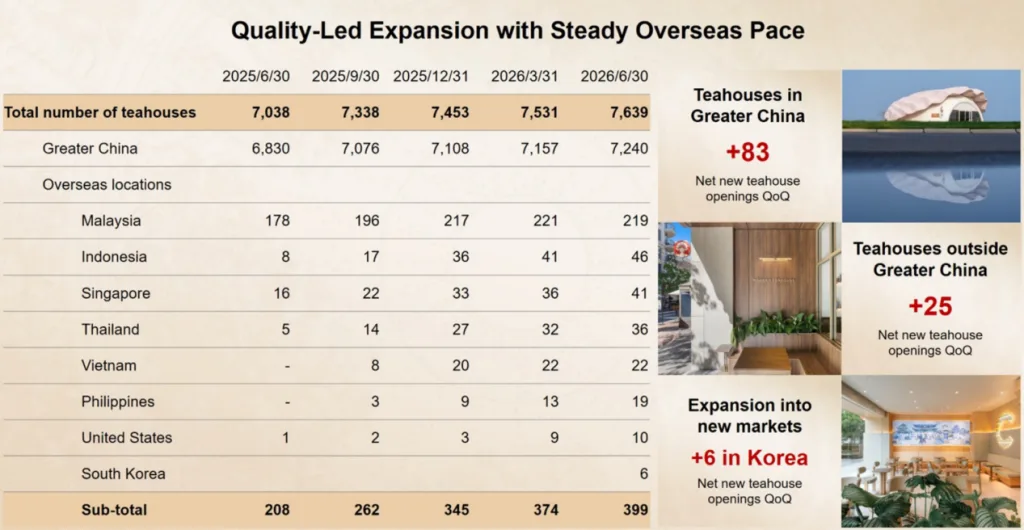
(Image Source: CHAGEE Q2 Financial Report)
3. Localized Manufacturing & Sourcing
Brands following a "Cross-Border Core Materials + Local Fresh Ingredients" model (similar to ChaPanda’s approach in South Korea) use Phase 3 of the Canton Fair to initiate factory and equipment sourcing. This structure involves compliance with Vietnamese land lease laws, environmental impact assessments, and local food safety standards.
II. Profiling Vietnamese Buyers
| Buyer Category | Primary Sourcing Objectives | Key Compliance & Operational Risks | Recommended Legal & Contracting Actions |
| Local Beverage Chains & Regional Brands | Custom machinery, OEM tea bases, automated sealing & fructose equipment | IP infringement, formula leaks, product specification mismatches | Sign binding bilingual NDAs before technical disclosure; define precise quality standards |
| Cross-Border Franchise Master Agents | Regional master franchise rights, brand authorization, ingredient supply | Operating without MOIT franchise registration; invalid contract clauses | Execute MOIT franchise filings; define explicit territorial protection & pricing mechanics |
| Independent Franchisees & Individual Investors | Turnkey store equipment, standardized raw material packages | Unclear tax/duty allocation; customs clearance bottlenecks; unauthorized sourcing | Clarify import tax liability; establish mandatory sourcing agreements linked to MOIT filings |
III. Franchise Regulatory Compliance and Key Case Studies
1. Why "Execute First, Comply Later" Fails Under Vietnamese Law
Attempting to collect franchise fees prior to fulfilling statutory registration prerequisites exposes franchisors to severe legal risks:
- 1-Year Operational Threshold: MOIT requires the underlying franchise system to have been in continuous operation for at least 1 year prior to filing.
- Strict Franchise Disclosure Document (FDD): Franchisors must submit verified offshore entity registrations, trademark ownership proof, operational resource documentation, and a 12-month litigation history statement.
- Contractual Enforcement Gaps: Operating without MOIT filings leaves the franchisor unable to enforce key contractual rights—such as designated procurement or liquidated damages—before Vietnamese courts, alongside triggering administrative penalties.
- Benchmark Compliance Precedent: In August 2026, hotpot brand Shoo Loong Kan successfully completed its MOIT franchise registration following cross-border notarizations and localized contract revisions, demonstrating that franchise compliance requires a structured, long-term timeline.

(Image Source: Xinhua News Agency)
2. Case Studies: Franchisee Disputes and Trademark Infringement
- Mixue Franchisee Protests (Hanoi, 2023): Between September and October 2023, several Mixue franchisees in Vietnam organized joint protests over retail price cuts, raw material cost adjustments, and store density policies. This event highlighted the necessity of drafting transparent pricing mechanisms, territorial protection limits, and supply cost adjustments directly into formal franchise agreements.
- Counterfeit Mixue Store Prosecution (Lai Chau Province, June 2026): Police in Lai Chau Province raided an unauthorized "MIXUE" store, seizing nearly 3,000 counterfeit labels and packaging items. Authorities initiated criminal prosecution under industrial property infringement laws. This case underscores the necessity of early trademark filings to establish criminal and civil enforcement rights.
IV. Pre-Entry Risk Mitigation: Trademarks, Supply Chain, and Geopolitical Risks
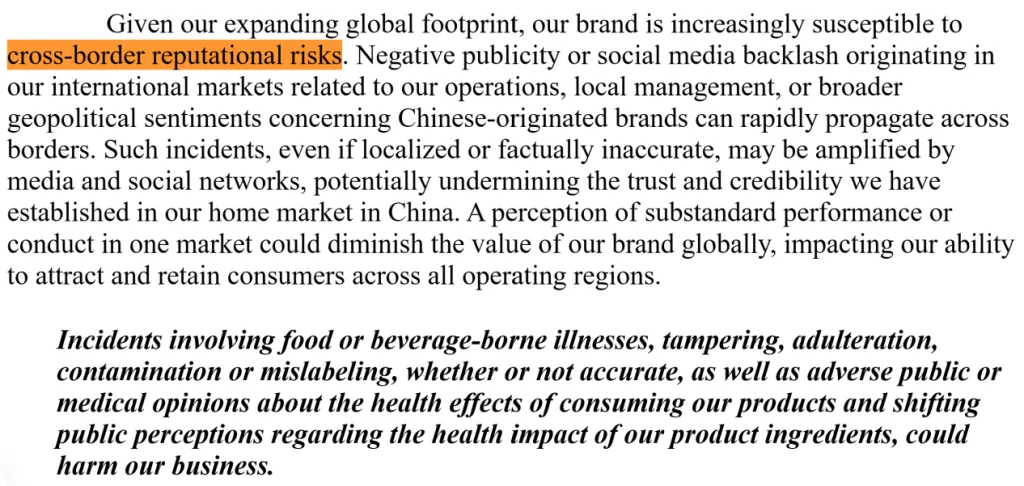
(Image Source: CHAGEE Annual Report)
1. Trademark Prosecution and Supply Chain Control
- Early NOIP Registration: CHAGEE secured trademark registrations with the National Office of Intellectual Property (NOIP) prior to opening stores in Vietnam, blocking unauthorized domain squatting and copycat brands ("Chacee", "Chamee"). Canton Fair exhibitors should list active NOIP application or registration numbers in their recruitment collateral as proof of legal title.
- Supply Chain Confidentiality: Designated procurement clauses depend on MOIT compliance for validity. To protect proprietary beverage formulas and equipment parameters during Canton Fair negotiations, brands must execute Non-Disclosure Agreements (NDAs) prior to technical disclosures.
2. Geopolitical and Data Compliance
- Cross-Border PR & Mapping Exposure: CHAGEE previously faced consumer pushback in Vietnam due to a mapping controversy within its mobile app UI. The company explicitly listed "consumer boycotts and operational restrictions caused by geopolitical risks" as a key risk factor in its annual report.
- Localized Compliance Review: Prior to launching digital ordering mini-programs or mobile apps in Vietnam, brands must complete localized political, cultural, and data protection compliance reviews to ensure alignment with domestic regulations.
V. Key Compliance Considerations
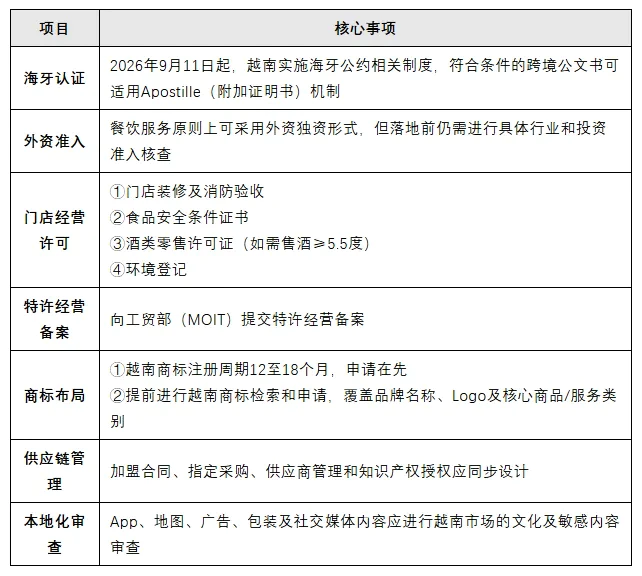
- Pre-Filing Mandatory Rule: Trademark filings with NOIP must precede public franchise recruitment at trade shows.
- FDD Preparation: Draft comprehensive Franchise Disclosure Documents (FDD) containing verified financial statements, litigation history, and corporate governance records.
- Dual-Tier Inspection Rules: Separate physical appearance arrival inspections from latent ingredient defect claims in cross-border supply agreements.
- Clear Currency Mechanics: Structure contract currency denominations, exchange rate adjustment triggers, and bank clearing paths explicitly.
Conclusion
Expanding a Chinese New Tea brand from a Canton Fair booth to Ho Chi Minh City or Hanoi requires structured regulatory planning. Exhibitors and franchisors must back trade show leads with NOIP trademark protections, MOIT franchise filings, and robust supply chain agreements. Establishing these legal safeguards converts temporary exhibition traffic into defensible, long-term brand equity across Southeast Asia.
About the Author

Yu Yuting
Partner | NEO-ARK Law Firm
Lawyer Yu focuses on foreign-related litigation, cross-border disputes, commercial matters, and legal services for overseas individuals and businesses in China.
Email: [email protected]
About NEO-ARK Law Firm
NEO-ARK Law Firm provides legal services in foreign-related litigation, commercial disputes, family law, and cross-border legal matters, assisting both international and domestic clients throughout China.