
...

News

Can a Distributor Be Liable for Trade Dress Infringement in China?

Overview

A distributor can face an unfair competition claim even if it did not manufacture the product at issue. In China, disputes involving similar product decoration often turn on whether the appearance of the goods is likely to confuse consumers and whether the defendant can be legally linked to their sale.

In this case, a technology company alleged that a watch sold through an online retail platform used product decoration similar to that of its well-known watch collection. The claimant argued that the decoration had acquired a certain level of market recognition and sought compensation, together with an order requiring the defendant to stop selling the product.

The defendant disputed responsibility for the sale. It argued that it had not manufactured or sold the specific watch, that the online store was not registered to it, and that a product certificate identifying it as the general distributor was insufficient to establish liability. It also challenged the scope of its distribution authorization and the evidence supporting the claimant's asserted reputation.

The court ultimately found that the product decoration was sufficiently similar to cause consumer confusion and held the defendant liable as a seller based on the evidence before it. However, the court awarded substantially less compensation than the claimant had sought and did not uphold the claimant's separate copyright claims.

The case illustrates an important defense principle in Chinese unfair competition litigation: even where complete dismissal is not achieved, carefully contesting the defendant's role, the scope of liability and the basis of the claimant's remedies can materially limit litigation exposure.

Case Snapshot

ItemDetails
Case TypeIntellectual Property / Unfair Competition
JurisdictionMainland China
CourtLiwan District People's Court, Guangzhou
IndustryWatches and Consumer Products
Dispute TypeAlleged imitation of product decoration and consumer confusion
Original Claim ValueApproximately RMB 500,000
Main ClaimsInjunction against sales, compensation and reasonable enforcement expenses
Key Legal IssuesTrade dress similarity, likelihood of confusion, distributor liability and related copyright claims
Defense StrategyChallenge the link between the defendant and the sale, the scope of liability and the compensation claim
OutcomeSales injunction and limited damages; separate copyright claims not upheld
AttorneyYu Yuting
Law FirmNEO-ARK Law Firm

The Core Legal Issues

1. When can similar product decoration amount to unfair competition in China?

Under China's Anti-Unfair Competition Law, using product decoration similar to that of another operator's goods with a certain market influence may constitute an act of confusion where it is likely to mislead consumers about the origin of the goods or their connection with another business. The specific legal assessment depends on the applicable law and the facts of the case. WIPO Lex

Here, the claimant argued that its watch collection had acquired sufficient recognition and that the defendant's product used similar decoration.

The court found that the similarity was sufficient to cause confusion and upheld the unfair competition claim in relation to the sale.

For businesses facing similar allegations, the key questions may include:

  • Whether the claimant can establish the required market influence of the product decoration;
  • Whether the overall appearance of the products is sufficiently similar;
  • Whether the similarities are likely to confuse relevant consumers; and
  • Whether the defendant's conduct falls within the scope of the alleged unfair competition.

2. Can a distributor be liable even if it denies manufacturing the product?

A defendant's role in the supply chain can be central to an unfair competition dispute.

The defendant argued that it had not manufactured or sold the specific watch and challenged the reliability of a product certificate identifying it as the general distributor. It also maintained that the product was outside the scope of its authorized distribution arrangements.

The court nevertheless treated the defendant as a seller based on the evidence before it.

This aspect of the case highlights the importance of distinguishing between different forms of involvement in the supply chain:

  • Manufacturing the product;
  • Authorizing or arranging its distribution;
  • Acting as a distributor for a particular product range; and
  • Selling or being legally linked to the sale of the specific product in dispute.

These roles should not automatically be treated as interchangeable. However, a company that denies direct involvement may still face liability if the available evidence establishes its legally relevant role in the sale.

3. How should a defendant respond when unfair competition and copyright claims are brought together?

The claimant also asserted copyright-related claims concerning the product's design or decoration.

The defendant's position required the court to consider different legal grounds rather than treating all allegations as a single infringement claim.

The court upheld the unfair competition claim but did not uphold the claimant's separate copyright claims.

This distinction matters because unfair competition and copyright infringement are different legal causes of action. They involve different legal requirements and should be analyzed separately.

A defense should therefore address each claim independently, including the claimant's rights, the conduct alleged, the evidence connecting the defendant to that conduct and the remedies sought.

Defense Strategy

IssueDefense Focus
Product saleChallenge whether the evidence sufficiently linked the defendant to the specific product and transaction
Distributor identificationExamine the significance and reliability of the product documentation relied upon by the claimant
Authorization scopeClarify the distinction between authorized product lines and the specific product in dispute
Product decorationContest the claimant's assertions concerning reputation, similarity and likely consumer confusion
Copyright allegationsSeparate the copyright claims from the unfair competition claim and challenge each on its own legal basis
CompensationChallenge the legal and factual basis for the amount claimed
Overall exposureSeek to limit liability to the conduct and remedies supported by the evidence

The defense did not eliminate all liability. Its significance lies in the extent to which the claim was narrowed and the compensation reduced.

Outcome

The court found that the product decoration at issue was sufficiently similar to cause consumer confusion and held the defendant liable for unfair competition in its capacity as a seller.

The judgment required the defendant to stop the relevant sales and pay compensation. However, the compensation awarded was substantially lower than the claimant's original demand.

The court did not uphold the claimant's separate copyright claims, nor did it make a finding that the defendant had acted in concert with another company to manufacture the product.

The case therefore ended with an adverse finding on the unfair competition claim, but with a materially narrower scope of liability than the claimant had sought.

For confidentiality reasons, the specific compensation amount and detailed cost allocation are not disclosed.

Why This Case Matters

A distributor's role should be assessed on the evidence

Companies may assume that they are insulated from liability because they did not manufacture a product. This case illustrates why that assumption can be risky.

Product certificates, sales records, distribution documents and other materials may become relevant to determining whether a company was involved in the sale of the goods at issue.

Trade dress claims can focus on consumer confusion

A dispute over product decoration is not simply a visual comparison. The legal analysis may also consider the market recognition of the claimant's goods and whether the similarity is likely to mislead consumers.

Copyright and unfair competition claims should be distinguished

The same product may give rise to different legal allegations. Each claim should be tested against its own legal requirements rather than treated as an automatic consequence of the same facts.

Reducing liability can be a meaningful litigation result

A defendant may not always be able to secure complete dismissal. Nevertheless, challenging the scope of the claims, the evidence of involvement and the amount of compensation can still make a substantial difference to the outcome.

Commercial and IP risk should be reviewed together

Distributors should maintain clear records of product authorization, sourcing, supplier relationships and the scope of their distribution rights. These records can become important when a product is challenged in litigation.

Frequently Asked Questions

Can a distributor be liable for unfair competition in China?

Potentially. A distributor may face liability where the evidence establishes that it engaged in conduct prohibited by the applicable law, including a legally relevant role in selling goods whose decoration causes consumer confusion. Liability depends on the facts and evidence of the particular case.

Does a company have to manufacture a product to face an unfair competition claim?

Not necessarily. A claim may concern the sale or distribution of a product rather than its manufacture. The defendant's actual role and the evidence connecting it to the transaction are important.

What is trade dress infringement under Chinese law?

The term is commonly used to describe disputes over product or packaging appearance. Under China's unfair competition framework, certain uses of product decoration associated with goods having market influence may be unlawful if they are likely to cause consumer confusion.

Can a claimant bring copyright and unfair competition claims in the same dispute?

A claimant may assert different legal claims based on related facts, but each claim must independently satisfy its applicable legal requirements. Success on an unfair competition claim does not automatically establish copyright infringement.

What can a company do when facing a large compensation claim?

The company should assess the legal basis for each claim, the evidence linking it to the alleged conduct, the scope of any potential liability and the basis for the compensation calculation. A focused defense may reduce exposure even if some liability is ultimately established.

Key Takeaways

For distributors and businesses facing product-decoration or trade dress claims in China:

  1. Do not assume that the absence of manufacturing activity automatically eliminates liability.
  2. Examine the evidence connecting the defendant to the specific product and sale.
  3. Assess product authorization and distribution scope carefully.
  4. Distinguish unfair competition claims from copyright claims.
  5. Challenge the claimant's evidence of market influence, similarity and likely consumer confusion where appropriate.
  6. Evaluate the compensation claim separately from the question of liability.
  7. Treat limiting the scope of liability as a legitimate litigation objective, even where complete dismissal is not achieved.

About the Author

Yu Yuting
Partner | NEO-ARK Law Firm

Lawyer Yu focuses on foreign-related litigation, cross-border disputes, commercial matters, and legal services for overseas individuals and businesses in China.

Email: [email protected]

About NEO-ARK Law Firm

NEO-ARK Law Firm provides legal services in foreign-related litigation, commercial disputes, family law, and cross-border legal matters, assisting both international and domestic clients throughout China.

Recommend
Recovering Repeated Private Loans in China: Renewals and Capitalised Interest

Overview

Repeated private loans can create complex repayment disputes, particularly when advances are made over several years and the parties use different payment methods. The accounting may become even more complicated when previously accrued interest is incorporated into a later loan balance.

In this case, a borrower who was a Hong Kong resident obtained funds from the lender through multiple transactions over an extended period. The advances included bank transfers, WeChat transfers and amounts recorded as interest converted into principal. Written loan acknowledgements were issued, with an agreed annual interest rate of 6%.

Despite making partial interest payments, the borrower did not repay the principal. The lender repeatedly requested repayment by telephone and WeChat, while the borrower acknowledged the borrowing but continued to delay payment.

The dispute highlights important considerations in recovering repeated private loans in mainland China, including how to establish the outstanding debt, distinguish new advances from capitalised interest, and assess repayment obligations where no fixed repayment date has been agreed.

Case Snapshot

ItemDetails
Dispute TypePrivate Loan / Debt Recovery
Legal JurisdictionMainland China
BorrowerHong Kong resident
Loan PeriodApproximately September 2018 to May 2024
Number of Loan TransactionsEight
Approximate Loan Balance ClaimedRMB 790,000
Agreed Interest Rate6% per annum
Approximate Dispute ValueRMB 859,000
AttorneyYu Yuting
Law FirmNEO-ARK Law Firm

Key Legal Issues

1. How should repeated loans over several years be established?

When funds are advanced through multiple transactions, the lender must establish the individual advances and explain how they relate to the total amount claimed.

Written loan acknowledgements can help identify the parties' lending arrangements. Bank transfer records and WeChat payment records may corroborate the actual movement of funds. Where the claimed balance includes amounts carried forward from earlier transactions, the underlying records should also explain how those amounts were calculated.

In this case, the lending history involved eight transactions over several years. The supporting materials included written loan acknowledgements, bank and WeChat transfer records, and communications in which the borrower acknowledged the debt.

2. Can previously accrued interest be converted into principal?

A loan balance may include amounts arising from previously accrued interest, but the legal treatment of those amounts requires careful examination.

Under the rules governing private lending in mainland China, parties cannot avoid the applicable interest-rate limits simply by describing unpaid interest as new principal. Where previously accrued interest is incorporated into a later loan balance, the court may examine the underlying transactions, the parties' agreement and the applicable legal ceiling.

The calculation must therefore distinguish between:

  • Principal actually advanced to the borrower;
  • Interest accrued under the earlier loan arrangements;
  • Interest payments already made; and
  • Any amount carried forward or incorporated into a subsequent loan acknowledgement.

The fact that an amount appears in a later loan acknowledgement does not, by itself, establish that the entire amount is recoverable as principal.

3. Can a lender demand repayment when no repayment date was agreed?

Under Article 675 of the Civil Code of the People's Republic of China, where the parties have not agreed on a repayment period, or the period cannot be determined, the borrower may repay the loan at any time, while the lender may demand repayment after allowing a reasonable period.

Accordingly, the absence of a fixed maturity date does not prevent a lender from making a repayment demand.

In this case, the lender made repeated repayment requests by telephone and WeChat. The borrower acknowledged the borrowing but did not repay the principal.

4. How should the agreed interest rate be assessed?

The parties recorded an annual interest rate of 6%. Whether and to what extent interest is recoverable must be assessed under the rules applicable to the relevant loan transactions.

Because the lending relationship extended from 2018 to 2024, the applicable rules and judicial interpretations should be considered in light of the dates and circumstances of each transaction. The interest calculation should also account for payments already made and any amounts carried forward into later loan records.

Legal and Evidentiary Considerations

IssueRelevant MaterialLegal Significance
Multiple loan transactionsEight written loan acknowledgementsHelps establish the sequence and terms of the lending arrangements
Actual fund transfersBank and WeChat transfer recordsCorroborates the movement of funds
Interest carried forwardLoan records and transaction calculationsHelps determine whether amounts recorded as principal include previously accrued interest
Partial interest paymentsPayment recordsRelevant to calculating the outstanding balance
Borrower's acknowledgementWeChat and telephone communicationsMay corroborate the existence of the debt
Repayment demandsCommunications requesting repaymentHelps establish that the lender demanded repayment despite the absence of a fixed repayment date

Practical Lessons for Repeated Private Loan Disputes

Maintain a transaction-by-transaction loan record

Where lending takes place over several years, a consolidated balance alone may not be sufficient. Each advance, payment and adjustment should be traceable to its underlying transaction.

Separate new advances from capitalised interest

A lender should maintain a clear calculation showing which amounts represent new funds actually advanced and which represent interest carried forward from earlier arrangements. This distinction can be important when a court assesses the recoverable principal and interest.

Preserve digital payment and communication records

WeChat transfers and messages may form an important part of the evidence in a private lending dispute. Relevant records should be preserved in a form that allows the transaction details, parties and context to be verified.

Make and document repayment demands

Where no repayment date has been agreed, a lender should make a clear demand for repayment and allow a reasonable period for compliance. Keeping records of these communications can help establish the course of dealings between the parties.

Frequently Asked Questions

Can multiple private loans be combined into one debt claim in China?

A lender may claim the outstanding balance arising from multiple loan transactions. However, the lender should be able to explain each transaction and provide records supporting the total amount claimed.

Can unpaid interest be added to the principal of a later loan?

It may be possible in certain circumstances, but the treatment is subject to the applicable rules governing private lending and interest-rate limits. Re-labelling unpaid interest as principal does not automatically make it recoverable.

Are WeChat transfers valid evidence in a private loan dispute?

WeChat transfer records may help establish that funds were transferred. Their evidential significance depends on whether they can be linked to the parties, the loan arrangements and the surrounding communications.

Can a lender demand repayment if the loan has no fixed repayment date?

Yes. Under Article 675 of the Civil Code, where no repayment period has been agreed or can be determined, the lender may demand repayment after allowing the borrower a reasonable period.

Conclusion

Recovering repeated private loans requires a clear account of the entire lending history. Where transactions span several years and include bank transfers, WeChat payments and interest carried forward into later loan records, the lender must be able to explain how the claimed balance was formed.

This case illustrates the importance of maintaining written loan acknowledgements, preserving digital payment records and distinguishing actual advances from previously accrued interest. It also highlights that a lender may demand repayment even where the parties have not agreed on a fixed repayment date.

The recoverability of the claimed principal and interest ultimately depends on the underlying transactions, the applicable legal rules and the court's assessment of the evidence.

About the Author

Yu Yuting
Partner | NEO-ARK Law Firm

Lawyer Yu focuses on foreign-related litigation, cross-border disputes, commercial matters, and legal services for overseas individuals and businesses in China.

Email: [email protected]

About NEO-ARK Law Firm

NEO-ARK Law Firm provides legal services in foreign-related litigation, commercial disputes, family law, and cross-border legal matters, assisting both international and domestic clients throughout China.

2026-11-13

140th Canton Fair Legal Insights | Three Core Compliance Challenges for Foreign Direct Investment in China

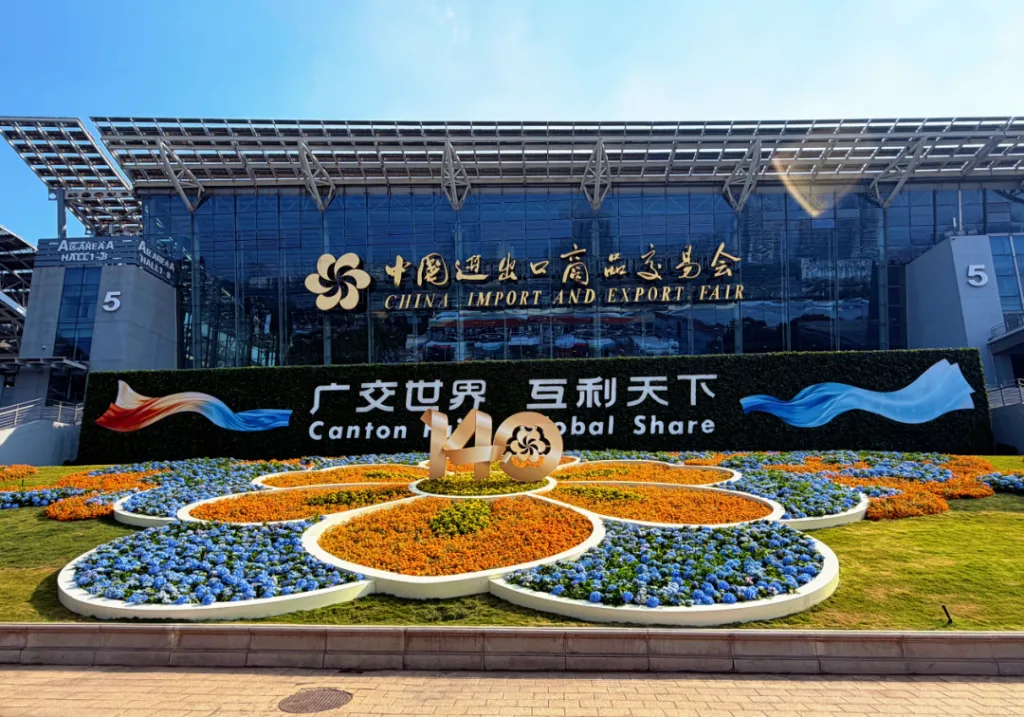
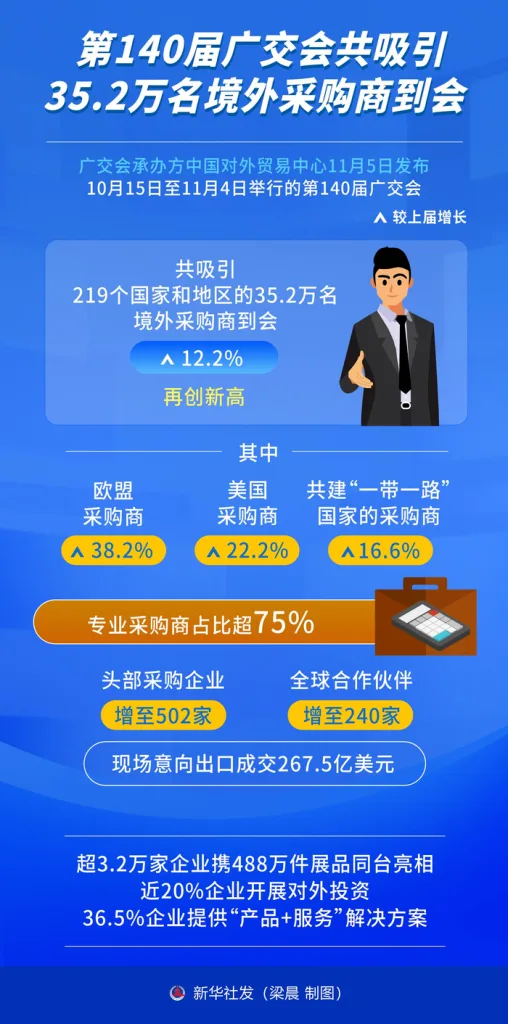
On November 4, 2026, the 140th China Import and Export Fair (Canton Fair) concluded in Guangzhou. Spanning 1.55 million square meters, the landmark 70th-anniversary session welcomed a record-breaking 352,000 overseas buyers from 219 countries and regions, marking a 12.2% increase over the previous session.

Throughout her duty rotation at the Guangzhou Foreign-Related Legal Services Port, Yu Yuting—Partner and Head of the International Legal Affairs Department at Guangdong Neo-Ark Law Firm—advised numerous international executives regarding market entry. A prominent trend emerged from these consultations: overseas enterprises are increasingly shifting from traditional trade sourcing to direct "Investment in China" (在华投资). To support smooth operational execution, this briefing outlines three core legal compliance priorities for foreign enterprises establishing a commercial footprint in China.

(Image Source: Official Canton Fair Website)

I. Distribution Channel Compliance & Brand Protection

For foreign brands that have established domestic trading subsidiaries and plan to expand their retail or wholesale networks across China, structuring compliant distribution and brand licensing agreements is critical during early market entry.

  • Defining Cargo Title & Risk Transfer: Clearly establish the exact point at which ownership and risk transfer across transaction stages. Contracts must distinguish between outright distribution (经销), agency sales (代销), and consignment (寄售), tailored to the specific commercial workflow rather than relying on generic templates.
  • Intellectual Property Boundaries: Set explicit clauses governing trademark usage scope, patent licensing permissions, and technical confidentiality obligations to prevent unauthorized sub-licensing or IP dilution.
  • Antitrust-Compliant Pricing Controls: Structure pricing policies strictly within China’s Anti-Monopoly Law framework. Clearly define Recommended Retail Prices (RRP) and compliance mechanisms while avoiding unlawful Resale Price Maintenance (RPM).
  • Cross-Regional Sales (Channel Conflict) Restrictions: Define clear territorial boundaries, cross-regional sales (窜货) criteria, and corresponding breach remedies or termination rights to safeguard regional market stability.

(Image Source: CCTV-13)

II. Capital Settlement & Foreign Exchange Compliance

Corporate bank account setup and cross-border fund flows frequently trigger regulatory bottlenecks for newly established foreign-invested enterprises (FIEs). Misconceptions regarding account categories and State Administration of Foreign Exchange (SAFE) rules often lead to compliance holds.

[Cross-Border Fund Flow Compliance Architecture]
 ├── Account Segregation ───> Strict separation of corporate vs. personal accounts
 ├── Pre-Opening Readiness ─> Full KYC dossier (investor credentials, filings, legal rep ID)
 └── FX & BOP Reporting ────> Authentic trade/investment background + mandatory SAFE declarations
  1. Strict Segregation of Corporate & Personal Accounts: Maintain absolute separation between corporate bank accounts and personal accounts. All commercial revenue and operational settlements must be routed through corporate accounts; utilizing personal accounts to collect or disburse company funds is strictly prohibited.
  2. Pre-Opening KYC & Documentation Readiness: Prepare complete corporate registration proofs, foreign investment filing receipts, Articles of Association, and legal representative identification documents in advance to satisfy strict bank anti-money laundering (AML) and due diligence reviews.
  3. Foreign Exchange & Balance of Payments Compliance: Ensure that capital injections, dividend repatriations, and current account settlements correspond to authentic underlying transactions. Complete mandatory Balance of Payments (BOP) statistical declarations on time to avoid account freezes or regulatory penalties.

(Image Source: Xinhua News Agency)

III. Manufacturing Partnerships & Entity Establishment Risk Controls

As foreign investors deepen their commitment in China, demand for localized manufacturing partnerships and physical entity incorporation—particularly in electronics manufacturing and hardware processing—has grown substantially. Risk management in this phase depends on proactive legal structuring prior to execution:

Compliance LayerCore Legal Requirements & Risk Mitigation Actions
Entity EstablishmentScreen business scopes against the Special Administrative Measures (Negative List) for Foreign Investment Access; confirm approval workflows and plan registered capital timelines (noting the 5-year full payment rule under China's Company Law). (See our previous guide on setting up a company in China for detailed entity comparisons.)
Partner Due DiligencePrior to signing Original Equipment Manufacturer (OEM) or Original Design Manufacturer (ODM) contracts, conduct comprehensive due diligence on domestic factories to verify production capacity, regulatory licenses, and clean IP standing.
Contractual SafeguardsIncorporate binding clauses governing product quality standards, delivery schedules, tooling ownership, background/foreground IP attribution, and liquidated damages directly into manufacturing agreements.

Conclusion

The rise of "Investment in China" as a central theme at the 140th Canton Fair underscores sustained global confidence in China's industrial supply chains and business environment, signaling a strategic shift from exploratory trade to long-term operational commitment. Foreign enterprises planning localized expansion should engage experienced cross-border legal counsel early to structure compliant distribution networks, banking frameworks, and manufacturing contracts.

About the Author

Yu Yuting
Partner | NEO-ARK Law Firm

Lawyer Yu focuses on foreign-related litigation, cross-border disputes, commercial matters, and legal services for overseas individuals and businesses in China.

Email: [email protected]

About NEO-ARK Law Firm

NEO-ARK Law Firm provides legal services in foreign-related litigation, commercial disputes, family law, and cross-border legal matters, assisting both international and domestic clients throughout China.
2026-11-12

Recovering an Unpaid Private Loan in China: Evidence and Repayment Rights

Overview

A private loan dispute can become difficult when a borrower receives money in several instalments, makes partial interest payments, but fails to repay the principal. The situation may be further complicated when the parties never agreed on a fixed repayment date.

In this case, the borrower, a Hong Kong resident, obtained several loans from the lender over a period of approximately two years. The transactions involved both bank transfers and cash payments, and the borrower issued written acknowledgements of the debts. Although the borrower made partial interest payments and later acknowledged the borrowing during communications with the lender, the principal remained unpaid.

The dispute illustrates several important issues in private lending claims in mainland China: how to establish the existence and amount of a loan, how to address cash advances, and how a lender may demand repayment when no repayment date has been agreed.

Case Snapshot

ItemDetails
Dispute TypePrivate Loan / Debt Recovery
Legal JurisdictionMainland China
BorrowerHong Kong resident
Loan PeriodApproximately April 2018 to May 2020
Number of AdvancesFive
Approximate PrincipalRMB 590,000
Agreed Interest Rate6% per annum
Approximate Dispute ValueRMB 730,000
AttorneyYu Yuting
Law FirmNEO-ARK Law Firm

Key Legal Issues

1. How can a lender prove loans made through both bank transfers and cash payments?

A private lending claim requires the lender to establish that the funds were actually advanced and that the parties intended to create a lending relationship.

Bank transfer records can help establish the movement of funds. For cash advances, written acknowledgements, receipts, communications between the parties and other corroborating materials may be particularly important.

In this case, the lender relied on written loan acknowledgements for the advances, together with bank transfer records and communications in which the borrower acknowledged the borrowing. Considered together, these materials provided a basis for demonstrating the lending relationship and the outstanding debt.

2. Can a lender demand repayment if no repayment date was agreed?

Under Article 675 of the Civil Code of the People's Republic of China, where a loan repayment period has not been agreed or cannot be determined, the borrower may repay the loan at any time, while the lender may demand repayment after giving the borrower a reasonable period to do so.

Accordingly, the absence of a fixed repayment date does not mean that the borrower can indefinitely postpone repayment. A lender may request repayment and allow a reasonable period for the borrower to comply.

Here, the parties had not specified a repayment deadline. The lender therefore relied on repeated repayment demands made by telephone and through messaging communications.

3. Is an agreed annual interest rate of 6% enforceable?

The enforceability of private loan interest depends on the applicable legal rules and the relevant contract date. Chinese judicial rules on private lending have changed over time, including the introduction of an interest-rate ceiling linked to the one-year Loan Prime Rate (LPR).

The agreed annual rate in this case was 6%. Its enforceability should be assessed under the rules applicable to the relevant loan agreements and advances. The fact that the borrower made partial interest payments may also be relevant to understanding the parties' performance of the agreements, but does not by itself establish the final amount recoverable.

Legal and Evidentiary Considerations

IssueRelevant MaterialLegal Significance
Existence of the loansWritten loan acknowledgementsSupports the existence and terms of the lending relationship
Delivery of fundsBank transfer records and cash-payment documentationHelps establish that the loan advances were actually made
Borrower's acknowledgementTelephone and messaging communicationsMay corroborate the borrowing and the outstanding obligation
Repayment demandsCommunications requesting repaymentHelps demonstrate that the lender sought repayment despite the absence of a fixed maturity date
Interest agreementWritten loan termsProvides a basis for assessing the agreed interest, subject to applicable legal limits

Practical Lessons for Private Loan Recovery in China

Keep a clear record of every advance

Where a loan is advanced in several instalments, each transaction should be documented. The records should identify the amount, date, recipient and purpose of the payment. Cash advances should be supported by signed acknowledgements or other reliable documentation.

Preserve communications acknowledging the debt

Messages in which a borrower confirms the loan, discusses repayment or requests additional time may help corroborate the written loan documents and payment records. Such communications should be preserved in their original form where possible.

Make a clear repayment demand

If the parties did not agree on a repayment date, the lender should make a clear repayment request and allow a reasonable period for compliance. Keeping a record of the demand can help establish the history of the dispute.

Assess interest separately from principal

The principal advanced, interest already paid and any remaining interest claim should be calculated separately. The applicable interest rules must be assessed with reference to the dates and terms of the relevant loan transactions.

Frequently Asked Questions

Can a lender sue for repayment if the loan agreement has no maturity date?

Yes. Under Article 675 of the Civil Code, where no repayment period has been agreed or can be determined, the lender may demand repayment after allowing the borrower a reasonable period to repay.

Are bank transfers enough to prove a private loan?

Not necessarily. A bank transfer can demonstrate that money moved between accounts, but the legal nature of the transfer may still need to be established. Loan acknowledgements, communications and other supporting materials can help show that the payment was a loan rather than a gift or another type of transaction.

Can cash loans be recovered through litigation in China?

A cash loan may be recoverable if the lender can establish that the money was actually delivered and that the parties intended it to be a loan. Written acknowledgements and corroborating records can be important.

Does a borrower's acknowledgement of the debt help a recovery claim?

It can. A clear acknowledgement may corroborate the loan documents and payment records. Its significance will depend on the wording, authenticity and surrounding circumstances.

Conclusion

Recovering a private loan in mainland China requires more than showing that money changed hands. The lender must establish the lending relationship, demonstrate that the funds were advanced and provide a reliable account of the outstanding principal and interest.

This case illustrates the value of maintaining written loan acknowledgements, payment records and communications confirming the debt. It also demonstrates that the absence of a fixed repayment date does not necessarily prevent a lender from demanding repayment under Chinese law.

The final outcome of any claim will depend on the evidence, the applicable legal rules and the court's assessment of the particular transactions.

About the Author

Yu Yuting
Partner | NEO-ARK Law Firm

Lawyer Yu focuses on foreign-related litigation, cross-border disputes, commercial matters, and legal services for overseas individuals and businesses in China.

Email: [email protected]

About NEO-ARK Law Firm

NEO-ARK Law Firm provides legal services in foreign-related litigation, commercial disputes, family law, and cross-border legal matters, assisting both international and domestic clients throughout China.
2026-11-10

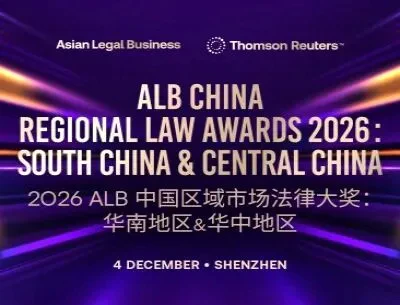
Industry Recognition | Guangdong Neo-Ark Law Firm Shortlisted for the 2026 ALB China Regional Law Awards in Real Estate & Construction

On November 3, 2026, Asian Legal Business (ALB)—a leading legal publication owned by Thomson Reuters—officially announced the finalists for the 2026 ALB China Regional Law Awards: South China & Central China. Recognized for its deep industry expertise and track record in real estate and infrastructure matters, Guangdong Neo-Ark Law Firm has been shortlisted for Real Estate & Construction Law Firm of the Year: South China & Central China – Local.

I. Significance of the ALB Regional Law Awards

Published by Thomson Reuters, Asian Legal Business (ALB) is one of the most authoritative legal media platforms in the Asia-Pacific region. Its annual regional law awards evaluate firms across deal complexity, market innovation, client feedback, and sustained practice growth.

This nomination marks another milestone in Neo-Ark's consistent recognition by ALB:

[Neo-Ark Law Firm ALB Recognition Track Record]
 ├── 2021: Shortlisted — Rising Law Firm of the Year
 ├── 2023: Shortlisted — Real Estate & Construction Law Firm of the Year
 ├── 2024: Shortlisted — Real Estate & Construction Law Firm of the Year
 └── 2026: Shortlisted — Real Estate & Construction Law Firm of the Year (South & Central China - Local)

II. Core Strengths in Real Estate & Infrastructure Law

Being shortlisted for the third time in the Real Estate & Construction category reflects sustained market trust in Neo-Ark's specialized legal capabilities:

  • Full-Lifecycle Project Advisory: Delivering integrated legal support across land acquisition, project financing, EPC contracting, engineering bidding compliance, and commercial real estate operations.
  • Complex Construction Dispute Resolution: Representing developers, state-owned construction conglomerates, and infrastructure investors in high-stakes engineering cost audits, construction delay claims, and cross-border infrastructure arbitration.
  • Institutional Backing: Supported by the firm's dedicated Construction & Infrastructure Investment Law Research Center and its newly upgraded Special General Partnership governance structure with RMB 10 million in paid-in capital.

III. Commitment to Service Excellence

This recognition underscores the industry's validation of Neo-Ark Law Firm's professional rigor, service quality, and client reputation. Looking ahead, Guangdong Neo-Ark Law Firm will continue refining its specialized practice teams and delivering pragmatic, high-caliber legal solutions for real estate, construction, and infrastructure enterprises across the Greater Bay Area and beyond.

About the Author

Yu Yuting
Partner | NEO-ARK Law Firm

Lawyer Yu focuses on foreign-related litigation, cross-border disputes, commercial matters, and legal services for overseas individuals and businesses in China.

Email: [email protected]

About NEO-ARK Law Firm

NEO-ARK Law Firm provides legal services in foreign-related litigation, commercial disputes, family law, and cross-border legal matters, assisting both international and domestic clients throughout China.

2026-11-09

Scroll to Top

+86 13503030053

BackToTop

Inquiry Inquiry Email Email Tel Tel

Request A Quote

×
Please enable JavaScript in your browser to complete this form.