...

News

Can a Lender Recover a Large Private Loan in China? Interest Calculation and Guarantor Liability

Overview

Recovering a substantial private loan in China can involve more than proving that funds were advanced and remain unpaid. Where the transaction involves multiple loan agreements, extended interest payments, cross-border fund transfers and several guarantors, the outcome may depend on the validity of the agreements, the accounting of principal and interest, and whether each guarantor remains legally liable.

In this case, a US national advanced funds to a Chinese pawn company under two loan agreements. A separate asset management company and an individual had undertaken to provide joint and several guarantees. After the borrower stopped making payments, the lender commenced proceedings to recover the outstanding debt, interest and related obligations from the borrower and the guarantors.

The borrower challenged the validity of the loan agreements, while the parties also disputed how previous interest payments should be accounted for. The court upheld the validity of the loan agreements, recalculated the outstanding principal after adjusting the interest account, and held the individual guarantor liable. The claim against the corporate guarantor was dismissed on separate legal grounds.

The case demonstrates three important aspects of Chinese private lending litigation: a regulatory argument does not automatically invalidate a loan contract; a detailed financial reconciliation can be central to principal recovery; and the liability of each guarantor must be assessed independently.

The case remains subject to appeal. The outcome described below is therefore the first-instance result, not a final appellate determination.

Case Snapshot

ItemDetails
Case TypePrivate Lending Dispute
JurisdictionMainland China
CourtYangpu District People's Court, Shanghai
PartiesIndividual lender, pawn company, asset management company and individual guarantor
Cross-Border ElementThe lender is a US national
Original Claim ValueApproximately RMB 15 million
Main ClaimsRepayment of principal and interest
Additional ClaimsJoint and several liability of the guarantors
Key Legal IssuesContract validity, interest reconciliation, guarantee period and corporate guarantee requirements
First-Instance OutcomeSubstantial principal recovery upheld; individual guarantor held jointly and severally liable; claim against corporate guarantor dismissed
Procedural StatusAppeal pending
AttorneyYu Yuting
Law FirmNEO-ARK Law Firm

The Core Legal Issues

1. Does a loan agreement become invalid because the borrower is a pawn company?

The borrower argued that, as a pawn company, it was subject to industry-specific regulatory requirements and that lending to an individual in the circumstances of the case rendered the agreements invalid.

The lender disputed this interpretation.

The court accepted the position that the regulatory argument did not, by itself, invalidate the loan agreements. It found the agreements legally effective and proceeded to examine the parties' repayment obligations.

This distinction matters in Chinese contract litigation. A regulatory breach and contractual invalidity are not necessarily the same legal question. Whether a contract is invalid depends on the applicable legal rules and the specific circumstances, rather than solely on whether one party has referred to an industry regulation.

For lenders, this means that the defense to a loan claim should be assessed against the actual legal grounds for invalidity, not simply the existence of regulatory requirements affecting the borrower.

2. How should principal and interest be reconciled when the payment history is complex?

A substantial portion of the dispute concerned the accounting of funds already paid.

The lender had advanced funds under two separate loan agreements. The borrower had made interest payments for an extended period, but later stopped making payments. The parties disagreed over how the previous payments should affect the outstanding debt.

The lender's case relied on a systematic reconciliation of the loan balances and interest payments, supported by periodic account records and communications between the parties.

The court reviewed the payment history and adjusted the account to reflect the applicable legal limits on recoverable interest. It then determined the remaining principal obligation.

This illustrates why a loan recovery claim should not rely on a single headline balance. The calculation may need to distinguish between:

  • the principal actually advanced;
  • payments made during the loan term;
  • interest accrued under the agreements;
  • interest that can legally be claimed; and
  • the outstanding principal and interest after the appropriate adjustments.

A consistent reconciliation can help the court trace the movement of funds and determine the enforceable debt.

3. When can an individual guarantor be held jointly and severally liable?

The loan agreements included a guarantee from an individual.

The court found that the lender had asserted its rights against the individual guarantor within the applicable guarantee period. It therefore held the guarantor jointly and severally liable for the relevant repayment obligations.

This part of the case highlights the importance of reviewing not only the guarantee wording, but also the timing and manner in which the creditor exercises its rights.

Depending on the guarantee arrangement and applicable law, a creditor may need to establish that the relevant claim was made within the required period. A guarantee should not be assumed to remain enforceable indefinitely merely because the underlying debt has not been repaid.

4. Why was the corporate guarantor treated differently?

The asset management company had also undertaken to provide a guarantee. However, the court dismissed the claim against it on separate grounds involving the guarantee period and the absence of an effective corporate resolution.

The different outcomes demonstrate that a corporate guarantee and an individual's guarantee may raise distinct legal issues.

For a corporate guarantor, the analysis may include whether the guarantee was properly authorized under the applicable corporate governance requirements, as well as whether the creditor's rights were asserted within the relevant period.

The creditor's ability to recover from one guarantor therefore does not automatically establish liability for every other guarantor.

Legal Strategy

IssueLegal Approach
Contract validityAddress the specific legal basis for the borrower's invalidity argument
Multiple loan agreementsAnalyze each agreement and the associated payment obligations
Complex interest historyReconcile the payment records and distinguish legally recoverable interest from amounts requiring adjustment
Cross-border transfersEstablish the movement and receipt of the loan funds through consistent transaction records
Individual guaranteeEstablish the applicable guarantee terms and whether the creditor asserted its rights in time
Corporate guaranteeExamine guarantee authorization, corporate resolution requirements and the guarantee period
Recovery prospectsIdentify the parties against whom liability can legally be established

The strategy treated the debt calculation and guarantee issues as related but separate questions. Establishing the borrower's repayment obligation was only one part of the case; determining which additional parties could be held liable required a separate legal analysis.

Evidence and Financial Reconciliation

The dispute involved multiple transactions and a lengthy payment history. A central challenge was presenting the financial relationship in a form that could be checked against the agreements, payment records and communications.

The case illustrates the importance of maintaining a consistent record of:

  • loan agreements and amendments;
  • records showing the transfer and receipt of funds;
  • periodic loan and interest reconciliations;
  • payment records; and
  • communications concerning the balance, interest and repayment arrangements.

For confidentiality reasons, this case study does not disclose the underlying reconciliation figures, detailed payment history or internal evidence strategy.

Outcome

At first instance, the court upheld the validity of the loan agreements and ordered the borrower to repay the outstanding principal, together with applicable interest.

The court adjusted the financial account to reflect the legally recoverable interest and the treatment of previous payments.

The court also held the individual guarantor jointly and severally liable. However, the claim against the corporate guarantor was dismissed because of issues relating to the guarantee period and corporate authorization.

The individual guarantor subsequently appealed. The first-instance judgment should therefore not be described as a final resolution of the entire dispute.

For confidentiality reasons, the specific amount of principal recognized by the court, the detailed interest adjustments and the underlying financial calculations are not disclosed.

Why This Case Matters

Regulatory compliance arguments require legal analysis

A borrower cannot establish contractual invalidity merely by referring to industry regulation. The court must consider the relevant legal rules and the facts of the transaction.

Financial reconciliation can determine the recoverable debt

Where a loan has generated repeated payments over an extended period, the outstanding balance may differ materially from the original amount advanced.

A reliable reconciliation should distinguish the actual funds advanced, the payments received and the interest legally recoverable.

Guarantees must be assessed individually

The liability of an individual guarantor and a corporate guarantor may differ because the applicable legal requirements and factual circumstances are not necessarily the same.

Guarantee periods can affect recovery prospects

Creditors should identify the relevant guarantee period and take appropriate steps to preserve their rights. Delayed action can affect whether a guarantor remains liable.

Cross-border elements increase the importance of clear records

Where a lender is overseas or funds move across borders, the documentation should clearly establish the parties, the loan agreements, the transfer of funds and the payment history.

The presence of a foreign national does not, by itself, determine which law governs the dispute. The applicable law and jurisdiction must be assessed from the relevant contractual and factual circumstances.

Frequently Asked Questions

Can a lender recover a private loan from a company in China?

Potentially. The lender generally needs to establish the loan relationship, the funds advanced, the repayment obligations and the outstanding debt. The legal effect of the agreement and any defenses raised by the borrower must also be assessed.

Does a regulatory breach automatically invalidate a loan agreement in China?

No. A regulatory issue does not automatically establish contractual invalidity. The court must assess the applicable legal rules and the circumstances of the transaction.

Can a lender claim interest at the rate stated in a loan agreement?

Not necessarily in full. The enforceable amount depends on the applicable rules governing private lending interest, the relevant time period and the facts of the transaction.

Can an individual guarantor be liable even if a corporate guarantor is released?

Yes. The liability of each guarantor depends on the relevant guarantee terms, applicable legal requirements and the circumstances of the case. One guarantor's liability does not automatically determine another's.

Why is the guarantee period important in Chinese loan disputes?

The guarantee period can affect whether the creditor has preserved its rights against the guarantor. Creditors should review the applicable period and take the legally required steps within that time.

Can a US national bring a private lending claim in a Chinese court?

A foreign national may bring a civil claim before a Chinese court where the court has jurisdiction and the relevant procedural requirements are met. The applicable law and any cross-border issues depend on the circumstances of the transaction.

Key Takeaways

For lenders pursuing substantial private loan claims in China:

  1. Assess contract validity against the applicable legal rules rather than relying solely on regulatory arguments.
  2. Maintain a traceable record of funds advanced, payments received and interest calculations.
  3. Separate principal recovery from the calculation of legally recoverable interest.
  4. Analyze each guarantee independently.
  5. Check guarantee periods and corporate authorization requirements at an early stage.
  6. For cross-border transactions, preserve clear records of transfers, agreements and repayment communications.
  7. Distinguish first-instance results from final judgments when a case remains under appeal.

About the Author

Yu Yuting
Partner | NEO-ARK Law Firm

Lawyer Yu focuses on foreign-related litigation, cross-border disputes, commercial matters, and legal services for overseas individuals and businesses in China.

Email: [email protected]

About NEO-ARK Law Firm

NEO-ARK Law Firm provides legal services in foreign-related litigation, commercial disputes, family law, and cross-border legal matters, assisting both international and domestic clients throughout China.


Recommend
The 140th Canton Fair Series | Payment Security: Mitigating Collection Risks in Canton Fair Orders Through Landmark Precedents

As the 140th Canton Fair approaches, foreign buyers and Chinese exporters gather in Guangzhou to negotiate deals and finalize commercial contracts. While the exhibition provides extensive market access, transition from initial trade show leads to final payment collection involves serious legal hurdles: buyer identity verification, contract validity, payment routing, cargo title control, and judicial enforcement.

(Image Source: Nanfang+)

This article examines payment security across four operational stages—pre-contractual due diligence, contract drafting, performance management, and emergency dispute response—supported by key judicial precedents.

I. Case Studies: Payment Collection Disputes in Canton Fair Transactions

Case 1: Inaccurate Buyer Verification Creates Standing Barriers in Court

  • Fact Pattern: In a cross-border sales dispute heard by the Guangzhou Intermediate People's Court, plaintiff ADEL sued Algerian merchant SAMIR over unpaid apparel orders negotiated at the Canton Fair.
  • Judicial Determination: During proceedings, the court identified discrepancies between the defendant's submitted passport records and official entry-exit databases. Through cross-referencing name data and travel history, the court confirmed SAMIR's physical presence in Guangzhou during the relevant transaction window. Based on transaction logs, the court ordered SAMIR to pay over RMB 9.02 million in principal plus interest.
  • Legal Takeaway: When contracting with new overseas buyers, exporters must verify the buyer's legal identity, corporate registration, and signatory Power of Attorney (POA). Complete passport copies, business registries, purchase orders, and communication records should be preserved.

Case 2: Unilateral Order Cancellations and Seller Loss Allocations

  • Fact Pattern: In an international commercial arbitration administered by the Guangzhou Arbitration Commission, parties signed a $40,000 mineral water procurement contract during the Spring 2019 Canton Fair, backed by a $10,000 deposit. The buyer subsequently sought contract termination citing canceled downstream business events, triggering a dispute over incurred manufacturing costs.
  • Arbitral Outcome: The tribunal successfully mediated a settlement balancing accrued production, raw material, and warehousing costs against the deposit.
  • Legal Takeaway: Custom products or long-lead items carry significant upfront manufacturing costs. Contracts must incorporate explicit provisions governing payment milestones, cancellation penalties, termination rights, and cost-allocation mechanisms.

Case 3: Third-Party Remittances and Bank Account Freezing Risks

  • Fact Pattern: In an execution objection case handled by the Guangzhou Internet Court in April 2026, a Nigerian buyer challenged the court-ordered freezing of over RMB 10,000 in a domestic account belonging to an individual, Zhang. The buyer asserted the funds were trade remittances intended for a domestic supplier.
  • Judicial Determination: The court verified that during the Autumn 2025 Canton Fair, the buyer and Zhang executed a transaction exceeding RMB 150,000 without a formal written contract, relying instead on WeChat logs and Alipay transfers. By auditing chat histories, bank transfer receipts, and counterparty confirmations, the court verified the fund origins and released the freeze with the judgment creditor's consent.
  • Legal Takeaway: Discrepancies between the contract counterparty, remitter, and consignee create severe compliance risks under anti-money laundering (AML) rules. If third-party payment is necessary, parties must execute a formal Third-Party Payment Authorization Agreement and retain supporting payment instructions and bank slips.

(Image Source: The Paper)

II. Practical Recommendations Across Pre-Contractual, Contracting, and Performance Stages

1. Pre-Contractual Stage: Conducting Buyer Credit Due Diligence

  • Overseas Entity Verification: For new foreign buyers, exporters should request a Buyer Credit Report via China Export & Credit Insurance Corporation (Sinosure, [www.sinosure.com](https://www.sinosure.com).cn, Hotline: 95387) to review overseas corporate registration status, credit history, and pending litigation.
  • Domestic Intermediary Vetting: Where Chinese trading agents, forwarders, or local representatives are involved, conduct public registry searches (via Tianyancha or Qichacha) to review corporate status and court enforcement records.
  • Signatory Authorization: Inspect original Powers of Attorney (POA) and passport credentials for on-site negotiators. Exercise caution with counterparties lacking physical office addresses or operating exclusively via free webmail domains.

2. Contracting Stage: Formulating Clear & Enforceable Payment Arrangements

While Proforma Invoices (PI) are widely used to confirm orders, whether a PI constitutes a binding contract depends on its specific terms, price firming language, and execution history. For high-value or customized orders, parties should execute a formal contract covering subject matter, specifications, pricing, payment schedules, inspection, default liabilities, and dispute resolution.

  • Payment Milestones: Align production and delivery strictly with received payments (e.g., production commences only upon deposit clearance; document release occurs only after final balance settlement).
  • Documenting Third-Party Remittances: Require written triangular payment agreements signed by the buyer, remitter, and seller whenever payments originate from non-contractual bank accounts.
  • Liquidated Damages: Specify clear default interest rates and penalty terms for late payments, tailored to local enforcement standards under the governing law.

3. Performance Stage: Synchronizing Payments, Cargo Control, and Shipping Documents

  • Internal Control Triggers: Link ERP workflow stages—raw material sourcing, manufacturing, inspection, shipping booking, and original Bill of Lading (B/L) release—directly to verified bank payment receipts.
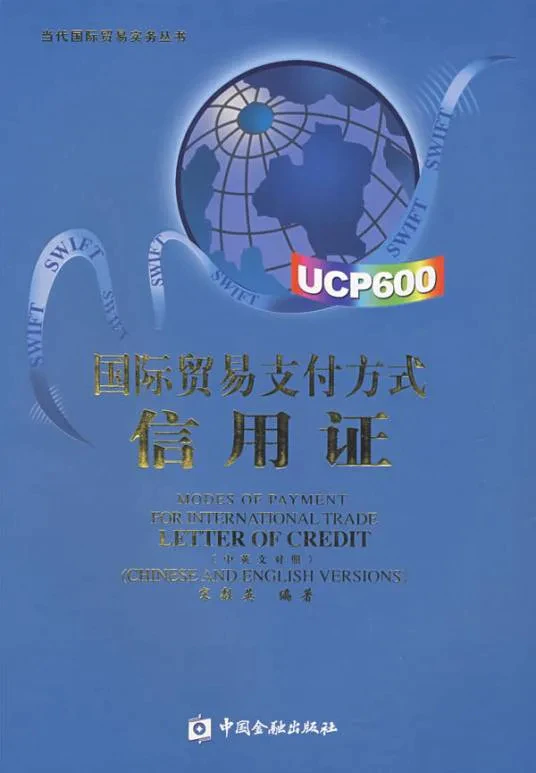
  • Letter of Credit (L/C) Compliance: Examine L/C terms for soft clauses or non-documentary conditions controlled solely by the buyer (e.g., buyer-issued inspection certificates). Conduct pre-presentation document audits for high-value transactions.
  • Export Credit Insurance: For open-account (O/A) or extended credit terms, leverage export credit insurance to mitigate buyer insolvency or political risks, ensuring full compliance with policy reporting and claim filing deadlines.

(Image Source: Baidu Baike)

III. Incident Response & Emergency Risk Mitigation Following a Dispute

When faced with payment delays, buyer default, order cancellation requests, or frozen account notifications, exporters should follow a structured three-step response protocol:

1.Fix and Preserve Primary Evidence:

Compile and organize all original contracts, Purchase Orders (PO), Proforma Invoices (PI), email threads, WhatsApp/WeChat logs, Bills of Lading (B/L), customs declarations, and bank remittance slips. Preserve complete digital chat histories on their original devices to ensure judicial admissibility.

2.Execute Cargo and Production Control Measures:

  • Unshipped Orders: Immediately evaluate pausing production and halting port dispatch.
  • Manufactured Goods: Assess alternative resale channels, re-routing, or modification options to minimize holding costs.
  • In-Transit Cargo: Review Incoterms, B/L types (e.g., Negotiable Original B/L vs. Telex Release), and payment status to issue hold-shipment instructions to freight forwarders or carriers.

3.Initiate Legal & Asset Preservation Procedures:

If payment default is evident, initiate arbitration or court litigation pursuant to the contractual dispute clause. Where risks of asset dissipation exist, apply for pre-litigation or interim property preservation orders (财产保全) to freeze the buyer's domestic assets or accounts.

(Image Source: Official Canton Fair Website)

Conclusion

The Canton Fair offers vital trade opportunities for international buyers and Chinese exporters. Securing transaction value requires diligence beyond exhibition negotiations—encompassing buyer vetting, structured contract terms, rigorous payment control, and proactive evidence preservation to ensure sustainable international growth.

About the Author

Yu Yuting
Partner | NEO-ARK Law Firm

Lawyer Yu focuses on foreign-related litigation, cross-border disputes, commercial matters, and legal services for overseas individuals and businesses in China.

Email: [email protected]

About NEO-ARK Law Firm

NEO-ARK Law Firm provides legal services in foreign-related litigation, commercial disputes, family law, and cross-border legal matters, assisting both international and domestic clients throughout China.
2026-09-21

The 140th Canton Fair Series | China’s Tea & Beverage Brands Entering Vietnam: A Regulatory Compliance Roadmap from Procurement to Local Franchising

Phase 3 of the Canton Fair—focusing on food, packaging materials, and food processing machinery—has become a central sourcing hub for Chinese New Tea brands (新茶饮) expanding into Southeast Asia. Vietnamese buyers gather in Guangzhou not only to procure brewing equipment and raw ingredients, but also to evaluate domestic brands' supply chain integration and localized franchise operations.

(Image Source: China News Service / ECNS)

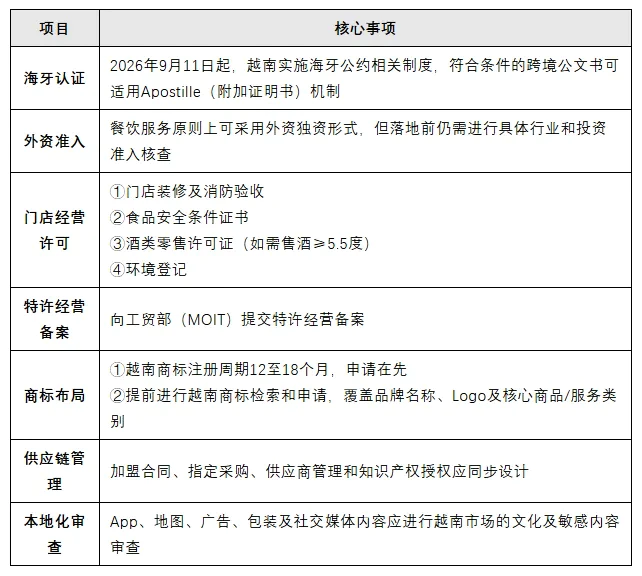
For Chinese beverage enterprises, the Canton Fair serves as both a global trade portal and an essential legal pre-check arena for cross-border franchising and supply chain setup. This guide outlines the key legal requirements for entering Vietnam, covering MOIT franchise registration, NOIP trademark prosecution, supply chain binding, and geopolitical risk management.

I. Procurement Models at the Canton Fair: Legal Structuring of Supply Chain and Franchising

At the Canton Fair, negotiations between Chinese manufacturers (packaging suppliers, tea equipment factories, syrup producers) and Vietnamese buyers fall under three primary operational structures, each with distinct compliance requirements:

1. Direct-Operated Stores and Centralized Procurement

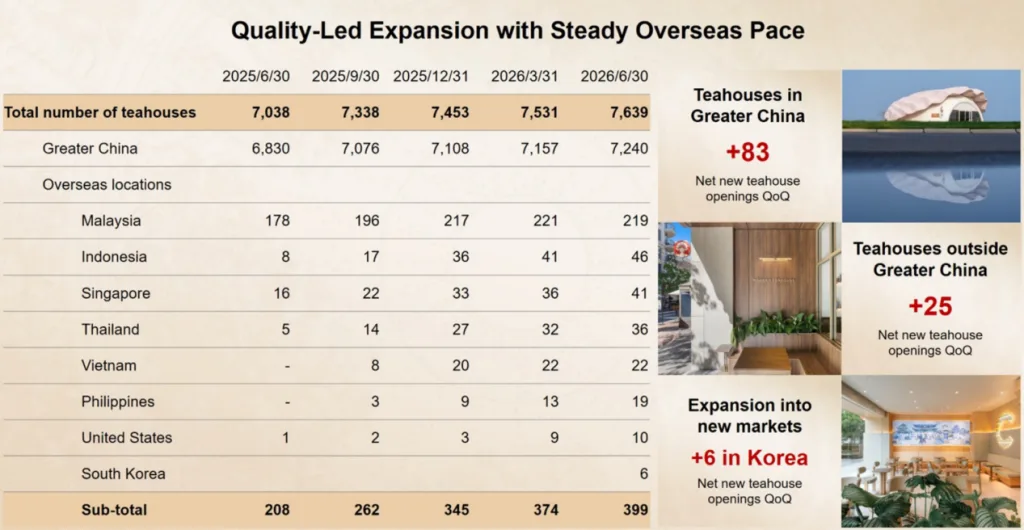
Under a direct-operated model—such as CHAGEE's (霸王茶姬) deployment of 20 direct-operated or joint-venture outlets in Vietnam as reported in its 2025 financial disclosures—bar equipment, cold-chain systems, and core tea bases are centrally procured in China and exported. The Canton Fair allows brand headquarters to vet primary suppliers and secure a unified supply chain. Legal focus centers on foreign direct investment (FDI) structure, corporate registration, and local operating permits in Vietnam.

2. Franchising, Distribution, and Designated Sourcing

Under a franchise model—such as Mixue’s (蜜雪冰城) network of approximately 1,300 stores in Vietnam—franchisees are contractually required to procure core ingredients exclusively from headquarters or designated suppliers.

At the fair, some foreign buyers seek raw materials with the intention of bypassing franchisor supply networks. Under Vietnamese law, a franchisor must complete formal registration with the Ministry of Industry and Trade (MOIT) to legally enforce exclusive sourcing covenants. Without MOIT compliance, designated procurement clauses face enforcement hurdles and administrative exposure in Vietnam.

(Image Source: CHAGEE Q2 Financial Report)

3. Localized Manufacturing & Sourcing

Brands following a "Cross-Border Core Materials + Local Fresh Ingredients" model (similar to ChaPanda’s approach in South Korea) use Phase 3 of the Canton Fair to initiate factory and equipment sourcing. This structure involves compliance with Vietnamese land lease laws, environmental impact assessments, and local food safety standards.

II. Profiling Vietnamese Buyers

Buyer CategoryPrimary Sourcing ObjectivesKey Compliance & Operational RisksRecommended Legal & Contracting Actions
Local Beverage Chains & Regional BrandsCustom machinery, OEM tea bases, automated sealing & fructose equipmentIP infringement, formula leaks, product specification mismatchesSign binding bilingual NDAs before technical disclosure; define precise quality standards
Cross-Border Franchise Master AgentsRegional master franchise rights, brand authorization, ingredient supplyOperating without MOIT franchise registration; invalid contract clausesExecute MOIT franchise filings; define explicit territorial protection & pricing mechanics
Independent Franchisees & Individual InvestorsTurnkey store equipment, standardized raw material packagesUnclear tax/duty allocation; customs clearance bottlenecks; unauthorized sourcingClarify import tax liability; establish mandatory sourcing agreements linked to MOIT filings

III. Franchise Regulatory Compliance and Key Case Studies

1. Why "Execute First, Comply Later" Fails Under Vietnamese Law

Attempting to collect franchise fees prior to fulfilling statutory registration prerequisites exposes franchisors to severe legal risks:

  • 1-Year Operational Threshold: MOIT requires the underlying franchise system to have been in continuous operation for at least 1 year prior to filing.
  • Strict Franchise Disclosure Document (FDD): Franchisors must submit verified offshore entity registrations, trademark ownership proof, operational resource documentation, and a 12-month litigation history statement.
  • Contractual Enforcement Gaps: Operating without MOIT filings leaves the franchisor unable to enforce key contractual rights—such as designated procurement or liquidated damages—before Vietnamese courts, alongside triggering administrative penalties.
  • Benchmark Compliance Precedent: In August 2026, hotpot brand Shoo Loong Kan successfully completed its MOIT franchise registration following cross-border notarizations and localized contract revisions, demonstrating that franchise compliance requires a structured, long-term timeline.

(Image Source: Xinhua News Agency)

2. Case Studies: Franchisee Disputes and Trademark Infringement

  • Mixue Franchisee Protests (Hanoi, 2023): Between September and October 2023, several Mixue franchisees in Vietnam organized joint protests over retail price cuts, raw material cost adjustments, and store density policies. This event highlighted the necessity of drafting transparent pricing mechanisms, territorial protection limits, and supply cost adjustments directly into formal franchise agreements.
  • Counterfeit Mixue Store Prosecution (Lai Chau Province, June 2026): Police in Lai Chau Province raided an unauthorized "MIXUE" store, seizing nearly 3,000 counterfeit labels and packaging items. Authorities initiated criminal prosecution under industrial property infringement laws. This case underscores the necessity of early trademark filings to establish criminal and civil enforcement rights.

IV. Pre-Entry Risk Mitigation: Trademarks, Supply Chain, and Geopolitical Risks

(Image Source: CHAGEE Annual Report)

1. Trademark Prosecution and Supply Chain Control

  • Early NOIP Registration: CHAGEE secured trademark registrations with the National Office of Intellectual Property (NOIP) prior to opening stores in Vietnam, blocking unauthorized domain squatting and copycat brands ("Chacee", "Chamee"). Canton Fair exhibitors should list active NOIP application or registration numbers in their recruitment collateral as proof of legal title.
  • Supply Chain Confidentiality: Designated procurement clauses depend on MOIT compliance for validity. To protect proprietary beverage formulas and equipment parameters during Canton Fair negotiations, brands must execute Non-Disclosure Agreements (NDAs) prior to technical disclosures.

2. Geopolitical and Data Compliance

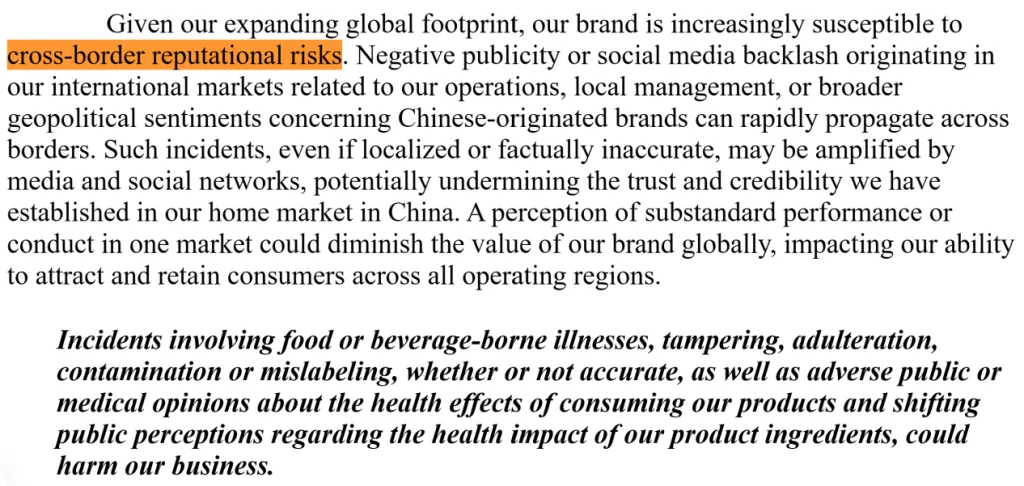
  • Cross-Border PR & Mapping Exposure: CHAGEE previously faced consumer pushback in Vietnam due to a mapping controversy within its mobile app UI. The company explicitly listed "consumer boycotts and operational restrictions caused by geopolitical risks" as a key risk factor in its annual report.
  • Localized Compliance Review: Prior to launching digital ordering mini-programs or mobile apps in Vietnam, brands must complete localized political, cultural, and data protection compliance reviews to ensure alignment with domestic regulations.

V. Key Compliance Considerations

  1. Pre-Filing Mandatory Rule: Trademark filings with NOIP must precede public franchise recruitment at trade shows.
  2. FDD Preparation: Draft comprehensive Franchise Disclosure Documents (FDD) containing verified financial statements, litigation history, and corporate governance records.
  3. Dual-Tier Inspection Rules: Separate physical appearance arrival inspections from latent ingredient defect claims in cross-border supply agreements.
  4. Clear Currency Mechanics: Structure contract currency denominations, exchange rate adjustment triggers, and bank clearing paths explicitly.

Conclusion

Expanding a Chinese New Tea brand from a Canton Fair booth to Ho Chi Minh City or Hanoi requires structured regulatory planning. Exhibitors and franchisors must back trade show leads with NOIP trademark protections, MOIT franchise filings, and robust supply chain agreements. Establishing these legal safeguards converts temporary exhibition traffic into defensible, long-term brand equity across Southeast Asia.

About the Author

Yu Yuting
Partner | NEO-ARK Law Firm

Lawyer Yu focuses on foreign-related litigation, cross-border disputes, commercial matters, and legal services for overseas individuals and businesses in China.

Email: [email protected]

About NEO-ARK Law Firm

NEO-ARK Law Firm provides legal services in foreign-related litigation, commercial disputes, family law, and cross-border legal matters, assisting both international and domestic clients throughout China.
2026-09-14

Can a Distributor Be Liable for Trade Dress Infringement in China?

Overview

A distributor can face an unfair competition claim even if it did not manufacture the product at issue. In China, disputes involving similar product decoration often turn on whether the appearance of the goods is likely to confuse consumers and whether the defendant can be legally linked to their sale.

In this case, a technology company alleged that a watch sold through an online retail platform used product decoration similar to that of its well-known watch collection. The claimant argued that the decoration had acquired a certain level of market recognition and sought compensation, together with an order requiring the defendant to stop selling the product.

The defendant disputed responsibility for the sale. It argued that it had not manufactured or sold the specific watch, that the online store was not registered to it, and that a product certificate identifying it as the general distributor was insufficient to establish liability. It also challenged the scope of its distribution authorization and the evidence supporting the claimant's asserted reputation.

The court ultimately found that the product decoration was sufficiently similar to cause consumer confusion and held the defendant liable as a seller based on the evidence before it. However, the court awarded substantially less compensation than the claimant had sought and did not uphold the claimant's separate copyright claims.

The case illustrates an important defense principle in Chinese unfair competition litigation: even where complete dismissal is not achieved, carefully contesting the defendant's role, the scope of liability and the basis of the claimant's remedies can materially limit litigation exposure.

Case Snapshot

ItemDetails
Case TypeIntellectual Property / Unfair Competition
JurisdictionMainland China
CourtLiwan District People's Court, Guangzhou
IndustryWatches and Consumer Products
Dispute TypeAlleged imitation of product decoration and consumer confusion
Original Claim ValueApproximately RMB 500,000
Main ClaimsInjunction against sales, compensation and reasonable enforcement expenses
Key Legal IssuesTrade dress similarity, likelihood of confusion, distributor liability and related copyright claims
Defense StrategyChallenge the link between the defendant and the sale, the scope of liability and the compensation claim
OutcomeSales injunction and limited damages; separate copyright claims not upheld
AttorneyYu Yuting
Law FirmNEO-ARK Law Firm

The Core Legal Issues

1. When can similar product decoration amount to unfair competition in China?

Under China's Anti-Unfair Competition Law, using product decoration similar to that of another operator's goods with a certain market influence may constitute an act of confusion where it is likely to mislead consumers about the origin of the goods or their connection with another business. The specific legal assessment depends on the applicable law and the facts of the case. WIPO Lex

Here, the claimant argued that its watch collection had acquired sufficient recognition and that the defendant's product used similar decoration.

The court found that the similarity was sufficient to cause confusion and upheld the unfair competition claim in relation to the sale.

For businesses facing similar allegations, the key questions may include:

  • Whether the claimant can establish the required market influence of the product decoration;
  • Whether the overall appearance of the products is sufficiently similar;
  • Whether the similarities are likely to confuse relevant consumers; and
  • Whether the defendant's conduct falls within the scope of the alleged unfair competition.

2. Can a distributor be liable even if it denies manufacturing the product?

A defendant's role in the supply chain can be central to an unfair competition dispute.

The defendant argued that it had not manufactured or sold the specific watch and challenged the reliability of a product certificate identifying it as the general distributor. It also maintained that the product was outside the scope of its authorized distribution arrangements.

The court nevertheless treated the defendant as a seller based on the evidence before it.

This aspect of the case highlights the importance of distinguishing between different forms of involvement in the supply chain:

  • Manufacturing the product;
  • Authorizing or arranging its distribution;
  • Acting as a distributor for a particular product range; and
  • Selling or being legally linked to the sale of the specific product in dispute.

These roles should not automatically be treated as interchangeable. However, a company that denies direct involvement may still face liability if the available evidence establishes its legally relevant role in the sale.

3. How should a defendant respond when unfair competition and copyright claims are brought together?

The claimant also asserted copyright-related claims concerning the product's design or decoration.

The defendant's position required the court to consider different legal grounds rather than treating all allegations as a single infringement claim.

The court upheld the unfair competition claim but did not uphold the claimant's separate copyright claims.

This distinction matters because unfair competition and copyright infringement are different legal causes of action. They involve different legal requirements and should be analyzed separately.

A defense should therefore address each claim independently, including the claimant's rights, the conduct alleged, the evidence connecting the defendant to that conduct and the remedies sought.

Defense Strategy

IssueDefense Focus
Product saleChallenge whether the evidence sufficiently linked the defendant to the specific product and transaction
Distributor identificationExamine the significance and reliability of the product documentation relied upon by the claimant
Authorization scopeClarify the distinction between authorized product lines and the specific product in dispute
Product decorationContest the claimant's assertions concerning reputation, similarity and likely consumer confusion
Copyright allegationsSeparate the copyright claims from the unfair competition claim and challenge each on its own legal basis
CompensationChallenge the legal and factual basis for the amount claimed
Overall exposureSeek to limit liability to the conduct and remedies supported by the evidence

The defense did not eliminate all liability. Its significance lies in the extent to which the claim was narrowed and the compensation reduced.

Outcome

The court found that the product decoration at issue was sufficiently similar to cause consumer confusion and held the defendant liable for unfair competition in its capacity as a seller.

The judgment required the defendant to stop the relevant sales and pay compensation. However, the compensation awarded was substantially lower than the claimant's original demand.

The court did not uphold the claimant's separate copyright claims, nor did it make a finding that the defendant had acted in concert with another company to manufacture the product.

The case therefore ended with an adverse finding on the unfair competition claim, but with a materially narrower scope of liability than the claimant had sought.

For confidentiality reasons, the specific compensation amount and detailed cost allocation are not disclosed.

Why This Case Matters

A distributor's role should be assessed on the evidence

Companies may assume that they are insulated from liability because they did not manufacture a product. This case illustrates why that assumption can be risky.

Product certificates, sales records, distribution documents and other materials may become relevant to determining whether a company was involved in the sale of the goods at issue.

Trade dress claims can focus on consumer confusion

A dispute over product decoration is not simply a visual comparison. The legal analysis may also consider the market recognition of the claimant's goods and whether the similarity is likely to mislead consumers.

Copyright and unfair competition claims should be distinguished

The same product may give rise to different legal allegations. Each claim should be tested against its own legal requirements rather than treated as an automatic consequence of the same facts.

Reducing liability can be a meaningful litigation result

A defendant may not always be able to secure complete dismissal. Nevertheless, challenging the scope of the claims, the evidence of involvement and the amount of compensation can still make a substantial difference to the outcome.

Commercial and IP risk should be reviewed together

Distributors should maintain clear records of product authorization, sourcing, supplier relationships and the scope of their distribution rights. These records can become important when a product is challenged in litigation.

Frequently Asked Questions

Can a distributor be liable for unfair competition in China?

Potentially. A distributor may face liability where the evidence establishes that it engaged in conduct prohibited by the applicable law, including a legally relevant role in selling goods whose decoration causes consumer confusion. Liability depends on the facts and evidence of the particular case.

Does a company have to manufacture a product to face an unfair competition claim?

Not necessarily. A claim may concern the sale or distribution of a product rather than its manufacture. The defendant's actual role and the evidence connecting it to the transaction are important.

What is trade dress infringement under Chinese law?

The term is commonly used to describe disputes over product or packaging appearance. Under China's unfair competition framework, certain uses of product decoration associated with goods having market influence may be unlawful if they are likely to cause consumer confusion.

Can a claimant bring copyright and unfair competition claims in the same dispute?

A claimant may assert different legal claims based on related facts, but each claim must independently satisfy its applicable legal requirements. Success on an unfair competition claim does not automatically establish copyright infringement.

What can a company do when facing a large compensation claim?

The company should assess the legal basis for each claim, the evidence linking it to the alleged conduct, the scope of any potential liability and the basis for the compensation calculation. A focused defense may reduce exposure even if some liability is ultimately established.

Key Takeaways

For distributors and businesses facing product-decoration or trade dress claims in China:

  1. Do not assume that the absence of manufacturing activity automatically eliminates liability.
  2. Examine the evidence connecting the defendant to the specific product and sale.
  3. Assess product authorization and distribution scope carefully.
  4. Distinguish unfair competition claims from copyright claims.
  5. Challenge the claimant's evidence of market influence, similarity and likely consumer confusion where appropriate.
  6. Evaluate the compensation claim separately from the question of liability.
  7. Treat limiting the scope of liability as a legitimate litigation objective, even where complete dismissal is not achieved.

About the Author

Yu Yuting
Partner | NEO-ARK Law Firm

Lawyer Yu focuses on foreign-related litigation, cross-border disputes, commercial matters, and legal services for overseas individuals and businesses in China.

Email: [email protected]

About NEO-ARK Law Firm

NEO-ARK Law Firm provides legal services in foreign-related litigation, commercial disputes, family law, and cross-border legal matters, assisting both international and domestic clients throughout China.

2026-09-09

The 140th Canton Fair Guide Series | Exporting Chinese Vehicles and Auto Parts to Russia: End-to-End Compliance Essentials and Risk Management

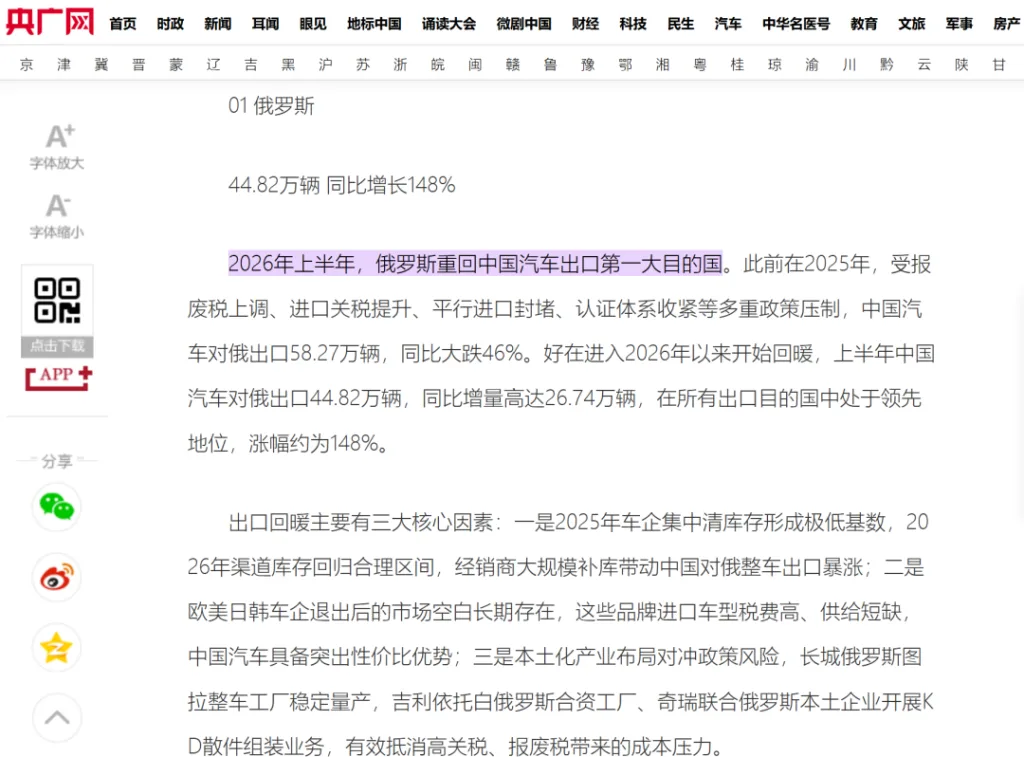
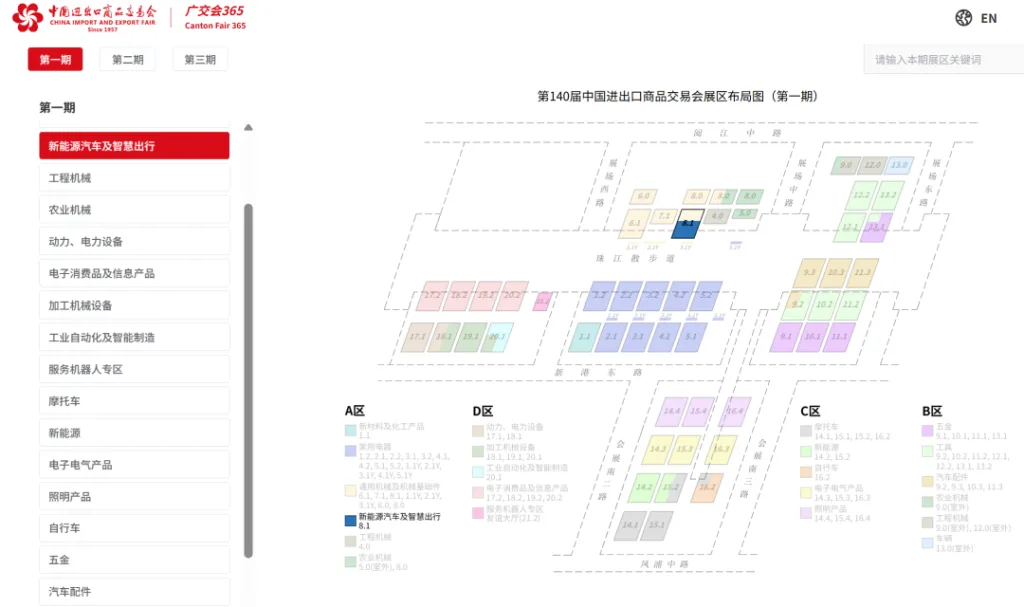
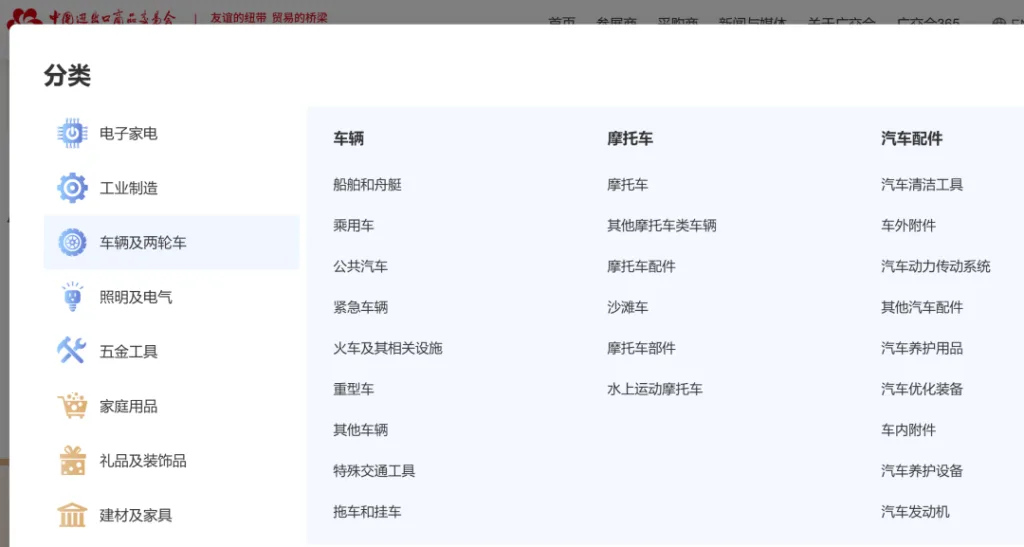
The 140th China Import and Export Fair (Canton Fair) takes place in Guangzhou from October 15 to November 4, 2026, marking the event's 70th anniversary. Phase 1 (October 15–19) focuses on "Advanced Manufacturing," spotlighting New Energy Vehicles (NEVs), smart mobility, and automotive components. Following bilateral talks between President Xi Jinping and President Vladimir Putin in Beijing in May 2026, Sino-Russian economic cooperation continues to deepen, positioning Chinese automakers and auto parts suppliers as key contributors to the Russian market.

(Image Source: Sputnik Russian News Agency)

However, long-chain cross-border automotive transactions carry notable legal and operational exposure: complex market access procedures, evolving recycling fees, export control regulations for dual-use components, and fluctuating currency clearing channels. This guide outlines the key legal considerations, risk mitigation strategies, and judicial precedents for enterprises exporting vehicles and auto parts to Russia.

I. Complete Vehicle Imports: Total Landed Cost Calculation and EAC Compliance

1. Total Landed Cost Modeling

A vehicle's actual import cost in Russia extends well beyond its Factory Gate or FOB purchase price. Exporters and importers must model total landed costs using the following formula:

(Image Source: CNR.cn)

  • New Energy Vehicles (NEVs): Electric drive system specifications, battery capacity, engine displacement equivalent, and exact model classifications must be verified against current Russian tax schedules.
  • Key Risks: Vague contract terms regarding tax liability, unexpected increases in the Russian scrap tax during transit delays, and discrepancies between physical vehicle specifications (power output, displacement, age) and customs declarations.
  • Legal Recommendations:
    1. Clearly allocate all tax, duty, and fee liabilities between buyer and seller in the sales contract.
    2. Stipulate precise technical parameters (displacement, horsepower, manufacturing year, import purpose) and assign strict liability for variances.
    3. Insert a Regulatory Change Clause specifying relief mechanisms, fee adjustments, or termination rights if sudden policy shifts impact performance.

2. EAC Certification and Technical Compliance

(Image Source: Official Canton Fair Website)

Russia, as a member of the Eurasian Economic Union (EAEU), requires imported vehicles and components to comply with TR CU 018/2011 (Technical Regulation on the Safety of Wheeled Vehicles).

  • Certification Rules: EAC certificates must be issued by accredited Russian certification bodies (accreditation codes typically starting with RA.RU), tested in accredited laboratories within Russia, and marked with the EAC logo on the product body.
  • Penalties: Utilizing fraudulent or borrowed certificates can result in fines of 100%–300% of the cargo value, mandatory goods re-export, and a 3-year blacklist from Russian customs registry systems.
  • Legal Recommendations:
    1. Verify certificate numbers and accredited agency credentials via the official Russian Federal Accreditation Service (RusAccreditation) system prior to signing contracts.
    2. For pre-owned and parallel-import vehicles, ensure correct issuance of the Electronic Vehicle Passport (e-PAS/e-PTS) and valid scrap tax payment receipts.
    3. Maintain complete bilingual (Chinese/Russian) technical dossiers, factory certificates, and test reports.

II. Auto Parts Exports: Potential Application of Dual-Use Item Controls

(Image Source: kad.arbitr.ru)

Automotive parts encompass diverse technical classifications. Under the Export Control Law of the People's Republic of China and the updated Dual-Use Items Export Control List, specific automotive components may fall under export restrictions:

  • High-Risk Controlled Items:
    • High-precision inertial navigation systems, gyroscopes, and accelerometers.
    • Specialized automotive-grade semiconductor chips, millimeter-wave radars, and LiDAR units.
    • High-strength carbon fiber composite materials and special alloy structures.
    • Off-road vehicle chassis and specialized drivetrain components adaptable for dual military-civilian purposes.
  • Compliance Actions:
    1. Screen product HS codes and technical parameters against the updated Dual-Use Items Export Control List prior to export booking.
    2. Conduct comprehensive Know Your Customer (KYC) and end-user screenings to verify the Russian importer’s identity and end-use application (e.g., commercial aftermarket repair vs. industrial manufacturing) to prevent unauthorized transshipment.

III. Settlement and Foreign Exchange: RMB/RUB Mainstream and Digital Currency Frameworks

While Chinese Yuan (RMB) and Russian Ruble (RUB) serve as the primary clearing currencies for Sino-Russian trade, the implementation of new digital finance regulations requires updated risk controls.

1. Currency Settlement Practices

Under Article 317 of the Civil Code of the Russian Federation, commercial contracts may denominate obligation values in foreign currency or accounting units while settling in Rubles calculated at the Central Bank of the Russian Federation (CBR) exchange rate on the payment date.

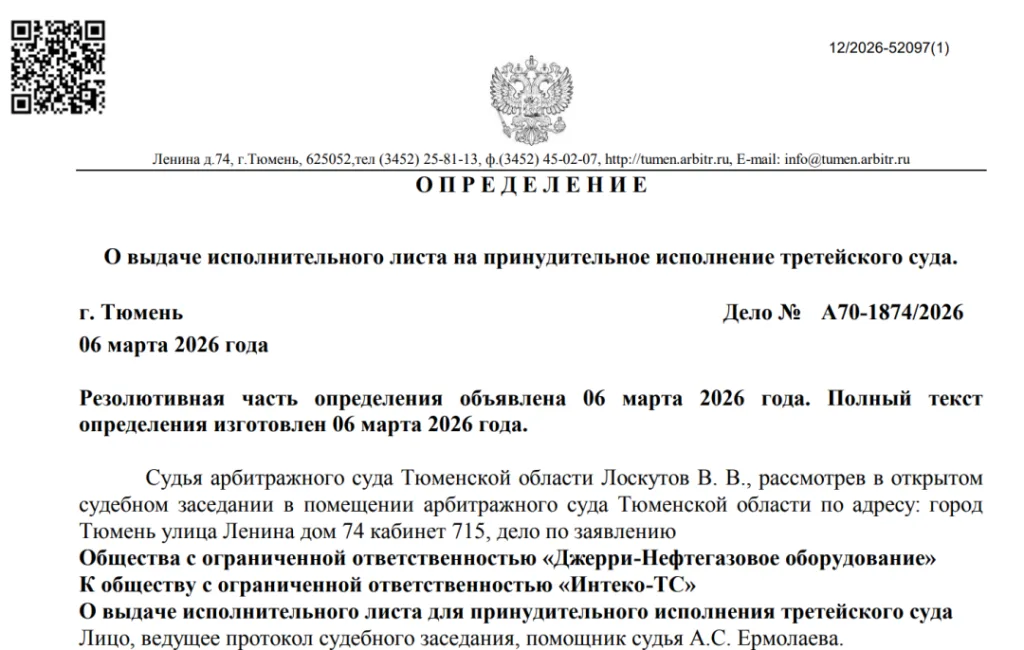
  • Judicial Precedent (RMB Denomination): In a cross-border supply dispute adjudicated by the Tyumen Region Arbitration Court, Jereh Oil & Gas Equipment Co., Ltd. (Russian subsidiary of China's Jereh Group) successfully enforced a contract denominated in RMB against Inteko TS LLC. The court granted full monetary recovery, issuing an enforcement order for RMB-denominated principal and penalties converted to RUB at the CBR exchange rate.

2. Digital Assets Regulatory Threshold

Under Russia's experimental legal framework for digital currency and digital rights in foreign trade (effective September 1, 2024), trade contracts may utilize permitted digital financial assets (DFAs) for international clearing. However, transactions reaching or exceeding 10 million RUB (or equivalent) are subject to mandatory financial monitoring by Rosfinmonitoring.

  • Compliance Actions:
    1. Prioritize commercial bank channels for direct RMB/RUB cross-border clearing. Explicitly define payment paths, delivery milestones, and exchange rate risk-sharing mechanisms in the contract.
    2. If using third-party payment arrangements, execute binding tripartite agreements linking payment obligations to specific contract numbers.
    3. When evaluating digital currency/DFA clearing options, perform structured legal reviews regarding custody, exchange mechanics, and regulatory compliance.

IV. Russian Import Customs Clearance and Logistics: Channel Comparison

Transport ChannelPrimary Ports & CorridorsSuitable Freight TypeOperational Advantages & Disadvantages
Rail TransportManzhouli, Suifenhe, ErenhotComplete Vehicles (Car Carriers/Auto-racks), Auto Parts (Containers)Pros: High capacity, stable scheduling.
Cons: Border bottleneck congestion during peak seasons; buffer time required.
Road TransportHeihe, Tongjiang, DongningComplete Vehicles (Commercial Transporters), Urgent PartsPros: Fastest transit time, high door-to-door flexibility.
Cons: Higher unit cost; vulnerable to severe winter weather delays.
Maritime ShippingVladivostok, St. Petersburg, NovorossiyskBulk Vehicles (Ro-Ro Vessels), Heavy Auto ComponentsPros: Ideal for large-volume shipments; lowest cost per ton.
Cons: Subject to Russian port throughput capacity and port congestion delays.
China-Europe Railway ExpressTransit via Kazakhstan / Mongolia to MoscowHigh-Value Parts & Specialized ModulesPros: Balanced transit speed, end-to-end tracking visibility.
Cons: Requires strict transit documentation consistency across multiple customs jurisdictions.

V. Typical Case Studies and Judicial Precedents

(Image Source: Official Canton Fair Website)

Case 1: Enforcement of CIETAC Arbitral Awards in Russian Courts

  • Fact Pattern: China’s Zoomlion heavy industry group initiated CIETAC arbitration against Russian buyer ARM-AUTO over unpaid machinery equipment sales. CIETAC awarded damages to Zoomlion, but the buyer refused voluntary compliance. Zoomlion sought enforcement before Russian courts. Lower courts initially refused enforcement, alleging procedural flaw in arbitration notice delivery.
  • Russian Supreme Court Ruling: The Supreme Court of the Russian Federation reversed the lower rulings and enforced the CIETAC award. The Court held that the arbitral institution validly served notices to the contractually designated address. The buyer bore sole legal responsibility for failing to notify the tribunal or seller of an address change.
  • Takeaway: Arbitration clauses must specify exact corporate registration details, physical notification addresses, email contacts, and mandatory formal notice protocols for address updates.

Case 2: Contractual Inspection Windows and Quality Defect Claims

  • Fact Pattern (Case No. А40-117228/2021): A buyer sought a 495 million RUB refund, claiming delivered military medical shelters failed Ministry of Defense technical standards.
  • Moscow Court Ruling: Although the contract provided a 6-month quality objection window, the buyer failed to issue a formal written notice of defect within the statutory timeframe and failed to prove fundamental breach. The court rejected the refund counterclaim, granting only partial liquidated damages for minor delays.
  • Takeaway: Contracts should explicitly define:
    1. Inspection timelines for quantity, surface appearance, and packaging.
    2. Written notification deadlines for hidden defects.
    3. Formal notification protocols and accredited testing organizations.
    4. Legal waiver consequences if the buyer fails to object within the stipulated timeframe.

Case 3: International Rail Freight Damage Claims Under SMGS

  • Fact Pattern (Case No. А40-296498/2023): Cargo transported from Penza-4 station (Russia) to Kazakhstan suffered freeze damage and transit delays. The recipient generated a formal Commercial Incident Report (Коммерческий акт) immediately upon arrival, documenting exact package damage and temperature impacts.
  • Moscow Arbitral Court Ruling: The court applied the Agreement on International Goods Transport by Rail (SMGS) rules on carrier liability, ordering Russian Railways to pay approximately 3.6 million RUB in cargo damages.
  • Takeaway: For exports utilizing rail logistics, parties must preserve the SMGS consignment note, official seals, arrival inspection logs, and station-issued Commercial Incident Reports. Immediate on-site evidence preservation is mandatory to sustain damage recovery claims.

VI. Canton Fair On-Site Compliance Checklist

[Exhibitor Checklist]
 ├── 1. Access & Certification: Valid EAC TR CU 018/2011 certificate status verified.
 ├── 2. Trade Compliance: HS code screened against China's Dual-Use Export Control List.
 ├── 3. Contractual Structure: RMB/RUB currency clearing paths & CBR exchange mechanics set.
 ├── 4. Quality Protocols: Dual-tier inspection windows (surface vs. hidden defects) drafted.
 └── 5. Dispute Resolution: Specific CIETAC/arbitration service address clauses inserted.
  • Access Documentation: Ensure all displayed vehicle models and components hold valid EAC registration dossiers or clear certification pathways.
  • Export Control Screening: Verify product technical specifications against Chinese dual-use control thresholds before agreeing to foreign delivery schedules.
  • Contract Drafts: Include explicit clauses allocating scrap tax obligations, regulatory change risk, RMB clearing parameters, and strict dispute service protocols.

Conclusion

Sino-Russian automotive trade presents expanding commercial opportunities during Phase 1 of the 140th Canton Fair. To maximize commercial gains while safeguarding transaction value, automotive exporters and importers should complete comprehensive legal reviews covering product certification, total landed cost structures, export control compliance, RMB clearing mechanisms, and enforceable dispute resolution clauses.

About the Author

Yu Yuting
Partner | NEO-ARK Law Firm

Lawyer Yu focuses on foreign-related litigation, cross-border disputes, commercial matters, and legal services for overseas individuals and businesses in China.

Email: [email protected]

About NEO-ARK Law Firm

NEO-ARK Law Firm provides legal services in foreign-related litigation, commercial disputes, family law, and cross-border legal matters, assisting both international and domestic clients throughout China.
2026-09-08

Scroll to Top

+86 13503030053

BackToTop

Inquiry Inquiry Email Email Tel Tel

Request A Quote

×
Please enable JavaScript in your browser to complete this form.