Key Elements: Canadian Citizen Plaintiff, Impersonation Fraud, Civil Liability of Legal Heirs, Cross-Border Rights Protection
The Outcome: Successfully navigated a procedural impasse caused by the death of a criminal suspect, pivoting the strategy into an active civil lawsuit against the legal heir to pursue recovery within the scope of the inherited estate.
Case Background & Context
In September 2022, Plaintiff A, a Canadian citizen, required domestic legal representation regarding a private lending matter. An individual, Individual B, faked credentials as a licensed attorney and falsely claimed the capacity to handle the case to secure the plaintiff's trust, leading to a signed representation agreement. Individual B collected a total of 32,000 RMB across three separate tranches but subsequently delayed indefinitely and failed to perform any legal services.
Upon recognizing the misrepresentation, Plaintiff A reported the matter to the public security bureau, which formally initiated a criminal fraud case. However, due to the subsequent passing of Individual B, the public security authority lawfully withdrew the criminal case. To recover the financial losses, Plaintiff A retained our firm to transition the matter to the civil judiciary, filing a lawsuit against Individual B's son and legal heir, Defendant C, to claim compensation out of the deceased's inherited estate.
To break the legal deadlock caused by the termination of criminal proceedings and ensure actual financial protection for our international client, our litigation team executed a highly adaptable strategy:
Constructing an Airtight Evidence Chain: For foreign nationals unfamiliar with domestic regulatory structures, proving subtle professional impersonation fraud presents extreme difficulties. Our team systematically gathered financial routing records, communication histories, and official status verifications, stabilizing an empirical evidence chain that effectively documented the deceptive conduct.
Pivoting to Civil Remedial Pathways: The death of a suspect generally terminates a criminal prosecution, which often leaves foreign victims uncertain of their remaining options. Our team formulated an alternative civil path under the PRC Civil Code, shifting the legal focus from personal criminal liability to the civil liability attached to the deceased's estate.
Targeting the Inherited Estate Framework: We structured the civil action to hold Defendant C liable strictly within the legal scope of the inheritance received from Individual B. This maneuver bypassed the procedural wall of the closed criminal file and opened a direct, lawful channel toward financial restitution.
The Progress & Value Delivered
The acceptance of the civil lawsuit by the People's Court established a critical trajectory for cross-border asset preservation when criminal options are procedurally exhausted. By establishing this civil action, our team successfully kept the client's financial recovery path active and fully operational.
Why Clients Trust Neo-Ark Law Firm: When unexpected events like the passing of an opposing party cause a criminal case to close, standard recovery routes vanish. Our firm specializes in identifying creative, alternative civil remedies to ensure that procedural roadblocks do not impede our clients' substantive rights. By translating a closed criminal file into a targeted civil inheritance claim, we demonstrate our steady commitment to safeguarding cross-border interests through every legal avenue available.
The 140th Canton Fair Guide Series | Exporting Chinese Vehicles and Auto Parts to Russia: End-to-End Compliance Essentials and Risk Management
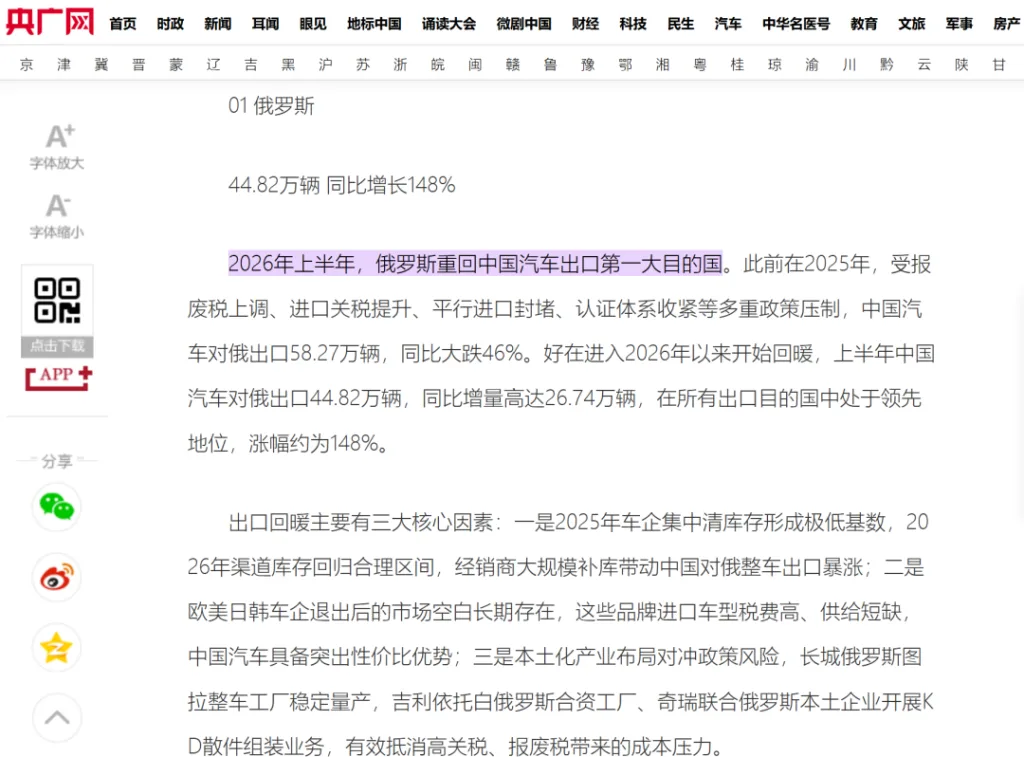
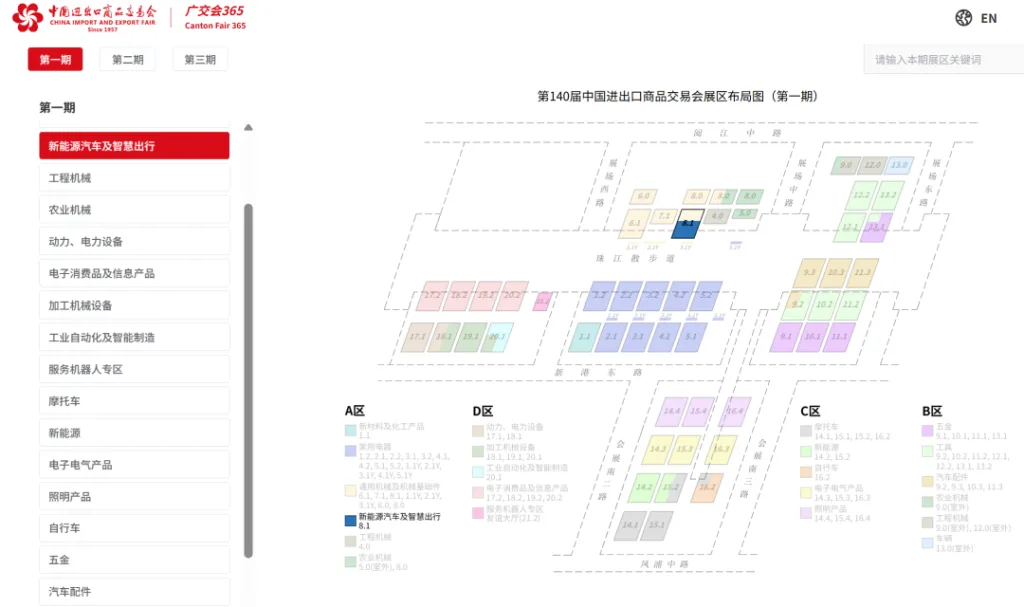
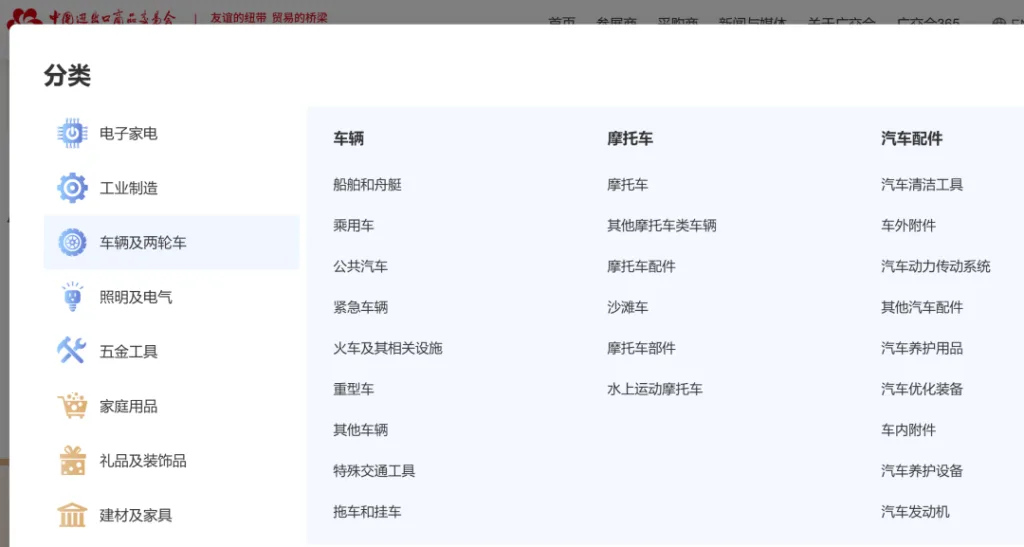
The 140th China Import and Export Fair (Canton Fair) takes place in Guangzhou from October 15 to November 4, 2026, marking the event's 70th anniversary. Phase 1 (October 15–19) focuses on "Advanced Manufacturing," spotlighting New Energy Vehicles (NEVs), smart mobility, and automotive components. Following bilateral talks between President Xi Jinping and President Vladimir Putin in Beijing in May 2026, Sino-Russian economic cooperation continues to deepen, positioning Chinese automakers and auto parts suppliers as key contributors to the Russian market.
(Image Source: Sputnik Russian News Agency)
However, long-chain cross-border automotive transactions carry notable legal and operational exposure: complex market access procedures, evolving recycling fees, export control regulations for dual-use components, and fluctuating currency clearing channels. This guide outlines the key legal considerations, risk mitigation strategies, and judicial precedents for enterprises exporting vehicles and auto parts to Russia.
I. Complete Vehicle Imports: Total Landed Cost Calculation and EAC Compliance
1. Total Landed Cost Modeling
A vehicle's actual import cost in Russia extends well beyond its Factory Gate or FOB purchase price. Exporters and importers must model total landed costs using the following formula:
(Image Source: CNR.cn)
New Energy Vehicles (NEVs): Electric drive system specifications, battery capacity, engine displacement equivalent, and exact model classifications must be verified against current Russian tax schedules.
Key Risks: Vague contract terms regarding tax liability, unexpected increases in the Russian scrap tax during transit delays, and discrepancies between physical vehicle specifications (power output, displacement, age) and customs declarations.
Legal Recommendations:
Clearly allocate all tax, duty, and fee liabilities between buyer and seller in the sales contract.
Stipulate precise technical parameters (displacement, horsepower, manufacturing year, import purpose) and assign strict liability for variances.
Insert a Regulatory Change Clause specifying relief mechanisms, fee adjustments, or termination rights if sudden policy shifts impact performance.
2. EAC Certification and Technical Compliance
(Image Source: Official Canton Fair Website)
Russia, as a member of the Eurasian Economic Union (EAEU), requires imported vehicles and components to comply with TR CU 018/2011 (Technical Regulation on the Safety of Wheeled Vehicles).
Certification Rules: EAC certificates must be issued by accredited Russian certification bodies (accreditation codes typically starting with RA.RU), tested in accredited laboratories within Russia, and marked with the EAC logo on the product body.
Penalties: Utilizing fraudulent or borrowed certificates can result in fines of 100%–300% of the cargo value, mandatory goods re-export, and a 3-year blacklist from Russian customs registry systems.
Legal Recommendations:
Verify certificate numbers and accredited agency credentials via the official Russian Federal Accreditation Service (RusAccreditation) system prior to signing contracts.
For pre-owned and parallel-import vehicles, ensure correct issuance of the Electronic Vehicle Passport (e-PAS/e-PTS) and valid scrap tax payment receipts.
Maintain complete bilingual (Chinese/Russian) technical dossiers, factory certificates, and test reports.
II. Auto Parts Exports: Potential Application of Dual-Use Item Controls
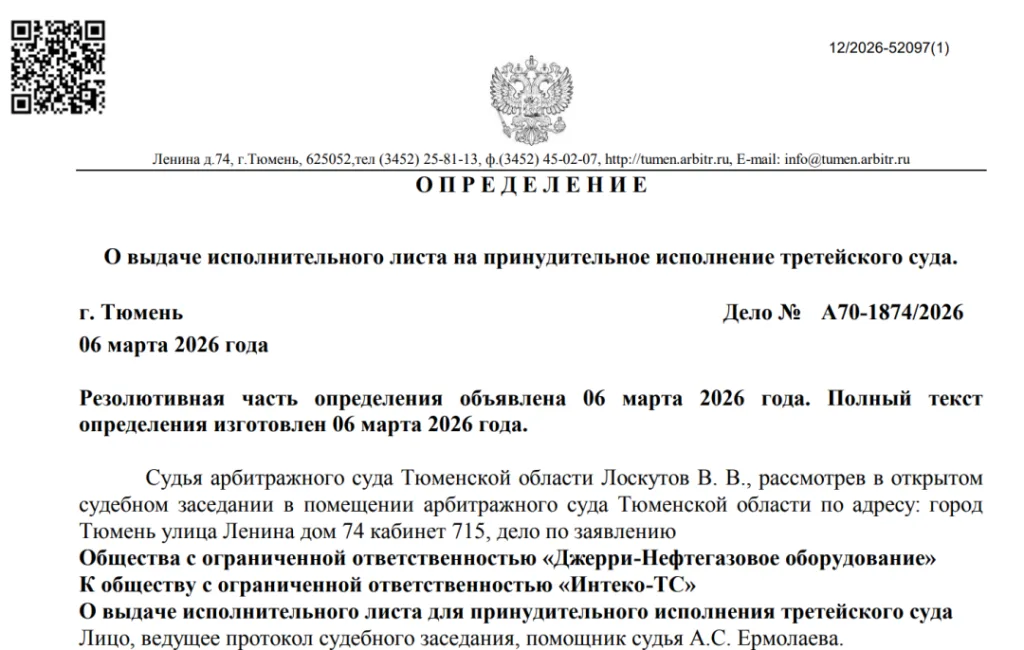
(Image Source: kad.arbitr.ru)
Automotive parts encompass diverse technical classifications. Under the Export Control Law of the People's Republic of China and the updated Dual-Use Items Export Control List, specific automotive components may fall under export restrictions:
High-Risk Controlled Items:
High-precision inertial navigation systems, gyroscopes, and accelerometers.
Specialized automotive-grade semiconductor chips, millimeter-wave radars, and LiDAR units.
High-strength carbon fiber composite materials and special alloy structures.
Off-road vehicle chassis and specialized drivetrain components adaptable for dual military-civilian purposes.
Compliance Actions:
Screen product HS codes and technical parameters against the updated Dual-Use Items Export Control List prior to export booking.
Conduct comprehensive Know Your Customer (KYC) and end-user screenings to verify the Russian importer’s identity and end-use application (e.g., commercial aftermarket repair vs. industrial manufacturing) to prevent unauthorized transshipment.
III. Settlement and Foreign Exchange: RMB/RUB Mainstream and Digital Currency Frameworks
While Chinese Yuan (RMB) and Russian Ruble (RUB) serve as the primary clearing currencies for Sino-Russian trade, the implementation of new digital finance regulations requires updated risk controls.
1. Currency Settlement Practices
Under Article 317 of the Civil Code of the Russian Federation, commercial contracts may denominate obligation values in foreign currency or accounting units while settling in Rubles calculated at the Central Bank of the Russian Federation (CBR) exchange rate on the payment date.
Judicial Precedent (RMB Denomination): In a cross-border supply dispute adjudicated by the Tyumen Region Arbitration Court, Jereh Oil & Gas Equipment Co., Ltd. (Russian subsidiary of China's Jereh Group) successfully enforced a contract denominated in RMB against Inteko TS LLC. The court granted full monetary recovery, issuing an enforcement order for RMB-denominated principal and penalties converted to RUB at the CBR exchange rate.
2. Digital Assets Regulatory Threshold
Under Russia's experimental legal framework for digital currency and digital rights in foreign trade (effective September 1, 2024), trade contracts may utilize permitted digital financial assets (DFAs) for international clearing. However, transactions reaching or exceeding 10 million RUB (or equivalent) are subject to mandatory financial monitoring by Rosfinmonitoring.
Compliance Actions:
Prioritize commercial bank channels for direct RMB/RUB cross-border clearing. Explicitly define payment paths, delivery milestones, and exchange rate risk-sharing mechanisms in the contract.
If using third-party payment arrangements, execute binding tripartite agreements linking payment obligations to specific contract numbers.
When evaluating digital currency/DFA clearing options, perform structured legal reviews regarding custody, exchange mechanics, and regulatory compliance.
IV. Russian Import Customs Clearance and Logistics: Channel Comparison
Transport Channel
Primary Ports & Corridors
Suitable Freight Type
Operational Advantages & Disadvantages
Rail Transport
Manzhouli, Suifenhe, Erenhot
Complete Vehicles (Car Carriers/Auto-racks), Auto Parts (Containers)
Pros: High capacity, stable scheduling. Cons: Border bottleneck congestion during peak seasons; buffer time required.
Road Transport
Heihe, Tongjiang, Dongning
Complete Vehicles (Commercial Transporters), Urgent Parts
Pros: Fastest transit time, high door-to-door flexibility. Cons: Higher unit cost; vulnerable to severe winter weather delays.
Maritime Shipping
Vladivostok, St. Petersburg, Novorossiysk
Bulk Vehicles (Ro-Ro Vessels), Heavy Auto Components
Pros: Ideal for large-volume shipments; lowest cost per ton. Cons: Subject to Russian port throughput capacity and port congestion delays.
Case 1: Enforcement of CIETAC Arbitral Awards in Russian Courts
Fact Pattern: China’s Zoomlion heavy industry group initiated CIETAC arbitration against Russian buyer ARM-AUTO over unpaid machinery equipment sales. CIETAC awarded damages to Zoomlion, but the buyer refused voluntary compliance. Zoomlion sought enforcement before Russian courts. Lower courts initially refused enforcement, alleging procedural flaw in arbitration notice delivery.
Russian Supreme Court Ruling: The Supreme Court of the Russian Federation reversed the lower rulings and enforced the CIETAC award. The Court held that the arbitral institution validly served notices to the contractually designated address. The buyer bore sole legal responsibility for failing to notify the tribunal or seller of an address change.
Takeaway: Arbitration clauses must specify exact corporate registration details, physical notification addresses, email contacts, and mandatory formal notice protocols for address updates.
Case 2: Contractual Inspection Windows and Quality Defect Claims
Fact Pattern (Case No. А40-117228/2021): A buyer sought a 495 million RUB refund, claiming delivered military medical shelters failed Ministry of Defense technical standards.
Moscow Court Ruling: Although the contract provided a 6-month quality objection window, the buyer failed to issue a formal written notice of defect within the statutory timeframe and failed to prove fundamental breach. The court rejected the refund counterclaim, granting only partial liquidated damages for minor delays.
Takeaway: Contracts should explicitly define:
Inspection timelines for quantity, surface appearance, and packaging.
Written notification deadlines for hidden defects.
Formal notification protocols and accredited testing organizations.
Legal waiver consequences if the buyer fails to object within the stipulated timeframe.
Case 3: International Rail Freight Damage Claims Under SMGS
Fact Pattern (Case No. А40-296498/2023): Cargo transported from Penza-4 station (Russia) to Kazakhstan suffered freeze damage and transit delays. The recipient generated a formal Commercial Incident Report (Коммерческий акт) immediately upon arrival, documenting exact package damage and temperature impacts.
Moscow Arbitral Court Ruling: The court applied the Agreement on International Goods Transport by Rail (SMGS) rules on carrier liability, ordering Russian Railways to pay approximately 3.6 million RUB in cargo damages.
Takeaway: For exports utilizing rail logistics, parties must preserve the SMGS consignment note, official seals, arrival inspection logs, and station-issued Commercial Incident Reports. Immediate on-site evidence preservation is mandatory to sustain damage recovery claims.
VI. Canton Fair On-Site Compliance Checklist
[Exhibitor Checklist]
 ├── 1. Access & Certification: Valid EAC TR CU 018/2011 certificate status verified.
 ├── 2. Trade Compliance: HS code screened against China's Dual-Use Export Control List.
 ├── 3. Contractual Structure: RMB/RUB currency clearing paths & CBR exchange mechanics set.
 ├── 4. Quality Protocols: Dual-tier inspection windows (surface vs. hidden defects) drafted.
 └── 5. Dispute Resolution: Specific CIETAC/arbitration service address clauses inserted.
Access Documentation: Ensure all displayed vehicle models and components hold valid EAC registration dossiers or clear certification pathways.
Export Control Screening: Verify product technical specifications against Chinese dual-use control thresholds before agreeing to foreign delivery schedules.
Contract Drafts: Include explicit clauses allocating scrap tax obligations, regulatory change risk, RMB clearing parameters, and strict dispute service protocols.
Conclusion
Sino-Russian automotive trade presents expanding commercial opportunities during Phase 1 of the 140th Canton Fair. To maximize commercial gains while safeguarding transaction value, automotive exporters and importers should complete comprehensive legal reviews covering product certification, total landed cost structures, export control compliance, RMB clearing mechanisms, and enforceable dispute resolution clauses.
About the Author
Yu Yuting Partner | NEO-ARK Law Firm
LawyerYu focuses on foreign-related litigation, cross-border disputes, commercial matters, and legal services for overseas individuals and businesses in China.
NEO-ARK Law Firm provides legal services in foreign-related litigation, commercial disputes, family law, and cross-border legal matters, assisting both international and domestic clients throughout China.
2026-09-08
Can a China Lease Exceed 20 Years? Rent Refund and Arbitration Case
Overview
Long-term property leases can create significant legal risks when the agreed lease term exceeds the statutory limit under Chinese law, particularly where the tenant has already paid a substantial amount of rent in advance.
In this China arbitration case, two tenants entered into a long-term property lease with a Guangzhou investment management company and paid the agreed rent in advance. The contractual lease period substantially exceeded 20 years.
The tenants subsequently challenged the validity of the portion of the lease exceeding the statutory maximum and sought a refund of the corresponding rent, together with interest and litigation-related costs.
The lessor argued that the lease was lawful because of the nature and permitted use of the underlying land, and that the tenants were attempting to use the statutory lease limitation as a means of escaping their contractual obligations.
The arbitration tribunal rejected this position and held that the portion of the lease exceeding 20 years was invalid, while the remaining portion of the lease was not thereby rendered invalid. The tribunal ordered the corresponding rent to be returned and also allocated relevant legal and arbitration costs to the lessor.
The dispute subsequently continued into the enforcement stage, where the lessor challenged the freezing of funds in its bank account. The enforcement objection was ultimately rejected by the court.
The case illustrates an important distinction in Chinese lease disputes: a lease may remain effective within the statutory period even where the agreed term exceeds 20 years, while the excess portion can be treated separately and give rise to restitution claims.
Case Snapshot
Item
Details
Case Type
Contract Dispute / Arbitration
Jurisdiction
Mainland China
Arbitration Institution
Guangzhou Arbitration Commission
Enforcement Court
People's Court in Guangzhou
Industry
Property Leasing / Investment Management
Contract Type
Long-Term Property Lease
Dispute Value
Approximately RMB 160,000
Main Issue
Validity of the lease term exceeding 20 years
Main Claim
Refund of rent attributable to the excess lease period
Additional Claims
Interest, lawyer fees and arbitration costs
Enforcement Issue
Objection to freezing of funds in enforcement proceedings
Attorney
Yu Yuting/ Sun Jianhui
Law Firm
NEO-ARK Law Firm
The Core Legal Issues
1. Can a lease in China legally exceed 20 years?
The central issue was the statutory limitation on the duration of a lease.
Under Article 705 of China's Civil Code, a lease term may not exceed 20 years, and the portion exceeding 20 years is invalid. The rule does not mean that an otherwise valid lease automatically becomes entirely invalid simply because the agreed term is longer than 20 years.
This distinction became critical in the arbitration.
The tenants did not simply seek to terminate the entire lease. Instead, they challenged the validity of the portion of the agreed term exceeding the statutory limit and sought the corresponding financial adjustment.
2. Does the nature of the underlying land change the 20-year lease limitation?
The lessor argued that the underlying property involved collective commercial land and that the applicable land-use period was longer than 20 years.
The defense attempted to connect the permitted land-use period with the validity of the contractual lease period.
The arbitration strategy distinguished between the statutory duration of land use and the legally permissible term of a lease contract.
The fact that a property or underlying land may have a longer permitted use period does not automatically eliminate the statutory limitation applicable to the contractual lease itself.
This distinction was central to defeating the lessor's argument.
3. Can a tenant recover rent corresponding to the invalid portion of a long-term lease?
Once the excess portion of the lease was found invalid, the next issue was the financial consequence.
The tenants had made an upfront rental payment covering the agreed long-term period.
The arbitration tribunal therefore had to determine whether the rent attributable to the invalid portion should be returned.
The tribunal supported the tenants' core restitution claim and ordered the lessor to return the corresponding rent.
This demonstrates why validity analysis and restitution analysis should be handled together in long-term lease disputes.
Legal Strategy
Issue
Legal Approach
Excessive lease term
Focus on the statutory 20-year limit under Article 705 of the Civil Code
Lessor's land-use argument
Distinguish land-use duration from the statutory limit applicable to the lease contract
Upfront rent payment
Separate the rent attributable to the valid lease period from the invalid excess period
Restitution
Seek return of the corresponding rent rather than treating the entire lease as invalid
Interest
Include appropriate financial consequences arising from the refund obligation
Legal and arbitration costs
Seek allocation of recoverable costs in accordance with the applicable arbitration rules
Enforcement
Continue protecting the effectiveness of the arbitral award after the liability phase
The strategy was therefore based on partial invalidity rather than wholesale cancellation of the lease.
That distinction was important because it allowed the tenants to challenge the legally impermissible portion of the arrangement while preserving the legal effect of the remaining lease period.
Why the 20-Year Rule Matters
Article 705 of the Civil Code expressly provides that a lease term may not exceed 20 years and that the portion exceeding 20 years is invalid.
This rule can be particularly relevant to commercial arrangements involving:
long-term commercial property leases;
prepaid rental arrangements;
investment-style property use rights;
long-term operating arrangements; and
contracts marketed as extended property-use rights.
Businesses and individuals should therefore distinguish between:
the duration for which the underlying property may be used and the legally permissible term of the lease contract itself.
A longer underlying land-use period does not necessarily mean that the parties can contractually create an unrestricted lease term.
Arbitration and Enforcement
Winning an arbitration does not necessarily mean that the dispute is immediately over.
After the arbitral award was issued, the respondent did not voluntarily perform the award.
The applicants therefore proceeded with enforcement.
During enforcement, the respondent challenged the freezing of funds in its account, arguing that the relevant funds were collected on behalf of third parties for utility payments and therefore should not have been frozen.
The enforcement court rejected the objection after examining the nature and ownership of the relevant account and the surrounding circumstances.
This part of the case highlights an important practical point: arbitration strategy should extend beyond obtaining an award and include a plan for enforcement.
A favorable arbitral award has limited practical value if the respondent's assets cannot ultimately be reached.
Outcome
The arbitration tribunal supported the applicants' core position and held that the portion of the lease exceeding the statutory 20-year limit was invalid.
The respondent was required to return the rent corresponding to the invalid portion of the lease, together with the applicable financial consequences.
The tribunal also supported the applicants' claims concerning recoverable lawyer fees and arbitration costs.
After the respondent failed to voluntarily comply with the award, the applicants commenced enforcement proceedings.
The respondent's attempt to challenge the freezing of funds on the basis that the account allegedly contained third-party utility collections was rejected by the enforcement court.
For confidentiality reasons, the specific amounts awarded and enforcement figures are not disclosed in this case study.
Why This Case Matters
A long-term lease is not necessarily wholly invalid
A lease exceeding 20 years should not automatically be treated as entirely void.
The legal analysis may instead focus on the portion exceeding the statutory limit.
This can materially affect both the tenant's rights and the financial consequences of the dispute.
Land-use rights and lease rights should be analyzed separately
One of the most important issues in the case was the distinction between the underlying land-use period and the contractual lease period.
The two concepts should not automatically be treated as interchangeable.
Upfront payment increases the importance of contract review
Where a tenant pays a substantial amount of rent in advance for a long-term arrangement, an invalidity issue can create significant financial exposure.
Long-term lease contracts should therefore be reviewed before substantial payments are made.
Arbitration does not end the matter
A claimant may need to consider enforcement strategy from the beginning of the arbitration.
Asset preservation, enforceability and potential objections should form part of the broader dispute-resolution plan.
Enforcement objections can become a second stage of the dispute
Even after an arbitral award has been obtained, the respondent may raise objections during enforcement.
The ability to defend the award at the enforcement stage can therefore be critical to achieving a practical recovery.
Frequently Asked Questions
Can a lease in China be longer than 20 years?
The parties may contractually state a longer period, but under Article 705 of the Civil Code, the portion exceeding 20 years is invalid.
Does a lease exceeding 20 years become entirely invalid?
Not necessarily. The statutory rule specifically provides that the portion exceeding 20 years is invalid. The validity of the remaining portion should be assessed separately.
Can a tenant recover prepaid rent for the invalid portion of a lease?
Potentially. Where the excess portion of the lease is found invalid, the corresponding financial consequences may include restitution of rent attributable to that invalid period, depending on the facts and applicable legal rules.
Does a longer land-use period allow a longer lease?
Not automatically. The permitted duration of land use and the statutory duration of a lease are legally distinct concepts.
Can an arbitral award be enforced against a disputed bank account?
Potentially, depending on the ownership and nature of the funds and whether a statutory exemption from enforcement applies.
In this case, the respondent's objection to the freezing of funds was rejected by the enforcement court.
Should long-term property leases be reviewed before signing?
Yes. Particular attention should be paid to the lease term, payment structure, property rights, land-use status, renewal provisions and the consequences of invalidity.
Key Takeaways
For parties entering into long-term property leases in China:
Check whether the contractual lease term exceeds the statutory 20-year limit.
Do not automatically equate land-use duration with lease duration.
If a lease exceeds 20 years, analyze the validity of the excess portion separately.
For prepaid leases, calculate the financial consequences of any invalid lease period.
Consider arbitration and enforcement strategy together rather than treating enforcement as an afterthought.
When an enforcement objection is raised, examine the legal ownership and nature of the relevant assets rather than relying solely on the respondent's characterization.
The case demonstrates that a long-term lease dispute may involve contract validity, restitution, arbitration and enforcement simultaneously. Effective representation therefore requires the dispute to be considered as a complete legal process, from contract interpretation through final recovery.
About the Author
Yu Yuting Partner | NEO-ARK Law Firm
LawyerYu focuses on foreign-related litigation, cross-border disputes, commercial matters, and legal services for overseas individuals and businesses in China.
NEO-ARK Law Firm provides legal services in foreign-related litigation, commercial disputes, family law, and cross-border legal matters, assisting both international and domestic clients throughout China.
2026-09-04
When Offshore Trusts Fail: Key Principles for Effective Asset Protection in the Hui Ka Yan and Zhang Lan Cases
The first-instance criminal ruling against Evergrande Group and Hui Ka Yan resulted in global asset recovery actions targeting offshore trusts. Meanwhile, Singapore courts previously pierced Zhang Lan’s family trust, placing over $100 million directly within reach of creditor execution.
These high-profile cases highlight a critical question for high-net-worth individuals and corporate executives: Why do certain offshore trust structures successfully shield assets while others fail under judicial scrutiny? This legal analysis breaks down the background, judicial enforcement mechanisms, and underlying reasons for failure in both benchmark cases, establishing five core compliance principles for structuring secure offshore asset protection trusts.
I. The Hui Ka Yan Case: Why Offshore Structures Cannot Block Judicial Recovery
1. Case Background
On August 20, 2026, the Shenzhen Intermediate People's Court delivered its first-instance criminal judgment against Evergrande Group, Evergrande Real Estate, and Hui Ka Yan. Hui was sentenced to life imprisonment for multiple corporate crimes, stripped of political rights for life, and subjected to complete personal asset confiscation alongside mandatory recovery of illegal proceeds. Liquidators in Hong Kong synchronized global asset recovery efforts across multiple offshore jurisdictions.
(Image Source: Baidu Baike)
2. Judicial Enforcement Actions
Domestic Level: The Shenzhen Intermediate People's Court established the legal foundation for cross-border recovery by ordering the confiscation of Hui’s personal assets and the recovery of all illegal proceeds.
Offshore Level: Hong Kong liquidators initiated a three-step recovery strategy:
Obtaining Worldwide Freezing Orders (WFOs) to restrict asset transfer and disposition.
Procuring disclosure orders forcing full disclosure of global bank accounts, equity holdings, and real estate.
Applying for receivership and asset liquidation across relevant offshore jurisdictions.
3. Core Reasons for Trust Failure
Illegitimate Asset Provenance: Trust structures alter ownership governance, not the underlying legal character of an asset. Assets derived from criminal conduct or illegal proceeds remain subject to statutory recovery regardless of how many offshore entities or jurisdiction layers envelope them.
Cross-Border Judicial Assistance: Criminal confiscation orders pair directly with offshore freezing and receivership mechanisms. Cross-border judicial assistance between mainland China, Hong Kong, and offshore jurisdictions enables courts to trace ultimate beneficial ownership and execute asset recovery.
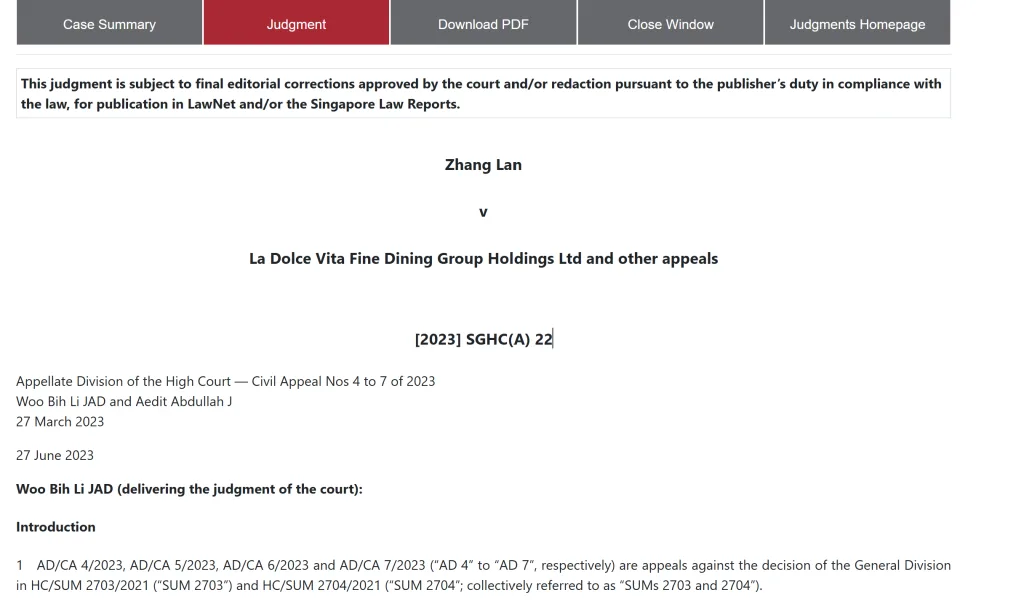
(Image Source: elitigation.sg)
II. The Zhang Lan Case: Failure Through Lack of Trust Independence
1. Case Background
Following equity transaction disputes involving South Beauty, Zhang Lan incurred substantial personal debt. Transaction proceeds totaling approximately $142 million flowed through Zhang Lan’s personal bank account in Hong Kong into SETL, a British Virgin Islands (BVI) company held within her family trust structure (Success Elegant Trust). Zhang argued these funds belonged to the trust and were immune from creditor enforcement.
2. Judicial Rulings & Enforcement
Creditors traced the fund flows and applied to the General Division of the High Court of Singapore for enforcement. In 2022, after examining transaction logs and operational realities, the Singapore High Court ruled that the account funds remained beneficially owned by Zhang Lan personally and appointed receivers over the accounts. The Singapore Court of Appeal affirmed the decision in 2023.
3. Core Reasons for Trust Failure
Failure of True Divestment: While funds transferred nominally from a personal account to a trust-owned BVI company, Zhang Lan retained direct operational authority over account disbursements.
Breach of Fiduciary Boundaries: A valid trust requires independent management by the trustee. Post-settlement interventions—such as issuing direct payment instructions for personal real estate acquisitions—served as evidence that Zhang Lan never surrendered beneficial control, rendering the structure an illusory trust.
III. Compliance Roadmap for Secure Offshore Trusts
Cayman Islands jurisdiction.: Getty Images
Ensure Legitimate Asset Origin: Trust asset protection applies strictly to legally acquired wealth. Comprehensive Know-Your-Transaction (KYT) and tax compliance audits must precede settlement. Assets subject to pending litigation, criminal exposure, or encumbrances must be excluded.
Execute True Delivery & Control Transfer: Legal ownership, managerial control, and disposition rights must transfer fully to the licensed trustee. Settlors must maintain absolute separation between personal accounts and trust assets to avoid asset commingling.
Define Settlor Powers Prudently: Settlors may retain limited rights (e.g., advisory investment roles, power to replace trustees, or appointing a protector). However, retaining unconditional revocation rights or direct operational control over trust capital invalidates the protective shield.
Establish Structures Pre-Crisis: Trusts are prospective risk-management tools. The optimal setup window is during periods of financial solvency, stable business operations, and absent pending claims. Settlements executed during insolvency or active litigation face immediate voidance under fraudulent conveyance laws.
Maintain Ongoing Operational Compliance: Courts evaluate trust operations across their full lifecycle. Trustees and trust protectors must retain complete records of trustee resolutions, investment decisions, and distribution logs while adapting to evolving global tax and anti-money laundering (AML) standards.
Conclusion
Offshore trust security relies not on secrecy tags or complex multi-tiered corporate layers, but on legitimate asset provenance, genuine control transfer, clear fiduciary boundaries, and compliant ongoing administration. Professional wealth structuring requires evaluating asset eligibility prior to entry, establishing precise legal boundaries during settlement, and ensuring the architecture operates strictly under trust principles throughout its lifecycle.
About the Author
Yu Yuting Partner | NEO-ARK Law Firm
LawyerYu focuses on foreign-related litigation, cross-border disputes, commercial matters, and legal services for overseas individuals and businesses in China.
NEO-ARK Law Firm provides legal services in foreign-related litigation, commercial disputes, family law, and cross-border legal matters, assisting both international and domestic clients throughout China.
2026-09-03
Can Using a Public Figure’s Photo Online Lead to a Portrait Rights Claim?
Overview
Using a person's photograph in corporate online content can create unexpected legal risks, particularly when the person is a public figure and the photograph was obtained from a publicly accessible source.
In this China portrait rights dispute, a company published an article through its corporate WeChat account that included photographs of a former public figure. The individual subsequently brought a lawsuit alleging infringement of portrait rights and sought monetary compensation, recovery of rights-protection expenses and a public apology.
The company disputed the alleged infringement. It argued that the article was a positive feature about the individual's career and achievements, the photographs had been obtained from publicly available online sources, and the publication did not distort, defame or otherwise misuse the individual's image. The company also challenged the extent of the claimed damages and the requested form of public apology.
Importantly, the case did not end with a court finding that the company had infringed the individual's portrait rights. Following the court's mediation, the parties reached a settlement that brought the dispute to a final conclusion without an infringement judgment.
The case illustrates an important risk-management issue for companies operating websites, WeChat accounts and other digital media: the fact that an image is publicly available online does not by itself eliminate portrait-rights risk, and the appropriate response to a claim may involve both substantive defenses and settlement strategy.
Case Snapshot
Item
Details
Case Type
Intellectual Property / Portrait Rights Dispute
Jurisdiction
Mainland China
Court
Shanghai Putuo District People's Court
Industry
Commercial / Consumer Business
Dispute Type
Alleged unauthorized use of a person's photograph in corporate online content
Original Claim Value
Approximately RMB 160,000
Main Claims
Compensation, reasonable rights-protection expenses and public apology
Key Legal Issue
Whether the publication of publicly available photographs constituted an actionable portrait-rights infringement
Key Strategy
Substantive defense + litigation risk control + judicial mediation
Final Resolution
Settlement through court mediation; no judicial finding of infringement
Attorney
Yu Yuting / Sun Jianhui
Law Firm
NEO-ARK Law Firm
The Core Legal Issues
1. Does using a publicly available photograph automatically constitute portrait-rights infringement?
The central issue was not simply whether the photograph had been used, but whether the circumstances of its use gave rise to legal liability.
The company argued that the photographs were obtained from publicly accessible online sources and were used in an article describing the individual's career and achievements.
The defense therefore distinguished between:
the existence of a photograph online;
the circumstances in which the photograph was obtained;
the purpose and context of publication;
whether the image was altered or presented in a derogatory manner; and
whether the publication created a commercial association or other legally significant use.
This distinction was important because online availability should not be treated as an automatic license to use a person's image for any purpose. At the same time, the legal assessment of an alleged portrait-rights infringement depends on the specific circumstances of the publication.
2. Does the use of a public figure's image receive greater tolerance?
The claimant was a public figure, which formed part of the company's defense.
The company argued that the article was a positive presentation of the individual's career and did not contain defamatory, degrading or misleading content.
The defense therefore focused on the context and nature of the publication, rather than relying solely on the claimant's public status.
This is an important distinction for businesses: being a public figure does not mean that a person's portrait can be freely used without legal consideration.
Instead, the purpose, presentation, context and potential commercial implications of the use should all be assessed.
3. How should a company respond when the claimant seeks both compensation and a public apology?
The claimant sought not only financial compensation and rights-protection expenses, but also a public apology in a widely circulated newspaper.
From the defendant's perspective, the potential risk therefore extended beyond financial liability.
A judgment requiring a public apology could potentially create additional reputational and commercial consequences for the company.
The defense accordingly challenged both the alleged infringement and the proportionality of the requested remedies.
This allowed the litigation strategy to focus not only on the amount of potential compensation, but also on preventing an unnecessarily broad form of public remedy.
Legal Strategy
Issue
Approach
Alleged portrait-rights infringement
Challenge whether the specific use of the photograph constituted actionable infringement
Source of photographs
Establish that the images had been obtained from publicly accessible online sources while avoiding reliance on this fact alone
Publication context
Emphasize the positive, non-derogatory nature of the article and the context in which the photographs were used
Commercial-use allegation
Challenge the asserted connection between the publication and commercial exploitation of the claimant's portrait
Damages
Challenge the basis and reasonableness of the claimant's compensation demand
Public apology
Challenge the necessity and proportionality of the requested form of public remedy
Overall risk
Seek a resolution that would avoid an adverse infringement judgment and minimize the company's financial and reputational exposure
The case therefore required more than a simple argument that the photographs were “found online.” The strategy addressed the legal nature of the use, publication context, alleged commercial purpose, requested remedies and overall litigation risk.
Settlement Strategy and Risk Control
An important feature of this case was that the objective was not merely to minimize the amount eventually paid.
The company also sought to avoid a formal judicial finding of infringement.
This distinction can be significant in intellectual property and personality-rights disputes.
A court judgment expressly finding infringement may create additional reputational consequences and may become relevant to future disputes or business communications.
Through active defense and court-led mediation, the parties ultimately reached a settlement.
The settlement:
resolved the dispute on a one-time basis;
did not contain a judicial finding that the company had infringed the claimant's portrait rights;
did not require the company to issue the originally requested public apology; and
brought the dispute to a final resolution.
For businesses, this demonstrates why settlement structure can be as important as settlement amount.
Outcome
The case was ultimately resolved through court mediation rather than an infringement judgment.
Under the settlement arrangement, the company made a one-time payment to resolve the financial aspects of the dispute, with the final amount being substantially lower than the claimant's original demand.
The company was not required to publish the requested public apology.
The mediation agreement also provided for a comprehensive resolution of the dispute, preventing the parties from continuing to pursue additional claims arising from the same matter.
For confidentiality reasons, the specific settlement amount and other detailed financial terms are not disclosed in this case study.
Why This Case Matters
Publicly available images still require legal review
Businesses should not assume that an image can be freely used simply because it can be found through a search engine or on a public website.
The source of an image, the identity of the person depicted, the purpose of publication and the context of use should all be considered before publication.
Portrait rights and copyright are different issues
A company may face more than one type of legal risk when publishing a photograph.
Copyright concerns may relate to the ownership or licensing of the photograph itself, while portrait-rights issues concern the rights and interests of the person depicted.
A compliance review should therefore consider both dimensions where appropriate.
Public figures are not automatically free to use
The fact that a person is well known does not eliminate portrait-rights considerations.
The purpose and manner of use remain important.
Settlement can protect against reputational consequences
In a personality-rights dispute, avoiding an adverse judicial finding may be commercially important.
A negotiated resolution can sometimes provide a more controlled outcome than allowing the dispute to proceed to a final judgment.
The form of relief matters
A claimant's requested compensation is only one aspect of the litigation risk.
Requests for public apologies, publications or other forms of corrective action may create additional business and reputational consequences.
Companies should therefore assess the full range of requested remedies, not just the monetary claim.
Frequently Asked Questions
Can a company use a public figure's photograph in a corporate WeChat article?
Not necessarily. The fact that an image is publicly accessible does not automatically mean that a company has unrestricted rights to use the person's portrait.
The purpose, context, manner and potential commercial implications of the use should be reviewed.
Does using a photograph from the internet eliminate portrait-rights liability?
No. An image being available online does not by itself establish that its use is legally permissible.
Businesses should separately consider the rights of the photographer or copyright owner and the portrait rights of the person depicted.
Are public figures treated differently in portrait-rights disputes?
A person's public status may be relevant to the legal assessment, but it does not mean that the person has no portrait rights.
The circumstances and purpose of the specific use remain important.
Can a company avoid a public apology through settlement?
Potentially. If the parties reach a settlement before judgment, the final resolution may differ significantly from the claimant's original requests.
In this case, the dispute was resolved through mediation without the company being required to issue the requested public apology.
Is mediation appropriate in an intellectual property or portrait-rights dispute?
It can be, particularly where the parties want to control financial exposure, reputational risk and the scope of any public-facing remedy.
The appropriate strategy depends on the facts and the client's commercial objectives.
Key Takeaways
For companies publishing photographs of individuals through websites, WeChat accounts, social media or other digital channels:
Do not assume that publicly available photographs are automatically free to use.
Assess portrait rights separately from copyright and image-licensing issues.
Consider the purpose, context and manner of publication.
For public figures, assess whether the use creates a commercial association or other legally significant implication.
When facing a claim, challenge both liability and the scope of the remedies being requested.
In appropriate cases, settlement can help control both financial and reputational risk.
A settlement that avoids an infringement finding may be materially different from simply negotiating the amount of compensation.
This case demonstrates that effective litigation strategy in a portrait-rights dispute is not limited to defending the alleged infringement itself. Controlling the form of the final resolution can be equally important to the client's long-term commercial interests.
About the Author
Yu Yuting Partner | NEO-ARK Law Firm
LawyerYu focuses on foreign-related litigation, cross-border disputes, commercial matters, and legal services for overseas individuals and businesses in China.
NEO-ARK Law Firm provides legal services in foreign-related litigation, commercial disputes, family law, and cross-border legal matters, assisting both international and domestic clients throughout China.
 Skip to content