The Guangzhou Bar Association officially announced the Decision on Guangzhou Bar Association 2025 Annual Member Awards.
Multiple attorneys from Guangdong NEO-ARK Law Firm received prestigious recognitions across several key categories—including the Theoretical Achievement Award, Social Stability Maintenance Award, Practice Excellence Award, Outstanding Working Committee Member, and Outstanding Special Committee Member—in recognition of their outstanding clinical legal practice, academic research, and contributions to bar organization development.
I. Theoretical Achievement Award
Analysis of Practical Dilemmas and Institutional Solutions for Cross-Border Visitation Rights of Minors Between Mainland China and Hong Kong/MacaoAuthors: Attorney Liu Minghong, Attorney Li Wanjun
Research on the Digital Estate Manager System in the Guangdong-Hong Kong-Macao Greater Bay AreaAuthor: Attorney Pan Wenjing
Legal Conflicts and Judicial Coordination of Cross-Border Wills Between Hong Kong and Mainland ChinaAuthors: Attorney Tang Jingying, Attorney Sun Kaiyang
Research on Criminal Jurisdiction Conflicts for Telecom Fraud in the Guangdong-Hong Kong-Macao Greater Bay AreaAuthor: Attorney Xie Guizhen
II. Social Stability Maintenance Award
Construction Engineering Contract Dispute CaseAwardees:Attorney Huang Jianqiu, Attorney Yu Yuting
III. Practice Excellence Award
Network Tort Liability Dispute CaseAwardee: Attorney Liu Xinyi
Medical Cooperation Contract Dispute CaseAwardees: Attorney Sun Jianhui, Attorney Ye Wenya
IV. Working Committee & Special Committee Honors
1. Outstanding Working Committee Member
Attorney Chen MeijuanInformatics and Legal Technology Promotion Working Committee
2. Outstanding Special Committee Members
Attorney Fang ZhilinDuty-Related Crimes Criminal Law Special Committee
Attorney Li WanjunMarriage and Family Law Special Committee
Conclusion
Every award reflects dedication, rigors of practice, and social responsibility. These recognitions highlight our attorneys' sustained commitment to frontline legal practice, cutting-edge theoretical research, bar organization governance, and social service.
NEO-ARK Law Firm remains committed to building practice excellence and social responsibility. The firm will continue encouraging its legal team to deepen expertise in complex legal fields, actively contribute to bar association initiatives, and advance high-quality legal services in the Guangdong-Hong Kong-Macao Greater Bay Area.
Disclaimer & Copyright: This article is co-authored by Mandy Wu and Yu Yuting. The insights shared are for general compliance trends only and do not constitute formal legal advice.As a specialized cross-border legal institution, Neo-Ark Law Firm provides comprehensive global compliance and rights-protection support for expanding enterprises. For more international legal updates, please visit the Neo-Ark Law Firm Official Websites (https://www.neoarklawyers.com/news).
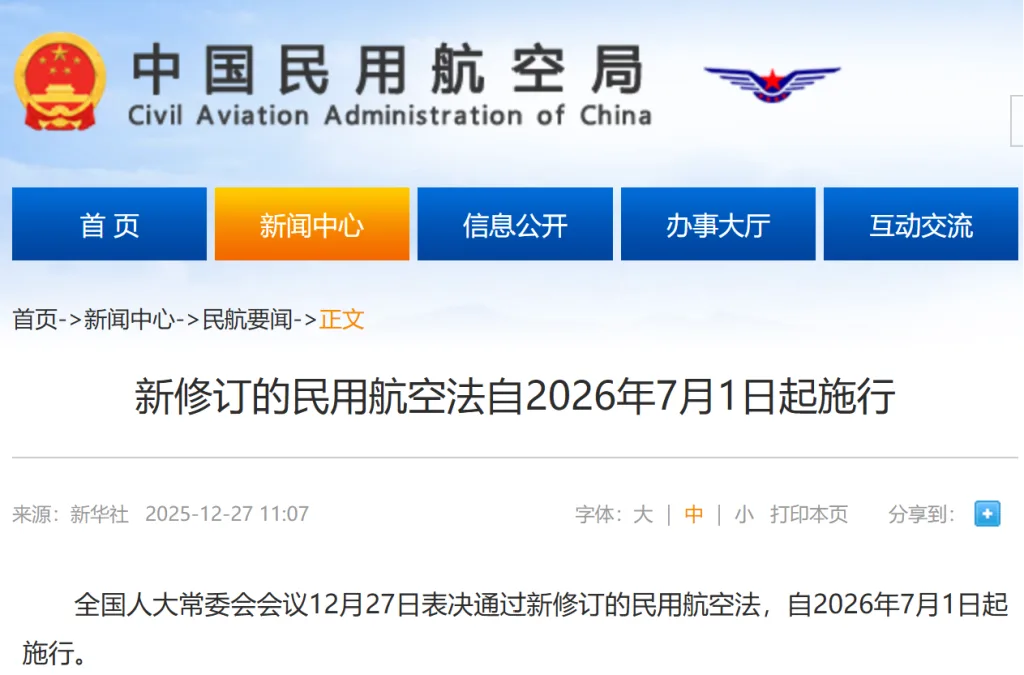
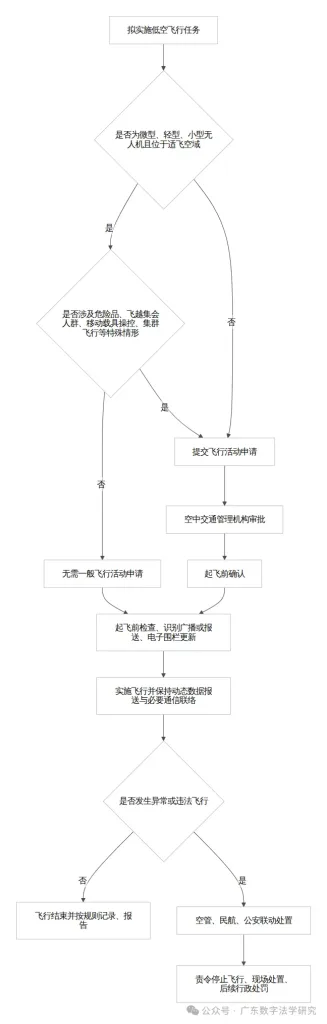
The newly amended Civil Aviation Law of the People's Republic of China officially takes effect today. As a comprehensive overhaul of the foundational legal statute that has governed China’s civil aviation sector for three decades, this legislative landmark transitions the low-altitude economy from fragmented regional trial programs into a unified, rule-of-law operational era.
(Source: Civil Aviation Administration of China)
Core Structural Shifts at a Glance:
Statutory Airspace Allocation: For the first time, low-altitude economy development is legally integrated into high-level airspace planning and local government infrastructure mandates.
Lifecycle Drone Identification: Mandatory airworthiness certifications and unique product identification codes (Product IDs) extend regulatory enforcement upstream to manufacturers.
Dynamic Enforcement & Countermeasures: Civil aviation authorities receive expanded enforcement powers, including site inspections, asset seizures, and mandatory anti-drone defense systems near sensitive zones.
Data Security & Privacy Safeguards: Explicit restrictions govern data collection, surveillance, and international data transfers during commercial drone operations.
I. Institutional Guarantee for Low-Altitude Airspace Allocation
Previously, low-altitude airspace opening and spatial planning relied primarily on local municipal rules or industry guidance, lacking direct grounding in national statute.
Core Statutory Provisions (Articles 74 & 225): The amended law explicitly mandates that airspace classification principles must incorporate the needs of low-altitude economic development. It adds a dedicated "Development Promotion" chapter, establishing legal duties for local governments at or above the county level to plan infrastructure and support industry growth.
Legal Impact: The law provides a solid legal foundation for government-led low-altitude infrastructure (such as physical vertiports, eVTOL landing pads, and integrated sensing-and-communication networks), accelerating municipal infrastructure investment and project rollouts.
II. Digital ID Enforcement: Full-Lifecycle Traceability for Unmanned Aircraft
To address public safety concerns surrounding commercial and consumer drones, the regulatory boundary extends directly upstream into aircraft design and manufacturing.
Core Statutory Provision (Article 34): Entities engaged in the design, production, import, maintenance, and flight operations of civil unmanned aircraft must obtain airworthiness approval, unless explicitly exempted by law. Furthermore, manufacturers are legally required to assign a standardized, unique product identification code to every aircraft.
Legal Impact: Commercial drones enter a fully transparent, lifecycle-monitored regulatory framework. Non-compliant manufacturers using uncertified components or failing safety standards will be phased out. In instances of unauthorized flights ("black flying") or property damage, regulatory agencies can achieve full-chain traceability from the aircraft straight to the registered operator.
(Source: Guangdong Digital Jurisprudence Society)
III. Enforcement Powers & Sensitive Zone Countermeasures
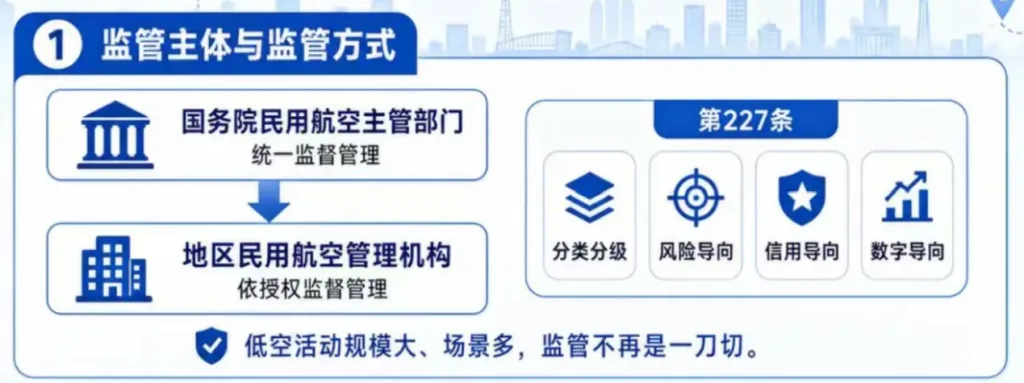
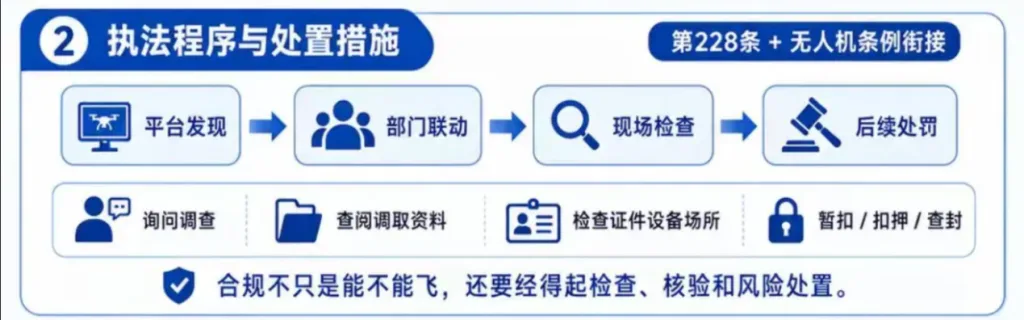
Recognizing the high volume and complex operational scenarios of low-altitude activities, the law equips civil aviation administrative authorities with enhanced enforcement mechanisms.
Core Statutory Provisions (Articles 61 & 228): Authorities are granted explicit powers for on-site inspections, data retrieval, asset impoundment, and temporary seizures. Additionally, civil airports are required to delineate designated drone control zones and equip them with detection and anti-drone countermeasure systems.
Legal Impact: Compliance for commercial low-altitude operators shifts from a one-time permit to continuous operational logging. Enterprises must maintain verifiable flight logs, real-time telemetry reporting, and audit trails to handle random dynamic inspections.
(source: Civil Aviation Administration of China)
IV. Urban Airspace Operational Restrictions
The law reinforces strict boundaries regarding flight paths over densely populated urban areas.
Core Statutory Provision (Article 83): Preserves the strict restriction that civil aircraft shall not fly over urban areas, unless strictly required for takeoff, landing, or designated flight corridors, maintaining altitudes sufficient to exit urban airspace in an emergency without endangering ground safety, or operating under special regulatory approval.
Legal Impact: Legislative encouragement of the low-altitude economy does not translate to unregulated urban flights. For enterprises planning urban air logistics or intercity eVTOL passenger transport, core competitiveness depends on maintaining superior safety standards, real-time airspace monitoring, and coordination with local air traffic control to secure special route permits.
(Source: Guangdong Digital Jurisprudence Society)
V. Data Privacy & Cross-Border Data Compliance
As aerial photography, infrastructure inspection, and geographic surveying become widespread, data privacy and national security controls have intensified.
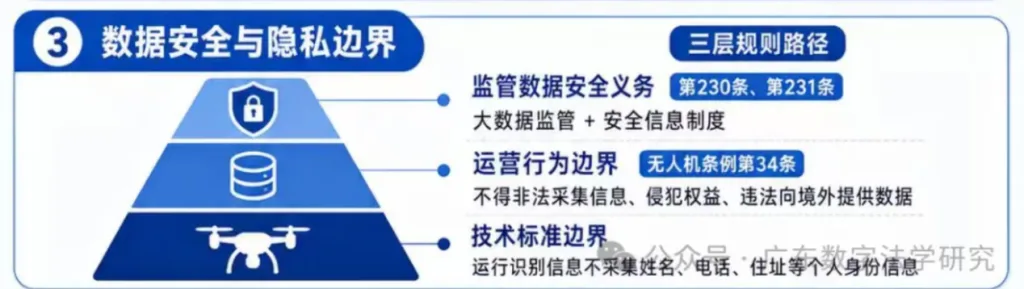
Core Statutory Provisions (Articles 230 & 231): While encouraging the use of big data technologies for oversight, civil aviation authorities are legally bound to protect data security. In tandem with the Interim Regulations on the Flight Management of Unmanned Aircraft, the law strictly prohibits illegal data collection, infringement of individual privacy rights, and unauthorized cross-border data transfers.
Legal Impact: Enterprises utilizing drones for geographic mapping, industrial inspection, or high-definition surveying must implement strict data residency and access controls. Capturing sensitive geographic data or transferring flight telemetry abroad without security assessments triggers severe administrative and data privacy liabilities.
(Guangdong Digital Jurisprudence Society))
Conclusion
The implementation of the amended Civil Aviation Law reshapes legal predictability across the low-altitude sector, bringing an end to unregulated growth. Future market leaders will be those who seamlessly integrate airworthiness certification, data security protocols, and operational compliance into their core commercial architecture.
(Guangdong Digital Jurisprudence Society))
Disclaimer & Copyright: This article is co-authored by Mandy Wu and Yu Yuting. The insights shared are for general compliance trends only and do not constitute formal legal advice.As a specialized cross-border legal institution, Neo-Ark Law Firm provides comprehensive global compliance and rights-protection support for expanding enterprises. For more international legal updates, please visit the Neo-Ark Law Firm Official Websites (https://www.neoarklawyers.com/news).
A cross-border family dispute arose between spouses with connections to Mainland China and Taiwan after years of marriage and accumulation of substantial marital assets.
The couple registered their marriage in Guangzhou and had two children. During the marriage, they acquired multiple properties and accumulated significant family assets.
Due to prolonged conflicts regarding financial management, one spouse alleged that the other had controlled marital assets, failed to provide transparent information regarding property transactions, and improperly handled proceeds from jointly owned property.
Representing the claimant, Yu Yuting, Attorney at NEO-ARK Law Firm, focused on protecting the client's rights regarding divorce, marital property division, and future claims concerning undisclosed assets.
Although the court did not grant divorce at the first instance due to considerations including family stability and the circumstances of the children, the judgment recognised the importance of equal rights between spouses in managing marital property and provided important guidance for potential future proceedings.
Case Snapshot
Item
Details
Practice Area
Cross-Border Family Law
Case Type
Divorce and Marital Property Dispute
Cross-Border Element
Mainland China – Taiwan
Client
Spouse Seeking Divorce and Property Protection
Core Legal Issue
Control and Disclosure of Marital Assets
Key Issue
Whether undisclosed marital property should affect future property division
Lead Lawyer
Yu Yuting / Li Wanjun
Law Firm
NEO-ARK Law Firm
Client's Situation
The dispute developed through the following stages.
1. Long-Term Marriage and Shared Assets
The parties had been married for many years and accumulated multiple properties and other marital assets during the marriage.
2. Dispute Over Marital Property Management
The client alleged that the other spouse:
Exercised unilateral control over major marital assets;
Disposed of jointly owned properties without sufficient transparency;
Failed to provide clear information regarding significant transaction proceeds;
Reduced financial support for family members.
3. Family Circumstances
The family situation involved additional considerations, including children who required ongoing support and care.
These circumstances became relevant factors during the court's consideration of whether the marriage relationship had completely broken down.
4. Legal Action
The client initiated divorce proceedings seeking:
Dissolution of the marriage;
Division of marital property;
Appropriate financial support arrangements;
Protection of the client's rights regarding jointly owned assets.
Legal Strategy
Strategy
Purpose
Analyse marital property ownership
Identify rights relating to jointly acquired assets
Challenge lack of financial transparency
Highlight the importance of equal property management rights between spouses
Preserve evidence of asset transactions
Support potential future claims regarding hidden or transferred assets
Present family circumstances comprehensively
Assist the court in understanding the overall marital relationship
Key Legal Findings
The case involved several important issues regarding marital property protection.
Under Chinese family law principles, both spouses generally have equal rights regarding jointly owned marital property.
One spouse's unilateral control over significant marital assets may affect future property division considerations.
Transparency regarding jointly owned assets is essential in protecting each spouse's lawful interests.
Even where divorce is not immediately granted, findings and judicial observations regarding asset management behaviour may provide important reference value for future proceedings.
Outcome
The court did not grant divorce at the first instance, considering factors including family stability and the circumstances of the children.
However, the judgment provided important observations regarding marital property management, emphasising that spouses should communicate, respect each other's rights, and jointly manage marital assets.
The court's reasoning created a valuable foundation for potential future proceedings, particularly regarding claims involving undisclosed or improperly managed marital property.
Why This Case Matters
Cross-border divorce disputes often involve more than the termination of a marriage.
Where spouses have connections between Mainland China and Taiwan, issues such as marital property ownership, asset disclosure, family support, and future enforcement may become significantly more complex.
This case demonstrates that even when divorce is not immediately granted, careful litigation strategy can protect a client's long-term interests by establishing important facts regarding marital asset management.
For individuals involved in cross-border marriages, early legal assessment of property ownership and financial transparency is critical.
Frequently Asked Questions
Can a spouse request divorce in China if the marriage involves Taiwan?
Yes.
Depending on the circumstances, courts in Mainland China may have jurisdiction over divorce disputes involving parties connected with Taiwan.
Can hidden marital assets affect property division?
Yes.
If a spouse conceals, transfers, or improperly disposes of marital assets, such conduct may become relevant when courts determine property division.
What happens if divorce is not granted in the first lawsuit?
A spouse may consider further legal action depending on changes in circumstances and whether evidence demonstrates that the marriage relationship has irretrievably broken down.
Key Takeaways
Cross-border divorce requires careful analysis of jurisdiction and applicable family law rules.
Equal rights over marital property are an important principle in divorce disputes.
Asset transparency can significantly affect future property division.
Strategic preparation in the first proceeding may protect long-term legal interests.
About the Author
Yu Yuting Partner | NEO-ARK Law Firm
LawyerYu focuses on foreign-related litigation, cross-border disputes, commercial matters, and legal services for overseas individuals and businesses in China.
NEO-ARK Law Firm provides legal services in foreign-related litigation, commercial disputes, family law, and cross-border legal matters, assisting both international and domestic clients throughout China.
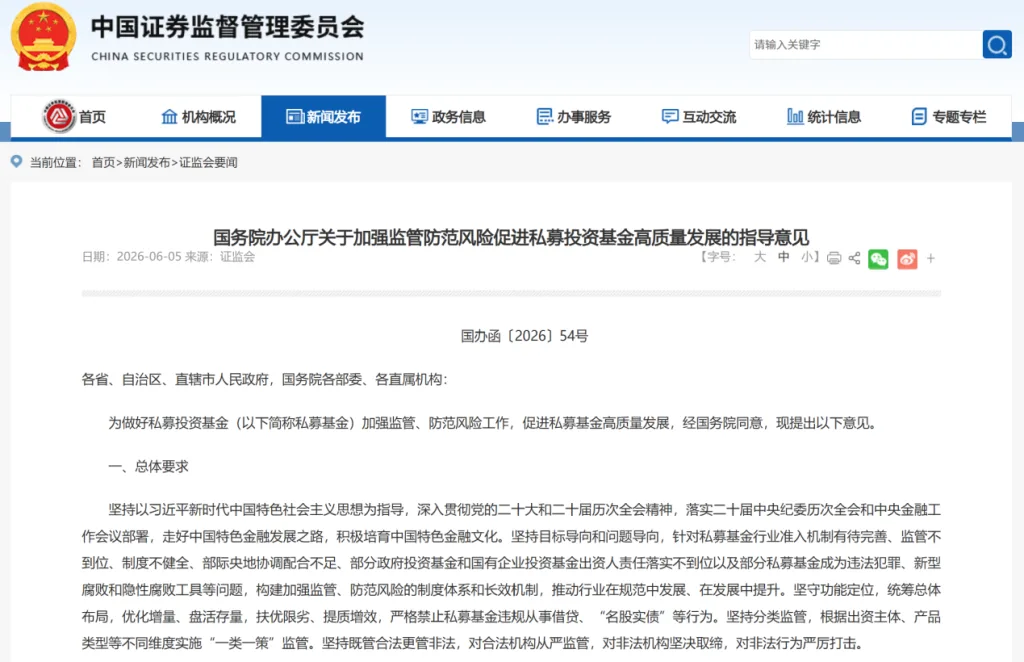
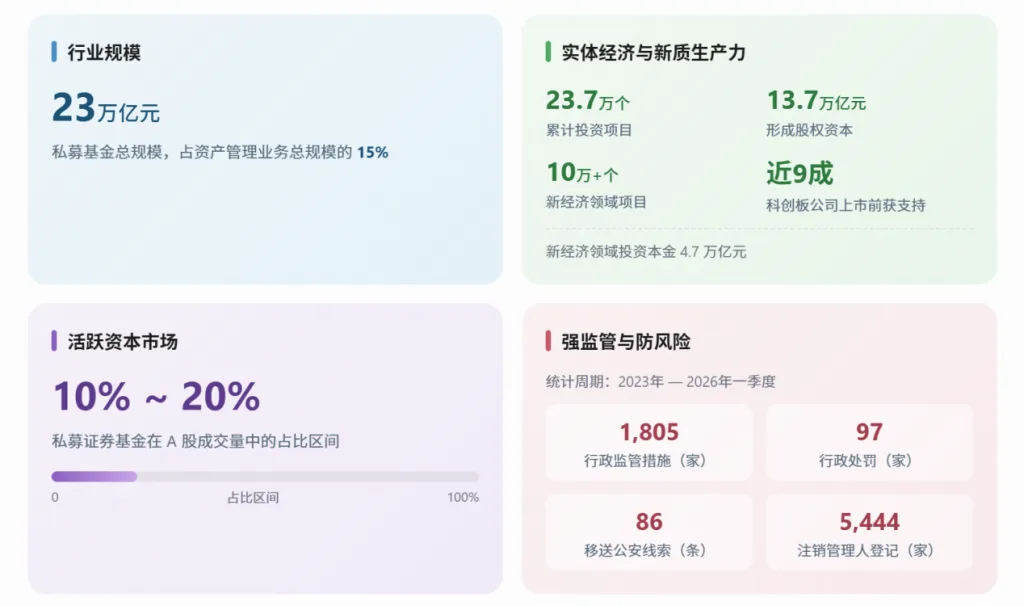
On June 5, 2026, the General Office of the State Council issued the Guiding Opinions on Strengthening Supervision, Preventing Risks, and Promoting High-Quality Development of Private Equity Investment Funds (State Council Letter [2026] No. 54, hereinafter referred to as "Decree 54").
As the top-level charter governing China's "1+N+X" private equity regulatory framework, Decree 54 marks the end of wild expansion and ushers in an era of stringent, high-quality institutional compliance.
Core Structural Shifts at a Glance:
Market Entry Control: Prequalification screening by provincial regulators is now a mandatory prerequisite prior to corporate registration.
Valuation Adjustment Mechanism (VAM) Governance: Introduces the first-ever top-level regulatory restriction on VAM and Earn-out agreements, cracking down on disguised debt and rigid redemptions.
State Capital Scrutiny: Strictly bans county-level governments from establishing redundant new government funds, prohibiting state-owned enterprises (SOEs) from off-spectrum cross-industry investments.
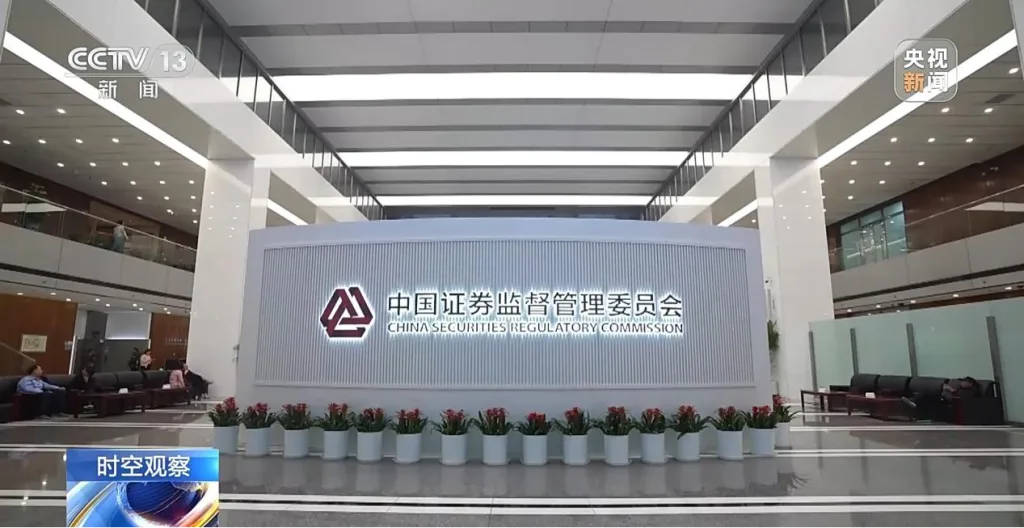
(source:CCTV 13)
I. Regulatory Restructuring: Rebalancing Administrative Enforcement and Self-Regulation
Decree 54 establishes a dual-tier governance system that explicitly segregates administrative enforcement from industry self-regulation:
Legacy Model: Heavy reliance on Asset Management Association of China (AMAC) self-regulation, resulting in limited deterrence over unregistered entities.
Decree 54 Model: China Securities Regulatory Commission (CSRC) and its regional offices act as administrative gatekeepers for entry checks, investigations, and penalties, supported by AMAC for frontline daily monitoring, filings, and self-disciplinary reviews.
By placing administrative oversight at the forefront, compliance obligations transition from mere industry association rules to binding statutory duties. Continued compliance is now the absolute legal precondition for fund managers to operate in mainland China.
Attorney's Compliance Note:
Existing fund managers should establish a dual-line compliance protocol connecting both the CSRC and AMAC. Shift internal compliance priorities from formality-based initial filing reviews to full-lifecycle ongoing operational control. Fund managers should proactively build audit-response mechanisms for sudden regulatory inquiries and on-site inspections.
(Official release and regulatory bulletin on private equity oversight guidelines issued by the China Securities Regulatory Commission. Source: CSRC)
II. Gatekeeping at Market Entry: Mandatory Joint Prequalification Screening
Under Section II of Decree 54, any entity seeking to register as a private equity fund manager—or planning to include private equity or venture capital terminology in its corporate name or business scope—must complete a joint prequalification screening by the provincial financial regulatory authority and local CSRC office before applying for market regulation registration.
Registration Procedure Framework:
Apply for Joint Prequalification Screening through the Provincial Authority and Local CSRC.
Upon prequalification approval, proceed to Market Regulation Corporate Registration.
General "Investment Management", "Asset Management"
No
Standard Market Regulation Corporate Registration
Attorney's Compliance Note:
Prospective fund managers must factor in an additional 1 to 3 months for prequalification screening. Applications require complete transparency regarding ultimate beneficial owners (UBOs), actual controllers, capital contribution capabilities, and risk control systems.
III. Custody System Upgrade: Full-Coverage Mandatory Custody Execution
Decree 54 mandates the creation of unified, mandatory fund custody regulations across all PE structures. The regulatory threshold for custody exemptions has shrunk considerably:
Contractual Securities Funds: Mandatory custody applies across all structures.
PE & VC Funds: Mandatory custody applies to all contractual structures, Special Purpose Vehicle (SPV) investments, and fund expansion products.
Attorney's Compliance Note:
Audit all active non-custodial funds within your portfolio immediately. Distinguish between legally exempted products and non-compliant structures requiring remediation. For newly established funds, embed qualified custodian institutions during the initial structural design phase to establish unambiguous cash-sweep and oversight covenants.
IV. Refining Equity Investments: Dual Regulation of VAM Agreements
For the first time, a State Council policy explicitly mandates the creation of specialized regulatory rules governing Valuation Adjustment Mechanisms (VAM / Earn-out agreements).
Going forward, VAM terms in PE/VC deals will be governed by two independent, parallel legal frameworks:
Civil & Judicial Review: Governed by Supreme People's Court judicial guidelines evaluating corporate law feasibility and capital maintenance principles.
Administrative Regulation (Decree 54): Strictly prohibiting VAMs structured to guarantee returns ("rigid redemption"), disguise debt as equity, or bypass leverage limits.
Attorney's Compliance Note:
Review all existing portfolio VAM provisions and classify them into strategic remediation categories:
Maintain: Commercial performance adjustments and legitimate shareholder-level compensation arrangements that comply with capital maintenance.
Amend or Excise: Unenforceable target-company buybacks, guaranteed return provisions, and rigid repurchase clauses that risk being recharacterized as illegal debt disguised as equity.
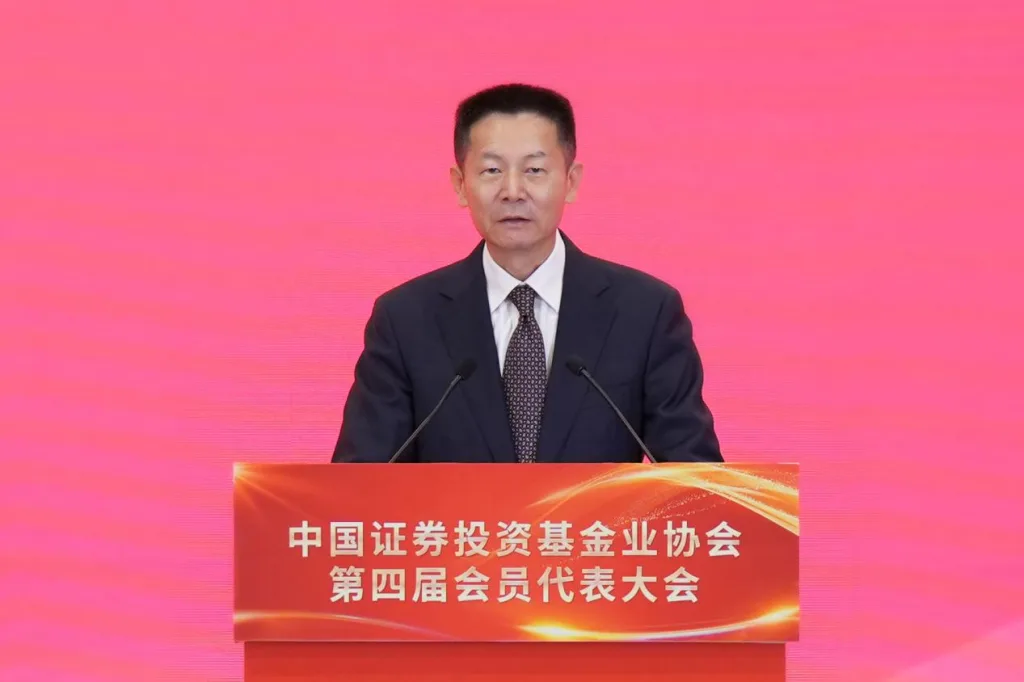
(CSRC Chairman Wu Qing delivering an opening address at the 4th Member Representative Congress of the Asset Management Association of China. Source: CSRC)
V. Tightening State-Owned and Government Fund Participation
Decree 54 imposes strict parameters on state-backed capital commitments:
Government Investment Funds: County and district-level governments are principally prohibited from launching new government investment funds. Exceptions require approval from higher-level municipal or provincial governments. Functional overlaps across funds are eliminated, and disguised debt raising or guaranteed returns are strictly illegal.
State-Owned Enterprise (SOE) Capital: SOE fund investments must align tightly with the enterprise's core operational mandate. SOEs are barred from cross-industry non-core investments, pure conduit operations, and non-compliant real estate funding.
Attorney's Compliance Note:
Shift fundraising priorities toward established provincial and municipal guidance funds. When partnering with SOE capital, conduct formal core business alignment reviews beforehand to ensure all transaction documents are stripped of guaranteed return terms.
VI. Closed-Loop Risk Cleanup & Digital Supervision
Decree 54 institutes a centralized digital monitoring platform that aggregates data across corporate registries, fund filings, bank custody, and judicial records to enable full-scope look-through enforcement:
Fund Manager Phase-Out: Entities involved in major illegalities will have their registrations revoked directly. Dormant ("shell"), abnormal, or untraceable managers will face strict time-bound rectification or cancellation.
Commercial Entity Phase-Out: Entities holding private equity designations in their business scope without actual operational capacity will have their business licenses revoked by market regulation authorities.
Conclusion & Strategic Action Plan
With the release of Decree 54, detailed departmental rules addressing information disclosure, fundraising, custody, VAM terms, and state capital will be rolled out rapidly. Compliance is no longer an operational cost—it is the foundational license to operate. Fund managers and institutional investors should immediately initiate comprehensive internal compliance audits to navigate this regulatory transition safely.
(Official data presentation from the State Council press conference detailing the implementation metrics and timeline for Decree No. 54. Source: CSRC Press Briefing)
Disclaimer & Copyright: This article is co-authored by Mandy Wu and Yu Yuting. The insights shared are for general compliance trends only and do not constitute formal legal advice.As a specialized cross-border legal institution, Neo-Ark Law Firm provides comprehensive global compliance and rights-protection support for expanding enterprises. For more international legal updates, please visit the Neo-Ark Law Firm Official Websites (https://www.neoarklawyers.com/news).
A foreign-related inheritance dispute arose after the death of an individual who left no will or testamentary arrangement.
The deceased had three daughters as first-order statutory heirs. One daughter initiated inheritance proceedings, claiming a one-third share of the assets.
Representing the other two heirs, Yu Yuting of NEO-ARK Law Firm challenged the scope of the claimed estate, arguing that certain amounts included by the claimant were not inheritance assets but instead involved compensation payments, funeral expenses, or funds held by third parties.
The court ultimately confirmed the actual estate subject to inheritance division and adopted the legal position that non-estate assets and disputed third-party funds should not be included in the inheritance distribution.
Case Snapshot
Item
Details
Practice Area
Foreign-Related Inheritance Law
Case Type
Estate Distribution Dispute
Client
Two Legal Heirs
Jurisdiction
China
Core Issue
Definition of Estate Assets
Key Issue
Whether Compensation Payments and Third-Party Held Funds Form Part of the Estate
Lead Lawyer
Yu Yuting / Li Wanjun
Law Firm
NEO-ARK Law Firm
Client's Situation
The dispute developed as follows:
1. Death Without a Will
The deceased passed away without leaving a will or inheritance agreement.
Under Chinese statutory inheritance rules, the deceased's three daughters were first-order legal heirs.
2. Inheritance Claim
One daughter filed a lawsuit requesting division of the deceased's assets and claimed a one-third inheritance share.
3. Dispute Over Estate Scope
The defendants, represented by NEO-ARK Law Firm, disagreed with the claimed estate amount.
They argued that certain claimed assets included:
Death-related compensation payments;
Funeral expenses;
Funds withdrawn or held by a third party;
Assets involving separate ownership disputes.
4. Legal Representation
The legal team focused on identifying which assets legally qualified as inheritance property and which should be excluded from estate distribution.
Legal Strategy
Strategy
Purpose
Investigate the deceased's financial assets
Identify the actual estate available for inheritance
Distinguish estate and non-estate assets
Prevent improper inclusion of compensation payments and other funds
Challenge third-party held funds
Clarify that separate ownership disputes should not be decided within inheritance proceedings
Present legal analysis before the court
Protect the legitimate inheritance interests of the clients
Key Legal Issues
1. Are Compensation Payments and Funeral Expenses Part of the Estate?
The legal team argued that certain payments issued after death were not the deceased's personal property.
Death-related compensation and funeral expenses are generally intended to provide financial support and assistance to close relatives rather than constitute assets owned by the deceased at the time of death.
Therefore, such payments should not automatically be included in inheritance distribution.
2. Should Third-Party Held Funds Be Divided in an Inheritance Case?
Certain funds had been withdrawn or held by a third party after the deceased's death.
The legal team argued that these funds involved separate ownership issues and should not be directly handled through inheritance proceedings without independent determination of ownership.
Outcome
After reviewing the evidence and legal arguments, the court determined that:
Bank deposits of approximately RMB 2.3 million and AUD 1,000 constituted inheritance assets;
The three daughters were each entitled to one-third of the confirmed estate;
The claimant's other requests were dismissed.
The court accepted the legal position presented by NEO-ARK Law Firm regarding the distinction between inheritance assets and non-estate property.
Why This Case Matters
Inheritance disputes often involve more than simply dividing assets.
The most important question is usually:
What assets legally belong to the estate?
This case demonstrates that accurate classification of assets is essential in inheritance proceedings.
Compensation payments, funeral-related funds, and assets controlled by third parties may have different legal characteristics from ordinary personal property and should not automatically be included in inheritance distribution.
For overseas Chinese families and individuals with assets in China, professional legal analysis is particularly important where inheritance involves multiple jurisdictions, family members, or unclear asset ownership.
Frequently Asked Questions
Are all assets received after someone's death considered inheritance?
No.
Only assets legally owned by the deceased at the time of death generally form part of the estate. Certain compensation payments or benefits may have different legal purposes and may not be inheritance property.
Are funeral expenses and death compensation divided among heirs?
Not necessarily.
Their legal nature must be examined separately. Some payments are intended for specific purposes or specific beneficiaries rather than estate distribution.
Can disputed funds held by another person be handled in an inheritance lawsuit?
It depends on the nature and ownership of the funds.
Where ownership itself is disputed, the court may require separate legal proceedings rather than deciding the issue directly within inheritance distribution.
Key Takeaways
The first step in an inheritance dispute is identifying the true estate.
Not all post-death payments are inheritance assets.
Third-party held funds may require separate ownership analysis.
Proper asset investigation can significantly affect inheritance outcomes.
Professional legal advice is essential in complex or foreign-related inheritance matters.
About the Author
Yu Yuting Partner | NEO-ARK Law Firm
LawyerYu focuses on foreign-related litigation, cross-border disputes, commercial matters, and legal services for overseas individuals and businesses in China.
NEO-ARK Law Firm provides legal services in foreign-related litigation, commercial disputes, family law, and cross-border legal matters, assisting both international and domestic clients throughout China.
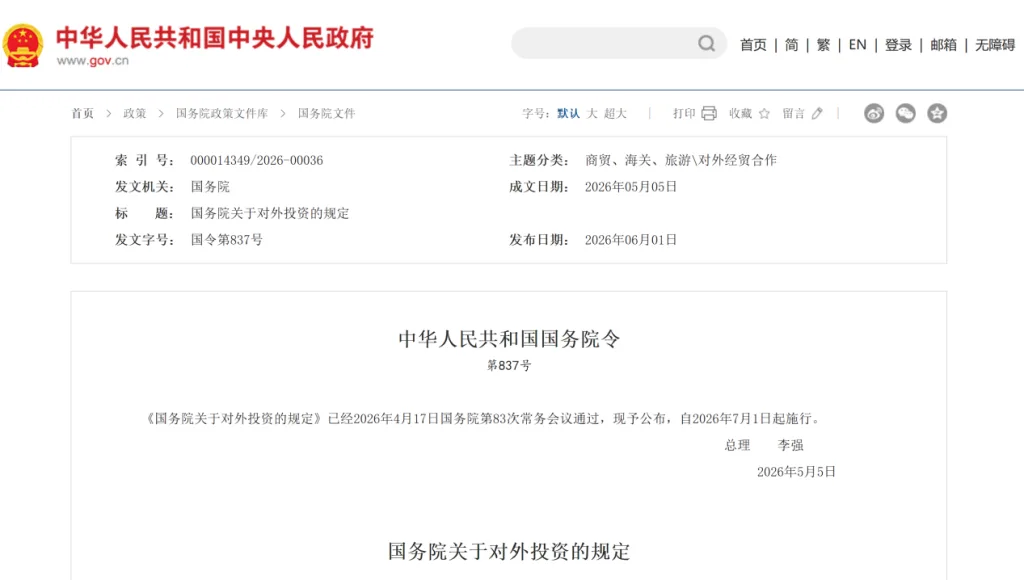
On June 1, 2026, the State Council officially promulgated the Regulations on Outbound Investment (State Council Decree No. 837, hereinafter referred to as the "Regulations"), which will take effect on July 1, 2026.
(A view of the State Council administrative updates. Source: Beijing Web TV)
As the first systematic administrative regulation enacted by the State Council in the field of outbound direct investment (ODI), this landmark regulation consolidates previously scattered departmental rules from the National Development and Reform Commission (NDRC), the Ministry of Commerce (MOFCOM), and other authorities. It establishes a comprehensive framework covering outbound investment services, administration, and protection, marking a milestone in the development of China’s outbound investment regime.
Previously, outbound investments were governed by NDRC's "Decree No. 11" and various foreign exchange regulations under the State Administration of Foreign Exchange (SAFE). How does this new framework differ? This article analyzes the core shifts, compliance priorities, and practical impact on cross-border business based on the official text and practical experience.
(The official release portal of the Central People's Government of the People's Republic of China. Source: gov.cn)
I. Regulatory Shifts: 6 Key Upgrades Under the New Framework
1. Individual Investors Officially Regulated
Individual investors who hold overseas assets through Special Purpose Vehicles (SPVs) or nominee holding structures (trust arrangements) are now officially brought under unified regulatory supervision.
Attorney’s Note: While detailed implementation guidelines are pending, individuals holding overseas assets should closely monitor regulatory updates and evaluate whether their existing offshore holding structures require compliance adjustments.
2. Dual Oversight Expands to Quadruple Supervision
The old approval process primarily focused on NDRC and MOFCOM filings. The new framework introduces a comprehensive four-pronged oversight mechanism:
Cross-Border Capital Checks (Foreign Exchange/SAFE & Commercial Banks)
National Security Reviews (Multilateral security screening on strategic assets)
Information Reporting & Joint Disclosures (Post-investment compliance monitoring)
Attorney’s Note: The National Security Review is an independent screening procedure. It does not rely on, nor is it bypassed by, standard NDRC or MOFCOM filings. Involved entities and individuals are legally obligated to cooperate and must not block or reject official inquiries.
3. Clear Boundaries for Export Control and Data Compliance
For the first time, outbound investment regulations explicitly mandate export control compliance.
Attorney’s Note: Enterprises deploying staff abroad, sharing proprietary technology, or engaging in transnational training must conduct dual-compliance reviews under the Export Control Law and the Regulations on Export Control of Dual-Use Items. While the "Sensitive Industry Directory" awaits updates, emerging sectors like AI infrastructure, quantum computing, 6G communications, biometrics, and strategic minerals are heavily scrutinized in practice. Projects in these areas require comprehensive risk assessments regardless of transaction size.
4. Strict Penalties for Unapproved Outbound Investments
The regulatory cost of non-compliance has escalated dramatically.
Practical Example: For an outbound investment of RMB 100 million, failure to complete timely filing procedures can lead to a confiscation of illegal gains and administrative fines ranging from RMB 100,000 to RMB 500,000. For severe violations, the fine ceiling reaches RMB 1 million, accompanied by a ban on processing new applications or participating in outbound investments for 1 to 3 years.
5. Personal Accountability: The Dual-Punishment System
Corporate violations now carry personal consequences. Regulatory penalties will target both the corporate entity and the responsible decision-makers.
Attorney’s Note: Signing directors, Chief Financial Officers (CFOs), and General Counsels can face direct personal administrative liability if an enterprise violates these regulations. Executives must proactively verify outbound compliance before authorizing transactions.
6. Crackdown on Fraudulent Filings and Illegal Activities
The Regulations strictly prohibit using fraudulent documentation to obtain approvals, or using outbound investments to facilitate illegal capital flight, tax evasion, or money laundering.
Attorney’s Note: If an outbound project is found to be a sham structured to move domestic capital offshore, the ODI Certificate will be revoked, exposing the parties to civil, tax, and criminal liabilities. The cross-departmental coordination between this regulation, anti-money laundering (AML) frameworks, and the Common Reporting Standard (CRS) should be carefully monitored.
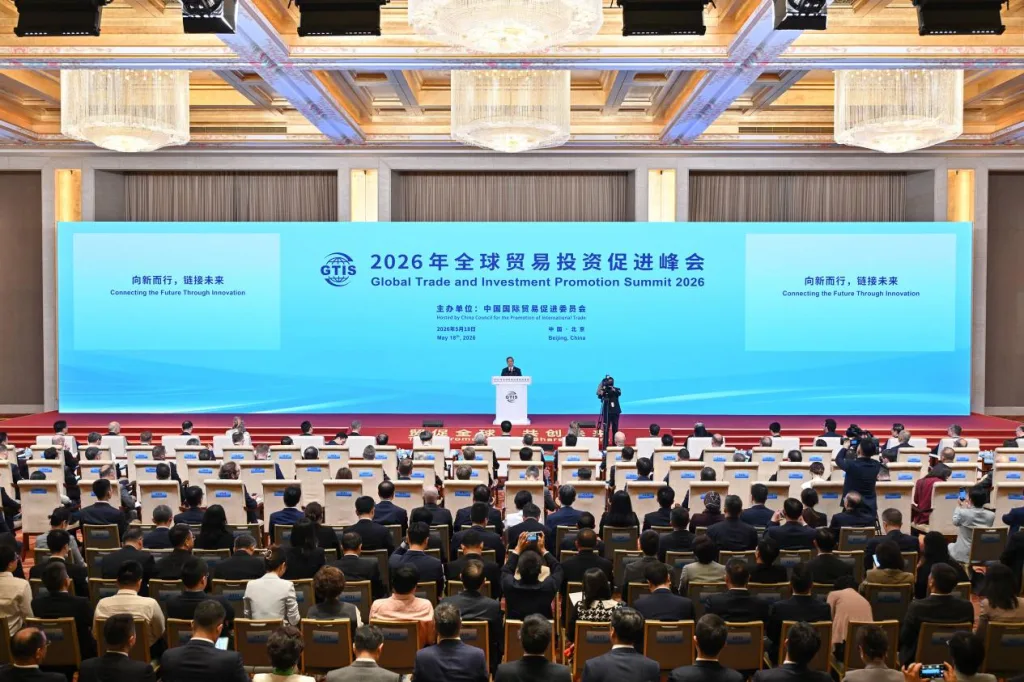
(Outbound investment and trade developments driving global industrial growth and bilateral partnerships. Source: Xinhua News Agency)
II. High-Risk Areas and Most Affected Business Categories
1. High-Priority Corporate Categories
Existing Outbound Enterprises: Companies with existing offshore entities, active overseas operations, or foreign equity investments.
Prospective Outbound Enterprises: Businesses planning offshore acquisitions, capital increases, or establishing new foreign entities in the second half of 2026.
Sensitive Sector Enterprises: Entities operating in high-risk jurisdictions, cross-border finance, advanced technology, or strategic natural resources.
2. High-Risk Business Activities
Retroactive Filings ("Invest First, File Later"): Formerly a common workaround, this practice is now prohibited and subject to immediate administrative penalties.
Non-Core Large-Scale Investments: Transnational financial investments or cross-industry acquisitions unrelated to the company's core business will face strict scrutiny.
Incomplete Portfolios for Existing Projects: Active overseas projects with missing corporate records, outdated financials, or incomplete risk reporting.
Investments in Sensitive Regions/Industries: Proposed projects in high-risk jurisdictions or restricted sectors will experience lower approval rates and prolonged review cycles.
3. Common Compliance Pitfalls
Individual Offshore Holdings: Founders holding overseas assets through offshore SPVs or proxy structures risk triggering compliance audits.
High-Tech Enterprises: Cross-border research centers, technology licensing, and global data transfers are subject to overlapping export control and data security reviews.
Unreported Tier-2 Reinvestments: Making down-stream investments via existing offshore subsidiaries without completing corresponding filing procedures can lead to retroactive penalties.
Cross-Border Litigation Data Risks: Transferring internal corporate data or documents abroad for foreign litigation or arbitration without verifying data residency can violate domestic confidentiality laws.
III. The Essential Outbound Compliance Checklist
1. Action Items for Enterprises
Structure Audit: Map out all existing offshore investment structures (including indirect holdings through SPVs or VIE structures) to ensure all projects are fully registered and approved.
Export & Data Audit: Review international business operations for controlled technologies or sensitive data transfers, and evaluate compliance with current export control regulations.
Directory Tracking: Monitor upcoming releases of the "Encouraged, Restricted, and Prohibited Outbound Investment Directory" by the NDRC and MOFCOM to evaluate project feasibility.
Internal Controls: Upgrade corporate governance policies, establish clear authorization limits for outbound investments, and define liability lines to safeguard executives.
2. Action Items for Individual Investors
Asset Structuring: Assess current personal holdings of foreign equity, real estate, and financial portfolios to evaluate whether supplementary disclosures or structural modifications are necessary.
Offshore SPV Reviews: Closely track the forthcoming implementation details concerning individual ownership of overseas assets through SPVs.
Immigration and Real Estate Planning: Re-align cross-border wealth management, immigration setups, and global property acquisitions with the new compliance standards.
IV. Crucial Provisions for Outbound Enterprises
Applicability to Hong Kong, Macao, and Taiwan: Investments in Hong Kong, Macao, and Taiwan are managed with reference to these Regulations. This explicitly includes structures established for Hong Kong IPOs or holding platforms set up in Hong Kong.
Indirect Outbound Investment Cover: The Regulations cover "indirectly acquiring ownership or control of enterprises or assets in other countries or regions." Investments routed through multi-layered overseas subsidiaries remain subject to domestic regulation.
Financing and Guarantees Classified as ODI: Providing financial assistance or guarantees to offshore entities is officially categorized as outbound investment. Issuing shareholder loans or corporate guarantees to overseas affiliates without proper regulatory filings constitutes a compliance violation.
Diplomatic and Consular Protection: Article 20 outlines the consular protection responsibilities of overseas diplomatic missions, and Article 23 establishes a mechanism to counter foreign investment barriers, offering compliant enterprises a reliable legal shield abroad.
Conclusion
A robust rule-of-law framework is the foundation of a healthy business environment. High-standard administrative regulations impose strict compliance duties, but they also provide a safer, more predictable landscape for outbound businesses. If you are advancing an overseas investment or planning global expansion, we recommend using the pre-implementation transition window to audit your processes, mitigate compliance risks, and secure long-term operational stability.
Disclaimer & Copyright: This article is co-authored by Mandy Wu and Yu Yuting. The insights shared are for general compliance trends only and do not constitute formal legal advice.As a specialized cross-border legal institution, Neo-Ark Law Firm provides comprehensive global compliance and rights-protection support for expanding enterprises. For more international legal updates, please visit the Neo-Ark Law Firm Official Websites (https://www.neoarklawyers.com/news).