
News

News

Inclusion ▪ Respect ▪ Professionalism ▪ Excellence

Overview

This case arose from the international transportation of commercial lighting products from China to Amazon Fulfilment by Amazon (FBA) warehouses in the United States.

During the COVID-19 pandemic, Amazon warehouses no longer issued traditional signed or stamped Proof of Delivery (POD) documents. Relying on the absence of a signed POD, the customer refused to pay the outstanding freight charges and filed a counterclaim alleging that the goods had never been delivered.

Representing the carrier, Yu Yuting, Attorney at NEO-ARK Law Firm, reconstructed the overseas delivery process using electronic logistics records, overseas delivery documents, and official Amazon communications. The court accepted the evidence, confirmed that the carrier had fully performed its contractual obligations, and upheld the client's claim in full.

Case Snapshot

ItemDetails
Practice AreaInternational Trade & Logistics Disputes
Case TypeMultimodal Transport Contract Dispute
Cross-Border ElementChina – United States
ClientInternational Freight Carrier
DestinationAmazon Fulfilment by Amazon (FBA) Warehouses, United States
Core Legal IssueRecovery of Freight Charges Without a Signed Proof of Delivery (POD)
Lead LawyerYu Yuting / Li Qikang
Law FirmNEO-ARK Law Firm

Client's Situation

The dispute developed through the following stages.

1. Cross-Border Transportation

The client arranged multimodal transportation of commercial lighting products from China to multiple Amazon FBA warehouses in the United States.


2. Operational Changes During the Pandemic

During the COVID-19 pandemic, Amazon adjusted its warehouse receiving procedures and no longer provided traditional signed or stamped POD documents for many deliveries.


3. Payment Dispute

The customer argued that, without a signed POD, the carrier could not prove delivery and therefore refused to pay the outstanding freight charges.

The customer also filed a counterclaim seeking compensation.


4. Legal Representation

The client instructed NEO-ARK Law Firm to recover the unpaid freight charges and defend against the counterclaim.


Legal Strategy

StrategyPurpose
Reconstruct the delivery processDemonstrate that the goods reached the designated Amazon FBA warehouses
Collect overseas delivery evidenceReplace the missing signed POD with a complete evidence chain
Verify Amazon's operational practicesExplain why signed PODs were unavailable during the pandemic
Defend against the counterclaimRefute allegations of non-delivery and contractual breach


Outcome

The court found that the carrier had successfully completed delivery despite the absence of a traditional signed POD.

Based on the evidence presented, the court:

  • Ordered payment of all outstanding freight charges;
  • Awarded interest calculated at four times the applicable Loan Prime Rate (LPR);
  • Rejected the customer's counterclaim in full;
  • Ordered the customer to bear the preservation costs and all litigation expenses.

Why This Case Matters

Cross-border logistics between China and the United States increasingly depends on digital records rather than traditional paper documentation.

This case demonstrates that the absence of a signed Proof of Delivery (POD) does not automatically prevent a carrier from proving successful delivery. When electronic logistics records, overseas delivery documents, platform communications, and tracking information form a complete and reliable evidence chain, they may be sufficient to establish contractual performance before a Chinese court.

For freight forwarders, logistics companies, exporters, and cross-border e-commerce businesses, preserving digital evidence is now just as important as transporting the goods themselves.


Frequently Asked Questions

Is a signed POD always required to recover freight charges?

No.

A signed POD is important evidence, but it is not the only way to prove delivery. Courts may accept other reliable evidence that establishes the goods reached the agreed destination.


Does Amazon FBA always provide a signed POD?

Not necessarily.

During the COVID-19 pandemic, many Amazon FBA warehouses relied on electronic receiving procedures rather than issuing traditional signed or stamped delivery receipts.


Can electronic logistics records be used as evidence?

Yes.

Electronic PODs, logistics tracking records, shipping documents, emails, and platform communications may all be used to establish successful delivery when considered together.


Key Takeaways

  • A missing signed POD does not automatically prevent recovery of freight charges.
  • Electronic logistics records can be strong evidence of contractual performance.
  • A complete evidence chain is often more persuasive than a single document.
  • Early legal advice helps reduce risks in international logistics disputes.

About the Author

Yu Yuting
Partner | NEO-ARK Law Firm

Lawyer Yu focuses on foreign-related litigation, cross-border disputes, commercial matters, and legal services for overseas individuals and businesses in China.

Email: [email protected]

About NEO-ARK Law Firm

NEO-ARK Law Firm provides legal services in foreign-related litigation, commercial disputes, family law, and cross-border legal matters, assisting both international and domestic clients throughout China.


Overview

A South Korean company established a wholly owned subsidiary in Xi'an, China, to operate in the semiconductor industry.

Although the subsidiary appeared to satisfy the substantive requirements for China's preferential tax policies applicable to qualifying semiconductor enterprises, it failed to complete the required annual filing procedures and was not included on the official list of eligible enterprises for the following tax year.

The company engaged Yu Yuting, Attorney at NEO-ARK Law Firm, to assess the legal consequences of the missed filing, evaluate possible remedial measures under Chinese law, and develop a cross-border tax strategy designed to minimise the group's overall global tax burden.

Case Snapshot

ItemDetails
Practice AreaCross-Border Tax Advisory
Case TypeTax Incentive Compliance
Cross-Border ElementSouth Korea – China
ClientSouth Korean Company
IndustrySemiconductor (Integrated Circuit)
Core Legal IssueLoss of Tax Incentives Due to Missed Compliance Filing
Lead LawyerYu Yuting / Li Chengwan
Law FirmNEO-ARK Law Firm

Client's Situation

The matter developed through the following stages.

1. Investment in China

The client established a wholly owned subsidiary in Xi'an, China, to conduct business in the semiconductor industry.


2. Qualification for Preferential Tax Policies

Based on the applicable national policies, the subsidiary appeared to meet the substantive requirements for preferential tax treatment available to qualifying enterprises.


3. Missed Annual Compliance Filing

The company did not complete the required annual filing procedures or apply for inclusion on the official list of eligible enterprises within the prescribed deadline.


4. Loss of Preferential Tax Treatment

As a result, the subsidiary was unable to enjoy the relevant tax incentives for the following tax year.


5. Cross-Border Tax Advisory

The client sought legal advice on available administrative options in China and on cross-border tax planning aimed at reducing its worldwide tax exposure.


Legal Strategy

StrategyPurpose
Review China's tax incentive policiesAssess whether the company met the substantive eligibility requirements
Analyse compliance obligationsIdentify the legal impact of the missed filing
Review applicable international tax treatiesEvaluate available cross-border tax planning opportunities
Coordinate with overseas tax advisersDevelop an integrated global tax strategy
Assess available administrative remediesDetermine practical options under Chinese law


Outcome

Following the legal review, the client obtained a comprehensive assessment of its legal position and the available options under Chinese law.

The advisory work provided practical guidance on potential administrative remedies, cross-border tax treaty considerations, and coordinated international tax planning, enabling the client to evaluate the most commercially appropriate strategy for reducing its overall global tax burden.


Why This Case Matters

Many foreign-invested enterprises assume that qualifying for China's tax incentives is sufficient to secure preferential tax treatment.

In practice, continued eligibility often depends on ongoing compliance with administrative filing requirements and government procedures.

This case demonstrates that tax compliance involves more than meeting the substantive legal criteria. For multinational businesses operating in China, timely legal review and coordinated international tax planning can play an important role in preserving tax benefits and managing global tax exposure.


Frequently Asked Questions

Can South Korean companies qualify for China's tax incentives?

Yes.

Foreign-invested enterprises, including South Korean companies, may qualify for various preferential tax policies in China if they satisfy the relevant legal and regulatory requirements.


What happens if a company misses a required tax incentive filing?

The consequences depend on the applicable regulations and administrative practice. In some situations, supplementary procedures or other remedial measures may be available, but prompt legal and tax advice is essential.


Why should multinational companies consider international tax treaties?

Cross-border tax treaties and foreign tax credit mechanisms may affect the group's overall tax position. Coordinating Chinese tax compliance with international tax planning can help reduce worldwide tax exposure.


Key Takeaways

  • Tax incentives require both substantive eligibility and procedural compliance.
  • Missing an administrative filing deadline may affect access to preferential tax treatment.
  • Cross-border tax planning should combine Chinese law with international tax considerations.
  • Early legal advice may help identify available options and reduce global tax risk.

About the Author

Yu Yuting
Partner | NEO-ARK Law Firm

Lawyer Yu focuses on foreign-related litigation, cross-border disputes, commercial matters, and legal services for overseas individuals and businesses in China.

Email: [email protected]

About NEO-ARK Law Firm

NEO-ARK Law Firm provides legal services in foreign-related litigation, commercial disputes, family law, and cross-border legal matters, assisting both international and domestic clients throughout China.

On June 13, 2026, the Guangdong Digital Jurisprudence Society successfully completed its leadership transition and election process.

Leveraging her deep professional expertise in data compliance and digital law alongside her exceptional clinical legal practice, Attorney Yu Yuting of our firm has been officially reappointed as a Council Director to the 3rd Council of the Guangdong Digital Jurisprudence Society.

I. Embracing the Digital Era: Advancing Frontier Compliance

As the global digital economy continues to expand, frontier legal issues such as data security, cross-border data flows, and artificial intelligence regulations are becoming increasingly critical.

The Guangdong Digital Jurisprudence Society serves as the province's premier platform for theoretical digital law research and practical innovation, bringing together top-tier academic experts, scholars, and leading legal practitioners from across China.

II. Translating Digital Legal Theory into Business Solutions

Since her initial appointment as Council Director, Attorney Yu Yuting has consistently worked at the intersection of digital legal research and practical client services.

During her tenure, she has remained at the forefront of digital transformation:

  • Actively participating in high-level academic symposiums.
  • Conducting in-depth research on corporate digital governance.
  • Pioneering practical legal strategies for cross-border data compliance and the financial assetization of intellectual property.
  • Devoting her practice to translating academic theories into practical, risk-mitigating compliance solutions for enterprise clients.

III. Looking to the Future of Digital Law

This reappointment represents both a prestigious professional recognition and a renewed commitment to the field.

Attorney Yu Yuting stated that she will continue to bridge the gap between academic theory and practical legal application. Leveraging NEO-ARK Law Firm's integrated platform, she plans to focus on the localization and system innovation of digital law, contributing her expertise to the growth of the Society and the advancement of digital rule-of-law initiatives in Guangdong.

Disclaimer & Copyright: This article is co-authored by Mandy Wu and Yu Yuting. The insights shared are for general compliance trends only and do not constitute formal legal advice.As a specialized cross-border legal institution, Neo-Ark Law Firm provides comprehensive global compliance and rights-protection support for expanding enterprises. For more international legal updates, please visit the Neo-Ark Law Firm Official Websites (https://www.neoarklawyers.com/news).

I. Rules for Asset Division and Cross-Border Debt Under Chinese Jurisdiction

1. Jurisdiction and Practical Limits on Overseas Property Division

When handling international asset division, if a Chinese court applies Chinese law to resolve marital property disputes, it holds broad adjudicative authority. However, there are strict limits regarding what can realistically be enforced abroad due to conflict of laws, burden of proof, and sovereignty:

(Following multiple rounds of cross-border coordination, the defendant Yu Xiaodong appeared via video link from a Thai prison, and the Chinese court granted the divorce in the first-instance trial. Source: Chinanews.com)

  • Moveable vs. Immoveable Assets: For overseas moveable property (e.g., bank deposits, financial portfolios, corporate equity, vehicles), Chinese courts can directly adjudicate the split, ownership, or cash compensation—provided the parties supply sufficient evidence or reach a mutual agreement in court. Conversely, under Article 36 of the Law on the Application of Laws to Foreign-Related Civil Relations, real estate is governed by the lex situs (law of the place where the property is located). Consequently, mainstream Chinese judicial practice avoids directly splitting ownership of overseas real estate. Courts generally decline to adjust or process the physical title of foreign real property, choosing instead to determine equity shares, award cash compensation, or divide actual proceeds from a sale. If the status and valuation of the asset cannot be verified, courts typically decline to make a ruling.
  • Burden of Proof: Chinese courts do not have cross-border investigative powers. The existence, ownership, acquisition date, and market value of all overseas assets must be proved entirely by the parties themselves. Any document generated abroad (e.g., property deeds, bank statements, investment receipts) must be officially notarized locally, authenticated by the competent Chinese embassy or consulate, and accompanied by certified Chinese translations to be admissible.
  • Enforcement Constraints: A domestic court order dividing overseas assets is legally effective only within China. It cannot be directly executed by foreign authorities. Enforcement depends on bilateral treaties or mutual reciprocity with the destination state, which often involves procedural hurdles. If the destination state does not recognize the Chinese decree, parties must file a separate property division lawsuit in that local jurisdiction.

Key Takeaway on Property: Moveable property is dividable if verifiable or agreed upon; overseas real estate is subject to the principle of "no direct title division, compensation only". Strategically, you should resolve domestic assets first within the main divorce proceeding, handle overseas real property through offset compensations, and reserve unresolved foreign assets for separate local actions.

(The husband lost contact after going to the United States for work 8 years ago. The wife filed for divorce, and the court successfully resolved the case through online mediation via the smart court system. Source: China Peace Grid)

2. Strategic Management of Cross-Border Debt Risks
  • The Marital Status Loophole: An overseas divorce decree that has not been formally recognized by a Chinese court holds no legal effect inside mainland China. Legally, the parties remain married domestically. Consequently, newly acquired loans, mortgages, or credit liabilities may still be deemed community debt if they meet joint-liability standards.
  • Joint Debt Standards: Under Article 1064 of the Civil Code, joint marital debt requires joint signature, subsequent ratification, or proof that the funds were used for daily family needs. Unilateral, large-scale borrowing not used for family life or joint business remains personal debt.
  • Risk Warning: Do not take on substantial loans or act as a joint guarantor before an overseas divorce is officially recognized in China. Doing so risks exposing you to unexpected joint liability.

II. Recognition and Enforcement of Chinese Divorce Decrees Abroad

Once a Chinese court issues a divorce judgment or mediation decree, using it abroad (to divide foreign assets or to remarry) requires navigating the foreign jurisdiction's recognition and enforcement procedures.

The difficulty varies significantly by country. Monetary divisions (e.g., splitting savings or compensation) are widely recognized in jurisdictions like Canada, Australia, and Singapore. However, custody and visitation provisions often require a local de novo trial, as foreign courts exercise extreme caution regarding child welfare.

Core Principle: Recognition ≠ Enforcement

  • Recognition: The local foreign court formally acknowledges the legal status of the Chinese judgment (specifically, the fact that the marriage is dissolved).
  • Enforcement: The local court uses compulsory state measures (e.g., seizing bank accounts or real property) to execute the specific terms of the judgment.

III. Application Process for Foreign Recognition

Step 1: Document Preparation
  • The original Chinese divorce judgment or mediation decree.
  • An official certificate of effective judgment (proving the decree is final and binding).
  • An official translation of the documents into the official language of the executing country.
  • A formal application/petition for enforcement.
Step 2: Petition the Competent Foreign Court

File the petition with the local court where the assets or children are located. The foreign court will review the Chinese decree to ensure it does not violate local public policy or fundamental legal principles.

Step 3: Execute the Order

Once recognized, the foreign court will initiate enforcement actions, such as frozen bank assets or real estate foreclosures.

IV. Practical Legal Advice for Cross-Border Litigants

  • Coordinate Global Language Early: Inform your legal team immediately if your court documents need to be used overseas. This allows your attorneys to draft the settlement or proposed judgment with highly enforceable, clear-cut language (such as "a lump-sum offset of X Amount" rather than vague, ongoing custody and visitation terminology).
  • Budget Your Timeline: Expect the overseas recognition and enforcement process to take at least 6 months. Notarization, translation, legalization, and local judicial reviews take time.
  • Address Jurisdictional Discrepancies: Because countries apply different standards to property, debts, and child custody, any issues left unaddressed by your Chinese decree should be raised immediately with counsel in the foreign jurisdiction. This is particularly true for unallocated foreign assets, local child welfare benefits, or religious matrimonial requirements.

Conclusion

Cross-border divorces sit at the intersection of domestic family law, foreign civil procedures, and international judicial assistance. Because jurisdiction, service, global assets, and enforcement present highly technical hurdles, we recommend evaluating your domestic jurisdictional standing first. Secure your domestic assets and child custody arrangements within China, and systematically prepare your documents for foreign recognition to protect your global interests.

Disclaimer & Copyright: This article is co-authored by Mandy Wu and Yu Yuting. The insights shared are for general compliance trends only and do not constitute formal legal advice.As a specialized cross-border legal institution, Neo-Ark Law Firm provides comprehensive global compliance and rights-protection support for expanding enterprises. For more international legal updates, please visit the Neo-Ark Law Firm Official Websites (https://www.neoarklawyers.com/news).

Overview

A cross-border inheritance dispute arose between family members connected to Australia and China after the deceased passed away in China without leaving a will.

One of the three statutory heirs commenced legal proceedings seeking a one-third share of what she claimed to be the deceased's estate. However, the scope of the estate itself became the central issue.

Representing the other two heirs, Yu Yuting, Attorney at NEO-ARK Law Firm, successfully argued that several categories of property claimed by the plaintiff—including death compensation, funeral-related payments, and funds held by a third party—did not automatically form part of the estate under Chinese law.

The court accepted these arguments, clarified the legal boundaries of the estate, and confirmed the assets that were legally subject to inheritance.

Case Snapshot

ItemDetails
Practice AreaCross-Border Inheritance & Estate Disputes
Case TypeStatutory Inheritance
Cross-Border ElementAustralia – China
ClientTwo Legal Heirs
Core Legal IssueScope of Estate Assets
Key Legal QuestionAre compensation payments and third-party held funds part of the estate?
Lead LawyerYu Yuting / Li Wanjun
Law FirmNEO-ARK Law Firm

Client's Situation

The dispute developed through the following stages.

1. Death Without a Will

The deceased passed away in China without leaving a will or other succession arrangement.

Under Chinese inheritance law, the deceased's three daughters became the first-order statutory heirs.


2. Disagreement Over the Estate

One heir filed a lawsuit requesting distribution of the estate.

The defendants disputed not the inheritance rights themselves, but the assets included in the claimed estate.


3. Assets in Dispute

The plaintiff sought to include several categories of property, including:

  • Death compensation payments
  • Funeral expenses
  • Funds withdrawn or held by a third party
  • Other disputed assets

The defendants argued that these assets had different legal characteristics and should not automatically be treated as inheritance property.


4. Cross-Border Considerations

Because the family had connections with both Australia and China, identifying the estate accurately was particularly important for the administration of cross-border assets and inheritance rights.

Legal Strategy

StrategyPurpose
Investigate the deceased's financial assetsDetermine the actual estate available for inheritance
Identify estate and non-estate propertyPrevent assets with different legal status from being improperly divided
Analyse third-party held fundsClarify that ownership disputes should be resolved separately where appropriate
Present a structured legal analysisAssist the court in accurately defining the scope of the estate

Key Legal Issues

Are Death Compensation and Funeral Payments Part of an Estate?

A key issue was whether payments made after the deceased's death should be included in the estate.

The legal team argued that death compensation and funeral-related payments are generally intended to provide financial support and assistance to surviving family members rather than forming part of the deceased's personal property.

Accordingly, these payments should not automatically be divided as inheritance.


How Should Third-Party Held Funds Be Treated?

Certain funds had been withdrawn or retained by a third party after the deceased's passing.

The legal team argued that where ownership remains disputed, those issues should be resolved separately rather than being determined within inheritance proceedings.


Outcome

The court determined that only the deceased's verified bank deposits—including approximately RMB 2.3 million and AUD 1,000—formed part of the estate.

Each of the three statutory heirs was entitled to an equal one-third share of those assets.

The court rejected the plaintiff's remaining claims and accepted the defendants' legal arguments that compensation payments, funeral expenses, and disputed third-party funds should not automatically be included in the inheritance proceedings.


Why This Case Matters

One of the most common misunderstandings in inheritance disputes is that every asset connected to the deceased should automatically be divided among the heirs.

This case demonstrates that determining what legally forms part of the estate is often the most important issue.

For families with connections to Australia and China, inheritance matters frequently involve questions about estate identification, financial records, compensation payments, and assets held by third parties. Careful legal analysis can significantly affect both the inheritance process and the final distribution of assets.


Frequently Asked Questions

Can Australians inherit assets located in China?

Yes.

Australian citizens and Australian residents may inherit assets located in China. For assets situated in China, inheritance is generally governed by Chinese law, and local legal procedures must usually be completed before the assets can be distributed.


Are death compensation payments part of an estate?

Not necessarily.

Their legal nature depends on the applicable laws and the purpose of the payment. In many cases, compensation paid to surviving family members is treated differently from the deceased's personal property.


Can funds held by another person be decided in an inheritance lawsuit?

Not always.

Where ownership itself is disputed, the court may require those issues to be resolved separately rather than within the inheritance proceedings.


Key Takeaways

  • The first step in any inheritance dispute is identifying the true estate.
  • Not every payment made after death forms part of the estate.
  • Assets held by third parties may involve separate legal issues.
  • Cross-border inheritance requires careful coordination between legal systems and financial institutions.
  • Early legal advice helps avoid unnecessary disputes and protects the legitimate interests of all heirs.

About the Author

Yu Yuting
Partner | NEO-ARK Law Firm

Lawyer Yu focuses on foreign-related litigation, cross-border disputes, commercial matters, and legal services for overseas individuals and businesses in China.

Email: [email protected]

About NEO-ARK Law Firm

NEO-ARK Law Firm provides legal services in foreign-related litigation, commercial disputes, family law, and cross-border legal matters, assisting both international and domestic clients throughout China.

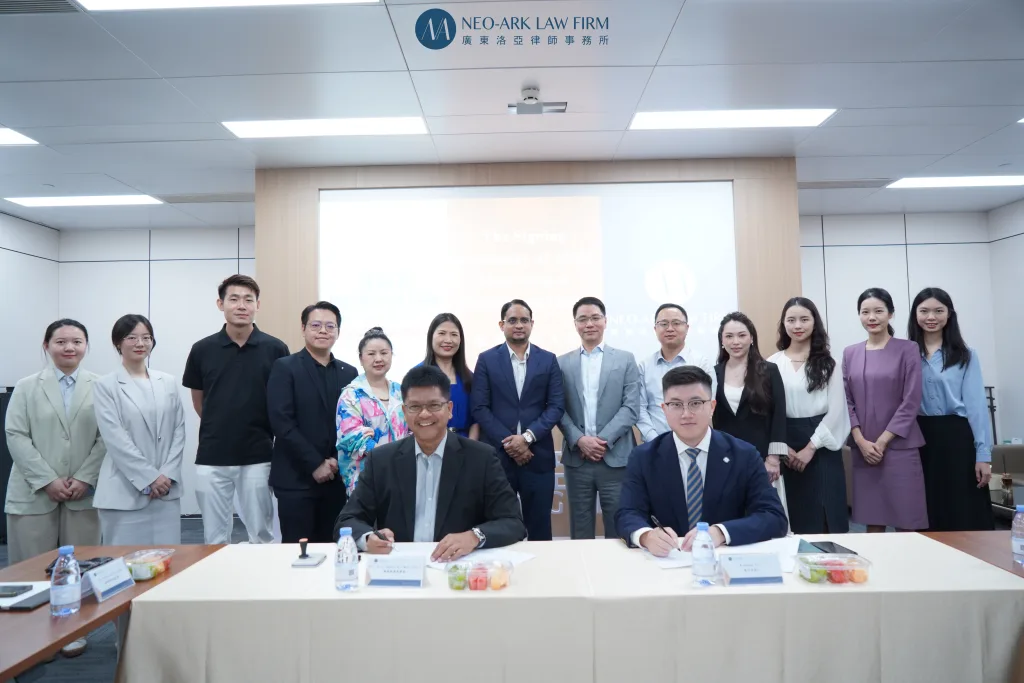
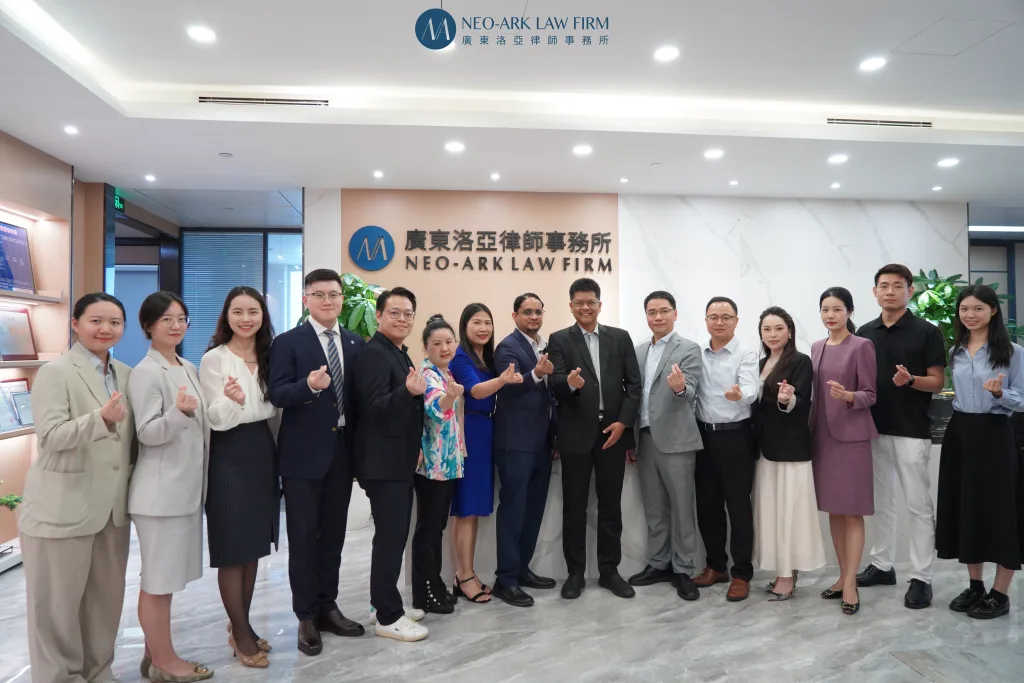
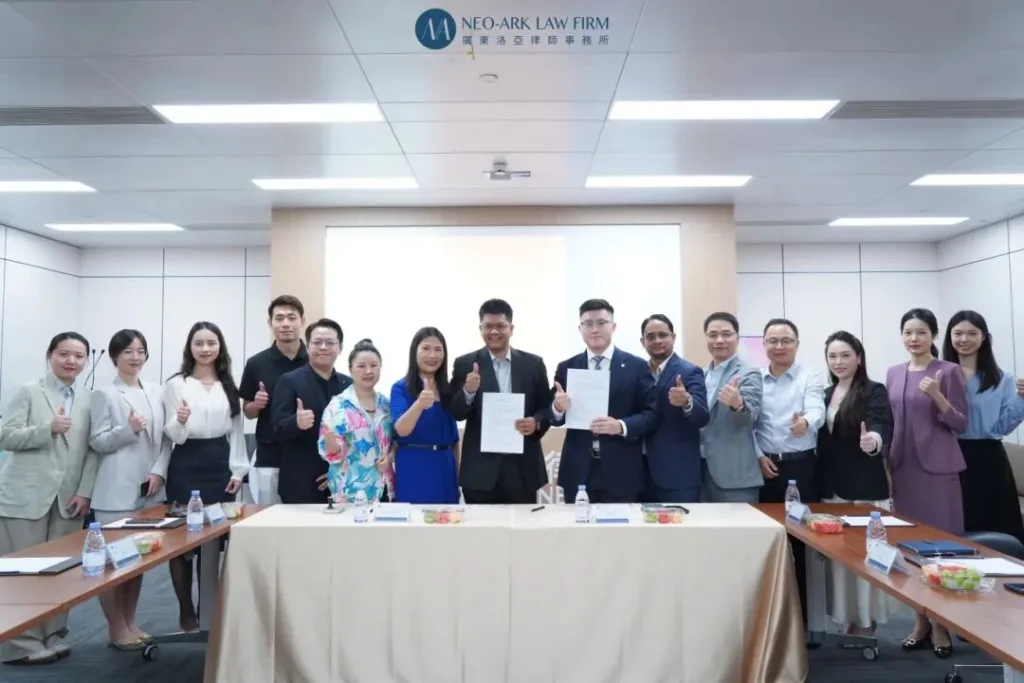
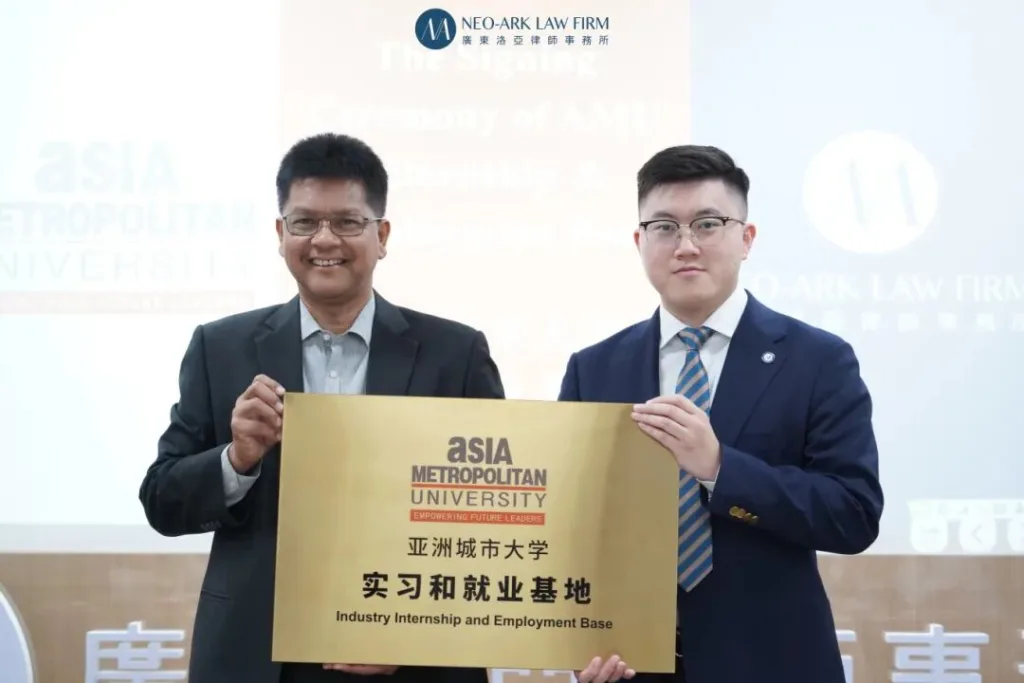
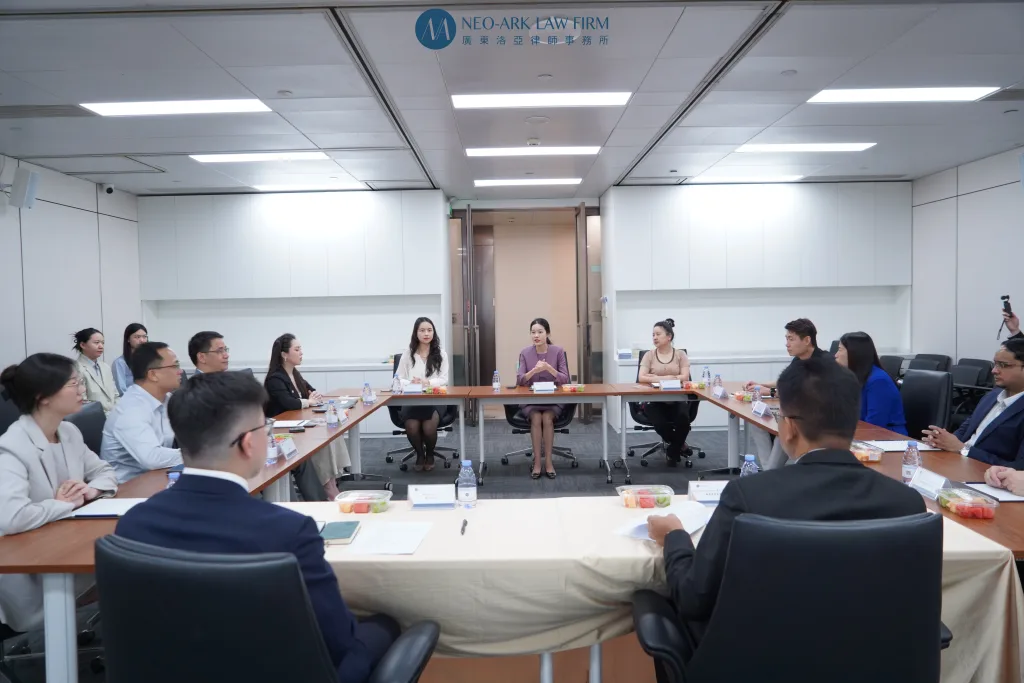
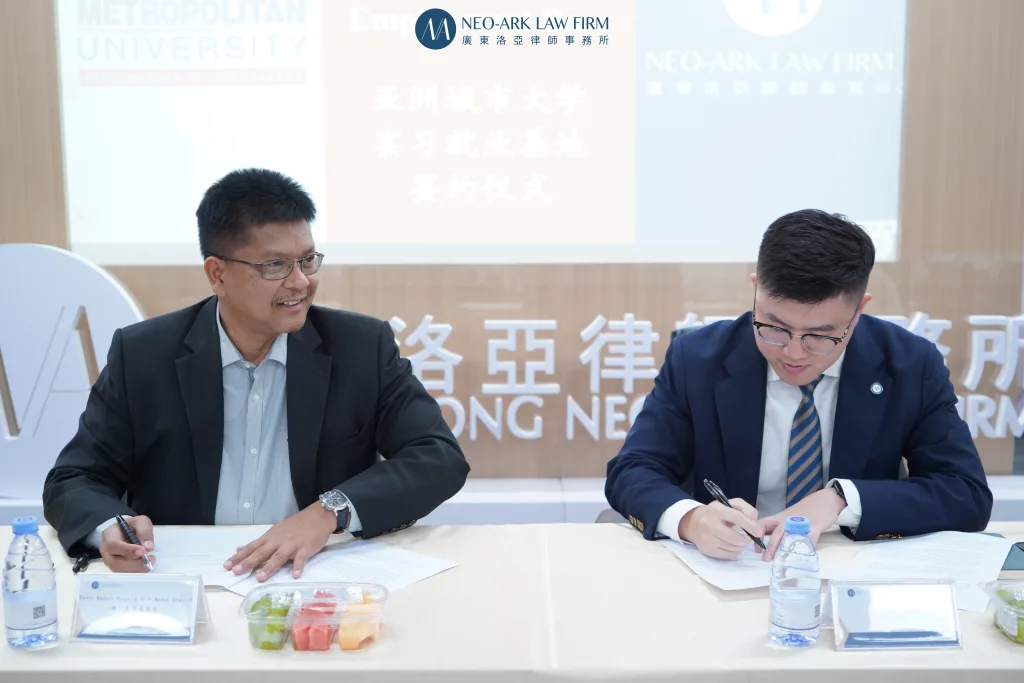
On June 24, 2026, the signing and plaque-unveiling ceremony for the joint Internship and Employment Base between Asia Metropolitan University (AMU) and Guangdong NEO-ARK Law Firm was successfully held.

Distinguished guests from AMU included Datuk Abdul Rashid Bin Mohd Sharif (Chief Regulatory Officer of AMU Group), Dr. Hassan Basri Bin Jahubar Sathik (Vice Chancellor of AMU), Keith Lee Kien Fook (Sales and Marketing Director), Dr. Xu Yanping, and several prominent alumni representatives.

Representing NEO-ARK Law Firm were Attorney Huang Jianqiu (Director and Senior Partner), Attorney Liu Minghong (Executive Director and Senior Partner), Attorney Sun Jianhui (Chairman of the Supervisory Committee and Senior Partner), Attorney Huang Ziran (Secretary-General of the Management Committee and Senior Partner), Attorney Yu Yuting (Head of the International Legal Affairs Department and Partner), Attorney Xie Guizhen, and Intern Attorney Zhu Jia, who hosted the delegation and participated in the strategic dialogue.

I. Introducing NEO-ARK’s International Legal Edge

The event commenced with an introductory presentation by Attorney Yu Yuting. She detailed NEO-ARK Law Firm’s developmental trajectory, personnel scale, core practice areas, and specific strengths in cross-border legal services, showcasing the firm's comprehensive capability and dedicated talent cultivation systems.

II. Fostering Synergies in Transnational Legal Education

AMU Vice Chancellor Dr. Hassan Basri Bin Jahubar Sathik expressed his gratitude for the warm reception and continuous support from NEO-ARK Law Firm.

He emphasized his hope that both institutions would utilize this newly established base to:

  • Deepen the integration of academic and corporate resources.
  • Explore innovative models for cultivating international legal professionals tailored to evolving industry demands.
  • Bridge the gap between academic legal training and practical hands-on legal employment.
  • Achieve a mutually beneficial partnership that guarantees precise talent development.

III. Official Signing and Unveiling Ceremony

Following these exchanges, representatives from both sides officially signed the school-enterprise internship and employment cooperation agreement. In the presence of all attendees, they jointly completed the plaque-unveiling ceremony for the "Asia Metropolitan University Internship and Employment Base".

The establishment of this base represents a significant milestone in NEO-ARK’s efforts to optimize its talent cultivation framework and expand its global school-enterprise partnership network. It also highlights the firm’s commitment to social responsibility and its practical contributions toward building a robust pool of international legal practitioners.

Moving forward, NEO-ARK Law Firm will leverage its extensive practical resources and platform advantages to collaborate deeply with AMU. The partnership will focus on cultivating interdisciplinary, international legal professionals, consistently channeling premium, high-caliber talent into the cross-border legal services sector and global rule-of-law initiatives.

Disclaimer & Copyright: This article is co-authored by Mandy Wu and Yu Yuting. The insights shared are for general compliance trends only and do not constitute formal legal advice.As a specialized cross-border legal institution, Neo-Ark Law Firm provides comprehensive global compliance and rights-protection support for expanding enterprises. For more international legal updates, please visit the Neo-Ark Law Firm Official Websites (https://www.neoarklawyers.com/news).

Scroll to Top

+86 13503030053

BackToTop

Inquiry Inquiry Email Email Tel Tel

Request A Quote

×
Please enable JavaScript in your browser to complete this form.